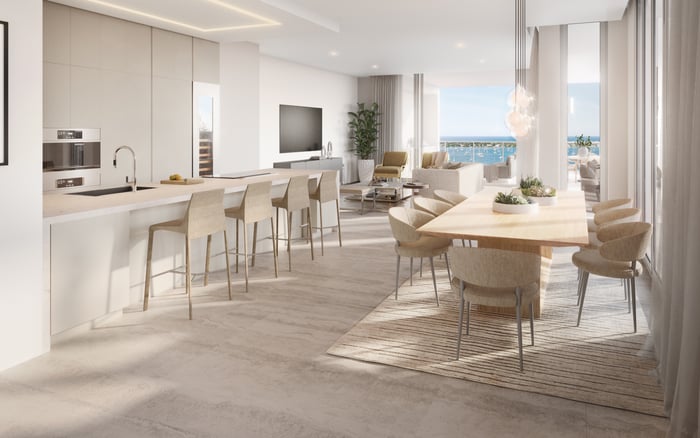
A practical 2026 buyer checklist for evaluating breakfast-room light at Maison D’Or South Flagler, focused on orientation, glazing, shading, controls, future flexibility, comfort, and luxury resale presentation.
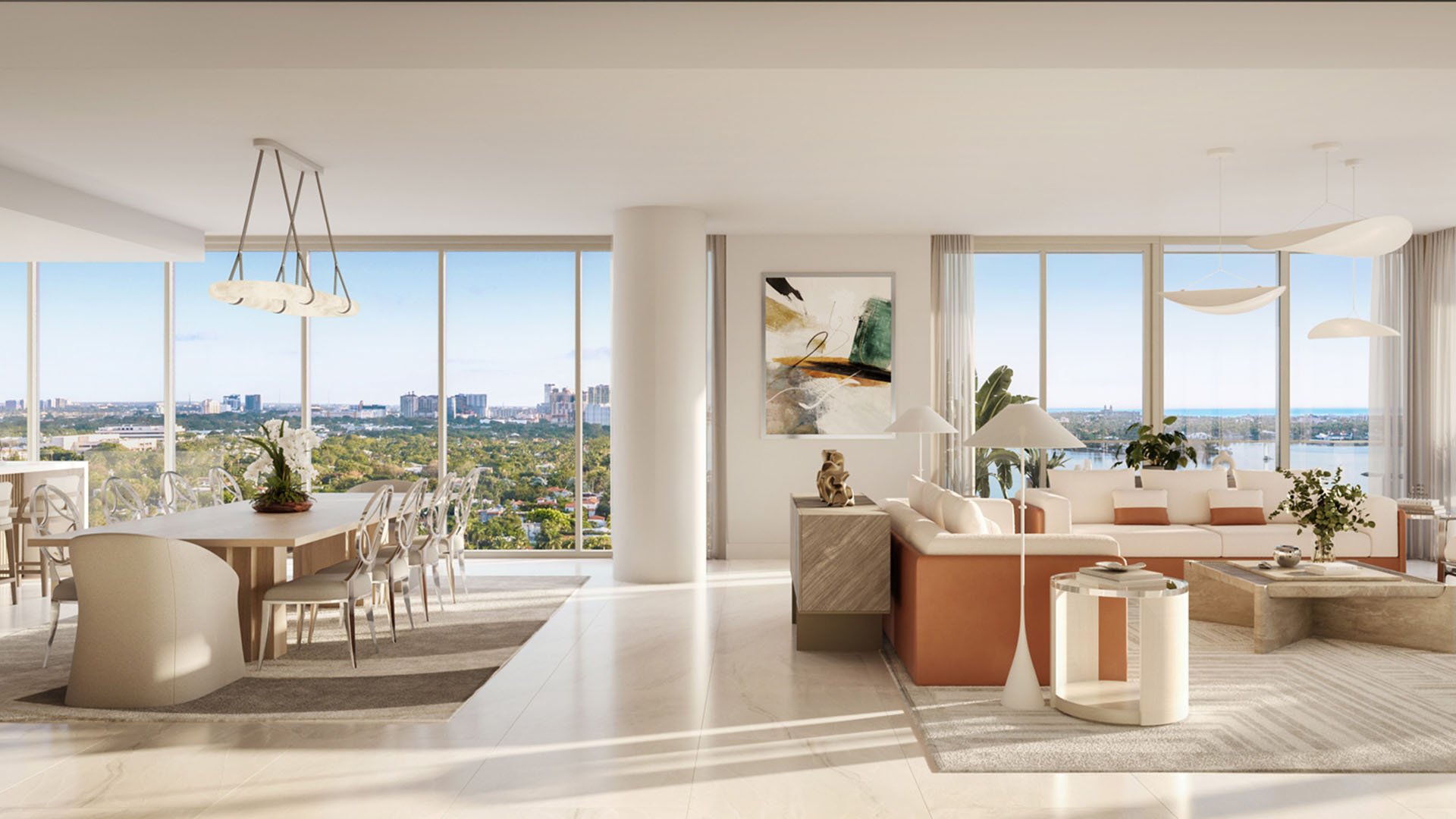
At Maison D’Or South Flagler, breakfast-room light deserves the same scrutiny buyers give to views, ceiling height, kitchen planning, and primary-suite privacy. In a South Flagler luxury residence, this is not merely a corner for coffee. It is often the room that sets the tone for the day, where morning routines, informal meals, remote work, family conversation, and casual entertaining converge.
The 2026 buyer should ask a more exacting question than whether the room is bright. The better test is whether the breakfast room is bright, controllable, visually flattering, and future-proof. Natural light has value, but unmanaged brightness can become glare. A handsome fixture has value, but poor switching, weak dimming, or the wrong color temperature can leave the room feeling unresolved. The strongest due diligence studies daylight and electric light together.
This is especially relevant along South Flagler, where waterfront brightness can be both a privilege and a complication. Light changes by hour, season, weather, window exposure, and interior finish. A breakfast room that photographs beautifully at noon may feel too sharp at 8 a.m., too shadowed at dusk, or too reflective when the water is bright.
Orientation is the first item on the checklist because exposure determines the timing, quality, and intensity of morning light. Before discussing pendants or sconces, buyers should understand where the breakfast room sits relative to the sun and the view. Depending on exposure and surrounding conditions, a room may receive direct light, filtered light, reflected waterfront brightness, or a softer ambient glow.
During a showing or pre-closing walkthrough, sit at the likely breakfast-room seating height. Do not judge the space only while standing. Notice whether sunlight falls directly into the eyes, whether the tabletop becomes reflective, and whether the view remains comfortable without squinting. The room should support daily use, not simply create a dramatic impression for a few minutes.
Buyers should also revisit the space at different times when possible. Morning conditions matter most for a breakfast room, but daytime work, late-afternoon conversation, and evening dining may also shape the room’s value. The more the room must do, the more important it becomes to verify its full lighting range rather than a single best moment.
Glazing is not just a frame for the view. It influences light transmission, glare control, heat gain, reflections, and the daily usability of the room. In a luxury residence, large glass can make a breakfast room feel expansive and serene, but it also requires careful evaluation. Buyers should study how the glass handles brightness, how it affects temperature, and whether the room feels restful or overexposed.
Shading conditions deserve equal attention. Blinds, overhangs, tinting, and window treatments can determine whether a room feels luminous or difficult to occupy comfortably. The goal is not to block the view, but to control light without diminishing the openness that gives a South Flagler residence its appeal.
Look for practical signals: hot patches on seating, glare on stone or lacquered surfaces, reflections in glass-front cabinetry, shadows across the table, and the way daylight interacts with wall color, flooring, and ceiling finish. A pale interior may amplify brightness. A darker palette may absorb it. Neither is inherently superior, but each should be understood before closing.
A breakfast room cannot depend on daylight alone. Stormy mornings, early departures, late dinners, and evening entertaining all require electric lighting that feels intentional. Fixture quality should be assessed for brightness, color temperature, glare, dimming performance, and compatibility with the room’s finishes.
The color of light is particularly important. Light that is too cool can make a warm breakfast room feel clinical. Light that is too dim or too amber may flatten food, flowers, art, and skin tones. In a luxury setting, the room should feel flattering at breakfast, composed during daytime laptop use, and atmospheric in the evening.
Controls are not a convenience item. They are a core due-diligence item. A breakfast room may need separate scenes for early breakfast, daytime work, entertaining, and quiet evening use. Ask whether dimming is smooth, whether switches are logically placed, and whether the control system can integrate with future upgrades. If a scene cannot be adjusted easily, the room may never perform as intended.
Many lighting problems can be improved after closing, but not every condition is easily corrected. Electrical rough-in should be requested or inspected before closing because junction-box locations, switch legs, and ceiling conditions may limit later fixture upgrades. A buyer who assumes a chandelier can be centered over the table may discover that structure, soffits, sprinklers, HVAC grilles, or existing wiring complicate the plan.
Ceiling height also matters. A pendant that works in a tall breakfast room may feel crowded in a lower space. Recessed lighting may be constrained by slab conditions or building systems. Decorative fixtures may require reinforcement, relocation, or coordination with fire and mechanical elements. The elegant solution is usually possible only when the constraints are known early.
Documentation should be part of the request. Lighting plans, electrical plans, fixture schedules, and control-system details can clarify what is installed, what is planned, and what can be modified. Where documentation is not available, a qualified review can still evaluate the practical conditions visible during inspection.
The most important distinction is between issues that can be corrected and issues embedded in the residence. A poorly chosen bulb, an underwhelming fixture, or an inadequate dimmer may be relatively simple to resolve. Orientation, glazing, ceiling structure, window exposure, and building systems are more fundamental.
This distinction affects negotiation, renovation planning, and long-term satisfaction. A buyer may accept a breakfast room that needs new fixtures if the daylight is comfortable, the ceiling can support improvements, and the controls can be upgraded. The same buyer may pause if glare, heat gain, or structural constraints make the room difficult to refine without major intervention.
Professional review can be useful where the residence is important enough to warrant precision. A lighting designer, architect, or qualified consultant may measure daylight, model fixture output, test dimming behavior, and evaluate the interaction between window exposure and interior finishes. This is not extravagance. It is protection against small daily irritations becoming permanent compromises.
A disciplined walkthrough should be slow, seated, and specific. Stand at the entry, then sit where breakfast will actually happen. Notice glare, shadows, reflections, view preservation, comfort at eye level, and whether the room feels balanced across the table. Open and close shades if available. Test each switch. Dim lights up and down. Look at the room from the kitchen and from the main living area, since the breakfast room often participates in a larger open plan.
Also consider how the room will present in photographs and resale. Luxury-market perception is visual and emotional. A breakfast room with controlled light reads calm, expensive, and finished. A room with harsh glare or uneven electric light can undercut otherwise strong design. Lighting also affects wellness, daily rhythm, operating comfort, and how often the room is actually used.
The final goal is not theatrical brightness. It is a room that supports daily life with grace: morning clarity, daytime flexibility, evening softness, and the technical infrastructure to adapt as tastes and technology change.
Why is breakfast-room light important at Maison D’Or South Flagler? It affects comfort, daily routine, wellness, photography, and resale presentation. The room should be evaluated as a primary living space, not a secondary dining nook.
Should buyers focus first on natural light or fixtures? Start with orientation and daylight, then evaluate electric lighting. Fixtures can often be changed more easily than exposure, glazing, or ceiling constraints.
What is the biggest daylight risk in a waterfront breakfast room? Excessive glare and heat gain can make a bright room uncomfortable. Shading, tinting, overhangs, and window treatments should be reviewed carefully.
What documents should buyers request before closing? Ask for lighting plans, electrical plans, fixture schedules, and control-system details where available. These can reveal limitations before upgrades are planned.
Why inspect electrical rough-in? Junction boxes, switch legs, and ceiling conditions can determine whether pendants, recessed lights, or chandeliers can be added later without complication.
What should be tested during a walkthrough? Test switches, dimmers, glare, shadows, reflections, and comfort at seating height. The breakfast table position is the most relevant viewing point.
Can poor breakfast-room lighting be fixed after closing? Some issues, such as bulbs, fixtures, and dimmers, may be correctable. Orientation, glazing, structure, and building systems are more permanent.
How does lighting affect resale? Controlled light makes a residence feel calmer, more finished, and more photogenic. Harsh or uneven light can weaken luxury-market perception.
Should a professional lighting review be considered? For a significant purchase, professional review can clarify daylight behavior, fixture output, dimming, and finish interaction. It can also guide future upgrades.
What is the ideal breakfast-room result? The room should be bright, controllable, flattering, and adaptable. It should support breakfast, work, entertaining, and evening use without visual strain.
When you're ready to tour or underwrite the options, connect with MILLION.
If branded residences are on your mind — as a home or as an allocation — we would be glad to share what we are seeing, privately.
Begin a quiet conversation