A discreet buyer’s guide to evaluating jewelry-safe placement at Edgeworth West Palm Beach, with emphasis on structure, privacy, access, insurance, and daily livability rather than renderings alone.

At the highest end of the South Florida market, the rendering is only the opening gesture. It can convey finish, atmosphere, and lifestyle, but it rarely answers the collector’s most practical question: where, exactly, will valuable jewelry live when the residence is occupied, staffed, serviced, and enjoyed?
For buyers evaluating Edgeworth West Palm Beach, jewelry-safe placement should be treated as part of the residence’s design intelligence, not as an afterthought. The goal is not simply to hide a safe. It is to integrate secure storage into the physical, operational, and insurance logic of the home without compromising the grace of the interior.
That is especially relevant in a luxury market shaped by second homes, seasonal use, entertaining, family visits, and trusted service providers. A safe that looks elegant in a dressing room may be poorly positioned if it sits in an obvious circulation path, rests on an unsuitable floor area, or conflicts with future millwork, access panels, or closet systems.
The first verification is structural. A jewelry safe can be heavy, and its location should be reviewed before cabinetry and flooring become fixed decisions. Buyers should ask whether the desired location can support the intended safe, how the load is distributed, and whether any reinforcement or anchoring strategy is needed.
This discussion should happen before custom closets are finalized. In luxury residences, dressing rooms often include extensive millwork, stone surfaces, glass fronts, lighting systems, and drawers. Those elements can complicate safe installation if the safe was not part of the original plan. A beautiful closet that cannot accommodate secure storage discreetly may require expensive revision later.
The most considered approach is to view jewelry storage as a built-in design requirement. It should relate to structural capacity, installation access, door swing, service clearances, and future maintenance. If a buyer is considering a larger safe, a dedicated niche or reinforced zone may be more elegant than forcing the safe into a finished room after closing.
For buyers comparing West Palm Beach, Palm Beach, new-construction, and pre-construction residences, the underlying issue is deeply personal: protecting objects that are often both financially significant and emotionally irreplaceable.
A safe should not be judged only by where it sits. It should be judged by how one reaches it. The best locations preserve privacy during everyday use. Consider the route from the primary suite, dressing room, bath, entry, private elevator landing, and any service corridor. The question is simple: can the owner access jewelry without turning a private ritual into visible activity?
In a sophisticated residence, discretion is usually more valuable than theatrical concealment. A safe behind a dramatic feature wall may attract curiosity. A safe integrated into a calm dressing sequence may simply disappear into routine. Buyers should think through morning departures, evening events, guest weekends, and household staffing patterns.
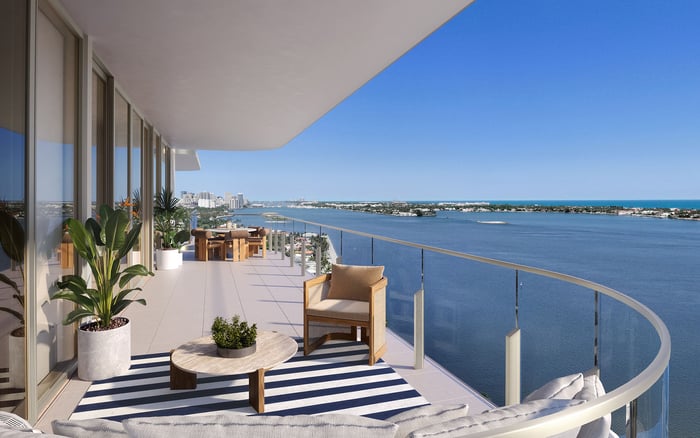
If the residence includes a balcony, outdoor entertaining may also influence behavior. Jewelry may be removed before swimming, exercising, or hosting, and the safe should be positioned so those transitions feel effortless. If the home is a penthouse or a larger-format residence, the same logic expands. Greater scale can create more privacy, but it can also create longer circulation paths and more opportunities for exposure.
A safe may fit perfectly in a rendering and still be difficult to deliver. Buyers should verify the practical path from loading area to final placement. Elevator dimensions, corridor turns, thresholds, door widths, protective coverings, and building move-in protocols all matter.
This is not a cosmetic concern. If a safe cannot be delivered without complex handling, installation may become more visible, more expensive, or more disruptive. In a completed luxury building, delivery timing may also intersect with association rules, contractor access windows, and protection requirements for common areas.
The safest planning question is direct: how will the safe arrive, and who needs to approve the route? If the answer is vague, the location is not yet fully verified. A buyer should also ask whether future removal or replacement would be possible without damaging finished interiors. Jewelry collections evolve, and secure storage should be flexible enough to evolve with them.
Insurance considerations should be addressed early. Placement, alarm integration, anchoring, safe rating, documentation, and access control may all affect how a collection is underwritten. A buyer should not assume that any high-quality safe will satisfy future insurance expectations.
The practical move is to ask the relevant insurance professional what conditions may apply before construction or customization decisions are complete. That conversation can shape the safe type, the preferred room, the monitoring strategy, and the documentation required for valuables. It can also avoid the common mistake of designing a beautiful storage area that fails to satisfy coverage expectations.
Documentation matters as well. Owners should preserve records for the safe, installation, alarm connection, and any related work. These details may seem minor until a claim, appraisal update, estate planning review, or policy renewal requires clarity.
Jewelry-safe placement is partly about human behavior. Where will the owner naturally stand while opening it? Can the door open without blocking circulation? Is there seating or counter space nearby for selecting pieces? Is the lighting flattering without being conspicuous? Does the safe create noise that carries into adjacent rooms?
A poorly placed safe can turn an elegant dressing room into a mechanical inconvenience. A well-placed safe feels almost invisible. It supports daily use without announcing itself. It allows jewelry to be returned immediately after an event, rather than left temporarily in a drawer, handbag, or travel pouch.
Buyers should also consider who knows the location. Household staff, contractors, closet installers, audio-visual technicians, and maintenance personnel may all move through private areas at different times. A secure plan limits unnecessary exposure during installation and after occupancy.
The instinct to hide a safe is understandable, but excessive concealment can create problems. Owners may need access quickly before travel, during a medical or family emergency, or when estate representatives are involved. If the safe is too difficult to reach or too dependent on a custom mechanism, elegance becomes friction.
The stronger strategy is controlled discretion. The safe should be private, secured, and integrated, but not so theatrical that it becomes impractical. Access protocols should be clear to the owner and any trusted parties designated in advance. That may include instructions for power loss, lock servicing, or emergency access procedures.
This is where luxury and discipline meet. The safest residence is not the one with the most dramatic hidden compartment. It is the one where the owner’s routines, risk profile, and design choices have been aligned before move-in.
Before relying on any proposed safe location at Edgeworth West Palm Beach, a buyer should verify five practical categories. First, structural suitability: floor capacity, anchoring, and compatibility with surrounding finishes. Second, delivery access: elevators, corridors, turns, and building procedures. Third, privacy: circulation, staff exposure, guest visibility, and daily use. Fourth, insurance: safe specifications, alarm integration, documentation, and policy expectations. Fifth, design integration: cabinetry, lighting, ventilation, door swing, and future serviceability.
None of these questions diminishes the allure of a luxury residence. They refine it. For a collector, true elegance lies in the absence of compromise. The safe should not feel like a later intrusion into a finished home. It should feel as though the residence always anticipated the life of someone who owns, wears, travels with, and protects important pieces.
The most important takeaway is simple: do not let the rendering make the decision. A rendering can suggest where a dressing table, closet island, or wall of cabinetry might belong. It cannot confirm structural support, delivery logistics, insurance alignment, or long-term operational discretion.
For buyers of Edgeworth West Palm Beach, the right question is not, “Where can a safe fit?” The right question is, “Where can a safe live beautifully, privately, and correctly?” That shift changes the conversation from storage to stewardship.
A residence at this level should serve the owner’s daily rituals with quiet precision. Jewelry-safe placement is one of those details that may never appear in a glossy image, yet it can define how secure, comfortable, and composed the home feels once life begins inside it.
Should jewelry-safe placement be decided before closing? It should be discussed as early as possible, especially if custom closets, millwork, or structural accommodations may be involved.
Is a primary closet always the best place for a safe? Not always. The best location depends on structure, privacy, circulation, insurance expectations, and how the owner actually uses jewelry.
What is the first technical issue to verify? Structural suitability is usually the starting point, including weight, anchoring, and compatibility with surrounding finishes.
Why does delivery access matter? A safe must be transported through real elevators, corridors, thresholds, and turns, not just placed into an idealized floor plan.
Can a safe be added after move-in? Often, but later installation may be more disruptive if cabinetry, flooring, and access routes were not planned around it.
Should insurance be reviewed before selecting a safe? Yes. Coverage expectations may influence safe type, alarm integration, documentation, and placement.
Is concealment more important than convenience? No. The best approach balances discretion with practical access, serviceability, and daily use.
Should household staff know where the safe is located? Access knowledge should be limited and intentional, based on the owner’s household operations and trust structure.
Does a larger residence make safe placement easier? Not automatically. Larger homes may offer more options, but circulation, visibility, and delivery logistics still require review.
What should buyers ask before approving a final location? Ask whether the location works structurally, privately, logistically, aesthetically, and for insurance purposes.
For a discreet conversation and a curated building-by-building shortlist, connect with MILLION.
If branded residences are on your mind — as a home or as an allocation — we would be glad to share what we are seeing, privately.
Begin a quiet conversation