A discreet buyer’s guide to Sunny Isles Beach relocation for Los Angeles family-office principals, with focus on domicile, tax exposure, condo diligence, ownership structures, and oceanfront underwriting.
For a Los Angeles family office, a move to Sunny Isles Beach is rarely about weather alone. It is a coordination exercise spanning tax counsel, estate planning, investment governance, residential real estate, insurance and family logistics. The residence may be the most visible symbol of the shift, but the underlying question is more exacting: where is the family’s true home, and can that conclusion be documented with discipline?
California’s top personal income-tax structure is an obvious catalyst. High-income residents can face the 12.3% top bracket plus the 1% Mental Health Services Tax on taxable income over $1 million. Florida, by contrast, has no personal income tax. For principals with concentrated equity, fund distributions, carried-interest events, operating-company proceeds or recurring investment gains, the delta can be material.
Still, the move should never be reduced to a rate comparison. California residency analysis is fact-specific, and relocating families should expect their “closest connections” to matter. The home used most meaningfully, the location of spouse and family, business ties, banking relationships, vehicles, licenses, professional advisors and time spent in each state all become part of the record. A Florida declaration of domicile may be recorded with the county clerk, but it should be treated as one document in a broader domicile file, not a standalone shield.
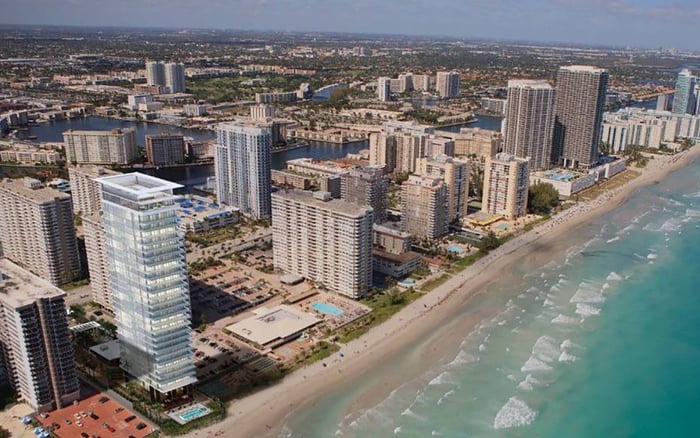
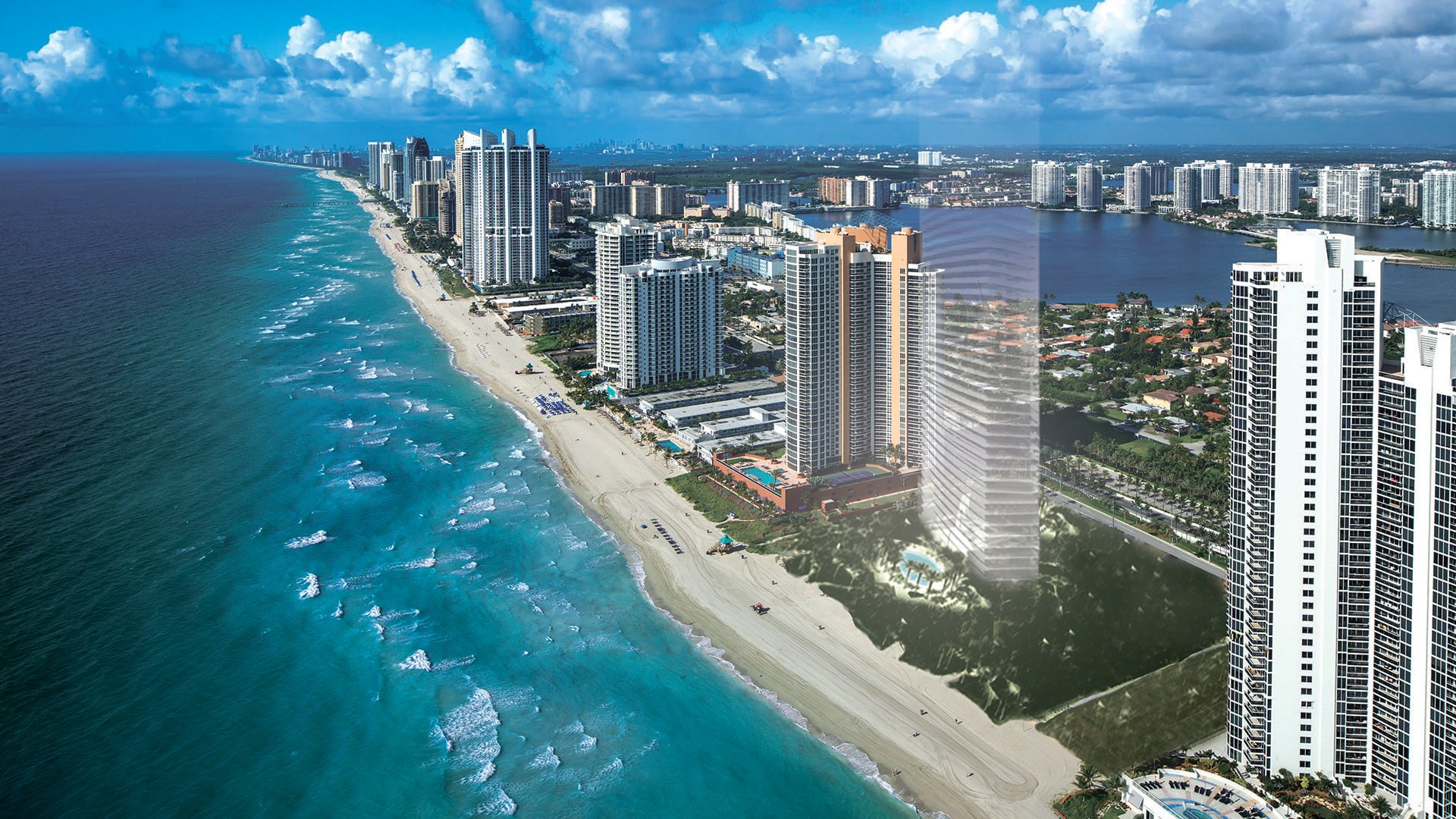
Sunny Isles Beach is a compact coastal municipality between the Atlantic Ocean and the Intracoastal Waterway, north of Bal Harbour and south of Golden Beach and Hallandale Beach. With 22,342 residents in 2020, it is not a large office hub. Its appeal is residential, coastal and architectural, particularly for families seeking a high-service oceanfront home within the broader Miami ecosystem.
For Los Angeles buyers accustomed to Bel Air, Brentwood, Beverly Hills or Malibu, the product type is meaningfully different. Prime Los Angeles wealth often centers on land, gates, long drives, guest houses and estate compounds. Sunny Isles Beach is more vertical. The trophy asset is often a large full-service condominium residence with direct water exposure, private elevator access, building-level security, resort-style amenities and lock-and-leave simplicity.
That distinction is strategic. A principal who wants acreage, staff quarters and a compound environment may need to compare Sunny Isles with other South Florida markets. A principal who wants oceanfront convenience, privacy, services and international access may find Sunny Isles unusually efficient.
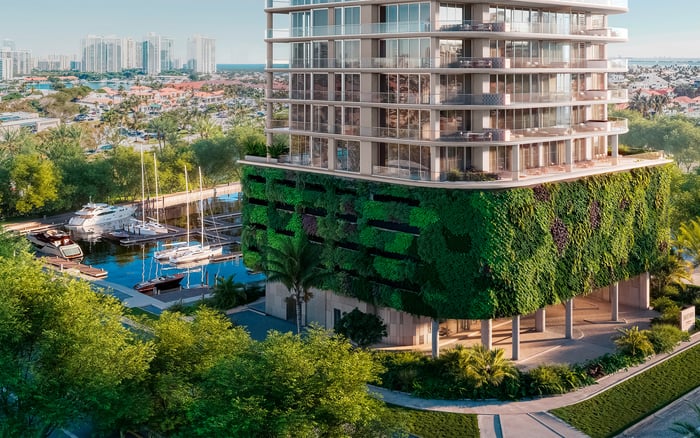
Sunny Isles has become one of South Florida’s clearest expressions of branded residences. For some family offices, the brand matters less as a logo and more as an operating promise: service standards, design coherence, amenity programming and resale recognition.
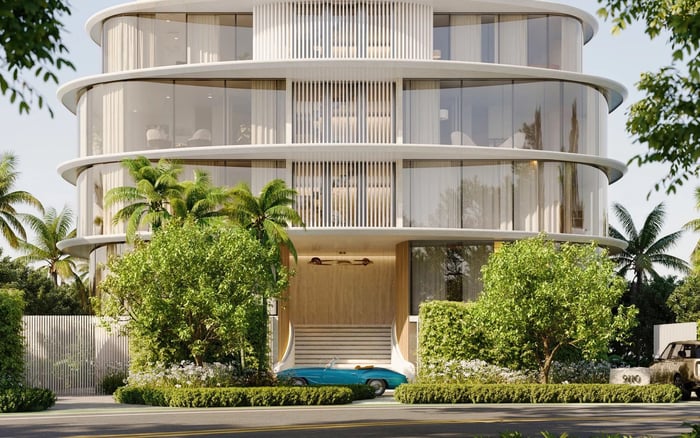
Pre-construction buyers evaluating Bentley Residences Sunny Isles are looking at an oceanfront project at 18401 Collins Avenue marketed around in-residence multi-car garages and a branded luxury tower concept. That proposition may resonate with Los Angeles buyers who view cars as part of the household collection rather than a parking inconvenience.
Completed ultra-luxury inventory has a different profile. The Estates at Acqualina Sunny Isles is known for large oceanfront residences and the Villa Acqualina amenity complex, which may suit families seeking scale and service without the lead time of a new tower. Armani Casa Sunny Isles Beach, at 18975 Collins Avenue, brings the vocabulary of branded design to the oceanfront condominium format.
The key is to avoid treating every luxury tower as the same asset class. Pre-construction exposure, completed branded product and older oceanfront inventory each carry different questions about timing, liquidity, reserves, insurance, assessments and buyer depth.
Florida’s lack of personal income tax does not eliminate local carrying costs. Luxury buyers should model property taxes parcel by parcel because assessed values, market values, exemptions and millage rates drive the final bill. County property records should be reviewed early, not after contract execution, because they show ownership history, assessed values, market values, exemptions and prior sales.
For a primary residence, Florida’s homestead exemption can reduce taxable value. More importantly for long-term holders, the Save Our Homes cap generally limits annual increases in assessed value for homesteaded property to the lesser of 3% or inflation. For a family office planning a decade-long South Florida base, that cap can influence the after-tax holding model.
This is where investment discipline should override lifestyle emotion. A spectacular view may justify a premium for personal use, but underwriting still needs separate columns for acquisition cost, property tax, insurance, association dues, reserves, potential assessments, financing strategy and exit liquidity.
For family offices, condominium diligence should be treated with the seriousness of a private-company review. Florida condominium buyers should examine milestone-inspection status because qualifying buildings must undergo structural milestone inspections at statutory intervals. Associations for buildings three stories or higher must also complete structural integrity reserve studies, which makes reserve funding central to the conversation.
This is especially important for older towers. A residence may be cosmetically renovated and beautifully furnished, while the association’s future capital needs tell a more complex story. Buyers should review budgets, reserves, insurance, pending litigation, inspection status, planned projects and the history of special assessments. The objective is not to avoid every building with future work. It is to price risk with clarity.
Address-level flood-risk diligence is also essential for oceanfront and Intracoastal property. Federal flood maps should be reviewed for the specific address, and insurance assumptions should be tested before closing. In a family-office context, this belongs in the same diligence packet as title, entity ownership, lending terms and estate-planning documents.
Many family offices prefer to buy through LLCs, trusts or other entities for governance, estate-planning or privacy reasons. That approach remains common, but it requires more coordination than a personal-name purchase. A federal residential real-estate reporting rule will require reports for certain non-financed transfers of residential real estate to legal entities and trusts, making structure, timing and documentation part of the closing strategy.
If a foreign seller is involved, FIRPTA can require the buyer to withhold tax from the amount realized on the sale of U.S. real property. That issue can affect cash flows, closing mechanics and negotiation posture, particularly in an international market where seller profiles vary widely.
The practical lesson is simple: decide the ownership structure before negotiating the final contract terms. The entity, beneficial owners, financing posture, tax residency plan and estate plan should be aligned before deposits become nonrefundable.
Sunny Isles Beach may become the family residence, but the operating infrastructure may sit elsewhere. Private banking, law firms, accountants, office space, investment teams and senior talent are more likely to cluster in Aventura, Brickell, Miami Beach, Coral Gables or Palm Beach. That is not a weakness. It is how the region functions.
Miami International Airport’s nonstop-flight network matters for Los Angeles family offices that will keep West Coast board seats, New York relationships and international commitments. A Sunny Isles residence can serve as a coastal base while the family office operates across multiple nodes.
For the principal, the central test is fit. Does the residence support daily life, privacy, travel, wellness, family routines and governance? If so, Sunny Isles Beach can become more than a tax-driven address. It can become the residential anchor of a new South Florida operating model.
Is moving from Los Angeles to Sunny Isles Beach mainly a tax decision? Tax is often a catalyst, but domicile, family logistics, real estate fit and operating infrastructure all matter.
Does Florida have personal income tax? Florida has no personal income tax, which can be meaningful for principals with large taxable income or liquidity events.
Is a Florida declaration of domicile enough by itself? No. It should be one part of a broader file documenting closest connections and actual life in Florida.
How different is Sunny Isles Beach from Los Angeles estate markets? Sunny Isles is largely a vertical oceanfront condominium market, while prime Los Angeles often emphasizes private land and compounds.
Should buyers model Florida property taxes before signing? Yes. Taxes should be reviewed parcel by parcel because assessed values, exemptions and millage rates shape carrying costs.
Why does homestead matter for long-term owners? Homestead can reduce taxable value, and the Save Our Homes cap may limit annual assessed-value increases for qualifying primary residences.
What condo documents deserve special attention? Buyers should review milestone inspections, structural reserve studies, budgets, insurance, litigation and assessment history.
Is flood diligence necessary for oceanfront purchases? Yes. Address-specific flood risk and insurance assumptions should be reviewed before closing.
Can a family office buy through an LLC or trust? Often yes, but entity purchases require careful planning because certain non-financed transfers may trigger reporting obligations.
Does Sunny Isles Beach work as a family-office operating base? It can work as the residential base, while advisors, banking and office functions may sit in nearby South Florida business centers.
For a tailored shortlist and next-step guidance, connect with MILLION.
If branded residences are on your mind — as a home or as an allocation — we would be glad to share what we are seeing, privately.
Begin a quiet conversation