A refined buyer’s guide to evaluating protected view corridors, privacy, orientation and neighborhood character when moving from Los Angeles to Coral Gables and South Florida.
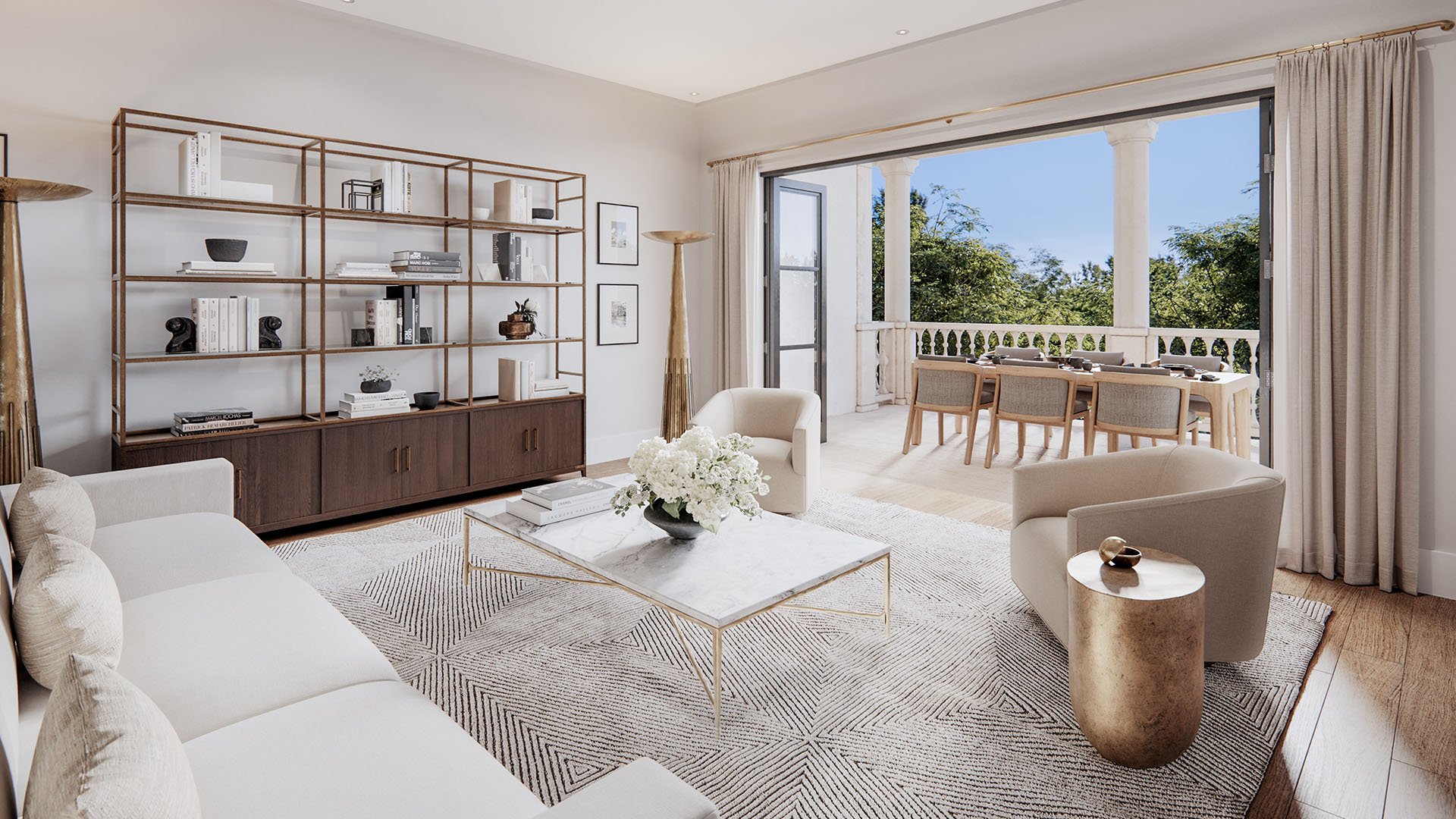
For a Los Angeles buyer arriving in South Florida, the phrase “protected view corridor” may sound reassuringly familiar. In both markets, the best outlooks are rarely accidental. They are shaped by setbacks, street grids, public spaces, waterways, height transitions, tree canopies, private easements, architectural restraint and, in some cases, formal planning conditions. Yet the meaning of a protected view is never universal. A canyon sightline in Los Angeles and a green, water-facing axis in Coral Gables require different diligence.
The discreet buyer should treat a view corridor as a component of value, not a decorative promise. It can support long-term desirability, soften density, frame a daily ritual and give a home the emotional composure ultra-prime buyers seek. It can also be misunderstood when the buyer studies only what is visible from the terrace on a sunny afternoon. The sharper question is not simply, “What can I see?” It is, “Why can I see it, what preserves it, and what could change around it?”
This buyer’s guide approach is especially important in Coral Gables, where landscape, architecture and civic order often matter as much as square footage. The most successful purchase is usually the one that balances protected outlooks with privacy, arrival, shade, access and a floor plan that feels effortless every day.
Los Angeles buyers often understand micro-positioning intuitively. A few lots can separate a prized view from an exposed one. The same discipline applies here, though the signals differ. In South Florida, water, canopy, golf, parks, historic streetscapes and low-rise neighborhood edges can all create view value. Elevation matters, but it is not the only measure. A lower residence with a disciplined green outlook can feel more private and enduring than a higher one staring across future development.
Begin by separating three ideas: a view, a protected view and a controlled environment. A view is what the residence offers today. A protected view has some reason to be durable, whether through public realm, regulation, ownership pattern or physical geography. A controlled environment is the more comprehensive luxury: outlook, sound, approach, neighboring massing, nighttime lighting and privacy all working together.
For Los Angeles owners accustomed to hillside privacy, the South Florida equivalent may be a residence whose primary rooms open toward a garden, canal, bay, fairway, courtyard or park-like edge. The experience is horizontal rather than dramatic, but it can be deeply calming.
Coral Gables rewards a buyer who studies rhythm. Streets, setbacks, tree canopy, walls, gates, courtyards and civic landscaping influence the way a property receives light and frames space. Here, a protected corridor may feel less like a cinematic panorama and more like a cultivated procession from entry to garden, from living room to terrace, from terrace to water or green space.
When evaluating a home, stand in the principal rooms at several points in the day. Look beyond the beautiful foreground. Ask what sits beyond the hedge, across the street, past the waterway or behind the canopy. A view through mature trees may be more valuable than a bare open exposure because it filters heat and preserves intimacy. Conversely, a view that depends on one neighboring parcel remaining unchanged deserves careful review.
For buyers who want a more urban Gables lifestyle, projects such as Ponce Park Coral Gables and The Village at Coral Gables can help frame the conversation around walkability, architecture and neighborhood texture. The view question in this setting is often about proportion: how buildings meet the street, how courtyards shape privacy, and how the residence feels when the doors are open.
Waterfront property can be magnetic, but not all water views behave the same way. A broad bay outlook, a canal edge, a marina view and a garden-framed water glimpse each carries a different mood. The buyer should consider glare, boat activity, privacy from the water, nighttime reflections, storm exposure, insurance review, dock placement where applicable, and how indoor rooms relate to the view without feeling overexposed.
Garden outlooks have their own luxury. In Coral Gables and Coconut Grove, the most compelling homes often borrow beauty from mature landscaping and neighboring greenery. A corridor through trees can make a residence feel established from the first day of ownership. It may not photograph as dramatically as a skyline, but it can live better, especially for buyers seeking softness after years in a more vertical or hillside setting.
In nearby Coconut Grove, Park Grove Coconut Grove is a useful reference point for buyers considering the relationship between bay, canopy, architecture and privacy. The lesson is not that every buyer needs a tower residence. It is that the best South Florida outlooks usually combine openness with a sense of shelter.
A protected view is only valuable if it improves how the home is lived. A terrace facing a pristine corridor may be less useful if it is too hot at the hour you entertain. A bedroom with a dramatic outlook may feel less serene if it compromises privacy. A kitchen with a garden view may become the emotional center of the house, even if it is not the most expensive view on paper.
Walk the home as you would use it. Where do you drink coffee? Where do guests gather? Which room carries the best breeze? Which window frames the first impression on arrival? Which spaces feel calm after sunset? South Florida luxury is intensely sensory. Light, humidity, shade, sound and vegetation all shape the experience.
This is where Los Angeles instincts are useful. Buyers accustomed to considering exposure, hillside orientation and the choreography of arrival already know that value is partly cinematic. In Coral Gables, the cinema is quieter. It is the composition of palms, plaster, water, stone, shadow and carefully scaled neighboring architecture.
Not every Los Angeles buyer who begins with Coral Gables stays exclusively there. Some compare the Gables with Brickell for skyline energy, or with Miami Beach for ocean proximity and resort-like ease. Each area changes the meaning of a protected corridor.
In Brickell, height, orientation and the path of future development deserve particular attention. A residence may command a dramatic view today, but the buyer should still understand surrounding parcels, approach routes, and the difference between a protected water orientation and a skyline view that may evolve. The Residences at 1428 Brickell offers a natural reference for buyers comparing vertical luxury with the quieter garden language of Coral Gables.
In Miami Beach, the calculus may include ocean orientation, dune or park adjacency, historic context, resort privacy and the balance between sunrise drama and day-long usability. The Perigon Miami Beach belongs in that conversation for buyers weighing beachfront presence against the more residential cadence of the mainland.
The strongest buyers ask specific questions early. Is the view protected by public ownership, zoning, recorded restriction, physical water, road alignment, parkland, heritage conditions, neighboring estate scale or simple happenstance? If the answer is “happenstance,” the view may still be beautiful, but it should be priced and negotiated accordingly.
Review surveys, title materials, association documents, architectural controls, municipal planning context and any available information about neighboring parcels. Walk the area, not only the property. Look at rooflines, vacant lots, aging structures, construction staging, utility placement and tree conditions. A corridor is a spatial relationship, so the surrounding environment matters.
For single-family homes, consider how future improvements on your own property could affect the view. A new pavilion, taller hedge, pool structure or guest house may improve privacy while changing the outlook. For condominiums, study the stack, neighboring balconies, amenity decks, window lines and how the view performs from seated positions, not just standing at the glass.
A protected view corridor should make a home feel inevitable. It should support the architecture rather than compensate for it. It should be legible from the main living spaces, enjoyable at the hours that matter, and durable enough to justify its premium. Most of all, it should fit the buyer’s South Florida life.
For some, that means a Coral Gables residence with filtered garden views and quiet streets. For others, it means Coconut Grove canopy, Brickell skyline water, Miami Beach ocean light or a waterfront setting with a private rhythm. The right answer is rarely the loudest view. It is the one that continues to feel composed after the first impression fades.
What is a protected view corridor? It is a sightline that has some reason to remain open or controlled, such as planning rules, public space, water, setbacks, easements or surrounding ownership patterns.
Are protected views guaranteed forever? Not always. Buyers should verify what creates the protection and understand whether it is legal, physical, regulatory or simply circumstantial.
Why is Coral Gables different from Los Angeles? Coral Gables often emphasizes canopy, gardens, civic order and horizontal outlooks rather than hillside drama or long canyon views.
Should I prioritize water views over garden views? Not automatically. Water can be spectacular, while garden and canopy views may offer more privacy, shade and day-to-day serenity.
How many times should I visit a property before deciding? Visit at different times of day when possible. Light, glare, privacy and neighborhood sound can change the way a view feels.
What documents should be reviewed? Buyers typically review surveys, title materials, association documents, architectural controls and municipal planning context with qualified advisers.
Do high floors always have better protected views? No. A lower home with a stable green or water outlook can feel more private and durable than a higher home with uncertain surroundings.
Can landscaping protect a view? Landscaping can frame privacy and soften exposure, but it is not the same as a legally protected corridor unless controls are documented.
Is Brickell comparable to Coral Gables for view security? The experience is different. Brickell requires careful study of height, orientation and surrounding development patterns.
What is the best first step for a relocating buyer? Define how you want to live before selecting the view: privacy, shade, access, entertaining and daily rituals should guide the search.
To compare the best-fit options with clarity, connect with MILLION.
If branded residences are on your mind — as a home or as an allocation — we would be glad to share what we are seeing, privately.
Begin a quiet conversation