A buyer-focused look at why Fendi Château Residences Surfside works for frequent travelers, from lock-and-leave ease and oceanfront privacy to branded design and Surfside convenience.
For the globally mobile buyer, the most valuable residence in South Florida is not always the largest or the loudest. It is the one that can be left, returned to, and inhabited immediately, without the emotional drag of reactivation. That is the core appeal of Fendi Château Residences Surfside, an oceanfront branded condominium in Surfside that speaks directly to owners who divide their lives among cities, seasons, and time zones.
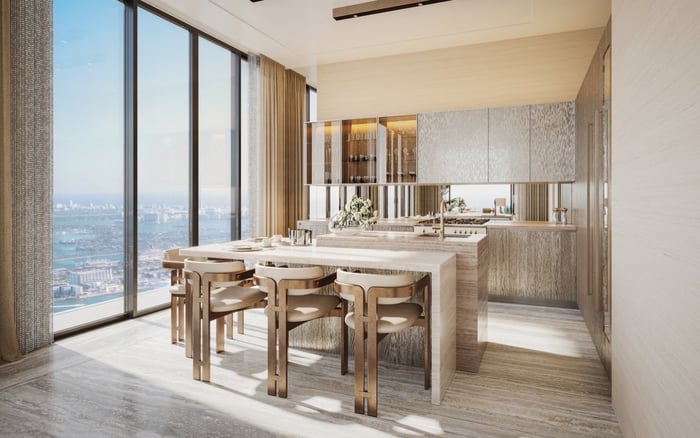
The proposition is not simply fashion attached to real estate. The Fendi name gives the residence a recognizable design identity, but the deeper value is operational. This is a private-home setting with a service profile closer to luxury hospitality, allowing an owner to arrive in Miami and step into a permanent coastal address rather than repeat the rituals of a hotel stay.
In that sense, Fendi Château Residences Surfside belongs to the most useful category of Branded Residences: those where the brand is not decorative, but behavioral. The residence is organized around familiarity, discretion, and ease. For a Second-home buyer, those qualities can matter as much as view, finish, or address.
Lock-and-leave living is often reduced to convenience, but for frequent travelers it is more exacting than that. It means confidence. The owner wants to depart without feeling that a standalone house is becoming an unmanaged project in their absence. They want to return without needing several days of setup before the residence feels like home again.
Fendi Château’s appeal rests on that intersection of permanence and simplification. It offers the emotional value of a private residence while reducing the day-to-day burden that can make seasonal ownership feel heavier than expected. The building’s boutique-residence positioning also matters. A more intimate arrival experience supports privacy and reduces the sense of transience that can come with larger hospitality environments.
This is especially relevant in Surfside, where the luxury buyer is often seeking calm rather than spectacle. Nearby Arte Surfside similarly reflects the neighborhood’s appetite for design-led, lower-profile coastal living, while Fendi Château leans into a branded residential identity with a fashion-house sensibility. The result is not a resort substitute. It is a private base that behaves with some of the fluency of a resort.
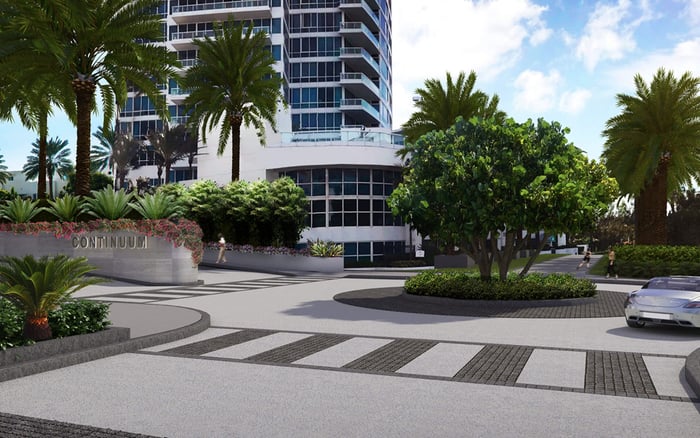
Surfside sits on a valuable stretch of the coastal axis linking Surfside, Bal Harbour, and Miami Beach. For travelers, that geography is practical. It keeps the residence inside the Miami luxury corridor while offering a quieter base than more tourist-heavy parts of Miami Beach. The benefit is most visible at arrival: instead of entering the city at its most theatrical, the owner returns to an oceanfront residential setting with a more composed pace.
That balance helps explain why Oceanfront property in Surfside continues to occupy a distinct place in the market. The neighborhood is close enough to Miami Beach to remain connected, yet separate enough to feel residential. The presence of established addresses such as The Surf Club Four Seasons Surfside reinforces the area’s identity as a polished coastal enclave rather than a conventional resort district.
Bal Harbour is also central to the use case. The Surfside address places residents near one of the region’s strongest luxury retail and dining anchors, giving frequent travelers an efficient lifestyle radius. A buyer considering Rivage Bal Harbour may be drawn to a similar north-beach orientation, where privacy and proximity work together rather than compete.
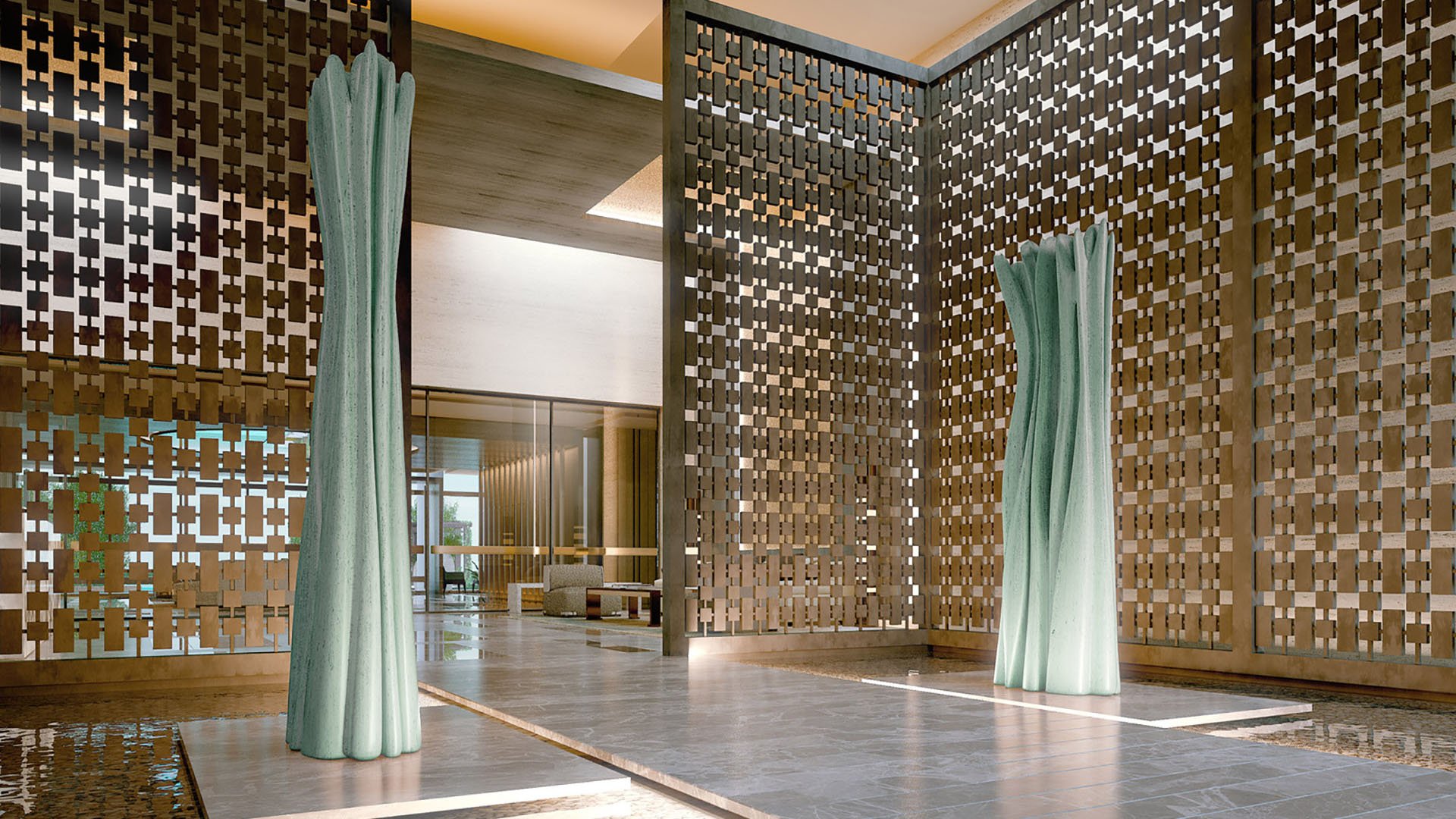
For globally mobile owners, design continuity can be a meaningful advantage. A branded residence tied to an established luxury fashion house offers a familiar language. That does not mean every owner is buying because of a logo. More often, the draw is trust: the expectation of refinement, material discipline, and an environment whose identity is already legible before the owner arrives.
This matters when a residence is used seasonally or semi-primarily. The home must feel personal, but it also has to perform consistently. The best version of this model allows the owner to keep a private coastal life in South Florida without giving up the service expectations shaped by international travel.
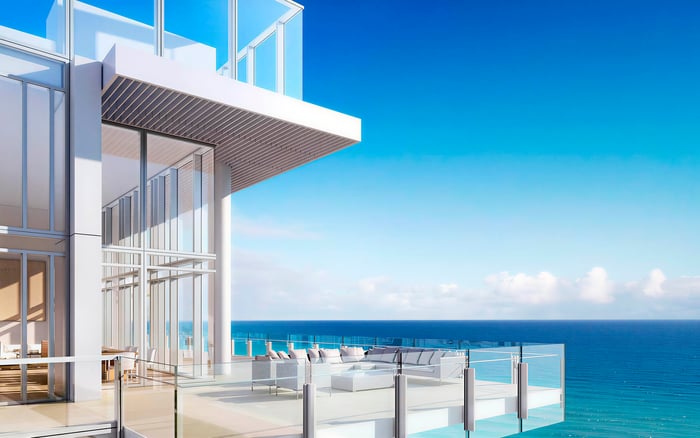
Fendi Château’s oceanfront setting adds another layer. A traveler can land in Miami and return not merely to a condominium, but to a resort-like coastal atmosphere without checking into a hotel. That distinction is central. Hotels are convenient, but they are shared and temporary. A residence is private, stable, and emotionally cumulative. Over time, that difference is what turns a purchase into a true base.
Privacy in South Florida luxury real estate is not only about gates, elevators, or square footage. It is about how a building feels on arrival, how crowded its common rhythm becomes, and whether the property supports discretion as part of daily life. Fendi Château’s boutique positioning is especially relevant here, since frequent travelers often value a less crowded arrival experience as much as amenity volume.
The same preference can be seen across Surfside’s newest luxury conversation. The Delmore Surfside reflects continuing demand for highly considered residential environments in the area, where scale, setting, and privacy are part of the appeal. Fendi Château’s distinction is the combination of Surfside calm, Fendi design identity, and a service-minded ownership model.
For the right buyer, this is the central point: the residence works because it reduces friction. It does not ask the owner to choose between permanence and ease. It creates a private coastal address that can be used intensely, left confidently, and reentered gracefully.
Fendi Château is particularly well suited to owners who already know South Florida and want a quieter Miami base rather than a high-traffic destination experience. It fits seasonal residents, international families, and domestic buyers who move regularly between business, leisure, and family commitments.
It may also appeal to buyers who are comparing branded residences across the region but want the intimacy of Surfside instead of the vertical energy of Brickell or the resort density of larger beachfront markets. The value proposition is practical as much as aesthetic: branded design, oceanfront permanence, service, and location all support the daily life of a frequent traveler.
In South Florida’s luxury market, the strongest residences are increasingly judged by how they function when the owner is not there. Fendi Château answers that question with a simple premise. It is a private home designed for an owner who is often away, but expects the return to feel effortless.
What makes Fendi Château Residences Surfside relevant to frequent travelers? It combines lock-and-leave ownership, oceanfront privacy, branded design, and a service-minded residential model that simplifies returns to Miami.
Is Fendi Château a hotel or a condominium? It is positioned as an oceanfront branded condominium, not a conventional hotel. Its appeal comes from pairing private-home permanence with hospitality-like service expectations.
Why does the Surfside location matter? Surfside offers a quieter coastal base while remaining connected to Bal Harbour, Miami Beach, and the broader Miami luxury corridor.
How does Bal Harbour factor into the lifestyle? Bal Harbour adds nearby luxury retail and dining, giving owners a refined lifestyle anchor close to the residence.
Is this more of a primary home or a second home? It can work for semi-primary and seasonal use because it offers a permanent private base with reduced maintenance burden compared with a standalone home.
What does branded design add for an owner? The Fendi identity gives globally mobile owners a familiar design and service language tied to an established luxury fashion house.
Why is privacy emphasized at Fendi Château? The boutique-residence positioning supports discretion and a less crowded arrival experience, which many frequent travelers value.
Does the oceanfront setting matter beyond views? Yes. It allows owners to return directly to a resort-like coastal environment without the temporary feel of a hotel stay.
Who is the most natural buyer for this residence? The natural buyer is someone who travels often, wants a refined Miami base, and prioritizes ease, privacy, and coastal permanence.
How should buyers compare it with other South Florida residences? Buyers should consider whether they value Surfside calm, branded identity, and lock-and-leave simplicity more than size, spectacle, or a busier setting.
If you'd like a private walkthrough and a curated shortlist, connect with MILLION.
If branded residences are on your mind — as a home or as an allocation — we would be glad to share what we are seeing, privately.
Begin a quiet conversation