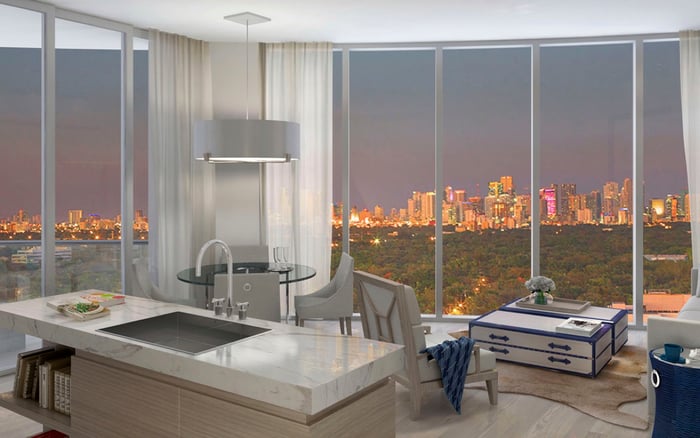
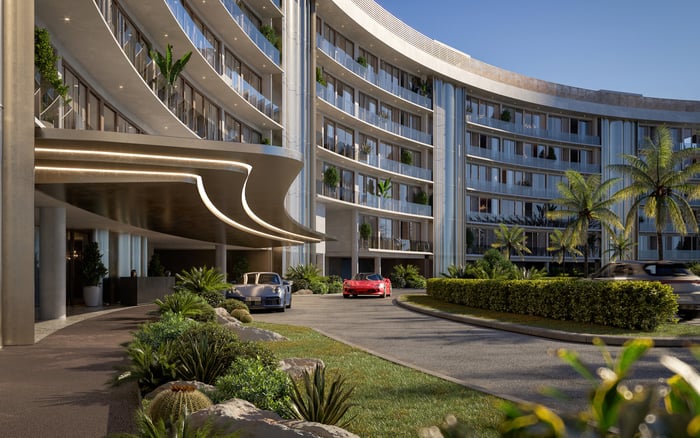
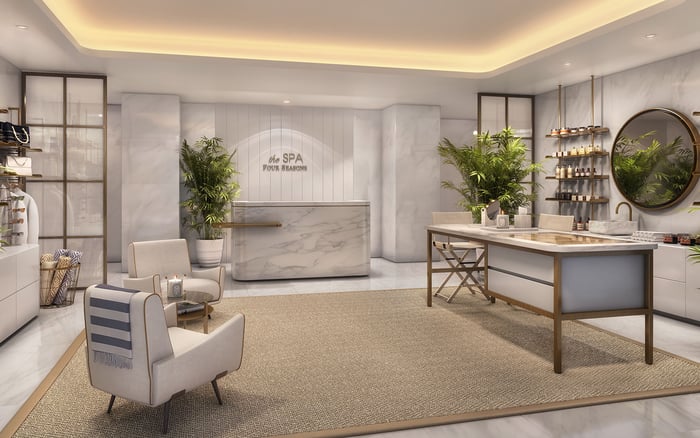
Park Grove Coconut Grove and The Well Coconut Grove show how the neighborhood is defining luxury through privacy, wellness, operational polish, greenery, and calm rather than spectacle.
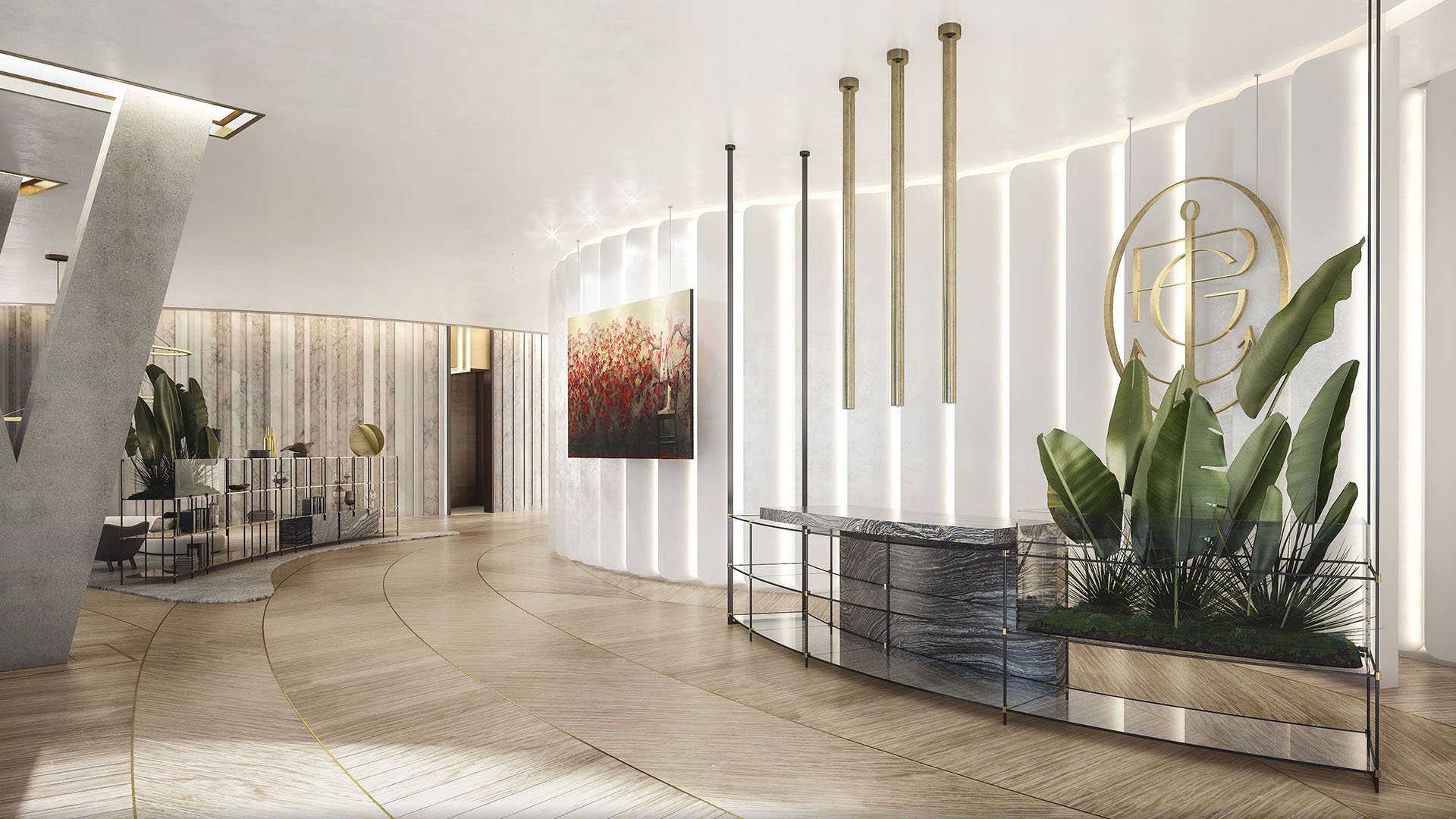
Coconut Grove has never needed Miami’s loudest luxury vocabulary. Its appeal is older, greener, and more residential: shaded streets, bay breezes, village-scale rhythm, and a clear preference for privacy over performance. That context is essential to understanding the rise of high-service living in the neighborhood. The most compelling residences are not simply adding amenities. They are refining the daily experience of being at home.
This is where Park Grove Coconut Grove and The Well Coconut Grove become useful case studies. One speaks through full-service architectural presence, campus-like polish, and a mature relationship to its bayfront garden setting. The other frames luxury through wellness, ritual, hospitality, and the idea of a retreat embedded in everyday life. Together, they point to a Coconut Grove buyer who values attention, calm, and usefulness more than amenity theater.
In many Miami luxury conversations, amenities become visual shorthand: expansive pool decks, dramatic lounges, photo-ready interiors, and resort cues designed to announce themselves immediately. Coconut Grove tends to reward a different posture. Here, the strongest luxury language often feels integrated rather than imposed.
High-service living does not mean less luxury. It often means a more serious form of it. The resident is not paying for a room they may photograph once. They are paying for privacy that works, staff and programming that feel composed, wellness infrastructure that can be used often, and spaces that make the home easier to inhabit. This is the difference between an amenity as stage set and an amenity as operating system.
That distinction also explains why Coconut Grove continues to support a refined residential profile. The neighborhood’s leafy, village-like identity asks buildings to fit into a slower, more grounded environment. Luxury can be elevated, but it should not feel as though it arrived from another city.
Park Grove is the more architecturally monumental of the two examples, but its relevance is not simply scale or presence. Its luxury model is rooted in restraint, service depth, privacy, and day-to-day livability. The project translates Coconut Grove’s bayfront and garden identity into a highly serviced residential campus, making the setting part of the experience rather than merely a view corridor.
That matters because the Grove buyer often seeks permanence. The most persuasive spaces are not always the loudest; they are the ones that hold their composure over years of use. Park Grove’s appeal sits in that register. Its service narrative is not about spectacle for visitors. It is about operational polish for residents.
In that sense, Park Grove reflects a mature Coconut Grove luxury principle: the building should make daily life feel handled, not staged. The grandeur is real, but it is filtered through privacy, greenery, and neighborhood fit. For buyers comparing Park Grove Coconut Grove with more entertainment-driven Miami residences, the difference is less about the quantity of amenities than about how those amenities behave.
The Well Coconut Grove approaches the same shift from another direction. It is a wellness-branded residential concept where health, ritual, and hospitality sit at the center of the home experience rather than appearing as secondary lifestyle features. Its appeal is tied to wellness-centric service, calm design cues, and curated routines more than oversized resort spectacle.
This is the “retreat at home” side of Coconut Grove luxury. The point is not simply to offer wellness as a room or a label. The concept gives wellness the role of primary narrative: the reason the residence feels distinct, and the reason its services are meant to be used repeatedly. In a market where many luxury buyers already have access to beautiful gyms, spas, and clubs, the more valuable proposition is integration. The home itself becomes the place where recovery, ritual, and hospitality converge.
The Well Coconut Grove also shows how Branded Residences can work in a quieter neighborhood when the brand identity is aligned with place. A globally recognized wellness idea feels more credible in Coconut Grove when it is translated through intimacy, calm, and daily usefulness rather than theatrical display.
The contrast is straightforward. Park Grove emphasizes full-service architectural luxury. The Well emphasizes branded wellness hospitality. Both reject the need for excess theater, and both are consistent with the Grove’s preference for calm, greenery, and residential discretion.
That is useful for buyers because it clarifies two distinct versions of high-service living. One buyer may be drawn to the permanence of an established, architecturally significant campus with deep residential programming. Another may prioritize wellness rituals and hospitality as the defining feature of home. In both cases, the luxury proposition is not about being seen. It is about being served intelligently.
This is also why other Coconut Grove offerings are often interpreted through a service lens. A buyer studying Four Seasons Residences Coconut Grove may naturally think about hospitality standards and residential discretion, while a buyer looking at Mr. C Tigertail Coconut Grove may consider how brand atmosphere, service, and neighborhood fit shape the lived experience. Even without making every building identical, the Grove encourages a more refined definition of amenity value.
Coconut Grove’s most interesting luxury evolution is not anti-amenity. It is anti-excess. The neighborhood is proving that the next stage of Miami luxury can be quieter, more curated, and more operationally sophisticated. From a Design & Architecture perspective, this is a shift away from the lobby as spectacle and toward the residence as a complete private environment.
For Lifestyle buyers, that changes the decision-making process. The question becomes: which building will support my routines with the least friction? Which one will protect privacy without feeling cold? Which one understands that wellness, service, gardens, and calm are not decorative extras, but the substance of the luxury experience?
Park Grove and The Well answer those questions differently, but they arrive at the same conclusion. Coconut Grove’s strongest residential projects do not need to perform luxury loudly. They can make it felt through precision, atmosphere, and the rare comfort of being well looked after.
Why are Park Grove and The Well Coconut Grove often compared? They both show how Coconut Grove luxury is moving toward service, privacy, wellness, and calm rather than visual spectacle.
What defines Park Grove’s luxury approach? Park Grove is best understood as full-service architectural luxury, with a bayfront garden identity and strong daily livability.
What defines The Well Coconut Grove’s appeal? The Well Coconut Grove centers wellness hospitality, daily rituals, and a retreat-at-home atmosphere as its primary amenity story.
Is Coconut Grove luxury less amenity-driven than other Miami areas? Not necessarily less amenity-driven, but more selective. The best amenities feel useful, private, and integrated into daily life.
What does post-theatrical luxury mean? It means quieter lobbies, curated services, privacy, wellness, and practical amenities taking priority over Instagram-first design.
Which project is more architecturally monumental? Park Grove can be read as the more architecturally monumental case study, with service and campus-style livability at its core.
Which project is more wellness-focused? The Well Coconut Grove is the more wellness-focused example, with health, rituals, and hospitality shaping the residential concept.
Why does Coconut Grove favor quieter luxury? The neighborhood’s leafy streets, bayfront identity, and village-like character reward residences that feel calm and contextually grounded.
Are Branded Residences a good fit for Coconut Grove? They can be, when the brand supports intimacy, service, and neighborhood character rather than imposing a louder resort model.
What should buyers focus on when comparing Grove residences? Buyers should look beyond visual amenities and evaluate privacy, service quality, wellness integration, and how naturally the building fits the Grove.
For a discreet conversation and a curated building-by-building shortlist, connect with MILLION.
If branded residences are on your mind — as a home or as an allocation — we would be glad to share what we are seeing, privately.
Begin a quiet conversation