A reported $173.4 million two-home buying move by Google co-founder Larry Page highlights how today’s ultra-wealthy are treating South Florida real estate as a portfolio: privacy, control, and optionality across multiple assets. From Coconut Grove acreage to Miami Beach’s branded residences, the market is being shaped by compound strategies, residency timing, and a rising premium on security and adjacency.
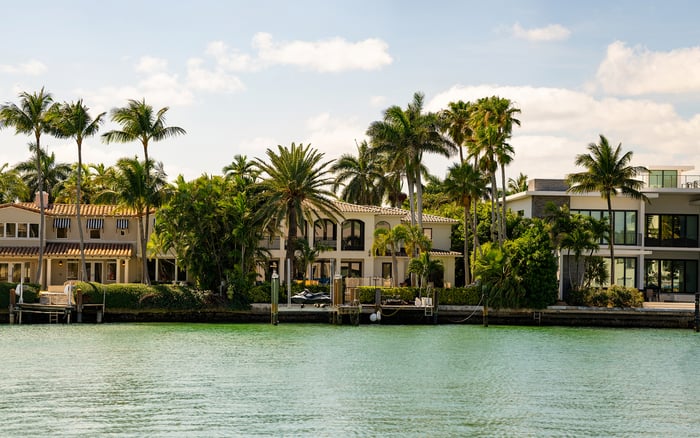
In late 2025 and early 2026, Google co-founder Larry Page was widely reported to have purchased two high-end homes in Coconut Grove for about $173.4 million. The reported breakdown is revealing: roughly $101.5 million for the “Banyan Ridge” estate, described as a sprawling, compound-style property on about 4.5 acres, and about $71.9 million for “Casa Bahia,” a modern waterfront home built in 2015 with seven bedrooms and eight bathrooms.
For South Florida, the story is not only the price point. It is the structure of the move. Buying two properties in the same enclave reads less like a single trophy closing and more like a deliberate plan to control lifestyle variables. In today’s ultra-prime market, sophisticated buyers are building flexibility: one property for scale and separation, another for waterfront access and day-to-day use, or a second residence that functions as an expansion option.
That approach is increasingly visible across the region’s most coveted neighborhoods, from Coconut Grove to Miami Beach. It also reflects broader deal flow that suggests South Florida is no longer a seasonal luxury market. It has become a year-round center of global second-home ownership.
Traditional luxury metrics still anchor value: frontage, views, architecture, ceiling height, provenance. At the top of the market, however, an additional premium has become a clear valuation principle: control of the perimeter.
Business coverage of ultra-wealthy buying patterns has emphasized that billionaires often assemble “compounds” by acquiring neighboring properties to increase privacy and security control, while also signaling status in a way a single mansion cannot. The logic is less about excess and more about risk management. Fewer sightlines. More control over access points. Less near-neighbor uncertainty. More future design flexibility.
Jeff Bezos’ reported buying on Indian Creek is often described as a compound strategy, with multiple purchases totaling about $237 million across 2023 and 2024. A nearby 1.8-acre waterfront lot selling for $105 million in June 2025 reinforced the idea that adjacent parcels can trade like strategic options, not simply land.
This is not limited to barrier-island addresses. In Delray Beach’s Stone Creek Ranch, high-profile buyers have been reported to acquire neighboring properties as a privacy buffer even away from oceanfront. The common thread is consistent: high security, controlled access, and the ability to curate an environment that feels predictable.
For buyers evaluating South Florida at the ultra-premium level, the practical takeaway is that “one perfect home” is no longer the only endgame. A two-home plan can, in some cases, deliver a better lived experience than one mega-residence, especially when it preserves optionality.
Another theme running through recent coverage is timing. Policymakers in California have discussed wealth-tax concepts tied to residency timing, and a proposed “California 2026 Billionaire Tax Act” has been described as a one-time 5 percent tax on worldwide net worth for individuals worth more than $1 billion who are California residents as of Jan. 1, 2026. The proposal is not enacted law, but the discussion itself can influence behavior.
Fortune reported that Page’s Florida move and Miami-area buying aligns with a broader billionaire playbook of shifting domicile amid potential wealth-tax exposure. Fox Business similarly reported that wealthy Californians have made strategic moves involving residency and business planning as wealth-tax discussions intensify.
In luxury real estate, the point is not political speculation. It is how risk is priced. When tax policy becomes a variable, real estate becomes both shelter and strategy. South Florida benefits because its lifestyle proposition is already world-class, and Florida’s tax environment is part of the decision framework for many buyers.
For the market, the downstream effect is often speed. Buyers acting with calendar sensitivity tend to be decisive, cash-ready, and less patient with extended negotiation theater. That decisiveness supports pricing, particularly for assets that deliver security, privacy, and a strong resale narrative.
South Florida’s ultra-luxury market is no longer defined by a handful of isolated record sales. It is defined by depth.
A PR Newswire release reported that South Florida logged 361 home sales at $10 million-plus in 2025, the second-highest annual count on record behind 2021. Miami Realtors also reported that Miami-Dade single-family sales over $3,000 per square foot rose sharply in 2025, reflecting how decisively the upper tier has repriced.
Record-setting trades still matter because they anchor expectations. Realtor.com reported that Russian billionaire Vladislav Doronin sold a Star Island estate for $120 million, a market-defining deal at the time.
Marquee buyers also influence liquidity and psychology. Realtor.com has detailed hedge-fund billionaire Ken Griffin’s Florida buying as a market-moving force in ultra-luxury pricing and deal volume. Fox Business also reported Griffin expanded his Miami footprint with a roughly $180 million Wynwood office-building acquisition, illustrating how the highest-net-worth relocations often bring both personal and institutional capital.
The practical implication is a new baseline: if a property offers rare attributes that cannot be replicated quickly, it can sustain pricing power even as broader markets normalize.
Coconut Grove’s appeal to ultra-wealthy buyers is its contradiction. It is connected and close-in, yet it can still feel insulated. That is why a reported 4.5-acre, compound-style estate can exist there at a scale that reads like a private resort.
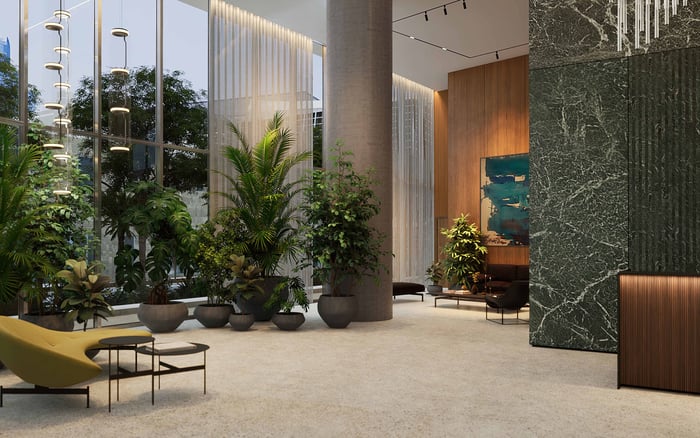
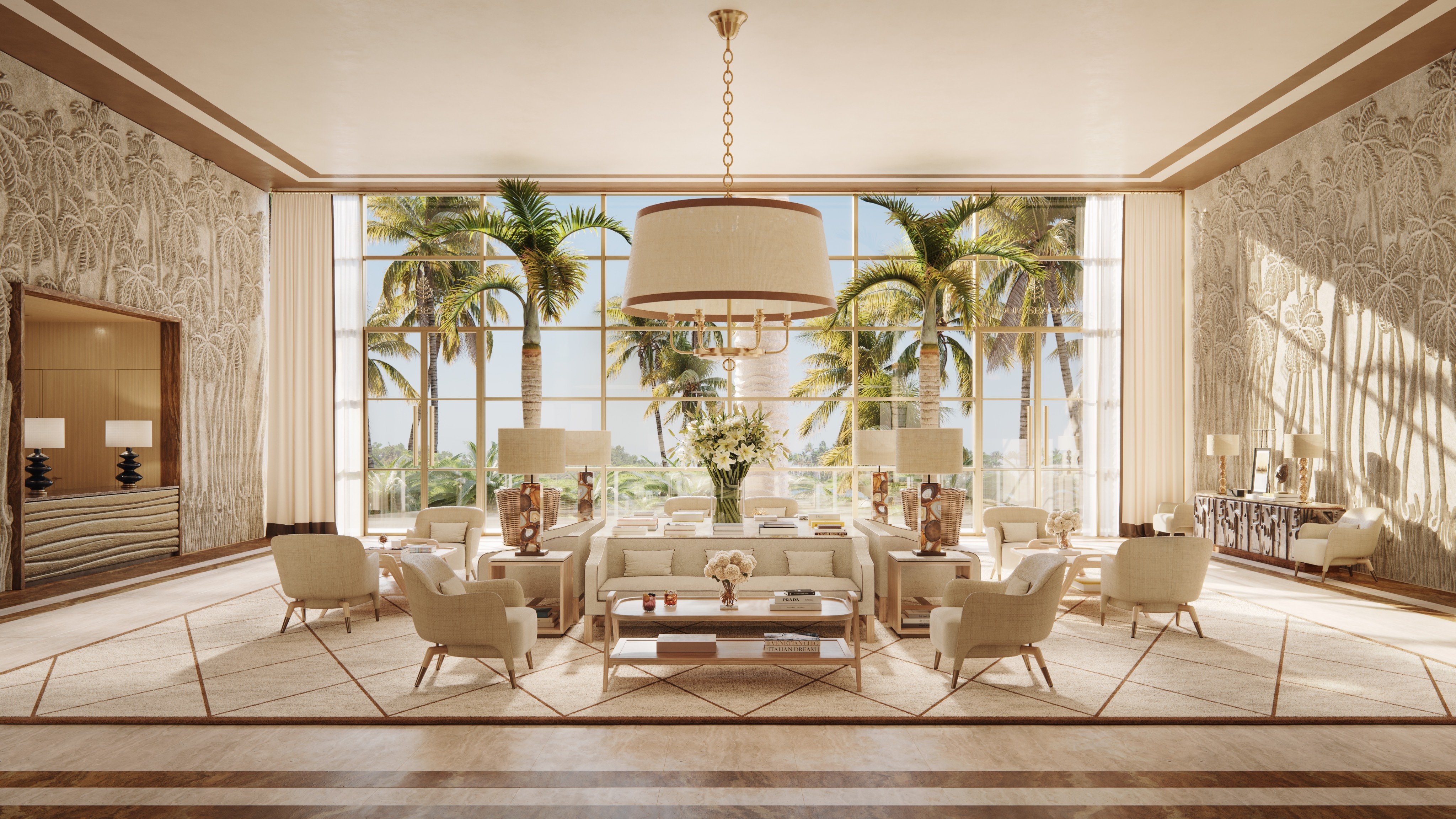
For buyers who want Grove energy without operating a sprawling single-family estate, the condo market has matured into a serious luxury alternative. Buildings with strong service DNA can deliver lock-and-leave ease, discreet arrival sequences, and consistent management standards. Two options aligned with today’s buyer profile are Four Seasons Residences Coconut Grove and Mr. C Tigertail Coconut Grove, both positioned for owners who prioritize hospitality-grade operations.
The compound conversation also changes how buyers shop in Coconut Grove. Instead of asking only, “Is this the best house?” many now ask, “Can this be the nucleus?” That shift favors properties with expansion potential, long-term neighbor stability, and site layouts that support layered security and controlled circulation.
Miami Beach expresses the same impulse toward control, often in a vertical format.
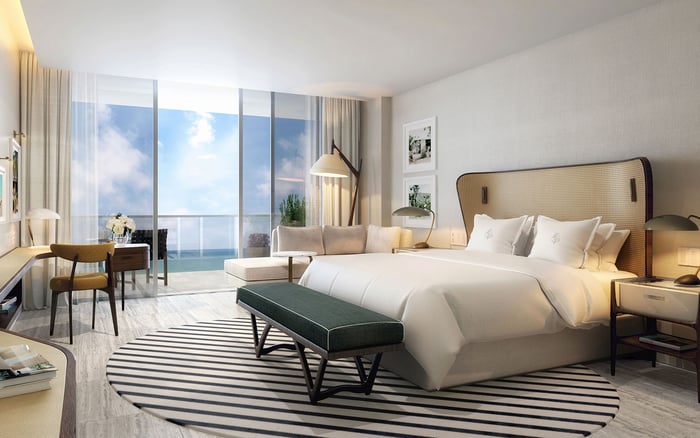
In a market where privacy is paramount, branded residential offerings can operate like a lifestyle firewall. They standardize service, manage access, and reduce the exposure that can come with a standalone home. For buyers who value a controlled environment, branded condos can be a sophisticated alternative to a multi-home sprawl.
In Miami Beach, that turnkey discretion is part of the appeal at Casa Cipriani Miami Beach, where the brand signals a specific approach to service and social privacy. Similarly, Setai Residences Miami Beach has long been associated with a polished, international owner profile, appealing to those who want a second home that feels fully managed.
For buyers seeking a Miami Beach address anchored by a legacy hospitality name, The Ritz-Carlton Residences® Miami Beach speaks to a preference for predictable service standards and understated entry points.
The throughline matches the compound model: minimize friction, maximize control.
At the highest end, the decision is rarely about square footage alone. Buyers are optimizing a personal operating system.
Privacy as a design brief: Sightlines, setbacks, landscaping, and arrival sequences often matter as much as finishes. When privacy is essential, a gated-community structure or managed-access model can be more valuable than a larger home with uncontrolled exposure.
Security layered with livability: True security is not only cameras and guards. It is redundancy, discretion, and an execution plan that does not interfere with daily life.
Portfolio resilience: Multi-property strategies can create resilience. A primary estate can be paired with a nearby managed residence for travel-heavy schedules, guest overflow, or continuity during renovations.
Future optionality: Buyers planning for a compound often care about adjacency and zoning flexibility, but also about market optics. A home that can be held, combined, or exited quietly without stigma can carry a premium.
This is why recent ultra-prime purchases resonate. They reflect a buyer class treating South Florida real estate less like a single statement and more like a long-duration allocation.
Why would an ultra-wealthy buyer purchase two nearby homes? To increase privacy, control access, and create flexibility for guests, work, and future redevelopment.
What is meant by a “compound strategy” in real estate? It typically refers to buying multiple adjacent or nearby properties and using them as one private environment.
Is the California billionaire wealth tax currently law? It has been discussed and proposed in various forms, but the widely reported 2026 concept is not enacted law.
Why does residency timing matter in luxury buying decisions? Some proposals and planning strategies can depend on where a person is domiciled by specific dates.
Are compounds only an oceanfront phenomenon? No. They also appear in inland luxury enclaves where security, acreage, and privacy are prioritized.
What does Miami’s second-home leadership signal to buyers? It suggests durable global demand, which can support liquidity and long-term pricing for prime assets.
What does $10 million-plus sales volume tell us about the market? High transaction counts indicate depth, not just isolated record deals.
How do branded residences compete with single-family estates? They offer managed privacy, standardized service, and lock-and-leave convenience for frequent travelers.
What should buyers prioritize if they want maximum privacy? Adjacency control, layered security planning, and predictable neighbor environments, often supported by a gated-community or managed building.
How should a buyer think about a second home in South Florida? As part of a lifestyle system that prioritizes access, privacy, service levels, and a future resale narrative.
Explore South Florida’s most coveted residences with MILLION Luxury.
If branded residences are on your mind — as a home or as an allocation — we would be glad to share what we are seeing, privately.
Begin a quiet conversation