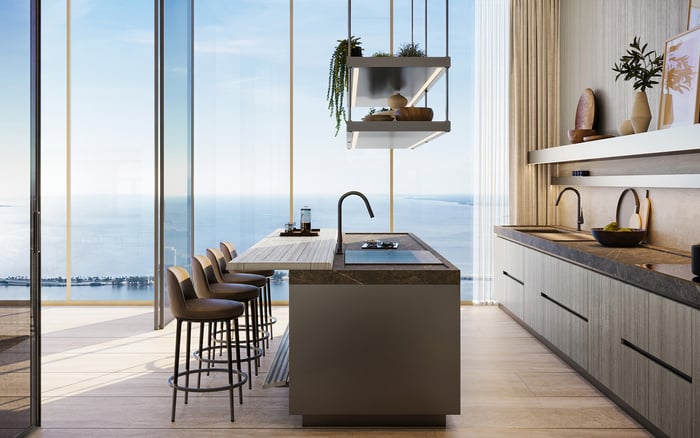
In South Florida’s ultra-premium market, staging is often less about furniture and more about storytelling. Done well, it highlights proportion, light, and flow, helping buyers visualize a lifestyle at the top of the market. But even impeccable presentation can distract from practical questions: moisture, settlement, mechanical age, smart-home complexity, disclosures, and the true neighborhood experience. This MILLION Luxury editorial breaks down the “hero” spaces most staging targets, the subtle red flags that deserve a second look, and a tour-day approach that keeps your attention on systems, documents, and due diligence, not just the mood.

Luxury staging works best as a quiet edit. It reduces visual noise, clarifies scale, and frames a lifestyle story that helps a buyer imagine daily life. In South Florida, where many high-end properties present well on paper, the difference between “good” and “unforgettable” is often the ease a listing communicates: light, privacy, and a sense of ritual.
That is why staging deserves respect, not suspicion. It is marketing craftsmanship meant to make a home more legible to the market. The real risk is attention. When lighting is dialed in and the furnishings read like a private club, it becomes easier to overlook what will matter after closing: a persistent odor near a vanity, a door that catches, an incomplete disclosure answer, or a smart-home system that only the current owner can reliably operate.
A disciplined tour lets you enjoy the beauty while staying anchored to evidence.
Luxury staging typically concentrates time and budget where photos land and perceptions form. Knowing the “hero spaces” helps you know where to slow down, and where to look past the mood.
Primary suite and bath: This is where calm is sold. It is also where moisture, ventilation, and plumbing realities often surface.
Living and dining: These rooms communicate volume and hosting potential. They are also the easiest places to soften imperfections behind art, consoles, or oversized accessories.
Kitchen: The kitchen is staged as performance theater: clear counters, premium appliances, effortless service. It is also the most practical room to verify basics like water pressure and under-sink condition.
Outdoor living: In South Florida, outdoor areas are functional rooms, not “extras.” They carry real maintenance requirements, especially with wind, salt air, and sun exposure.
If a home feels flawless, ask yourself whether it is flawless because of design and condition, or because you have mainly seen what staging wants you to remember.
The most valuable tour-day skill is separating aesthetics from signals. A staged home can photograph perfectly while still hinting at issues that deserve professional attention.
Start with your senses. Strong fragrances, candles, and aggressive diffusers may be ambiance, but they can also obscure odors associated with pets, smoke, or moisture. If the scent feels performative, look for supporting evidence: under sinks, around toilets, inside utility closets, and near water-heating equipment.
Moisture tends to reveal itself. Musty smells in bathrooms, soft spots, or visible staining on ceilings and walls are classic indicators of leaks or intrusion that styling cannot correct. Even if surfaces are freshly finished, staining patterns or repeated paint patches can suggest a history worth verifying.
Then watch for “clutter camouflage.” Heavy décor can make it harder to evaluate walls, baseboards, flooring, and finish quality. Overstaging can also distort proportion, making rooms feel smaller or more enclosed than they are.
Finally, pay attention to how the home moves. Doors or windows that stick, refuse to latch, or sit out of square can be a practical sign of alignment issues that merit deeper evaluation. One sticky door is not a diagnosis. It is a prompt to ask questions and confirm.
A luxury showing can feel relaxed, but your checklist should stay precise. Many buyers avoid testing basics because the experience feels “hosted.” You can be discreet and still be thorough.
Run water. Turn on faucets to gauge pressure and observe drainage. Flush toilets. Note wobble, slow refills, or unexpected sounds.
Flip switches and scan lighting. Confirm fixtures respond without flicker and that lighting scenes work as expected. If the home is staged for evening mood even during the day, ask to see brighter settings.
Use exhaust fans. In bathrooms and laundry areas, small fans have big implications for moisture management.
Look where staging rarely goes. Under-sink cabinets, behind toilet bases, utility rooms, and mechanical closets rarely appear in listing photos, yet they often provide the clearest signals.
In a market that values discretion, this is the buyer’s version of discretion: quiet verification.
A staged showing is a performance. Disclosures and due diligence are the contract reality.
Read seller disclosures as risk language, not prose. Red flags include vague answers, frequent “unknown” responses, or inconsistencies with what you observed during the tour. Even when nothing is wrong, ambiguity should be clarified in writing.
Use the due diligence period to verify condition and documents before closing. This window exists so buyers are not swayed by presentation alone. In luxury transactions, where systems, custom construction details, and specialty amenities can add complexity, a professional inspection is protection, not a formality.
Keep appraisal protection separate in your mind. An appraisal contingency addresses valuation risk if a lender’s opinion of value comes in low. It is not a substitute for inspection or thorough due diligence. Luxury appraisals rely heavily on comparable sales and market context; staging can influence perception but cannot replace objective valuation.
Smart-home technology increasingly shapes South Florida luxury, and staging can make it look effortless: lights fade, shades glide, music follows.
Ownership is more practical. The risk is rarely that smart features exist; it is fragmentation. Systems can be spread across multiple apps, tied to outdated hubs, dependent on unreliable networks, or configured in a way only one technician understands. Smart-home living can also require ongoing maintenance, software updates, and troubleshooting.
If automation is part of the home’s “wow factor,” ask what supports it: documentation, service providers, warranties, and a clear path for you to operate it on day one. Treat smart-home capability the way you would treat a pool, spa, or multi-zone HVAC: desirable, and best approached with a plan.
Staging controls what happens inside the residence. It cannot control traffic rhythms, ambient noise, light patterns, and how the neighborhood feels at different hours.
If possible, return at a different time of day. Morning calm and late-afternoon congestion can be two different realities. Notice how sunlight travels through primary rooms, how street noise carries, and how arriving and departing feels. In a second-home purchase, this matters as much as finishes because it influences whether the property feels restorative or demanding.
In South Florida luxury, “home” is often the combination of a private interior and a managed ecosystem. As you tour, keep building-level questions in view: service standards, operational transparency, and how much of your lifestyle depends on the property’s management.
In Miami Beach, staging may emphasize indoor-outdoor flow and a resort cadence, but your due diligence should verify what makes daily life effortless. If you are comparing branded or hospitality-adjacent environments, notice how the lifestyle is positioned in spaces like Faena House Miami Beach and Setai Residences Miami Beach: the promise is calm, service, and design continuity. Your job is to confirm the practical layer that supports that promise.
For buyers drawn to an oceanfront, residential-first feel, 57 Ocean Miami Beach is a useful mental model for evaluating what you are actually buying: not just a view, but resilience, maintenance expectations, and long-term livability.
If your preference leans toward discreet, full-service residential living, compare a listing’s staged “hotel polish” with the operational reality of properties such as The Ritz-Carlton Residences® Miami Beach or Casa Cipriani Miami Beach. Even when interiors are staged to perfection, the ownership experience often hinges on systems, service, and governance.
Across Bal-harbour and Brickell, the principle is the same: let staging introduce the lifestyle, then confirm the infrastructure that makes that lifestyle sustainable.
What is the main purpose of luxury staging? Luxury staging builds a lifestyle narrative that helps buyers visualize living in the home, often improving marketability at the top end.
Which rooms matter most in luxury staging? Primary suite, living areas, kitchen, dining, and outdoor living typically carry the most weight for perception and marketing photography.
Can staging hide defects? Staging can make defects harder to notice by adding visual clutter or placing furniture and décor where you would otherwise inspect surfaces.
What smells should concern me during a tour? Overly strong fragrances can mask underlying odors such as smoke, pet smells, or moisture, so treat them as a cue to look closer.
What are common signs of moisture issues? Musty odors and staining on ceilings or walls can indicate leaks or intrusion that should be investigated.
Why do sticking doors or windows matter? They can signal alignment issues that may warrant deeper evaluation by a professional.
What should I test during a showing? Turn on faucets, check water pressure, flush toilets, run exhaust fans, and flip light switches to verify fundamentals beyond décor.
Where should I look that most buyers miss? Under sinks, around toilets, in utility rooms, and near water-heating equipment are often the most revealing areas.
How should I approach seller disclosures? Read disclosures critically and follow up on vague, “unknown,” or inconsistent answers with targeted questions during due diligence.
Does an appraisal replace an inspection? No. Appraisals focus on valuation using comparable sales and market context; inspections evaluate condition and defects.
For discreet guidance from first tour to final walk-through, connect with MILLION Luxury.
If branded residences are on your mind — as a home or as an allocation — we would be glad to share what we are seeing, privately.
Begin a quiet conversation