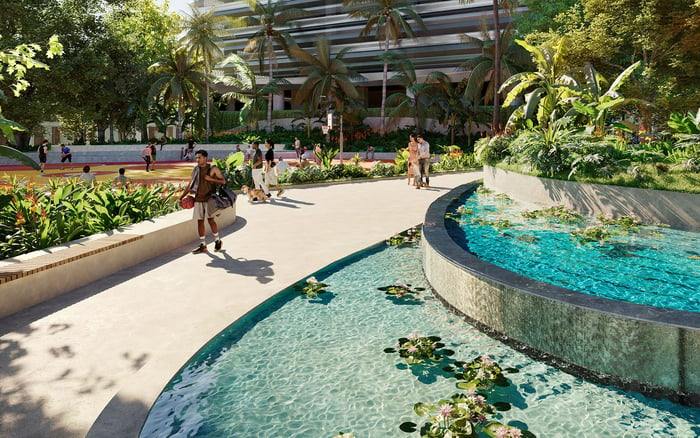
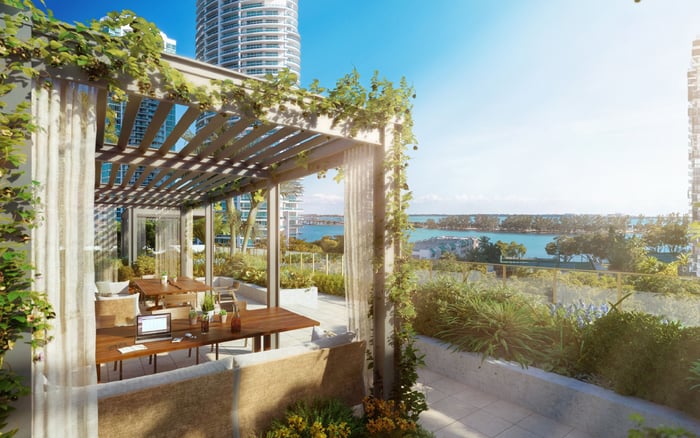
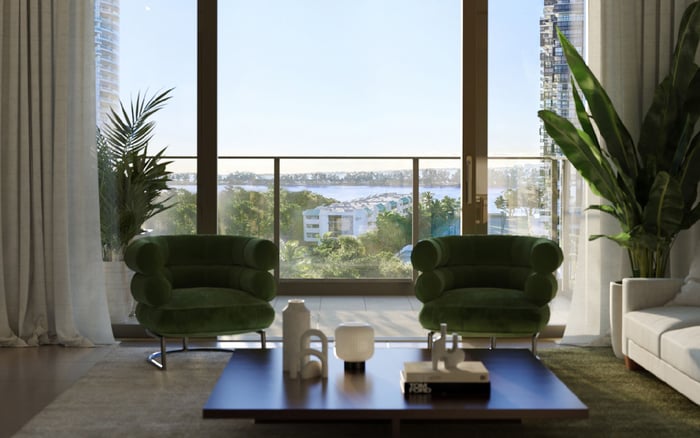
In Brickell, luxury is often evaluated in square footage, views, and finishes. But day-to-day ease is just as revealing: where you park, how you store, and how seamlessly guests arrive. For buyers weighing Colette Residences and Mercedes-Benz Places, these operational details can meaningfully shape livability, hosting, and even resale appeal. Because project-specific rules evolve from pre-construction through turnover, the right comparison is less about promises and more about how to interrogate the building’s logistics. This guide frames the questions that matter most in Brickell and outlines the decision points MILLION Luxury clients typically prioritize when parking, storage, and guest access are non-negotiable.
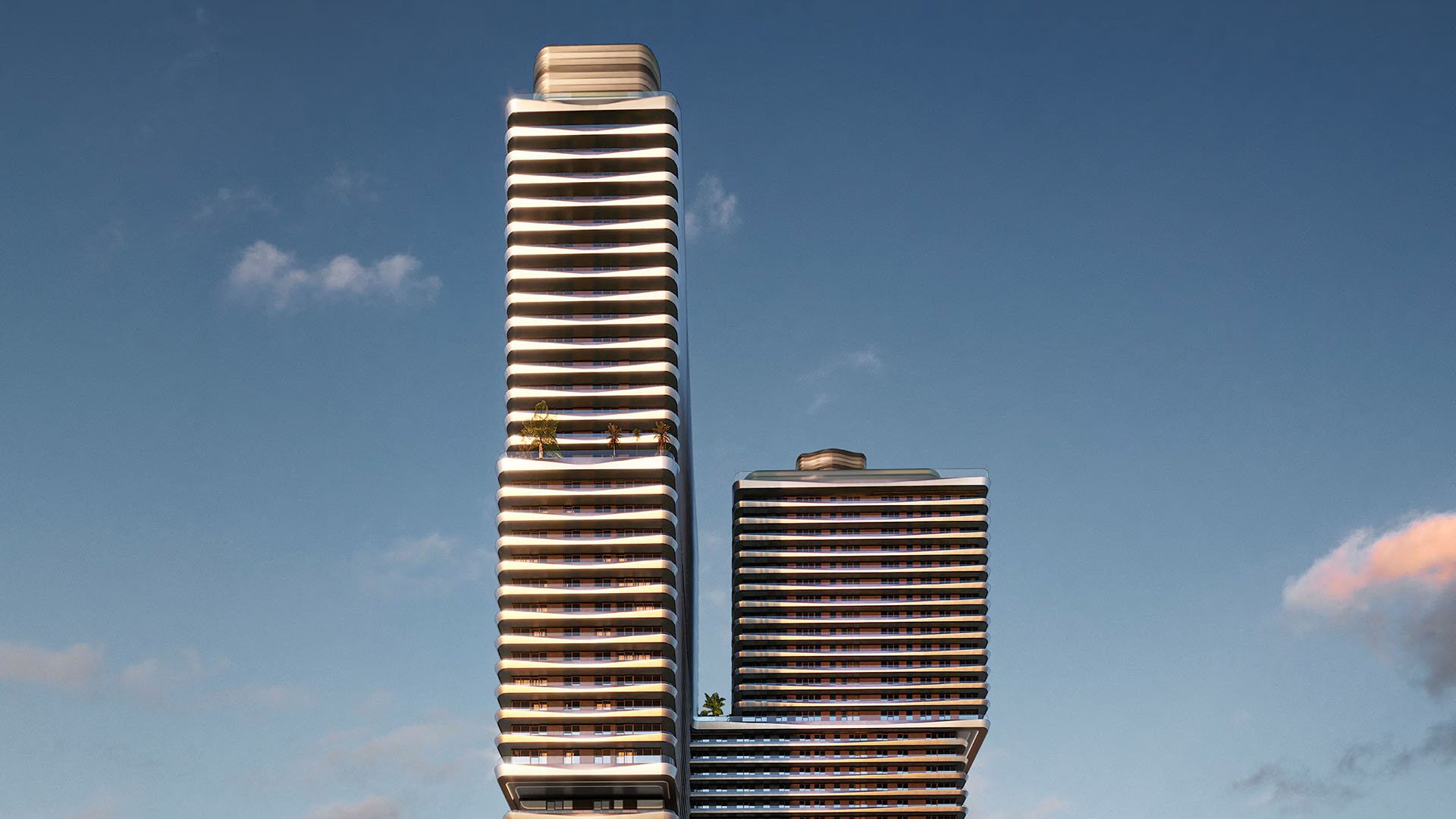
Brickell’s ultra-premium market is no longer defined only by finishes or branding. At the top end, frictionless living is operational: a composed arrival, predictable parking, secure storage, and guest entry that feels hosted rather than policed. These are the details you experience every morning, every grocery run, and every time friends arrive for dinner.
For buyers comparing Colette Residences Brickell and Mercedes-Benz Places Miami, the smartest discussion is a set of verifiable building mechanics. Policies can shift as a project moves from sales to completion, and even the best amenity deck can’t offset a daily bottleneck at the porte-cochère.
Brickell also brings unique pressures that elevate these topics: valet demand spikes during events, ride-share traffic competes with resident arrivals, and package volume is constant. When you evaluate either tower, treat parking, storage, and guest access as one system-not three separate checkboxes.
In a perfect world, every building would publish a final, resident-ready operating manual. In reality, the most effective approach is to compare the two projects using the same dossier of questions, then request answers in writing.
Start with these three principles:
The building either separates flows (resident, guest, service, delivery) or forces them to share space. You feel the difference in noise, privacy, and timing.
Whether it’s a private cage, a resident closet, or an assigned area, the value is defined by policy: access hours, permitted items, insurance responsibility, and whether the space is transferable.
The strongest luxury buildings welcome invited guests while staying firm with non-resident traffic.
This framework is equally relevant if you are also cross-shopping other Brickell options such as 2200 Brickell or a more established waterfront profile like Una Residences Brickell. In Brickell, small operational differences compound quickly.
Parking can function as a luxury feature-or a daily tax. For Colette and Mercedes-Benz Places, confirm the structure, not just the headline.
Confirm whether your space is deeded (a property interest), assigned (managed by the association), or controlled by a valet/garage operator. Deeded spaces can provide long-term clarity, while assigned spaces may offer flexibility-with potential exposure to future policy changes.
Clarify whether parking rights are tied to unit size, bedroom count, or a purchase add-on. If you plan to acquire an additional space, confirm whether it’s permitted, how it’s priced, and whether it can be sold later.
Many Brickell towers run smoothly at midday and tighten up at 7:30 p.m. A real comparison requires clarity on:
Whether resident self-park exists alongside valet
Whether guests can valet without entering resident zones
How ride-share drop-off is separated from valet queues
If a building is valet-reliant, the experience is largely determined by staffing depth, staging area, and the number of choke points between street and garage.
Luxury ownership increasingly includes EVs, larger SUVs, and occasional low-clearance vehicles. Confirm the EV charging approach (dedicated vs shared), any restrictions on aftermarket chargers, and whether the garage geometry realistically supports your vehicle profile. Also ask about detailing rules, idling, and overnight guest vehicle policies.
Even if you don’t drive daily, a building that treats cars as an afterthought can quietly reduce enjoyment-especially for residents splitting time between properties.
Storage isn’t glamorous, but it’s decisive. Brickell residents often need space for seasonal items, luggage, sports equipment, and owner-only personal effects.
When a sales presentation says “storage available,” it can mean anything from a dedicated cage to a limited set of rentable lockers. For either project, verify:
Whether storage is included with the residence or optional
Whether it is deeded, assigned, or rented monthly
Where it is located (same floor, garage level, separate storage room)
Access controls (key fob, concierge scheduling, camera coverage)
A well-run building treats storage like an extension of the residence: clean, monitored, and easy to reach without navigating back-of-house corridors.
If you travel frequently, package handling effectively becomes part of your personal infrastructure. Ask how deliveries are received, logged, and secured-and whether there is refrigerated handling for groceries. The day-to-day experience changes dramatically depending on whether packages are managed by concierge, a dedicated package room, or a third-party locker system.
Also confirm policies for oversized deliveries, furniture staging, and the permissible pickup window. In a premium building, predictability isn’t a bonus-it’s the expectation.
If you keep bikes, paddleboards, or specialty equipment, ask about designated areas and whether items are allowed in unit corridors or elevators. Rules around what can ride in which elevator can become a constant friction point if they don’t match your lifestyle.
Guest access should be effortless for friends and unmistakably controlled for strangers. In Brickell, a tower that can’t clearly distinguish between a guest, a delivery, and a transient visitor will eventually feel less private.
High-luxury living begins at the door. Evaluate the building’s approach to:
Guest check-in procedures
Whether guests are announced or simply allowed upstairs
How visitor credentials are issued and time-limited
How the building handles repeat guests and household staff
The strongest systems feel like a discreet hotel: attentive, not intrusive.
Elevator planning can make or break privacy. Confirm whether there are distinct service elevators and whether move-ins, vendors, and large deliveries are kept out of the resident elevator core.
If you entertain often, ask how guests are guided from curb to lobby to elevator without wandering. A clean guest path protects resident calm and reduces security risk.
Guest parking should be a designed feature, not an improvisation. Confirm:
Whether guest parking is available, and if it is valet-only
Whether there are time limits or event restrictions
Whether residents can pre-register guests
This is where Brickell’s lifestyle becomes very real. If you host often, a building that manages guests gracefully will feel larger than its square footage.
Brickell is dense, vertical, and active. “Good logistics” means the building anticipates congestion. Practically, that looks like curb management that prevents backups, a lobby that can process visitors without drama, and a back-of-house that keeps deliveries out of sight.
It also means policies align with luxury ownership patterns: second-home residents who arrive intermittently, buyers who keep vehicles on-site for convenience, and households that rely on vendors and staff.
If you want to compare the general Brickell experience across different product types, it can be useful to contrast newer concepts like ORA by Casa Tua Brickell with more residence-first towers. The goal isn’t to declare one “best,” but to identify which operating model matches your life.
When buyers are deciding between Colette and Mercedes-Benz Places, these are the questions that surface in serious negotiations. Use them as a checklist-and insist on clarity in writing.
How many spaces are allocated per residence, and is it guaranteed?
Are spaces deeded, assigned, or valet-managed?
Is there resident self-park, or is valet mandatory?
What are the EV charging provisions and upgrade rules?
Can you obtain additional spaces, and can they be transferred later?
Is private storage included, optional, or limited-inventory?
Is the storage deeded, assigned, or rented?
Are there restrictions on what can be stored?
How are packages managed, and is there refrigerated capacity?
What are the rules for oversized deliveries and vendor access?
What is the guest check-in process and pre-registration capability?
How are ride-shares handled at the curb?
What are the guest parking rules and costs?
Are service and resident elevators separated?
How are vendors and household staff credentialed?
In ultra-premium Brickell, these aren’t minor details. They’re the operating system of the residence.
Without speculating on final policies, you can still decide based on your personal hierarchy.
Choose the project whose operating approach best matches your non-negotiables:
If you value control and clarity, prioritize deeded or clearly assigned parking rights, defined storage, and a guest process that is consistent.
If you value hospitality and hosting, prioritize a guest arrival that feels seamless, plus adequate valet depth and staging.
If you value privacy, prioritize separation: distinct service flow, controlled elevator access, and a lobby protocol that protects residents while staying gracious.
A final note: these mechanics also influence resale. A beautifully designed unit in a building with chronic arrival friction or insufficient storage can meet more resistance at the top of the market.
Is parking usually included in Brickell luxury new construction? Often, but the number of spaces-and whether they are deeded or assigned-varies by building and residence type.
What’s the most important parking detail to confirm in writing? Whether your parking is deeded, assigned, or valet-controlled, plus any guaranteed space count tied to your unit.
Do these buildings typically offer guest parking? Many do via valet, but availability, limits, and event-night constraints should be confirmed for your lifestyle.
How should I evaluate valet quality before a building opens? Prioritize designed curb flow, staging capacity, and the written operating plan-rather than marketing language.
Is private storage standard in Brickell towers? It’s not universal; storage can be included, optional, or limited, and the structure matters as much as the size.
What are common restrictions for storage lockers? Buildings often restrict hazardous materials and may limit bulky items; always confirm permitted contents and access hours.
How do luxury buildings handle package deliveries? Typically through concierge or a secured package room system, with policies around logging, holding time, and oversized items.
Can I pre-register guests for easier entry? Many luxury buildings offer some form of guest management, but the exact workflow and tech varies.
Do service elevators really matter for daily living? Yes. Separating vendors and deliveries from resident elevators supports privacy, cleanliness, and quiet.
What should I prioritize if I’m a second-home owner? Prioritize secure package handling, predictable guest access for visitors, and parking rules that suit infrequent usage.
For a discreet conversation and a curated building-by-building shortlist, connect with MILLION Luxury.
If branded residences are on your mind — as a home or as an allocation — we would be glad to share what we are seeing, privately.
Begin a quiet conversation