A buyer-oriented framework for assessing how waterfront setbacks, design controls, and future development patterns can influence long-term view quality along Flagler Drive in West Palm Beach.
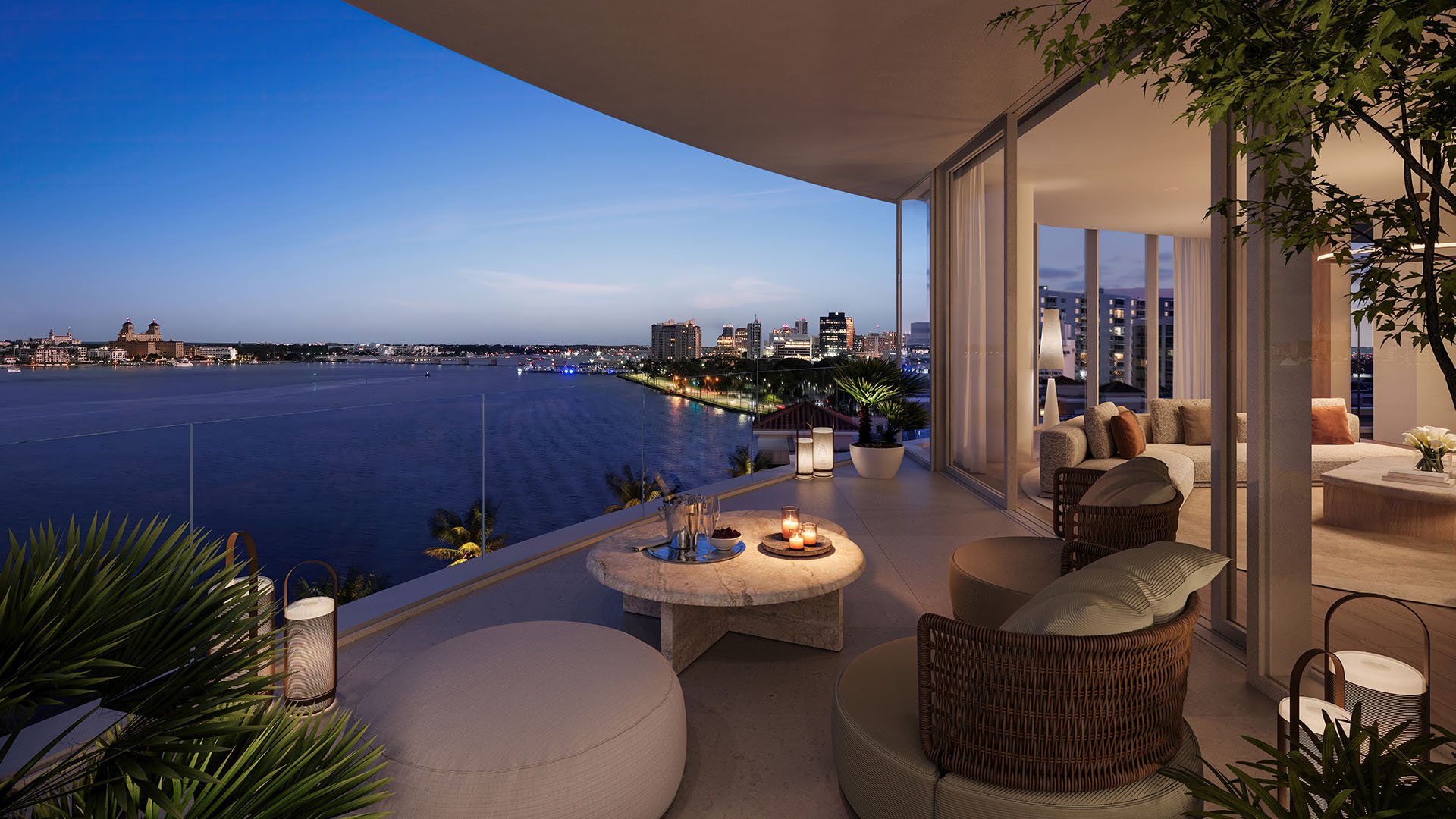
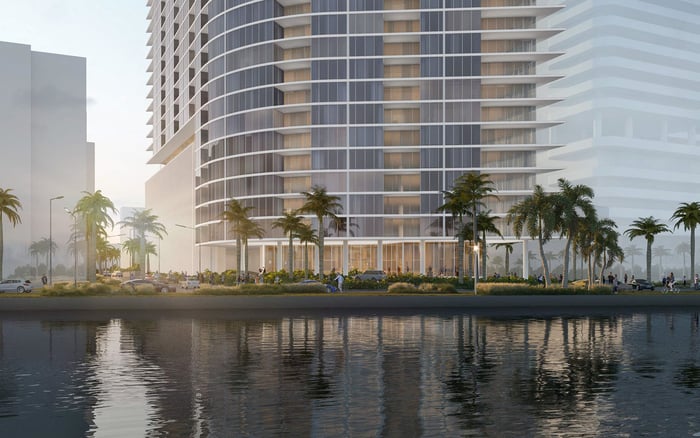
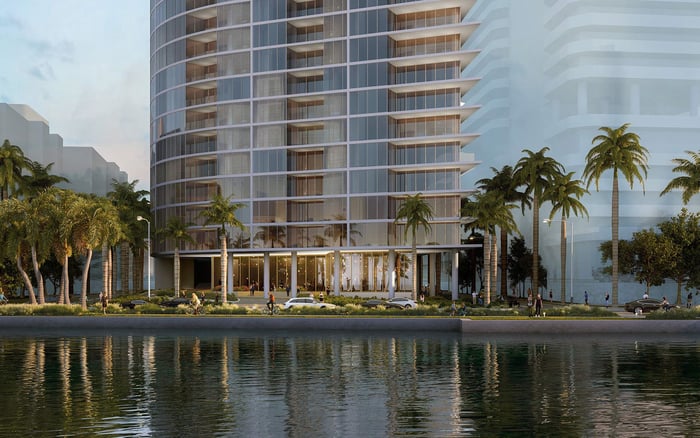
Flagler Drive is a waterfront address, but its view story is rarely a simple, uninterrupted line of sight to open water. In many stretches, you’re looking across the Intracoastal, over parkland, and through a sequence of streetscape and tree canopy before the water even begins. That layered foreground can be an asset-but it also means the value of a view depends on what is allowed to change between you and the horizon.
The strongest view profiles on Flagler tend to share two traits: they read clearly on a map and they hold up under plausible future development scenarios. The objective is to separate a view that exists today from a view that is likely to endure across a long hold period.
Before you analyze any regulation, define exactly what you’re trying to protect. Buyers often say “water view,” but underwriting requires a corridor.
Practical approach:
Stand on the balcony line (or planned furniture line) and define the left and right boundaries of the view. Photograph the full panorama.
Translate that panorama to a map by marking the parcels that fall inside your line of sight. These are the parcels that can change your day-to-day experience.
Separate foreground parcels (closest) from mid-ground and background parcels. Foreground changes typically have the biggest impact.
This corridor map becomes the index for every next step: setbacks, height, massing, landscape requirements, and the probability of variances.
Setbacks are minimum distances between a structure and a property line or shoreline edge. For a waterfront buyer, setbacks matter because they influence:
How close new construction can sit to the water or street edge.
How broad the buildable envelope is on each parcel within your corridor.
Whether a future building’s mass can be pushed forward to occupy more of your view.
What setbacks do not guarantee is the preservation of a specific view from a specific unit. Even generous setbacks can still allow a taller structure or a wider façade that takes a meaningful portion of the panorama.
Your takeaway: treat setbacks as a “shape control” tool-then evaluate height and bulk controls as the “volume control” tools.
Many buyers assume a view is protected because it feels iconic. In practice, lasting view security usually comes from one of two places.
True legal protection typically exists only when a recorded easement, a development agreement, or a specific regulatory overlay limits what can occur in the corridor in a binding way. These mechanisms are property-specific and should be verified in writing, not assumed.
Pattern protection is created by land use and geography: public waterfront, parkland, unusually narrow parcels, historic streetscapes, or long-established low-rise districts. The view persists not because it is promised, but because it is structurally difficult to disrupt.
On Flagler Drive, sophisticated buyers underwrite both. Legal protection is binary; pattern protection is probabilistic-and that’s where disciplined evaluation pays.
A discreet, highly effective diligence package blends what you can see, what you can measure, and what can realistically be approved.
Request a current survey (or commission one for single-family acquisitions) and compare it to what the eye assumes. Curves in seawalls, irregular lot lines, and utility easements can all shift the true buildable envelope in ways that change future massing.
For each parcel inside your view corridor, evaluate:
Current improvements: age, height, and likely redevelopment pressure.
Site dimensions: larger sites typically allow more design flexibility.
Corner conditions: corner lots can produce wider façades and a stronger presence.
Even without quoting a specific municipal code, you can underwrite variance likelihood by watching for:
Prior out-of-pattern approvals nearby.
Parcels where strict compliance is difficult due to constraints.
High-value corridors that attract ambitious proposals.
The point is not to fear change-it’s to price it.
Height limits and floor counts are intuitive, but the lived experience of a view is often decided by massing: width, articulation, and how close a building can sit to the edges of its site.
Two mid-rise buildings can share the same height and still perform very differently for your unit depending on:
Tower plate size and orientation.
Setbacks above a podium.
Step-backs that pull upper floors away from the water or street edge.
If you’re buying for a “slice” of water between two structures, the risk is often not a dramatic new skyscraper-it’s a more efficient, broader building that quietly fills the negative space.
Flagler Drive’s appeal is tied to its palms and landscaped character. But buyers should be clear-eyed about what is permanent and what is actively managed.
Trees grow, are pruned, are replaced, and are sometimes re-landscaped as part of capital projects. A view can improve or deteriorate without any new building at all. When you assess view durability, treat the canopy as a living variable rather than a fixed screen.
For some buyers, this is a feature: the foreground reads resort-like and private. For others-especially those buying for crisp sightlines and sunset photography-it’s a reason to prioritize higher elevations and wider angles.
In ultra-prime corridors, design review can encourage better architecture, but it is not a guarantee of your view. Focus on outcomes that directly affect sightlines: separation between buildings, step-backs, and the placement of vertical cores.
When considering West Palm Beach product, test your corridor assumptions against how premium projects frame their relationship to the waterfront and skyline. For example, Forté on Flagler West Palm Beach and Shorecrest Flagler Drive West Palm Beach speak directly to buyers who care about adjacency, orientation, and the daily cadence of Intracoastal life. For a broader view of the city’s evolving luxury profile, Alba West Palm Beach is another reference point for how new inventory can reshape expectations around elevation, glazing, and outdoor space.
Use a matrix to translate qualitative impressions into underwriting categories. Rate each factor Low, Medium, or High risk.
Foreground control: Are key foreground parcels public, constrained, or stable?
Buildable envelope: Do corridor parcels have wide buildable plates?
Redevelopment pressure: Are there aging improvements on valuable sites?
Approvals climate: Does the area commonly see exceptions to the pattern?
Soft obstruction volatility: Is tree canopy likely to expand into your sightline?
Then tie the result to pricing and terms. A High-risk corridor is not necessarily a deal-breaker, but it should prompt either a pricing adjustment, a stronger contingency package, or a different unit selection.
In view-sensitive corridors, the best “protection” is sometimes smarter unit selection.
Favor angles over straight-on views. Corner exposures and wider balconies often preserve a meaningful horizon even if something changes.
Prioritize elevation that clears the canopy and typical mid-rise rooflines.
Look for setbacks within the building itself: recessed terraces and step-backs can reduce the sense of exposure while maintaining a broader panorama.
And if your lifestyle extends beyond West Palm, it can be helpful to calibrate what true, enduring water frontage looks like in other South Florida markets. Buyers who tour oceanfront product like 57 Ocean Miami Beach often return to Flagler with sharper questions about corridor control, because the obstruction set is fundamentally different.
If the view is a primary value driver, your contract and diligence timeline should reflect that. Consider:
Specific document requests regarding adjacent parcels and known proposals.
A zoning and permitting review by qualified counsel focused on the corridor parcels.
Clear language around what is and is not represented about views.
If you are buying pre-construction, insist on clarity around how the building’s final massing and balcony geometry may evolve. The difference between a rendered view and a lived view is often a few feet of slab edge.
Future view protection is rarely a single document or a single rule. It’s the combined effect of:
The corridor’s land use stability.
The buildable envelope of the parcels that matter to your sightline.
The probability that exceptions will be granted.
The physical realities of tree canopy, streetscape, and shoreline.
When these align, Flagler Drive offers something rare: a waterfront lifestyle with an urbane streetscape and a view profile that can be underwritten rather than simply admired.
Do setbacks guarantee my water view will never change? No. Setbacks influence where a building can sit, but they rarely guarantee a specific view from a specific unit.
What is the first step in evaluating view risk on Flagler Drive? Define your exact view corridor and identify the parcels that fall inside that line of sight.
Are “protected views” common in South Florida luxury markets? They exist, but they are typically property-specific and must be verified through recorded or regulatory controls.
Why does massing matter as much as height? A wider façade or a forward-shifted building can block more of a panorama even at the same height.
Can trees affect resale value as much as new construction? Yes. Canopy growth and pruning patterns can materially change what you see day to day.
Should I prioritize a higher floor to reduce view risk? Often, yes-because elevation can clear canopy and nearby rooflines-but it does not eliminate corridor risk.
What should my attorney focus on during diligence? The buildable rights and approval pathways for parcels inside your view corridor, plus representation language.
Is a “slice view” between buildings inherently risky? It can be, because small changes in future massing may close the gap that creates the slice.
How do I compare Flagler Drive views to oceanfront views? Oceanfront sightlines can be more direct, while Flagler views often depend on multiple foreground layers and parcels.
What is one practical way to price view risk? Use a View Risk Matrix and tie higher risk to stronger contingencies or a tighter value conclusion.
When you're ready to tour or underwrite the options, connect with MILLION Luxury.
If branded residences are on your mind — as a home or as an allocation — we would be glad to share what we are seeing, privately.
Begin a quiet conversation