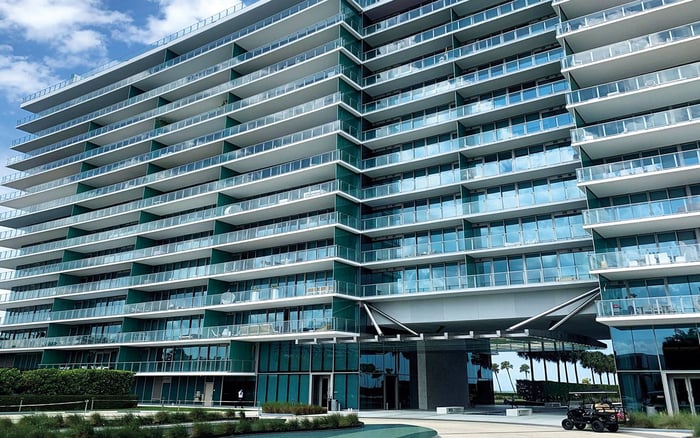
Key Biscayne offers two refined paths to island living: oceanfront condominiums that deliver lock-and-leave simplicity with resort-grade amenities, and bay-to-canal estates where docks, gardens, and architecture are entirely your own. This guide helps families weigh rhythm, privacy, school logistics, boating access, and long-term value. One lifestyle prizes efficiency and service; the other celebrates control and customization. Both hold enduring appeal, the decision rests on how you prefer to engage with the water, your household’s cadence, and your appetite for stewardship versus ease.
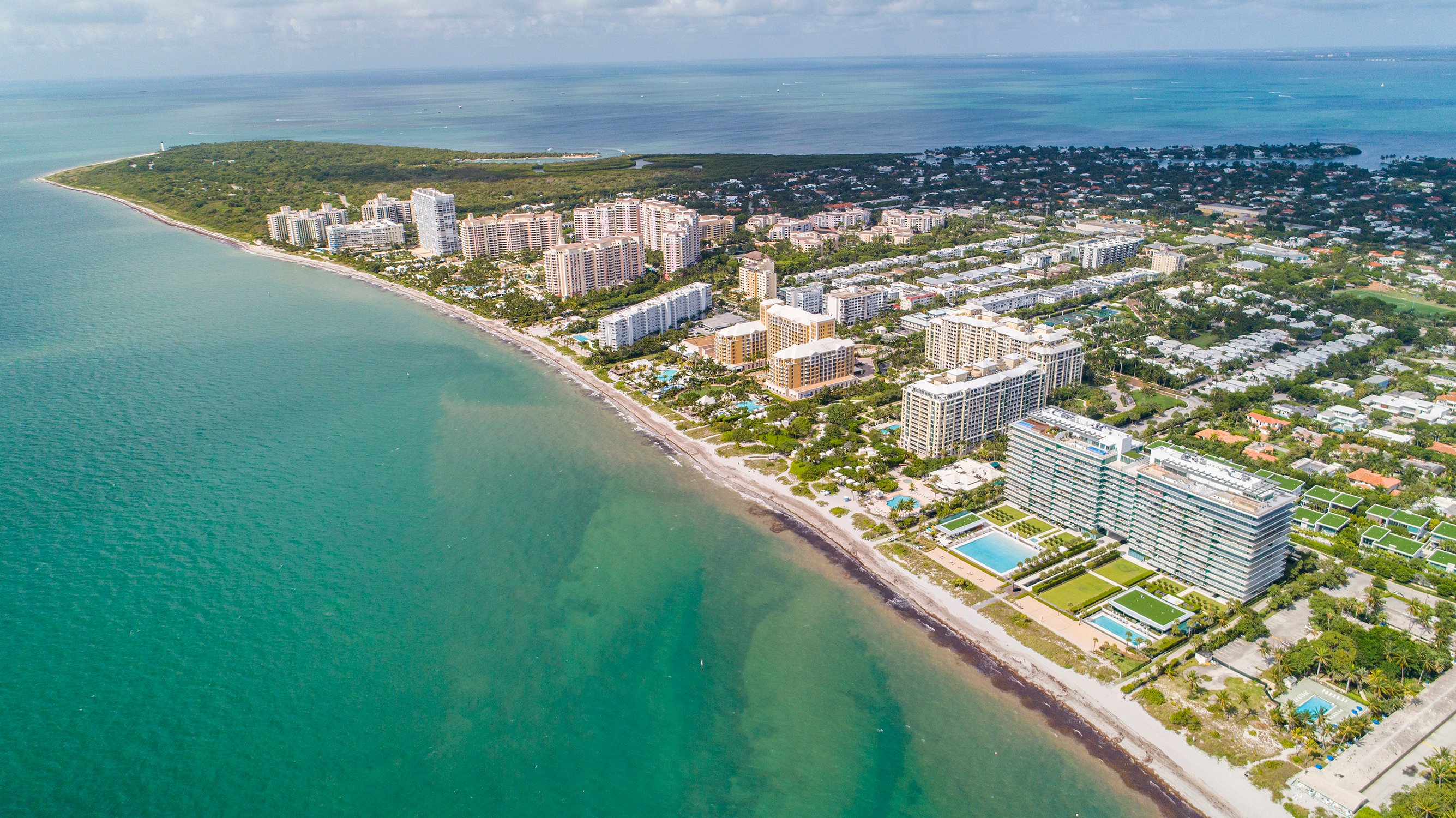
For many global families, the condominium proposition on Key Biscayne is about removing friction while keeping the sea front‑and‑center. Island towers pair Oceanfront placement with the mechanics of a five‑star resort: doormen, concierge, beach services, fitness/wellness programming, and a household operations team that functions even when you are elsewhere. The experience is designed so that arrival feels immediate—park, ride the private elevator, step onto a terrace where the horizon reads uninterrupted.
Consider the benchmark of a new‑era, design‑forward address like Oceana Key Biscayne. Residences emphasize proportion and clarity of view—broad glass, deep terraces, and gallery‑caliber great rooms that open directly to the water. For households who spend part of the year traveling, the lock‑and‑leave calculus is compelling: a single call activates housekeeping, beach setup, and provisioning; a single departure hands maintenance back to a staff that already knows your standards. The result is a seamless cadence—wake, swim, read, repeat—without needing to orchestrate gardeners, pool service, or dock maintenance.
Amenities in the upper‑tier buildings reflect how owners actually live: thoughtfully zoned pools (quiet vs. family), on‑premise dining that feels private rather than performative, spa suites for in‑residence treatments, and courts for tennis and paddle. Storage for boards and bikes, plus chilled package rooms, make practical life easier during hot months. While no residential tower can replace a personal dock, on‑island proximity to a Marina or private club closes the loop; many owners couple their residences with membership or a reserved slip nearby and treat the golf cart as their tender to the tender.
From a financial perspective, condominium ownership concentrates ongoing costs into association dues and reserves rather than bespoke line items. Elevators run smoothly, gardens look hand‑combed, glazing is serviced on schedule, and roofs and chillers are someone else’s worry. The trade‑off is governance: you accept the guardrails of a high‑functioning board and the shared rules that keep the community quiet, safe, and orderly. For many UHNW owners, this is a feature, not a bug—it preserves the hush without requiring daily oversight.
If your definition of luxury begins with sovereignty, a Key Biscayne waterfront estate converts Biscayne Bay into a private front yard. On canal and bayfront parcels, the pleasures are elemental: coffee at sunrise as manatees surface along the seawall; children fishing from the steps; a tender idling at your Boat-slip ready for a quick run to Stiltsville. In protected pockets such as Hurricane Harbor, owners value the lee from seasonal winds; on bay‑exposed points, they trade protection for cinematic, 270‑degree Waterview horizons.
The great advantage of a free‑standing property is program flexibility. Architect your compound for how your family actually moves through the day: a gulf‑streamed lap pool for morning training, a detached wellness pavilion with cold plunge and infrared, a screening room tucked behind acoustic doors, a catering kitchen that connects to terraces by service corridor, and a guest casita set far enough away for privacy. With sufficient frontage and the right entitlements, a dock can be engineered for your boating life—whether that means a robust Boat-slip for a serious center console or a pair of lifts for tenders and toys. (Local conditions—draft, setbacks, seagrass, and permitting—must be confirmed with a specialist before design; assume nothing until a marine consultant and counsel clear the path.)
Operationally, estate life is a different choreography. You will curate a staff—property manager, exterior team, pool and dock professionals, weekly interior support—who keep the compound pristine. The benefit is total control: a generator sized to run essentials, lighting scenes tied to the art program, gates and hedges set to your privacy tolerance. Security is personal and discrete; encounters with neighbors are entirely optional. For many owners building a legacy address, this is the point.
On the risk side, bespoke control means bespoke exposure to capital expenditures. Roofs, façades, seawalls, and mechanicals operate on your calendar and budget. During acquisition, diligence must be exhaustive—elevations, drainage, wind protections, and the condition of marine improvements are all value drivers. Car galleries and sport courts (even a private Tenniscourt) are feasible, but each layer introduces engineering and maintenance considerations. Navigationally, Key Biscayne’s geography puts you minutes from open bay; bridge clearance once you are on the island is typically not a constraint, but channel approach, wake zones, and conservation areas require local knowledge.
Families often select Key Biscayne for how daily life actually works. The village compresses errands, beach, parks, and schools into a calm, walkable grid with a familiar cast of baristas, coaches, and shopkeepers. On‑island schooling options simplify the morning run considerably—many households favor the public K‑8 program and parochial offerings for lower grades, then branch to magnet or private programs nearby as academics intensify. A frequent progression includes an early on‑island start, a move to a selective magnet on Virginia Key, and, for some, a later pivot to top programs in Coconut Grove or the southern corridor. The Rickenbacker causeway turns into a known rhythm: out after dawn, back by early afternoon.
The bridge, managed intentionally, is a manageable variable rather than a daily stressor. Drivers learn the pulse of market days and school hours; car services stagger pickups; athletics and extracurriculars are clustered to minimize back‑and‑forth. If your calendar includes frequent international travel, the route to MIA is direct and predictable, and the return to the island—one causeway, one village—feels like a decompression chamber.
Condo life streamlines this further. Without lawns, seawalls, or outbuildings to maintain, weekends belong to sand and sea. In an Oceanfront tower, a quiet afternoon might flow from reading to paddle to a sunset swim with nothing more complex than an elevator ride. Estate life replaces that simplicity with sovereign joys: an impromptu barbecue under the pergola, kids in the pool while a captain readies the tender, dogs patrolling a deep garden. Both produce a restorative cadence; they simply get there via different scripts.
Usage pattern. If the island is one of several global bases and you want a home that “works” on arrival, a condominium’s lock‑and‑leave posture is hard to beat. If Key Biscayne is the primary address and your household thrives on hosting, consider an estate—even a modest footprint with intelligent program delivers a hospitality layer a tower cannot.
Staff and operations. Associations encapsulate staffing into predictable dues. Houses shift you into an in‑house team model sized to your ambitions. Both can be calibrated discreetly; your tolerance for oversight often decides the path.
Boating. A home with a personal Boat-slip makes water the shortest commute of your day. Condo owners pair their residence with a local Marina or club to create a similar effect without property‑level marine upkeep. The correct answer is the one aligned with your vessel profile, crew needs, and appetite for marine projects.
Security and privacy. Towers deliver controlled access, cameras in the right places, and a lobby team that knows your face. Estates offer the invisibility of hedges and gates and the absence of shared walls. Both are safe; the difference is how interactive you want your environment to be.
Capital plan and liquidity. Condos typically transact with more frequency—clear comparables, known stacks, and an audience familiar with the address. single‑family-homes are by nature idiosyncratic; great ones move fast, but median hold periods tend to be longer, and exit narratives hinge on architecture, exposure, and marine improvements. Your investment committee should decide whether you prefer a boutique, low‑velocity asset or a liquid, brand‑anchored residence.
Adjacency options. If you love a calm, bay‑first life but want a second address minutes away for art openings, office dinners, or quick mainland access, study best‑in‑class alternatives along the inner bay. Nearby, Four Seasons Residences Coconut Grove brings hotel‑caliber service in a leafy, village‑scale setting; in Brickell, Una Residences Brickell leans nautical with its yacht‑inspired silhouette and direct bay orientation, while Baccarat Residences Brickell offers a design‑driven, river‑to‑bay lifestyle within minutes of the causeway. These are not substitutes for Key Biscayne, but they complement an island home beautifully.
A note on terminology and tags. In our internal taxonomy, Key-biscayne is the island’s shorthand area tag, and we also track quality signals like Oceanfront, Waterview, Marina, Boat-slip, and single-family-homes to ensure searches return precisely the inventory UHNW buyers expect. You’ll see those terms referenced here exactly as cataloged so that advisory, research, and marketing remain aligned.
Bottom line. Choose the cadence you want to repeat 300 days a year. If you want the sea framed like a work of art and life orchestrated by a team you barely notice, favor a top‑tier Oceanfront condominium. If you want to author everything—the garden, the dock, the procession from motor court to front door—commission or acquire the right estate and make the water yours.
What drives the cost difference between a condo and a house on Key Biscayne? Association dues in towers roll staffing, reserves, common‑area utilities, and insurance into a predictable line item. Estate ownership unbundles those costs—landscaping, pool, dock, seawall, exteriors, generators—and adds capital projects as you update or expand. Neither path is inherently cheaper; it’s about how you prefer to pay for quality and control.
Is boating strictly better from a house? A private dock is hard to beat for spontaneity. That said, pairing a residence at an Oceanfront tower with a reserved slip at a nearby Marina or club creates a very similar lifestyle with far less marine upkeep. Your vessel size, draft, and crew model should dictate the decision.
Which is better for school‑age children? Both. Condos simplify weekday routines and free weekends for time outside; estates give you lawns, sport space, and room to host teammates and friends. Many families choose based on school plan: on‑island early years suggest a tower; off‑island programs with later practices and carpools often tip the balance to an estate with more space.
How does resale liquidity compare? Condos in proven addresses generally offer more trading comparables and a broader buyer pool, which can aid price discovery. single-family-homes are more narrative‑driven; architecture, frontage, exposure, and marine improvements play a larger role. The best assets in either category are durable—demand concentrates around scarcity and story.
If I want both, is a two‑property solution common? Yes. Many owners anchor their life with an island estate and add a mainland pied‑à‑terre for office days and evening obligations—or invert the model with a Key Biscayne condominium and a Brickell or Coconut Grove base for city cadence.
When you’re ready to map the right fit, our private client team will curate on‑ and off‑market options aligned to your brief. Begin the conversation at MILLION Luxury.
If branded residences are on your mind — as a home or as an allocation — we would be glad to share what we are seeing, privately.
Begin a quiet conversation