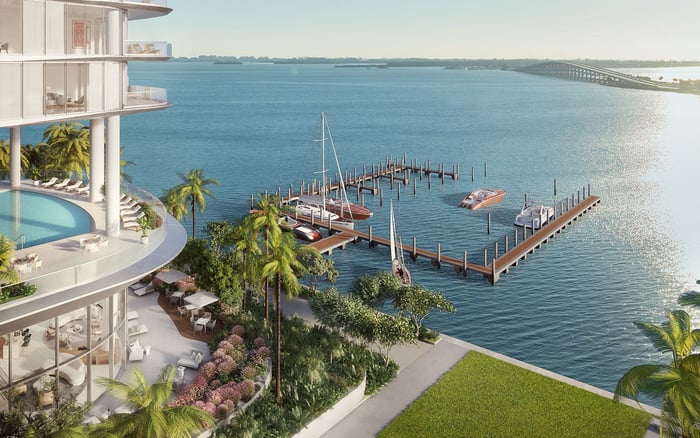
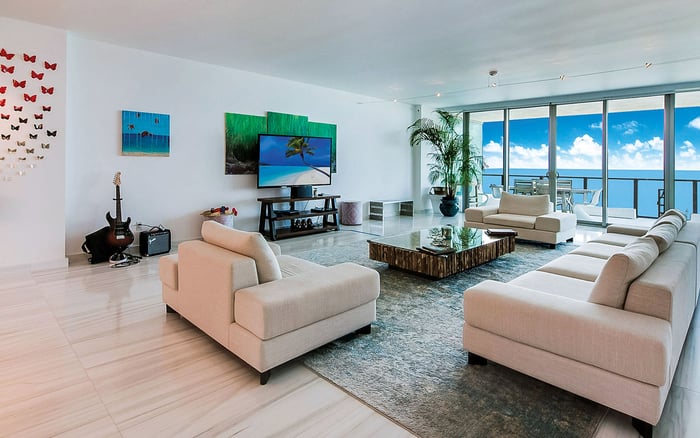
Key Biscayne offers a rare South Florida proposition: an incorporated island village with public beaches, protected parkland, boating access, family-oriented schools, and a quieter residential rhythm close to Miami.
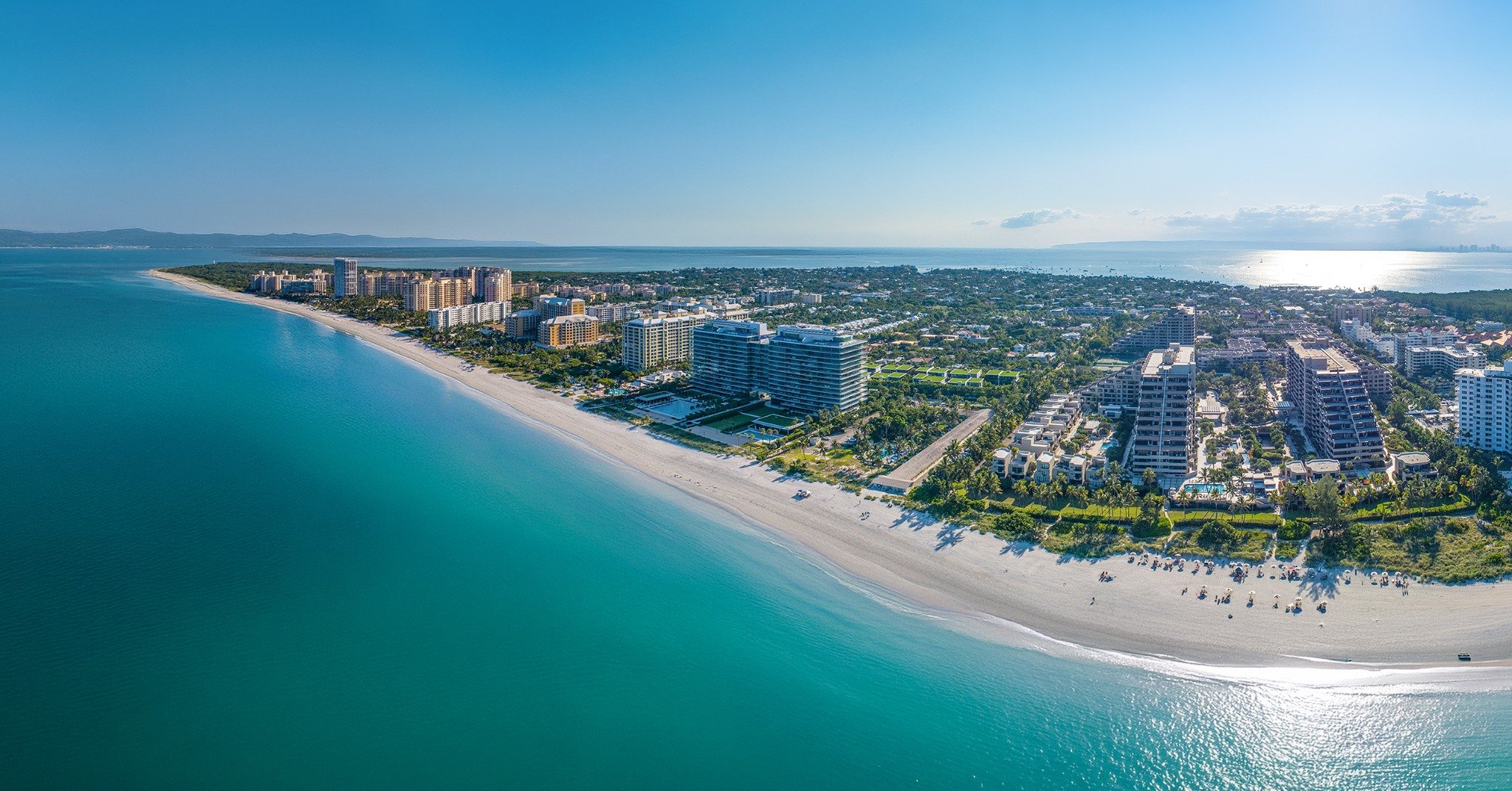
Key Biscayne holds a singular place in South Florida luxury real estate: close enough to Miami to stay deeply connected, yet shaped by a barrier-island setting that feels meaningfully calmer than the mainland. An incorporated village in Miami-Dade County, positioned east of mainland Miami, it has a limited-access character that gives the island much of its residential strength.
For affluent buyers, the appeal is not simply beach access. Many South Florida addresses can make that claim. The distinction is the combination: public waterfront land at both ends of the island, a boating culture shaped by Biscayne Bay, a family-oriented school narrative, and a housing profile centered on beachfront condos, waterfront estates, and low-key daily living rather than nightlife density.
That is why Key Biscayne often attracts buyers who have already experienced Miami at full volume. They are not exiting the city. They are refining their relationship with it.
The northern side of the island is anchored by Crandon Park, one of Key Biscayne’s defining public beach and recreation assets. For residents, it broadens the meaning of beachfront living beyond a private terrace or club cabana. The park offers beach access along with picnic areas, nature areas, cabana rentals, golf, tennis, and family recreation, creating a rare public amenity base within a high-end island setting.
At the southern end, Bill Baggs Cape Florida State Park brings Atlantic beach access, biking, paddling, fishing, and nature-based recreation into the daily orbit. Its historic Cape Florida Lighthouse is more than a landmark; it gives the island a sense of place many luxury enclaves lack. Together, Crandon Park and Bill Baggs create a north-south frame of preserved public waterfront land, unusual for a Miami-area community with such an affluent residential profile.
This matters because value here is not measured only at the property line. A Key Biscayne residence is also an entry point into a lifestyle of morning swims, weekend tennis, shaded bike rides, paddle sessions, and a beach day that does not require crossing half the county.
For those who want the island address in its most direct form, Oceana Key Biscayne offers a useful reference point for the condominium side of the market, especially for buyers prioritizing an island setting over a denser urban skyline.
Key Biscayne is not only a beach story. It is also a Biscayne Bay story. Crandon Park Marina gives boaters direct access to the bay and nearby offshore waters, making the island especially compelling for buyers whose idea of luxury includes a boat day as readily as a dining reservation.
The nearby marine landscape deepens that proposition. Biscayne National Park protects bay waters, islands, coral reefs, and marine ecosystems that support boating, snorkeling, diving, and wildlife viewing. For a certain buyer, this is the difference between owning near the water and actually living by the water.
This is also where the island distinguishes itself from many mainland alternatives. A mainland condominium may offer dramatic views, refined service, and a superb restaurant downstairs. Key Biscayne’s advantage is quieter and more elemental: morning light over the Atlantic, a boat route into Biscayne Bay, and parkland that interrupts the instinct to overbuild every beautiful edge.
Buyers comparing this calm with a more vertical waterfront life may look across the bay to The Residences at Mandarin Oriental, Miami, where the appeal is more urban and service-driven. The comparison clarifies the choice: Key Biscayne is less about spectacle and more about a private, breathable cadence.
For families, Key Biscayne’s value proposition often begins with geography but becomes more nuanced through education. Key Biscayne K-8 Center serves as the main public elementary and middle school for the village, making local schooling a central part of how families evaluate the island.
Nearby Virginia Key adds another layer through MAST Academy, a Miami-Dade public magnet school known for a marine and science-oriented identity. For families drawn to the water, that academic orientation can feel unusually aligned with the broader environment.
Private-school considerations often extend west toward Coconut Grove, where Carrollton School of the Sacred Heart and Ransom Everglades School sit within the broader Key Biscayne and Grove family-buyer orbit. This is one reason the island and the Grove are often discussed together by relocating families. They offer different residential textures, but both can support a refined, education-conscious lifestyle.
That cross-market thinking explains why a buyer considering Key Biscayne might also tour Park Grove Coconut Grove or The Lincoln Coconut Grove. The question is not simply which building is more polished. It is whether the household wants an island rhythm or a village-in-the-city rhythm.
Key Biscayne luxury is best understood as a blend of access and restraint. The island’s residential story favors beachfront condominiums, waterfront estates, boating proximity, and a quieter form of prestige. It is not trying to compete with the restaurant density of Brickell or the late-night theater of Miami Beach.
Put simply, the search vocabulary is unusually clear: Key Biscayne, beach access, oceanfront, marina, private school, and Coconut Grove all belong to the same decision matrix, not separate wish lists.
For condominium buyers, priorities often include views, privacy, building quality, service, and the ease of living near the beach without giving up a Miami connection. For estate buyers, the conversation shifts toward waterfront orientation, boating utility, outdoor living, and the sense of arrival that comes from crossing onto the island.
The market should be read carefully and currently, especially because pricing, inventory, and days-on-market conditions can move over time. But the strategic thesis is durable: Key Biscayne’s scarcity is not only about the number of homes. It is about the limited number of South Florida places where beach, bay, schools, parks, and calm coexist at this level.
The most sophisticated Key Biscayne buyers rarely view the island in isolation. They compare it against Brickell, Coconut Grove, Miami Beach, Fisher Island, Coral Gables, and sometimes Sunny Isles or Bal Harbour. Each offers its own luxury grammar.
Brickell provides financial-district energy, skyline views, and a polished residential tower culture. A project such as Una Residences Brickell may appeal to buyers who want bayfront design with immediate urban access. Miami Beach adds cultural visibility and oceanfront glamour. Fisher Island offers privacy at a different level of separation.
Key Biscayne’s answer is quieter. It does not need to be the most conspicuous address in the room. Its power lies in being both deeply residential and materially connected to the natural landscape. For many ultra-premium buyers, that is the more difficult luxury to replicate.
Key Biscayne is especially compelling for families who want schools in the conversation, beach access in daily life, and a calmer home base without severing ties to Miami. It is also a natural fit for boaters, tennis players, golfers, cyclists, and buyers who value public parkland as much as private amenity decks.
It may be less ideal for buyers who want constant nightlife at their doorstep or a high-density urban environment. That is not a flaw. It is the point. Key Biscayne’s strongest case is not that it offers everything Miami offers in miniature. Its strongest case is that it filters Miami through space, water, greenery, and restraint.
For the right household, the island is not a compromise between city and escape. It is a disciplined version of both.
Is Key Biscayne considered part of Miami-Dade County? Yes. Key Biscayne is an incorporated village in Miami-Dade County on a barrier island east of mainland Miami.
What makes Key Biscayne quieter than mainland Miami neighborhoods? Its island geography, limited-access feel, parkland, beaches, and residential orientation create a calmer daily rhythm.
Does Key Biscayne have public beach access? Yes. Crandon Park and Bill Baggs Cape Florida State Park provide major public beach and recreation access on the island.
Is Key Biscayne good for boating? Yes. Crandon Park Marina provides direct access to Biscayne Bay and nearby offshore waters.
What are the main parks on Key Biscayne? Crandon Park anchors the north, while Bill Baggs Cape Florida State Park anchors the south.
What public school serves younger students in the village? Key Biscayne K-8 Center is the main public elementary and middle school serving the village.
Is MAST Academy relevant for Key Biscayne families? Yes. MAST Academy is located on nearby Virginia Key and has a marine and science-oriented identity.
Do families consider Coconut Grove schools from Key Biscayne? Yes. Carrollton School of the Sacred Heart and Ransom Everglades are prominent private-school options in Coconut Grove.
What types of luxury homes define Key Biscayne? The market is shaped by beachfront condominiums, waterfront estates, boating access, and quieter island living.
Is Key Biscayne isolated from Miami? No. Its appeal is better understood as connected island calm rather than true isolation.
When you're ready to tour or underwrite the options, connect with MILLION.
If branded residences are on your mind — as a home or as an allocation — we would be glad to share what we are seeing, privately.
Begin a quiet conversation