A practical, discreet guide for families evaluating whether a Brickell luxury condo can support school-age children, daily routines, privacy, storage, and long-term comfort.
.jpg)
For years, Brickell was treated as the natural address for finance, dining, and high-floor pied-à-terres. Today, a more nuanced question is emerging among buyers with children: can a luxury condo in Brickell support the rhythms of a school-age family without feeling like a compromise?
The answer is yes, but not universally. Brickell family living works best when the residence is chosen less as a glamorous apartment and more as a complete household in the sky. The test is not only whether the view is memorable or the lobby is beautiful. It is whether backpacks have a place to land, homework can happen without overtaking the dining table, a child can sleep while adults entertain quietly, and the morning school run feels controlled rather than improvised.
This is where thoughtful comparison matters. A residence such as 2200 Brickell may enter the conversation for buyers who want to remain close to the neighborhood’s central energy while evaluating a more residential daily cadence. Other families may look toward waterfront or branded environments, but the same rule applies: the building must make family life easier, not merely more photogenic.
In a family purchase, even the most persuasive marble slab is secondary to circulation. A school-age child changes how a condo lives. Secondary bedrooms need to feel like real rooms, not decorative afterthoughts. A den becomes valuable when it can serve as a homework zone, music practice room, gaming area, or quiet office for a parent who wants to remain available without working from the kitchen counter.
The ideal family layout separates active and quiet zones. Bedrooms should have acoustic privacy. The primary suite should feel removed enough for adults to decompress, while still keeping children within a practical range. Bathrooms should be distributed so morning routines do not depend on everyone sharing the same corridor. Laundry should be accessible, not ceremonial. Storage, often overlooked in luxury showings, becomes one of the defining features of a successful urban family residence.
At Una Residences Brickell, buyers may be drawn to the waterfront identity, but families should still evaluate the fundamentals with discipline: entry sequence, stroller or sports-bag storage, pantry depth, closet capacity, and how the living room accommodates both adult entertaining and ordinary weekday life.
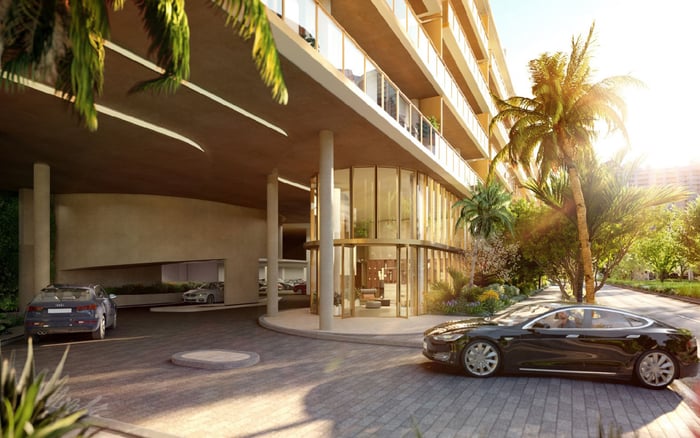
For a family, building service is not an indulgence. It is infrastructure. Elevators, valet rhythm, package handling, guest access, maintenance response, and security protocols all shape the daily experience. A residence can be architecturally impressive and still become frustrating if every morning feels congested or every after-school pickup turns into a logistical puzzle.
Buyers should ask how the building handles peak-hour movement, visitors, deliveries, household staff, tutors, caregivers, and children’s friends. The goal is not to recreate suburban life in a tower. It is to make vertical living feel orderly, discreet, and predictable.
This is one reason branded and service-oriented buildings remain part of the family discussion. Cipriani Residences Brickell, for example, may appeal to buyers who value hospitality language and a more complete residential experience. Yet the family decision should always return to how the building performs on an ordinary Tuesday morning.
The most important family amenity may not be inside the building at all. It may be the school-day map. Before choosing a Brickell condo, parents should rehearse the actual weekly rhythm: morning departure, afternoon return, activities, tutoring, dinner, and weekend sports or cultural obligations.
A condo can work beautifully if the family’s school network, commute tolerance, and driver or caregiver support are aligned. It can become stressful if the address is selected for adult convenience while the child’s schedule requires constant cross-county movement. The right question is not simply, “Is Brickell convenient?” The better question is, “Convenient for whom, at what hour, and how often?”
Families considering St. Regis® Residences Brickell should apply the same standard they would to any major home purchase: test the route, understand the building’s pickup and drop-off sequence, and consider whether the residence offers enough calm at the beginning and end of the day.
Families sometimes assume that children require a house to develop a social life. In South Florida, that is not always true. Many children thrive in urban neighborhoods when parents are intentional about school networks, clubs, sports, arts, and extended family connections. The condo itself does not need to replace a backyard if the broader lifestyle is rich, accessible, and well managed.
Still, parents should be honest about personality. Some children enjoy the sophistication and movement of city living. Others need outdoor space, informal play, and a quieter residential texture. Brickell works best for families who want proximity, culture, dining, waterfront walks, and a more metropolitan household rhythm.
A project such as ORA by Casa Tua Brickell may naturally attract buyers who appreciate urban energy and hospitality-driven living. For families, the key is whether that energy is balanced by private space inside the residence and enough routine outside it.
Brickell is strongest for families who prize time, access, and a polished urban environment. It can be particularly compelling for parents who work nearby, travel frequently, entertain in the city, or want a lock-and-leave residence that still functions as a primary home. The neighborhood can also suit families who prefer a high-service lifestyle over the maintenance demands of a single-family property.
The condo must be large enough for the life being asked of it. A beautiful two-bedroom may be a transitional solution, but a long-term family home usually needs more flexibility: a den, staff or guest accommodation, generous closets, and at least one room that can evolve as children grow. Younger children need play and supervision. Older children need independence and privacy. The residence should anticipate both.
The most successful Brickell family purchases are made with less fantasy and more choreography. Where does the school bag go? Where do sports uniforms dry? Where does a tutor sit? Where does a teenager retreat? Where do visiting grandparents sleep? If the home answers those questions elegantly, the condo has a chance to perform.
Before committing, families should walk the residence at the times they will actually use it. Morning light, elevator wait, street approach, garage flow, and evening noise all matter. A weekend showing can be seductive, but weekday behavior reveals the truth.
Parents should also look beyond the sales gallery. Ask how the building supports long-term residents rather than transient use. Consider whether the common areas feel appropriate for children without becoming child-centered. Review pet policies, guest policies, parking arrangements, storage options, and the practical separation between hospitality and home.
Most importantly, choose the unit, not just the building. In Brickell, two residences in the same tower can live very differently depending on exposure, floor height, layout, elevator proximity, and terrace usability. For a family, the best condo is not always the most dramatic. It is the one that makes weekday life feel gracious.
Can a Brickell condo really work for school-age children? Yes, if the floor plan, commute, building operations, and family routines are aligned. The residence must function as a complete home, not simply an impressive city apartment.
What is the most important feature for a family condo in Brickell? Layout is usually the starting point. Bedrooms, storage, bathroom distribution, acoustic privacy, and a flexible den can matter more than decorative finishes.
Should families prioritize amenities? Amenities help, but they should not distract from daily function. Elevator flow, parking, security, storage, and service response often shape family comfort more directly.
Is Brickell better for younger children or teenagers? It can work for both, but the needs differ. Younger children need supervision and practical storage, while teenagers often need privacy and independent routines.
How should parents evaluate school logistics? They should test the actual commute at real school-day times. A route that looks simple on paper may feel very different during weekday traffic patterns.
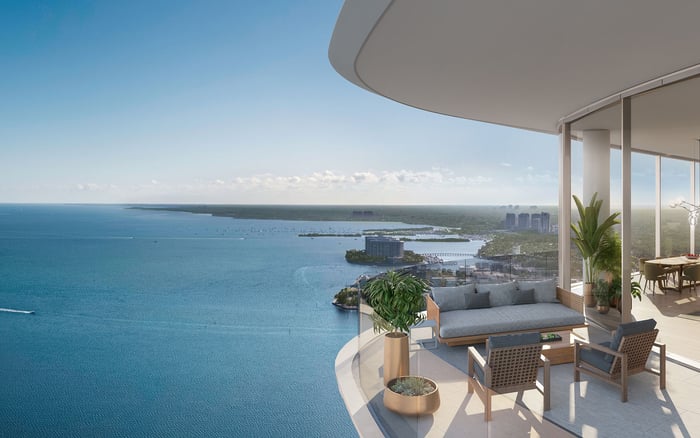
Does a family need a large terrace in Brickell? A terrace can be valuable, but it is not a substitute for a functional interior. Usable outdoor space is most effective when paired with generous indoor planning.
Are branded residences appropriate for families? They can be, especially when service and privacy are well managed. Families should still evaluate whether the atmosphere supports ordinary weekday living.
What should buyers ask during a showing? Ask about storage, guest access, valet patterns, delivery handling, staff entry, noise transfer, and rules for children’s friends. These details reveal how the building lives.
When is Brickell the wrong choice for a family? It may be wrong if the family needs a yard, private garage, or a quieter suburban pattern. The best choice depends on the child’s schedule and the parents’ lifestyle.
What is the best way to shortlist comparable options for touring? Start with location fit, delivery status, and daily lifestyle priorities, then compare stacks and elevations to validate views and privacy.
When you're ready to tour or underwrite the options, connect with MILLION.
If branded residences are on your mind — as a home or as an allocation — we would be glad to share what we are seeing, privately.
Begin a quiet conversation