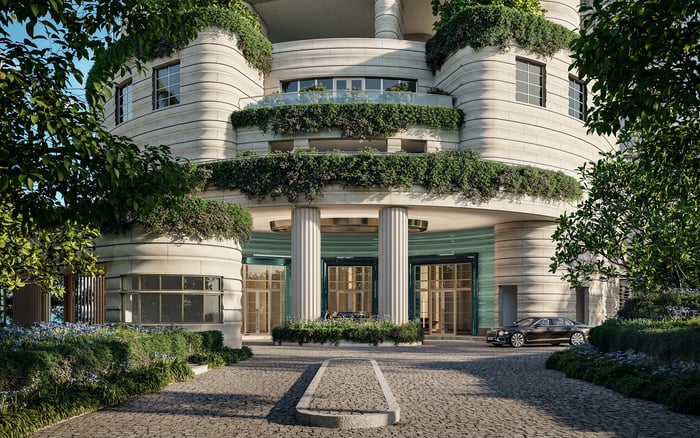
An editorial look at Kempinski Residences Miami Design District for buyers who want cultural proximity, design energy, and a more composed urban base than Downtown Miami.
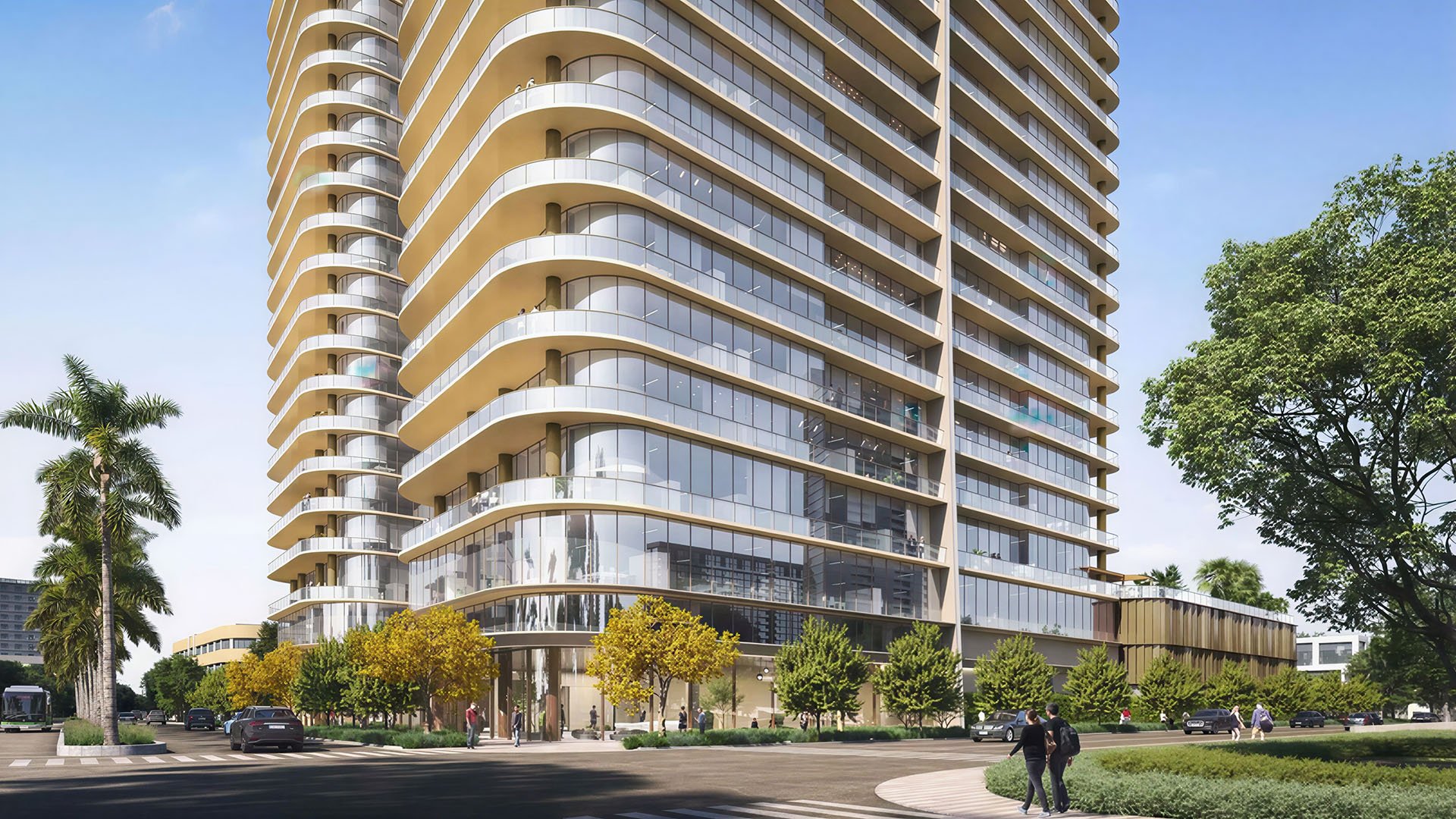
For certain South Florida buyers, the next residence is not simply about skyline height, beach proximity, or club-level amenities. It is about how a day feels when the front door opens. Kempinski Residences Miami Design District speaks to that precise desire: culture nearby, a refined urban setting, and a location that does not require committing to Downtown Miami’s most intense daily rhythm.
The appeal is less about spectacle than calibration. The Design District buyer typically wants restaurants, galleries, fashion, architecture, and design-oriented streets within close reach, without the constant density associated with a central business district. This is where the neighborhood’s residential promise becomes distinct. It offers an urbane lifestyle connected to Miami’s creative current while remaining meaningfully different from a high-traffic financial core.
For owners considering Kempinski Residences Miami Design District, the central question is not whether the address is luxurious in the abstract. The better question is whether the area’s cultural tempo matches the way they live, host, commute, shop, dine, and decompress.
Miami’s luxury market has matured beyond a single definition of prestige. Oceanfront remains powerful. Brickell remains relevant for finance, restaurants, and vertical energy. Coconut Grove appeals to those who want canopy, privacy, and a village-like pace. The Design District adds another residential category: a culture-forward base for owners who want the city’s creative life to feel immediate.
That distinction matters for art collectors, design patrons, fashion clients, and frequent hosts. A residence near the Design District can support a lifestyle where errands become rituals: an early coffee, a gallery visit, a design showroom appointment, a long lunch, a private dinner, then a quiet return home. It is not suburban retreat living, nor is it necessarily the same experience as beachfront resort living. It is urban, but with a different center of gravity.
This makes the area especially compelling for buyers who already use Miami as a cultural calendar. Art weeks, dinners, product launches, studio visits, and philanthropic events tend to reward proximity. The owner who values time as the ultimate luxury may find that being close to the scene is more practical than being formally removed from it.
The phrase “not Downtown” is not a criticism of Downtown. It is a lifestyle filter. Downtown works beautifully for buyers who want direct access to office towers, arena events, bayfront activity, and a dense high-rise environment. But some luxury owners want the benefits of central Miami without living inside its most concentrated movement.
Kempinski Residences Miami Design District may appeal to that buyer because the neighborhood context feels urban without being defined primarily by office-hour traffic or business-district momentum. The proposition is cultural access rather than corporate adjacency. It is a location for owners who want to participate in the city, then withdraw to a more curated residential setting.
For buyers comparing options, 2200 Brickell represents a different urban logic, tied to Brickell’s established residential and financial identity. That comparison is useful. If Brickell feels too vertical, too workday-focused, or too central for a buyer’s preferred routine, the Design District can become a more personal alternative.
The Design District sits in conversation with several Miami neighborhoods, each with a clear buyer profile. Wynwood is more explicitly creative and energetic, with a younger, art-driven edge. Midtown provides retail convenience and a practical urban location. Edgewater adds bayfront orientation and views for those who want water closer to the daily experience. Downtown delivers the most direct center-city pulse.
A buyer looking at Miami Design Residences Midtown Miami may be weighing similar desires: access, design identity, and urban convenience. A buyer considering Frida Kahlo Wynwood Residences may be drawn to a more overtly artistic neighborhood narrative. A buyer comparing Villa Miami may be asking whether the water view or the cultural doorstep matters more.
These are not purely financial comparisons. They are lifestyle comparisons. The right answer depends on where the owner spends time, how often guests arrive, whether the residence is primary or occasional, and how much daily calm is expected after an evening out.
With any New Project, especially in a highly desirable cultural district, buyers should move beyond the name and study the lived experience. The most important questions are practical. How does arrival feel at different times of day? How does the surrounding street life change between weekday mornings, weekend afternoons, and event nights? Does the neighborhood feel energizing or overly public? Does the residence support privacy, service, and ease in a way that suits the owner’s household?
New-construction buyers should also evaluate floor plan logic, ceiling heights, terraces, parking, elevator sequence, storage, pet policies, staff circulation, and the long-term maintenance culture implied by the building. In an area defined by culture and design, aesthetics will naturally be prominent, but day-to-day livability still determines whether a home feels effortless after the first season.
Boutique expectations may also play a role. Some owners prefer a more intimate building character, while others want the breadth of amenities and service depth that often comes with larger residential programs. Neither preference is superior. The key is alignment between the building’s operating style and the owner’s tolerance for visibility, staff interaction, guest flow, and shared amenity use.
Kempinski Residences Miami Design District is best considered by buyers who want Miami’s cultural energy in close reach and who do not define luxury solely by oceanfront geography. It may be especially relevant for owners who frequently move between the Design District, Wynwood, Midtown, Edgewater, Brickell, and Miami Beach, but do not want their home base to feel like a transit corridor.
It may be less suited to buyers whose ideal South Florida day begins and ends on the sand, or to those who prioritize a marina, golf setting, or gated estate environment. That is not a weakness. It is the discipline of choosing the right address for the life actually being lived.
For the right owner, the draw is subtle and persuasive: a residence near the cultural machinery of Miami, close enough to feel connected, yet positioned for a more composed daily rhythm than Downtown.
Who is the ideal buyer for Kempinski Residences Miami Design District? The best fit is a buyer who values culture, dining, design, and urban access more than a traditional beachfront setting.
Is the Design District a Downtown alternative? Yes, for buyers who want central Miami access without choosing the densest Downtown lifestyle.
How does it compare with Brickell? Brickell is often chosen for financial-district energy, while the Design District is more culture and design oriented.
Should Wynwood also be considered? Yes. Wynwood may appeal to buyers seeking a more overtly artistic and nightlife-adjacent neighborhood feel.
Is this a primary residence or second-home concept? It can suit either, depending on how often the owner uses Miami’s cultural, dining, and social circuit.
What should buyers evaluate first? Buyers should study arrival, privacy, floor plan livability, service sequence, parking, and neighborhood rhythm.
Is oceanfront access the main value driver here? No. The value proposition is more closely tied to cultural proximity and urban convenience.
Does the neighborhood suit collectors and design patrons? It may, especially for owners who want galleries, showrooms, restaurants, and events close to home.
Can it work for buyers who dislike congestion? It may work if they want urban access but prefer a setting that feels less defined by Downtown traffic patterns.
What is the most important comparison to make? Compare the Design District lifestyle with Brickell, Wynwood, Edgewater, and Miami Beach before deciding.
If you'd like a private walkthrough and a curated shortlist, connect with MILLION.
If branded residences are on your mind — as a home or as an allocation — we would be glad to share what we are seeing, privately.
Begin a quiet conversation