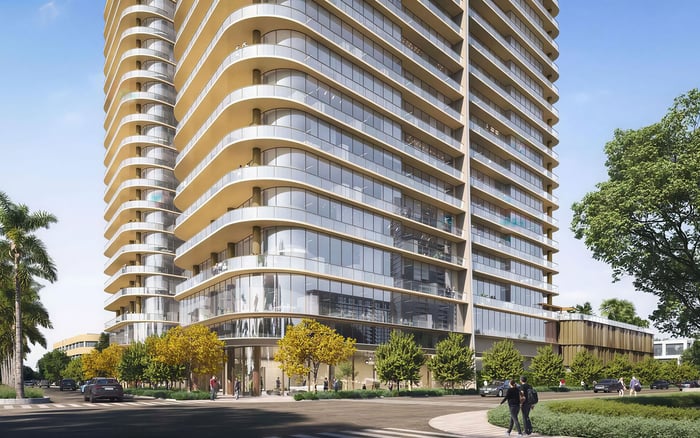
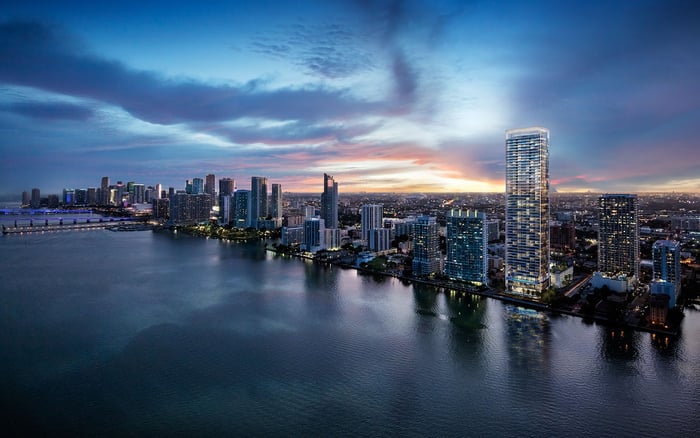
A discreet buyer’s guide to weighing Coral Gables retail walkability against Midtown Miami cultural access, centered on Cora Merrick Park and the Midtown-side Miami Design Residences reference point.
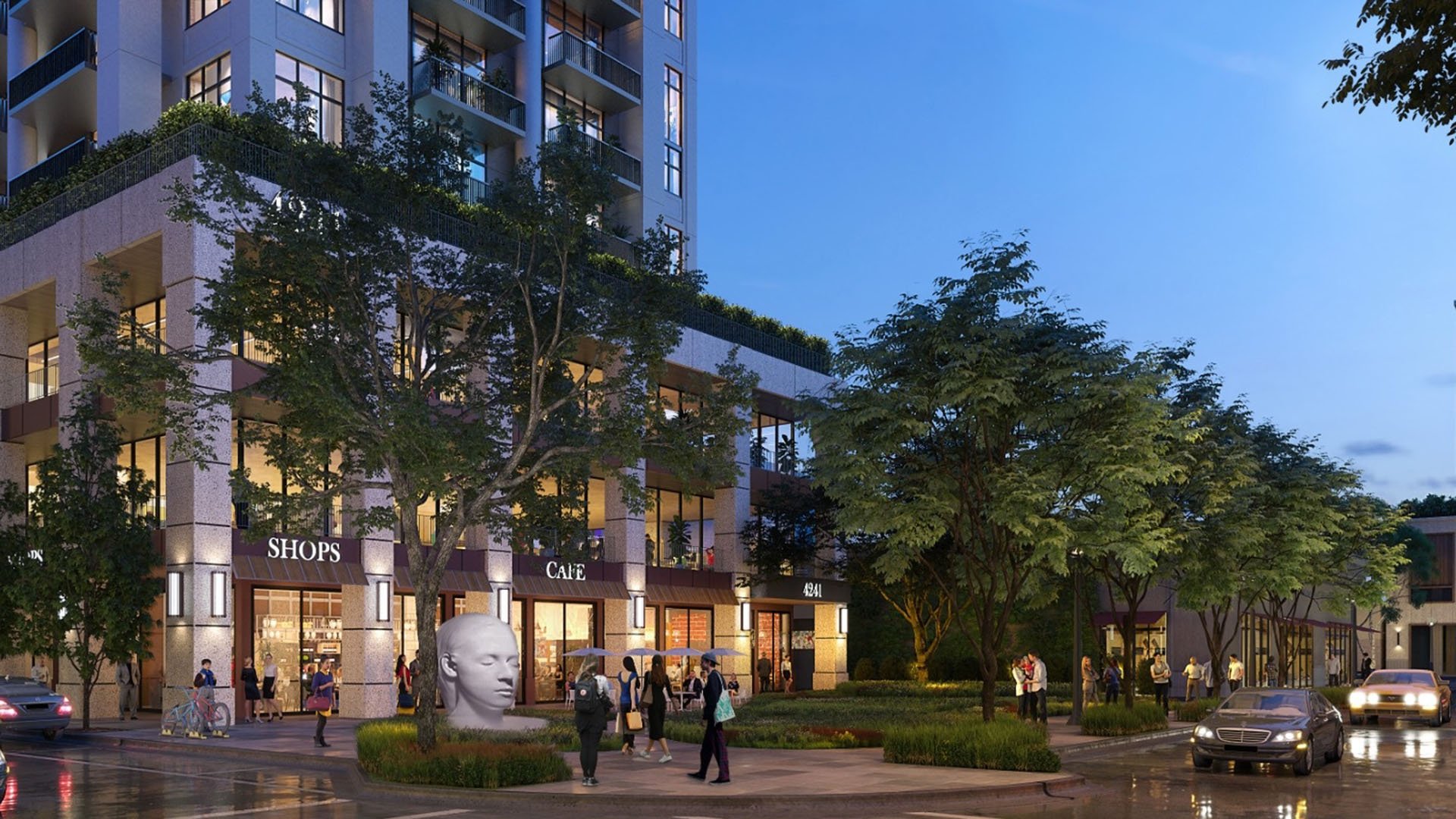
For South Florida’s high-end buyer, walkability is no longer a simple measure of how close the nearest café sits to the lobby. It is a lifestyle filter. In Coral Gables, the appeal is often the choreography of daily errands, shaded streets, polished retail, and a quieter cadence that supports a more residential interpretation of urban living. In Midtown Miami, the draw tends to be proximity to a broader cultural circuit, where design, dining, galleries, and neighboring creative districts shape the way residents move through the city.
That distinction frames this comparison between Cora Merrick Park and Miami Design Residences Midtown Miami. Cora Merrick Park is the Coral Gables anchor for the discussion. Miami Design Residences Midtown Miami serves as the Midtown-side reference point, best considered through the neighborhood lens unless a buyer has independently confirmed project-level specifics.
The decision is not simply Coral Gables versus Midtown. It is whether one prefers elegance that unfolds through a familiar retail-village rhythm, or energy that comes from being near Miami’s design and culture corridor.
Coral Gables has long appealed to buyers who value order, tradition, and urban refinement without the volume of a denser downtown district. The walkability conversation here is less about nightlife velocity and more about how daily life feels when restaurants, boutiques, personal services, and social meeting points are woven into a polished neighborhood fabric.
For the buyer considering Cora Merrick Park, the practical question is whether Coral Gables retail access aligns with the way they live. A buyer who prefers a composed lunch meeting, a boutique errand, a short evening stroll, and a home base with a calmer tone may find the Gables lifestyle especially persuasive. The keyword is not spectacle. It is continuity.
This is also where the Boutique sensibility matters. In luxury real estate, Boutique does not only describe scale. It describes discretion, personalization, and the absence of excess friction. Coral Gables often attracts residents who want urban amenities without feeling absorbed by them. That distinction can be decisive for downsizers, second-home buyers, and families who prioritize predictability.
Nearby Coral Gables searches may also bring Ponce Park Coral Gables and The Village at Coral Gables into the broader conversation, especially for buyers comparing different expressions of Gables living. The common thread is a preference for refinement that feels integrated rather than performative.
Midtown Miami answers a different question. Rather than asking how polished the daily retail loop can be, it asks how close a resident wants to be to Miami’s creative and cultural energy. Midtown sits in a part of the city where lifestyle often extends beyond a single neighborhood. Buyers may think in terms of access to design destinations, restaurants, galleries, studios, events, and the adjacent pull of Wynwood.
For some buyers, that adjacency is the premium. It allows a residence to function as a launch point into the city’s most design-forward experiences. The appeal is not necessarily quiet. It is optionality. A night out can be spontaneous. A design appointment, dinner, gallery opening, or private event may sit within a broader urban circuit rather than a single retail village.
That said, Midtown buyers should be disciplined. Without confirmed project-level details, the prudent approach is to assess Miami Design Residences Midtown Miami through the neighborhood proposition first, then verify the building specifics that matter most: residence configuration, services, parking, delivery timeline, ownership structure, amenity programming, and any restrictions that affect usage.
The surrounding area can also lead buyers to compare design-oriented projects such as Kempinski Residences Miami Design District when the priority is cultural proximity rather than a traditional residential enclave. For those who want a more finance-and-waterfront urban reference point, Brickell projects such as 2200 Brickell may enter the same mental map, even though the lifestyle equation is materially different.
The strongest way to compare these two choices is to imagine a normal week, not a sales presentation. In Coral Gables, the day may revolve around close-by retail rituals, appointments, dining, and a residential atmosphere that feels measured. The neighborhood supports buyers who value familiarity, elegance, and a sense of place less dependent on constant reinvention.
In Midtown, the week may feel more outward-facing. The resident is positioned near a cultural network that changes with exhibitions, openings, hospitality concepts, and the broader pulse of Miami’s creative districts. This can be highly appealing for collectors, design patrons, younger luxury buyers, and residents who entertain through experiences rather than formal domesticity.
Neither model is inherently superior. Coral Gables offers a quieter form of access, where retail walkability supports ease. Midtown offers a more kinetic form of access, where culture and design shape the value proposition. The right answer depends on whether the buyer wants the neighborhood to simplify life or animate it.
Investment should be treated carefully here. The stronger question is not which address will outperform in the abstract. It is which lifestyle thesis is more durable for the buyer’s intended hold period. Coral Gables tends to appeal to those who prize established residential character and refined convenience. Midtown speaks to buyers who believe cultural access, design adjacency, and urban flexibility will remain central to Miami’s luxury narrative.
For a New Project evaluation, the due diligence should be exacting. Buyers should confirm all project-specific details directly before relying on pricing, amenities, completion status, unit mix, or walkability metrics. This is especially important when comparing a Coral Gables-side project with a Midtown-side reference point whose finer details should be verified independently.
Investment in this context is as much about fit as forecast. A residence that matches daily habits is more likely to feel valuable through different market cycles. The buyer who loves Coral Gables’ composed retail environment may not place equal value on Midtown’s cultural momentum. Likewise, the buyer who wants immediate access to galleries, dining, and design energy may find Coral Gables too restrained.
Start with three questions. First, where do you want to spend your unplanned time? If the answer is a refined retail district with a quieter residential feel, Coral Gables deserves serious attention. If the answer is design, dining, cultural events, and a more urban social circuit, Midtown may be the stronger match.
Second, how much stimulation do you want at your doorstep? Some luxury buyers define access as convenience with calm. Others define it as proximity to movement. Cora Merrick Park belongs in the first conversation. Miami Design Residences Midtown Miami belongs in the second, subject to careful project verification.
Third, are you buying for yourself, guests, or future resale? Personal use may favor emotional fit. Guest use may favor recognizability and access. Resale may favor the clearest lifestyle story. The best purchase is the one where those three interests overlap.
Is Cora Merrick Park the Coral Gables-side project in this comparison? Yes. Cora Merrick Park is the Coral Gables anchor for this buyer-oriented comparison.
Is Miami Design Residences Midtown Miami treated the same way here? It is treated as the Midtown-side reference point, with project-level details best verified directly before a purchase decision.
What is the main lifestyle difference between Coral Gables and Midtown Miami? Coral Gables emphasizes composed retail convenience, while Midtown emphasizes cultural access and proximity to Miami’s design-driven energy.
Who is Coral Gables best suited for? It suits buyers who prefer refinement, routine, quieter streets, and a more residential interpretation of walkable luxury.
Who is Midtown Miami best suited for? It suits buyers who value restaurants, design culture, galleries, events, and a more dynamic urban lifestyle.
Should buyers compare amenities before choosing? Yes. Amenities, services, residence types, timing, and ownership details should be confirmed directly for any specific project.
Is walkability the same in both neighborhoods? No. Coral Gables walkability is more retail and daily-life oriented, while Midtown access is more cultural and experiential.
Can Brickell be part of the same search? Yes. Brickell can be a useful reference for buyers comparing urban convenience, although its lifestyle profile is distinct.
Does Wynwood matter in a Midtown decision? Yes. Wynwood can be part of the broader cultural context for buyers who prioritize art, dining, and creative energy.
Which option is better for long-term ownership? The better choice is the one whose lifestyle thesis matches how the buyer expects to live, host, and hold the property.
When you're ready to tour or underwrite the options, connect with MILLION.
If branded residences are on your mind — as a home or as an allocation — we would be glad to share what we are seeing, privately.
Begin a quiet conversation