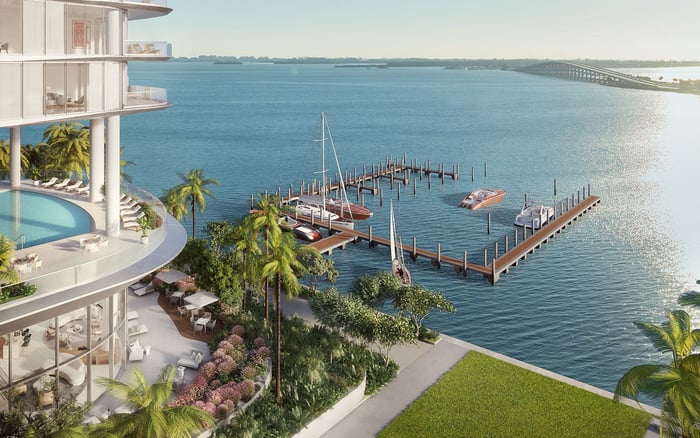
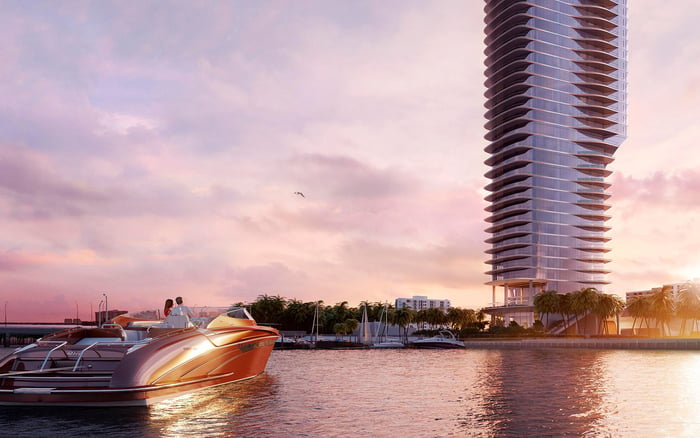
A buyer-oriented look at South Florida’s most coveted liveaboard-adjacent addresses and the marina ecosystems that power them, plus what to verify before you commit.
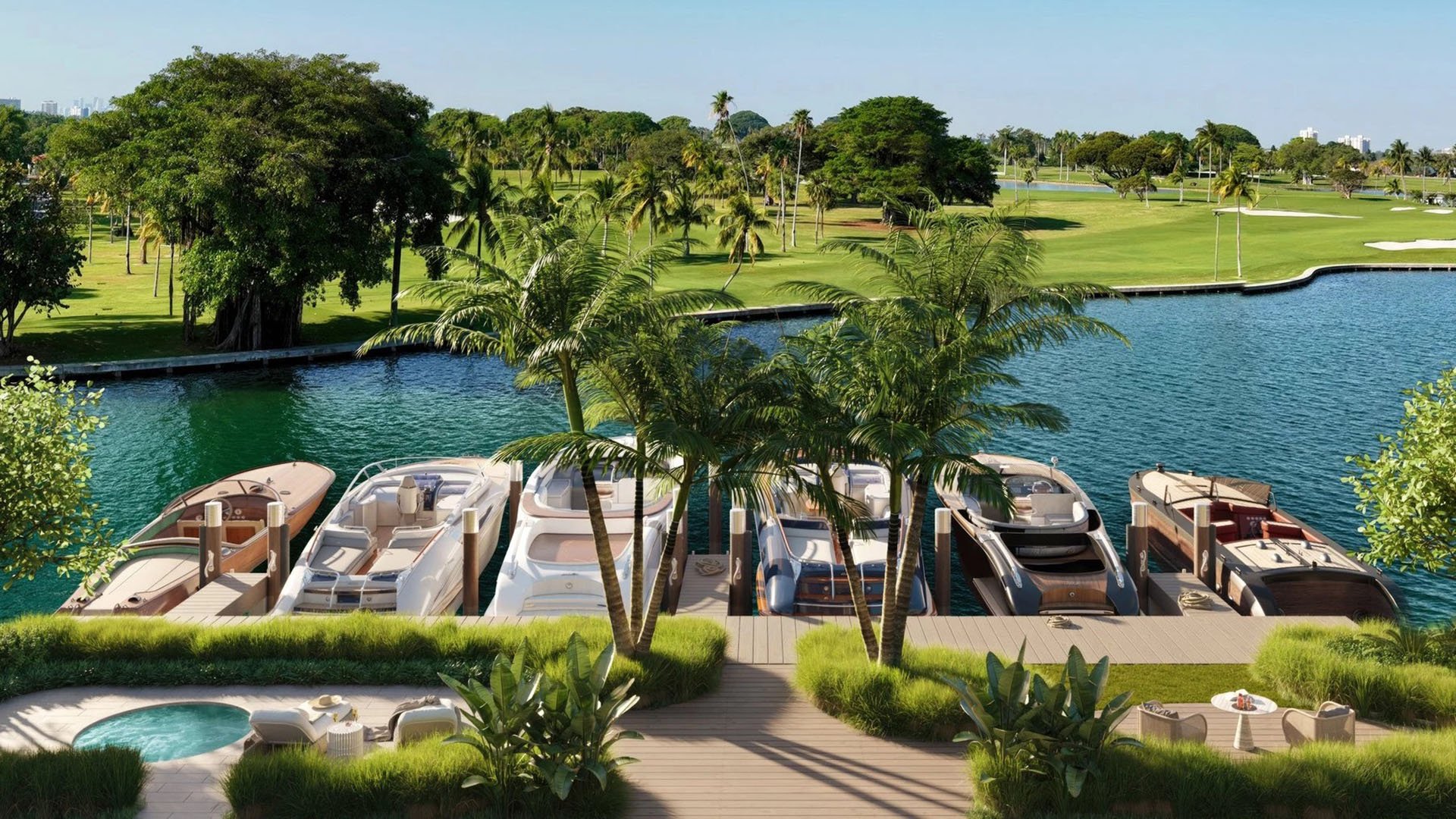
In South Florida’s luxury market, “waterfront” has shifted from a view category to a practical advantage. The most compelling addresses don’t merely sit near the water-they operate around it, with arrival sequences that work by tender, privacy that holds at the dock, and staff who understand a yacht isn’t a weekend accessory. It’s a moving residence with its own cadence, vendors, crew needs, and security sensitivities.
That is why mega-yacht marinas integrated into residential ecosystems have become a defining amenity set. At their best, these marinas function as quiet infrastructure: discreet access control, reliable car-to-boat transitions, and service pathways that keep provisioning out of the lobby. For buyers, the question is less about glamour and more about control-can your lifestyle move between land and sea without friction?
1. Fisher Island Marina - Fisher Island residential enclave
Fisher Island’s appeal is the separation itself. A marina presence here functions as part of a private-island routine: arrive by water, step into a gated residential world, and leave the city’s tempo behind.
For yacht owners, the advantage is alignment. Privacy expectations aren’t negotiable, and the marine environment isn’t an afterthought-it’s embedded in the destination’s identity, which matters when discretion is as important as access.
2. Miami Beach Marina - South of Fifth and South Beach adjacency
Miami Beach’s marina culture is established and highly visible. For nearby residents, the value is proximity to a full-service yachting hub paired with a walkable luxury neighborhood.
This integration is best suited to owners who enjoy a social, cosmopolitan waterfront-with the understanding that seasonality brings energy as well as activity.
3. Coconut Grove / Dinner Key Marina - Coconut Grove waterfront lifestyle
Coconut Grove’s marina ecosystem supports a different kind of luxury: neighborhood calm, mature landscaping, and a boating-forward culture that feels lived-in rather than staged.
For buyers who want to move from a residential routine into a sailing and yachting community without crossing the causeways, Grove adjacency can read as a practical form of privilege.
4. Bayside Marina (Downtown Miami) - Downtown waterfront access point
Downtown marina adjacency appeals to owners who want a central address: fast access to dining, events, and city services, plus convenient meeting points for guests.
From a liveability standpoint, the strongest integrations are the ones that keep boat-traffic logistics separate from residential circulation-protecting the home experience while still delivering waterfront immediacy.
5. North Bay Village marina corridor - Mid-Bay access between Miami and the beaches
North Bay Village occupies a strategic position for boaters who want efficient movement across the bay network. The appeal is geographic efficiency: not fully inland, not fully oceanfront, but well-positioned for both.
For yacht owners running a frequent in-town schedule, mid-bay placement can reduce friction and amplify spontaneity.
6. Haulover Marina area - North Miami Beach gateway
Haulover’s boating ecosystem is defined by access and utility. As a gateway zone, it offers a direct relationship to inlets, offshore waters, and a broader yachting supply chain.
For residents in nearby luxury enclaves, it can feel like a functional extension of home-especially if you prioritize getting out quickly over being seen.
7. Bal Harbour marina adjacency - Ultra-lux waterfront proximity
Bal Harbour’s brand of luxury is polished and controlled, and marina proximity complements it: a refined environment where the land-side lifestyle supports the water-side one.
The most compelling element is continuity of expectations. When the neighborhood standard is high, marine-adjacent living tends to follow.
8. Aventura / Dumfoundling Bay marina network - North Miami waterfront mobility
Aventura’s waterfront grid supports an active boating lifestyle, particularly for residents who value easy movement through protected waterways.
The strength here is day-to-day usability. For many owners, the best marina integration is the one you actually use, not the one you simply admire from the balcony.
9. Fort Lauderdale marina ecosystem - Broward’s yachting capital energy
Fort Lauderdale’s identity is inseparable from yachting. Marina-adjacent residential living can mean closer access to service providers, crew networks, and a community that treats boats as serious assets.
For mega-yacht owners in particular, operational fluency can translate into fewer delays and a deeper bench of expertise.
10. Bahia Mar Yachting Center area - Fort Lauderdale beachside marina access
Beachside marina access has a distinct appeal: ocean adjacency paired with resort-like living patterns. Bahia Mar’s broader yachting setting suits owners who want a destination feel without giving up the practicality of a major yachting city.
It’s a compelling hybrid-coastal lifestyle, marina proximity, and a sense of occasion on arrival.
A marina can be close without being integrated. Integration means the residential environment anticipates yachting realities.
Look for four signals:
First, circulation and discretion. The best properties plan for arrivals, guest handoffs, and service access-so provisioning carts never cut through a residential lobby.
Second, a coherent security model. Marina security should not run separately from residential access control. From car gate to dock gate, the experience should feel consistent.
Third, staff and service readiness. A truly yachting-aware environment understands crew routines, vendor coordination, and scheduling pressure, especially during peak season.
Fourth, weather protocols. South Florida buyers should ask how marina operations handle storm preparation-and what role, if any, the residential association plays in decision-making.
The right pairing is personal. Some buyers want to be steps from the ocean and nightlife. Others want a quieter bay rhythm. The key is matching the marina ecosystem to your preferred version of South Florida.
In Brickell, the appeal is vertical city living with waterfront adjacency and quick access to Miami’s broader bay network. If you’re building a full-service, lock-and-leave routine, 2200 Brickell is the type of address that fits the profile: design-forward, centrally placed, and aligned with a buyer who wants the city’s convenience as a baseline.
In Miami Beach, the marina conversation is inseparable from lifestyle visibility and walkability. Buyers who want a beachfront address that still reads as residential-first-not transient-often gravitate toward boutique, design-led projects such as 57 Ocean Miami Beach.
In North Bay Village, marina adjacency can feel quietly strategic, especially for owners who shuttle between Miami and the beaches. The next wave of luxury positioning here is increasingly residence-led, including projects like Continuum Club & Residences North Bay Village that speak to buyers who want a curated environment with water on both sides.
In Fort Lauderdale, the draw is operational depth: a market built around boating. For buyers who want a refined coastal lifestyle in a city that understands yachting, Riva Residenze Fort Lauderdale captures the idea of design-driven living that still feels fluent in the waterfront.
And in Hallandale, the marina conversation often intersects with resort-style planning and new luxury ecosystems. 2000 Ocean Hallandale Beach is a useful reference point for buyers who want a polished coastal residence with a strong amenity narrative and straightforward access to the broader boating corridor.
In ultra-premium real estate, the details that protect value are usually contractual, not decorative. When marina access is part of your decision, verify the following before you commit to the view.
Start with rights: is a slip deeded, leased, or simply preferred access? If it is leased, understand the term length, renewal conditions, and whether the right transfers on resale.
Next, costs: dockage fees, special assessments, utilities, and any required service packages. Clarify who sets fees and how increases are determined.
Then, dimensional reality: a slip may be marketed as “yacht-capable,” but your captain will focus on depth at mean low water, turning basin clearance, beam constraints, and tidal considerations.
Finally, governance: who manages the marina day-to-day, and how conflicts are resolved. A marina that feels calm is usually one with clear rules, consistent enforcement, and a culture that respects both residents and vessel owners.
The most sophisticated yachting lifestyle is rarely the loudest. It’s the one that works: arrivals that don’t require choreography, staff who resolve details before they become interruptions, and a residence that reads as a true home-not a staging area.
For buyers at the highest end, “integrated marina living” is ultimately about time. South Florida’s strongest waterfront ecosystems are the ones that give it back to you, with fewer transfers, fewer calls, and fewer compromises.
What qualifies as an integrated mega-yacht marina for a residential buyer? It means marina access and operations are designed to function with residential living, not merely alongside it.
Is a nearby marina as valuable as an on-site marina? It can be, if access is effortless and your dockage rights are clear and transferable.
Do marina-adjacent homes typically command a premium? Often yes, because convenience and lifestyle control can be as valuable as the view.
What should I confirm first when evaluating dockage options? Confirm whether your access is deeded, leased, or preferential-and what transfers on resale.
How important is marina management quality? Extremely important, since rules, staffing, and maintenance directly shape day-to-day usability.
Should I prioritize ocean access or protected waterways? Choose based on your real use pattern: offshore runs favor access; daily cruising favors protection.
Can HOA rules affect how I use my yacht? Yes, associations can restrict loading, noise, vendor access, and even certain service activities.
What is the biggest hidden risk in marina living? Ambiguity around rights and fees, which can change long-term cost and flexibility.
Are certain areas better for yachting services and crew logistics? Yes, some submarkets are more yachting-fluent, which can reduce friction for owners.
How do I align a residence with my yachting lifestyle? Match privacy, access, and service expectations to how often you boat and how you host.
To compare the best-fit options with clarity, connect with MILLION Luxury.
If branded residences are on your mind — as a home or as an allocation — we would be glad to share what we are seeing, privately.
Begin a quiet conversation