A practical 2026 due-diligence guide for families evaluating Jade Ocean Sunny Isles Beach, focused on the school-morning exit from unit door to Collins Avenue and beyond.

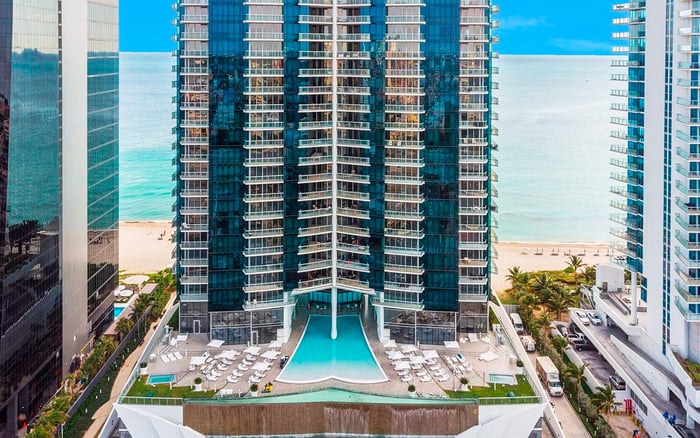
Jade Ocean Sunny Isles Beach is an oceanfront tower with the visual language many South Florida buyers want: height, glass, beach proximity, and the composed arrival that defines prime Sunny Isles living. For a family with school-age children, however, the most important inspection may not happen in the afternoon, in a sales gallery, or during a quiet weekend showing. It happens on a weekday morning, when the household needs to move from a private residence to the school route with discipline, predictability, and very little margin for delay.
The core 2026 due-diligence question is simple: can the family reliably leave around a typical 7:45 a.m. departure window? That question should be answered from the unit door, not from the lobby, and certainly not from a map pin. In vertical luxury living, the distance between a residence and school is only one part of the equation. Elevator timing, lobby congestion, valet coordination, parking access, driveway geometry, and the turn onto Collins Avenue can all define the morning reality.
For MILLION readers, this is not a warning against Jade Ocean. It is a sharper way to evaluate it. The building may work beautifully for the right family, provided the buyer validates the operating rhythm before purchase.
A school-morning test should begin where the child begins: inside the residence. The clock starts when backpacks are on, shoes are on, and the family is ready to leave. From that moment, the buyer should observe how long it takes to call and board an elevator, descend during peak demand, move through the lobby, collect the car or driver, exit the driveway, and join the school route.
High-rise living compresses many households into the same narrow window. If several residents are leaving for work, school, appointments, or airport runs, even a well-managed building can feel very different from the way it presents at 11:00 a.m. A buyer considering high floors should be especially attentive to vertical travel, because the elevator sequence becomes part of the school-day routine, not an occasional inconvenience.
This is why a polished lobby tour is not enough. The morning exit is a live system. It should be observed when that system is under pressure.
The elevator test is not merely about whether the building has enough service in theory. It is about how that service performs when families, staff, vendors, and residents overlap. A buyer should look for repeatability: does the wait feel manageable on one morning only, or across several weekday attempts?
The lobby should be judged with the same practical eye. A beautiful arrival sequence can still create friction if multiple families are moving through the same path at once. Strollers, sports bags, musical instruments, and school projects all change the space requirement. In a luxury tower, the morning lobby is less about ceremony and more about throughput.
Families should also test how the routine differs depending on who is managing the exit. A parent driving children personally will experience the building differently from a household using a driver, nanny, or coordinated valet request. Household staffing patterns can materially change whether Jade Ocean feels seamless or tight during the school run.
Valet and parking operations deserve a real-world test. A quiet showing hour can make any building feel effortless. A compressed school-morning window reveals whether the system can absorb simultaneous requests without turning a seven-minute process into a fifteen-minute bottleneck.
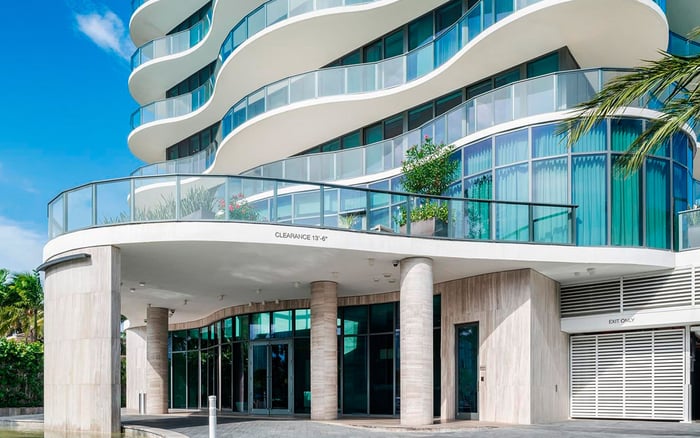
The buyer should observe how vehicles queue, where children can safely enter the car, and whether the porte-cochère or curb space becomes contested. Driveway geometry matters because the morning routine is not abstract. It involves doors opening, bags loading, seat belts fastening, and vehicles trying to exit without blocking one another.
If a family plans to self-park, the test should follow that exact routine. If the household expects valet to stage the car, test that version. If a driver or nanny will handle the route, test the handoff. The goal is not to prove that one arrangement is superior. The goal is to identify the arrangement that can be repeated on an ordinary Tuesday without drama.
For Sunny Isles Beach tower residents, Collins Avenue is not a distant traffic condition. It is part of the exit sequence. Even if the building itself performs smoothly, the turn into the corridor and the first few blocks of movement can determine whether the school run feels controlled or exposed.
A buyer should evaluate Collins Avenue during the same weekday period the family expects to use. The relevant comparison is not the best possible travel time. It is the dependable travel pattern after elevator, lobby, valet, driveway, and street-entry timing have already been included.
This is where map-distance thinking can mislead. A school may look close, yet the lived journey may depend on the building’s morning operations and the corridor’s congestion at that precise hour. Conversely, a route that appears slightly longer may feel more predictable if it aligns better with traffic flow and household staffing.
School bell times should be compared with the full exit sequence, not just drive time. A family that needs children seated before a strict start time should reverse-engineer the morning. Begin with the required arrival time, then subtract the realistic drive, the Collins Avenue exposure, the driveway exit, the lobby movement, the elevator descent, and a small buffer for children being children.
This is especially important for private-school families, where campuses, drop-off rules, and punctuality expectations can vary. The building may be a strong lifestyle fit, yet still require a more disciplined departure than a low-rise home or a residence with direct garage access.
The relevant lens is Sunny Isles by routine, oceanfront by lifestyle, private school by bell time, high floors by elevator dependency, and resale by future buyer scrutiny. Those five ideas explain why the morning test matters: lifestyle value and practical reliability must support one another.
The strongest due-diligence plan is tactile and repetitive. Conduct the test run more than once. Use the same weekday window. Start from the residence door if access permits, or from the most realistic equivalent available. Include the child-related details that actually slow a household down: bags, water bottles, uniforms, elevators missed by a few seconds, and the moment when a car is almost ready but not quite.
Buyers should also pay attention to emotional texture. Does the routine feel calm? Does the building staff appear accustomed to the morning surge? Is there a clear place for families to wait without blocking circulation? Does the driveway allow a child to enter the vehicle safely and efficiently? These small observations are often more revealing than any amenity list.
For Jade Ocean Sunny Isles Beach, the conclusion is conditional in the most important sense. The building can work for school-age families if the buyer validates the specific school timing, household staffing, elevator pattern, valet or parking process, driveway flow, and Collins Avenue exposure before purchase. Luxury finishes and oceanfront amenities may define the aspiration. The school-morning exit defines the weekday reality.
Is Jade Ocean Sunny Isles Beach suitable for families with school-age children? It can be, but the answer depends on testing the actual morning exit routine before purchase.
What time window should buyers test? Buyers should test the same weekday departure window their household expects to use, such as around 7:45 a.m.
Why should the test start at the unit door? Starting at the residence captures elevator, lobby, valet, driveway, and street-exit timing together.
Are map estimates enough for school planning? No. Map distance does not account for vertical living operations or Collins Avenue conditions.
What should families watch in the elevator system? They should observe wait times, crowding, and whether the timing is repeatable during peak demand.
Does valet performance matter for the school run? Yes. Valet timing can materially affect whether the family exits smoothly during compressed morning windows.
Why is driveway geometry important? The driveway must support safe, efficient loading when several residents may be leaving at once.
How does household staffing change the analysis? A driver, nanny, or parent-led route can each create a different timing pattern and stress level.
Should buyers test more than once? Yes. Repeated weekday tests give a clearer view of the building’s normal operating rhythm.
What is the best way to shortlist comparable options for touring? Start with location fit, delivery status, and daily lifestyle priorities, then compare stacks and elevations to validate views and privacy.
If you'd like a private walkthrough and a curated shortlist, connect with MILLION.
If branded residences are on your mind — as a home or as an allocation — we would be glad to share what we are seeing, privately.
Begin a quiet conversation