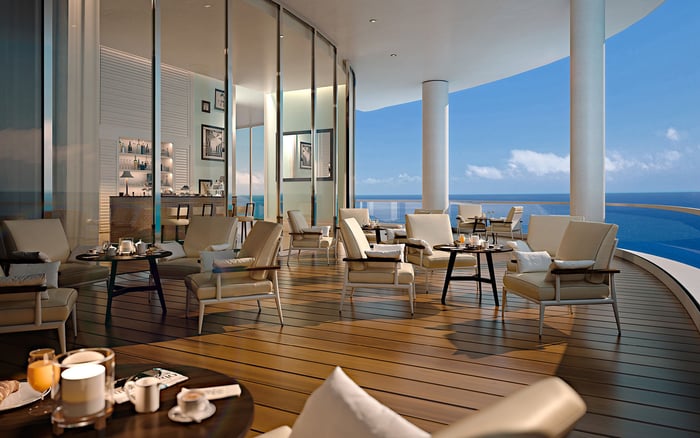
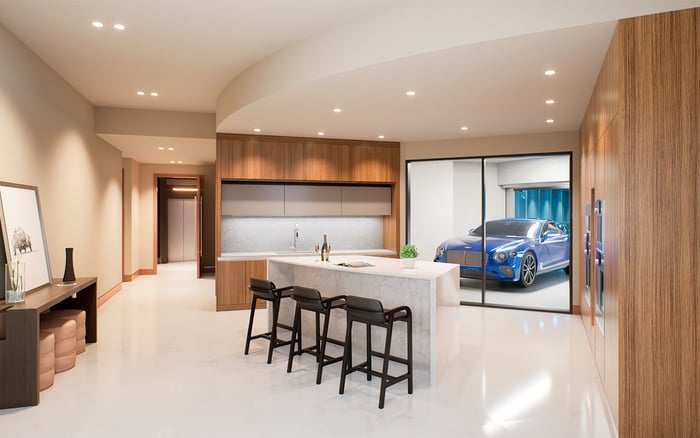
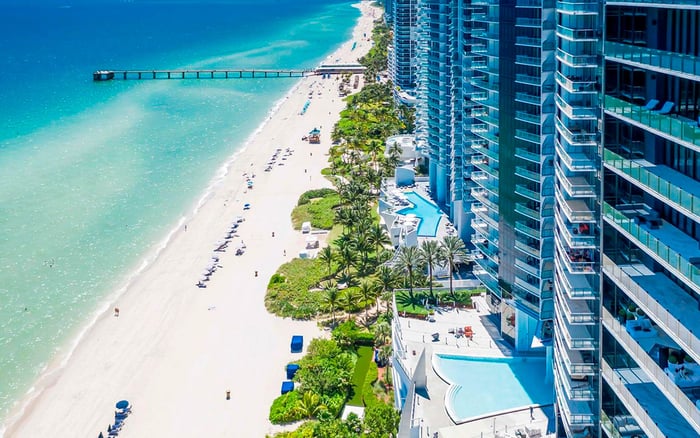
A discreet buyer’s guide to verifying wine-room and sommelier-service claims at Jade Ocean Sunny Isles Beach, with emphasis on operations, governance, insurance, staffing, and resale due diligence.
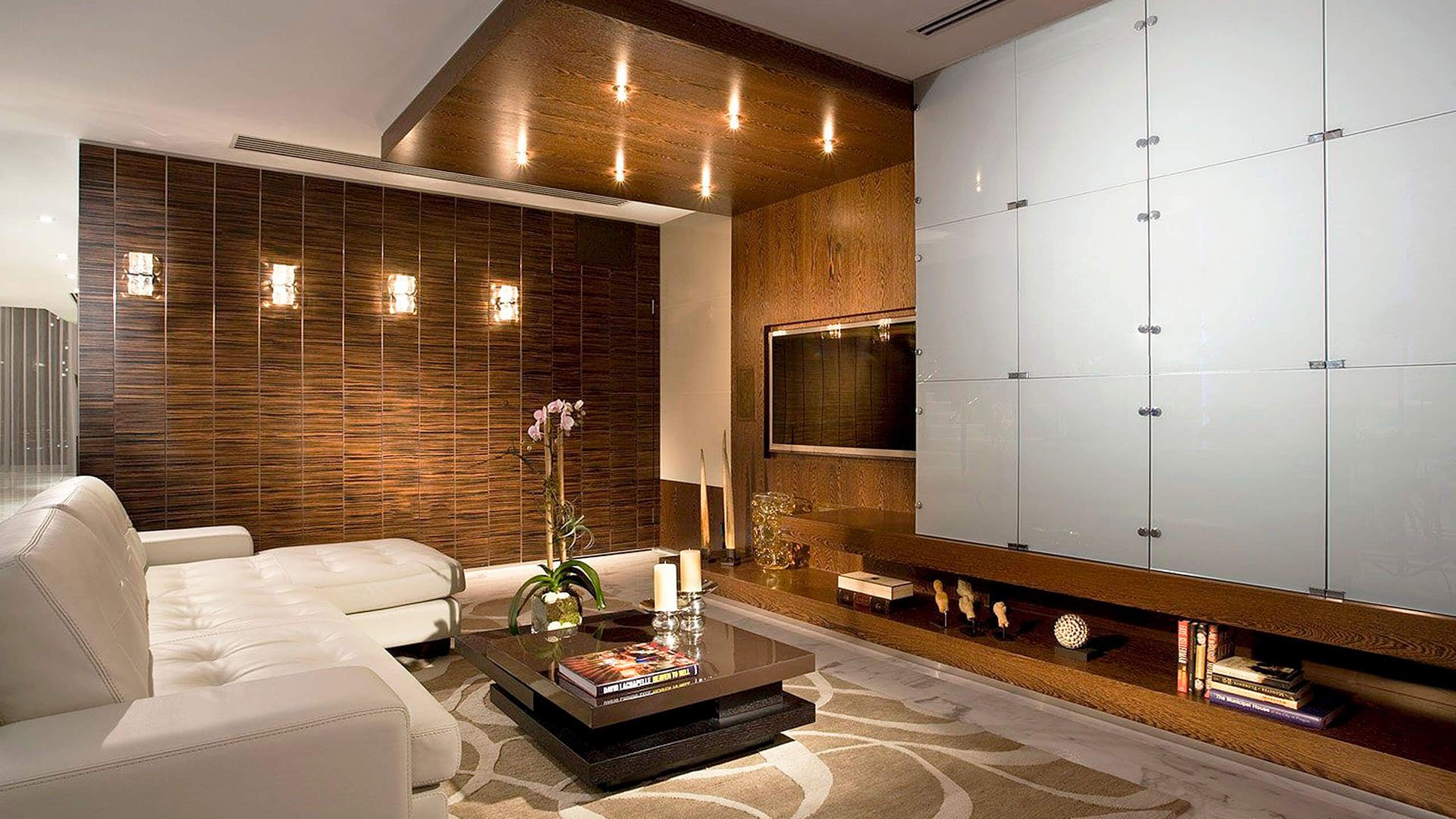
At the top of the South Florida condominium market, a wine room can signal culture, hospitality, and permanence with quiet confidence. For buyers considering Jade Ocean Sunny Isles Beach, however, the more valuable question is not whether wine language appears in a rendering, brochure, resale description, or casual building conversation. The question is what exists today, how it operates, who pays for it, and what protections apply when a collection has real value.
That distinction matters because Jade Ocean Sunny Isles Beach is a completed building. Current operations carry more weight than launch-era amenity language. A room that once looked compelling in early marketing may now function as a social lounge, a flexible event space, a decorative wine-themed area, or a true climate-controlled storage environment. Each version offers a different value proposition for a buyer who expects more than ambiance.
For an Oceanfront residence in Sunny Isles, wine storage is also a technical issue. South Florida heat, humidity, and storm-season power exposure make temperature control, humidity management, backup systems, maintenance protocols, and insurance responsibilities more consequential than they would be in a cooler, lower-risk climate.
The first step is to separate image from infrastructure. Ask whether any wine-related amenity is physically built, currently accessible, and described in the building’s present operating materials. Then ask what the room is actually designed to do. A true wine-storage facility should be evaluated differently from a lounge where wine is part of the atmosphere.
A serious buyer should verify whether the space maintains appropriate temperature and humidity, whether equipment is professionally maintained, whether backup power exists, and whether monitoring is continuous or intermittent. If the room is not intended for private bottle storage, that should be clear before a purchase decision is framed around it.
The same discipline applies to comparisons. In Sunny Isles, buyers may also be looking at Bentley Residences Sunny Isles, The Ritz-Carlton Residences® Sunny Isles, or Jade Signature Sunny Isles Beach. Amenity imagery can be seductive across the market, but operating reality is what shapes daily life: hours, reservation rules, staffing, fees, and whether residents actually use the spaces as advertised.
For collectors, the most important wine-room questions are practical. Is private storage available, or is the amenity primarily for tastings and events? If bottle storage exists, is capacity assigned to individual residences or shared among residents? Are there locks, logs, temperature records, and access controls? Who can enter the room: owners, tenants, guests, staff, outside vendors, or event personnel?
Liability should be addressed before the first bottle arrives. If wine spoils because of system failure, a power event, maintenance interruption, or improper handling, who is responsible? If a bottle is misplaced or removed, what insurance applies? If the association does not insure private collections, buyers should know whether they need separate coverage and whether the building’s rules permit the kind of collection they intend to store.
Maintenance is another quiet indicator of seriousness. A polished room without a documented maintenance contract is not the same as a monitored cellar with routine service and accountability. Buyers should ask how equipment is serviced, how often conditions are checked, and whether any incident history appears in recent building records.
The word sommelier can mean several things in a condominium setting. It may refer to a permanent staff member, a third-party vendor, a concierge referral, a tasting-event host, or an informal resident-led program. Those distinctions affect cost, reliability, exclusivity, and legal exposure.
If sommelier service is discussed, verify credentials, availability, booking rules, cancellation policies, and fees. Ask whether the service is included in association dues, billed per event, arranged through an outside vendor, or offered only at periodic tastings. If the service involves alcohol sales, corkage, private events, or vendor participation, licensing, insurance, vendor approval, and event policies should be reviewed with care.
There is a meaningful difference between an HOA-funded amenity and a concierge who can recommend a wine professional. There is also a difference between a standing program and a one-time event. The former may influence lifestyle value; the latter may be enjoyable, but it should not be priced like permanent infrastructure.
Resale descriptions often inherit language from older marketing, prior listings, or embellished amenity summaries. That does not make the language false, but it does make it insufficient. For a Resale at Jade Ocean, buyers should confirm wine-related claims through current building materials, management, the association, and the documents governing actual use.
The key documents include the condominium declaration, rules and regulations, current budget, reserve information, management contract, amenity policies, and recent board minutes. Together, these materials can show whether a wine room is merely available as a space, supported as an amenity, funded as an ongoing obligation, or subject to rules that limit its usefulness.
Budget treatment is especially important. If wine-related service requires staffing, climate equipment, vendor management, or insurance, those costs must sit somewhere. They may appear in association expenses, be passed through to users, or depend on event-by-event arrangements. Buyers should know which structure applies before they attach premium value to the feature.
For a Sunny Isles buyer, the smartest comparison is not amenity count. It is amenity usability. A wine room with limited access, no private storage, event-only programming, or high reservation friction may carry less practical value than a simpler, better-run hospitality space elsewhere.
Nearby luxury towers should be compared on the lived details: when the amenity is open, how reservations are handled, whether guests are allowed, what private events cost, how vendors are approved, and whether staff can explain the rules without ambiguity. A building such as Turnberry Ocean Club Sunny Isles may enter the conversation not because its imagery is interchangeable, but because ultra-premium buyers often compare towers through the lens of service consistency and governance.
Jade Ocean’s value should ultimately be evaluated through the lens of current resident experience. If wine-related amenities are real, maintained, and clearly governed, they can enhance the lifestyle of a collector or frequent host. If they are primarily decorative or episodic, they may still be pleasant, but they should not be treated as equivalent to a private club-style cellar program.
Before relying on wine-room or sommelier-service language, request clear answers across five categories.
First, what is built? Confirm whether the space is a cellar, lounge, tasting room, multipurpose room, or event area. Second, what is controlled? Temperature, humidity, access, equipment maintenance, and backup power all matter in South Florida. Third, who pays? Determine whether costs are covered by the association, charged to users, or handled through third-party vendors. Fourth, who governs? Review reservation rules, guest policies, private-event charges, vendor approval, and alcohol-related requirements. Fifth, who is liable? Clarify responsibility for spoilage, theft, damage, and service interruption.
The best answers are specific. The least useful answers rely on adjectives such as exclusive, curated, or world-class without explaining staffing, rules, budgets, and risk. In luxury real estate, precision is part of the amenity.
Does Jade Ocean Sunny Isles Beach have a verified active sommelier program? Buyers should not assume an active program without current confirmation from building materials, management, or association records.
Is a wine room the same as a climate-controlled cellar? No. A wine room may be decorative, social, multipurpose, or storage-oriented, so the technical specifications must be verified.
What documents should a buyer request? Request the declaration, rules and regulations, current budget, reserve information, management contract, amenity policies, and recent board minutes.
Why is backup power important for wine storage in South Florida? Heat, humidity, and storm-season outages can threaten wine quality if climate systems are not protected and monitored.
Who is responsible if stored wine spoils? Liability depends on the building’s rules, insurance structure, and storage agreement, all of which should be reviewed before storing valuable bottles.
Can guests use a wine-related amenity? Guest access depends on association rules, reservation policies, event approvals, and any applicable fees.
Are sommelier services usually included in dues? They may be included, billed separately, vendor-based, or event-only, so the funding model should be confirmed in writing.
Should resale listing language be trusted? Resale language is a starting point, not proof. Current operating records and management confirmation matter more.
What matters most for collectors? Assigned capacity, access control, climate monitoring, insurance responsibility, and maintenance history are the core issues.
How should Jade Ocean be compared with nearby towers? Compare hours, staffing, reservation friction, fees, governance, and resident usage rather than relying on amenity photographs.
When you're ready to tour or underwrite the options, connect with MILLION.
If branded residences are on your mind — as a home or as an allocation — we would be glad to share what we are seeing, privately.
Begin a quiet conversation