For today’s ultra-premium buyer, true luxury is not only what a residence shows, but what it quietly solves: privacy, protection, and seamless operations. In South Florida, where oceanfront visibility can be as intense as the lifestyle is effortless, the best properties treat security and service as architecture, not accessories. This editorial outlines how “security by design,” layered protection, and discreet back-of-house planning are reshaping what sophisticated owners should ask for, whether purchasing a waterfront estate or a Miami-beach condominium.
Luxury once announced itself. The grand façade, the oversized chandelier, the entry sequence that telegraphed the address before the vehicle stopped. In today’s ultra-premium market, many sophisticated owners are choosing a different signal: restraint.
The modern ideal is a residence that operates like a private club and presents like a gallery, calm, controlled, and quietly confident. The home should feel curated, not fortified; protected, not performative.
This shift is not merely aesthetic. High-visibility wealth creates practical exposure and lifestyle friction. Owners want family and guests to move through a property without feeling watched, managed, or on display. The expectation is simple: the house should lower risk and reduce interruption while still feeling warm, residential, and beautiful.
That is the essence of invisible luxury. It is not “more hardware.” It is less anxiety, delivered through architecture, planning, and systems that disappear into the experience.
Luxury security advice often returns to the same principle: security by design. Protection performs best when it is embedded early, through site planning, perimeter logic, and coordinated systems. When security is treated as an afterthought, it tends to look like one.
Add-on measures can read as improvised: mismatched cameras, exposed conduit, harsh fixtures, and gates that feel reactive rather than intentional. Beyond aesthetics, that patchwork approach can introduce operational confusion. If control points are unclear, residents and staff create workarounds, and workarounds are where vulnerability lives.
Designed-in security is typically quieter. Landscape and architecture do much of the first-line work: controlled approach, defined boundaries, layered entry, and a sense of order that feels natural. Technology then becomes a supporting layer, not the visual headline.
When touring a home in South Florida, use a simple litmus test. Does the property feel thoughtfully controlled, or merely monitored? A well-designed residence delivers ease because the control points are deliberate, intuitive, and consistent with the home’s overall language.
High-end residential security is often described as layered. The logic is straightforward: do not depend on a single device, person, or protocol. Instead, create concentric rings of deterrence and control so that if one layer fails, the next one still holds.
Layer one is the perimeter. For an estate, that usually means controlled access points, subtle barriers formed by walls and landscaping, and lighting that supports awareness while remaining elegant. In a condominium context, the “perimeter” begins earlier than many buyers expect. It starts at the streetscape, the arrival court, and the way a building guides residents and visitors from public space into private space.
Layer two is the building envelope: the doors, windows, locks, and any other points of entry. In premium homes, quality construction becomes a security feature. A residence that is well-built tends to be quieter, tighter, and more predictable in how it closes, seals, and performs. That predictability matters.
Layer three is interior control, including safe zones and room-level management. Most owners do not want a home that feels like a vault. Many, however, value the option to compartmentalize access: staff circulation separated from family areas, guest access that is welcoming but limited, and private suites that can be secured without shutting down the entire house.
The best properties feel open where they should feel open, and protected where it counts, with no theater required.
In the ultra-premium market, security is not a standalone feature. It is a lifestyle feature. Protection is increasingly expected to operate with the smoothness of hospitality: seamless entry for residents, clear verification for visitors, and a frictionless experience for trusted staff.
A recurring point in high-end protection frameworks is that security is not only technology. It is people, procedures, technology, and physical security working together. Buyers should look for coherence. Expensive equipment does not automatically create a secure posture if processes are unclear or circulation is poorly planned.
This is also where modern access control comes into view. Industry marketing around luxury door systems often emphasizes integrated access control that preserves a premium design appearance rather than a fortified look. Biometric entry is also frequently positioned as a way to reduce key and credential vulnerabilities while enabling tighter control and audit trails.
Not every buyer wants biometrics, and not every residence needs it. The practical takeaway is the mindset: access should be manageable, revocable, and discreet. A sophisticated home is one where you can change permissions over time without changing the architecture, or the mood.
True privacy is rarely achieved by a single gate or guard. In many of the strongest luxury homes, privacy begins architecturally, through orientation, massing, setbacks, and landscape buffers that reduce exposure without looking defensive.
That matters in South Florida, where oceanfront and water-facing properties can be visually exposed and outdoor living is year-round. If a home does not control sightlines, owners end up compensating with constant shade adjustments, screens, or behavioral changes that diminish the ease of the lifestyle.
Architectural privacy toolkits typically include landscape screening, careful window placement, and outdoor-room planning that prevents direct views into primary living spaces. The best examples do not deny light. They curate it, bringing brightness inward while limiting outward visibility.
Courtyard concepts are frequently discussed as a way to pull light into the center of a home while keeping key moments protected from the street and neighboring vantage points. The effect is both practical and emotional: residents feel connected to the outdoors without feeling exposed.
For due diligence, walk the property the way a neighbor would. Look back at the home from the approach and from adjacent viewpoints. Ask what is visible, from where, and at what time of day. A truly private home feels composed from every angle, not only the photographer’s.
Discretion in residential design is not new. Historically, servants’ quarters were typically planned as separate, subordinate spaces, often in an attic, basement, or distinct wing. The social context has changed, but the architectural lesson remains useful: high-functioning homes separate the theater of living from the mechanics of living.
In contemporary ultra-luxury, large properties often rely on an invisible workforce: property management, housekeeping, landscaping, and specialized vendors. This reality is frequently noted in coverage of luxury-estate service economies, where a home operates less like a static asset and more like a living system with recurring workflows.
You do not need a large staff to benefit from back-of-house intelligence. Even owners who prefer minimal staffing still need deliveries handled quietly, waste managed discreetly, equipment stored properly, and maintenance performed without intersecting the main entertaining axis.
A well-run property is defined by what guests do not see and what owners do not have to think about. When operations disappear, the home becomes genuinely restorative.
Back-of-house design is where a home either becomes a sanctuary or a stage that demands constant management.
One of the most practical invisible-luxury features is a true buffer zone between entertaining and operations. Butler’s pantries are often promoted in luxury residential design as staging and storage hubs for hosting. They support prep, cleanup, and glassware management while keeping main-kitchen activity less visible to guests. In many high-end plans, these spaces have evolved into highly specified service centers rather than utilitarian closets.
Beyond the pantry, evaluate the logic of circulation. Can catering arrive without crossing the main foyer? Is there a dedicated route for groceries, linens, and maintenance that does not cut through primary living areas? When circulation is unresolved, a home forces operational traffic into the same corridors that are meant to feel serene.
Storage is part of the same equation. Look for whether storage is where it should be, or scattered in a way that creates visual clutter and daily friction.
In single-family homes, buyers may also encounter staff or guest annexes, sometimes described as casitas. These self-contained secondary quarters with separate entrances can support discretion and operational efficiency, whether used for extended family, security personnel, or visiting staff.
The core value is not the label. It is flexibility: spaces that allow the household to scale up for peak weekends and scale down for quiet seasons without changing how the home feels.
In South Florida, some of the most meaningful privacy features are not inside the residence at all. They are embedded in the community.
A gated community can offer controlled entry, dedicated patrols, and a culture of discretion that is difficult to replicate on an open street. As one widely cited example in the luxury conversation, Gables Estates in the Coral Gables area has been reported as one of the most expensive U.S. neighborhoods and is known for intensive private security and controlled access.
For buyers, community-level security changes the baseline. It can reduce random traffic, limit casual observation, and simplify daily life. It also reframes what you need inside the home. A residence within a controlled environment can often prioritize softer privacy cues: landscaping, setbacks, and quiet arrival sequences rather than overt defensive measures.
The goal is a layered experience that reads as privilege, not procedure. When the neighborhood handles the first layer, the home can remain elegant and calm.
Condominium buyers sometimes assume privacy and security are “the building’s problem.” In practice, the most discerning purchases happen when the buyer audits the building with the same rigor used for a well-run estate.
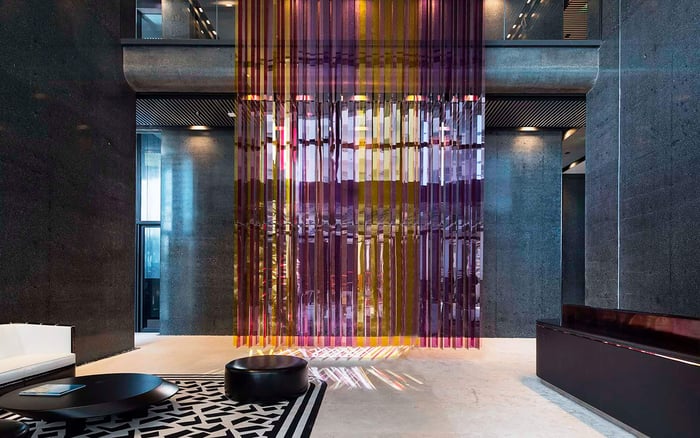
Start with arrival. Does the property provide controlled entry and a calm transition from public to private? Then focus on the subtleties that define daily life: sightlines from the street into the lobby, the ease of being greeted without being exposed, and the route from vehicle to residence that does not feel performative.
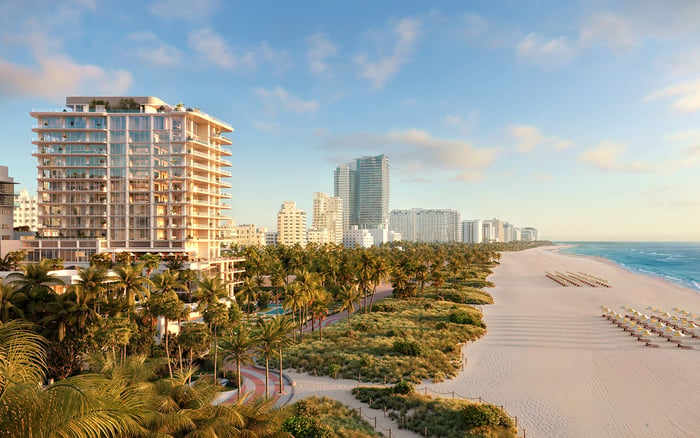
In Miami Beach, buyers often cross-shop landmark oceanfront addresses for lifestyle as much as for floor plans. Properties such as Faena House Miami Beach and Setai Residences Miami Beach sit within a market where privacy is both a design challenge and a differentiator.
Similarly, newer branded offerings like Shore Club Private Collections Miami Beach and The Ritz-Carlton Residences® Miami Beach underscore how the luxury buyer increasingly values discreet service, controlled access, and a hospitality-grade experience.
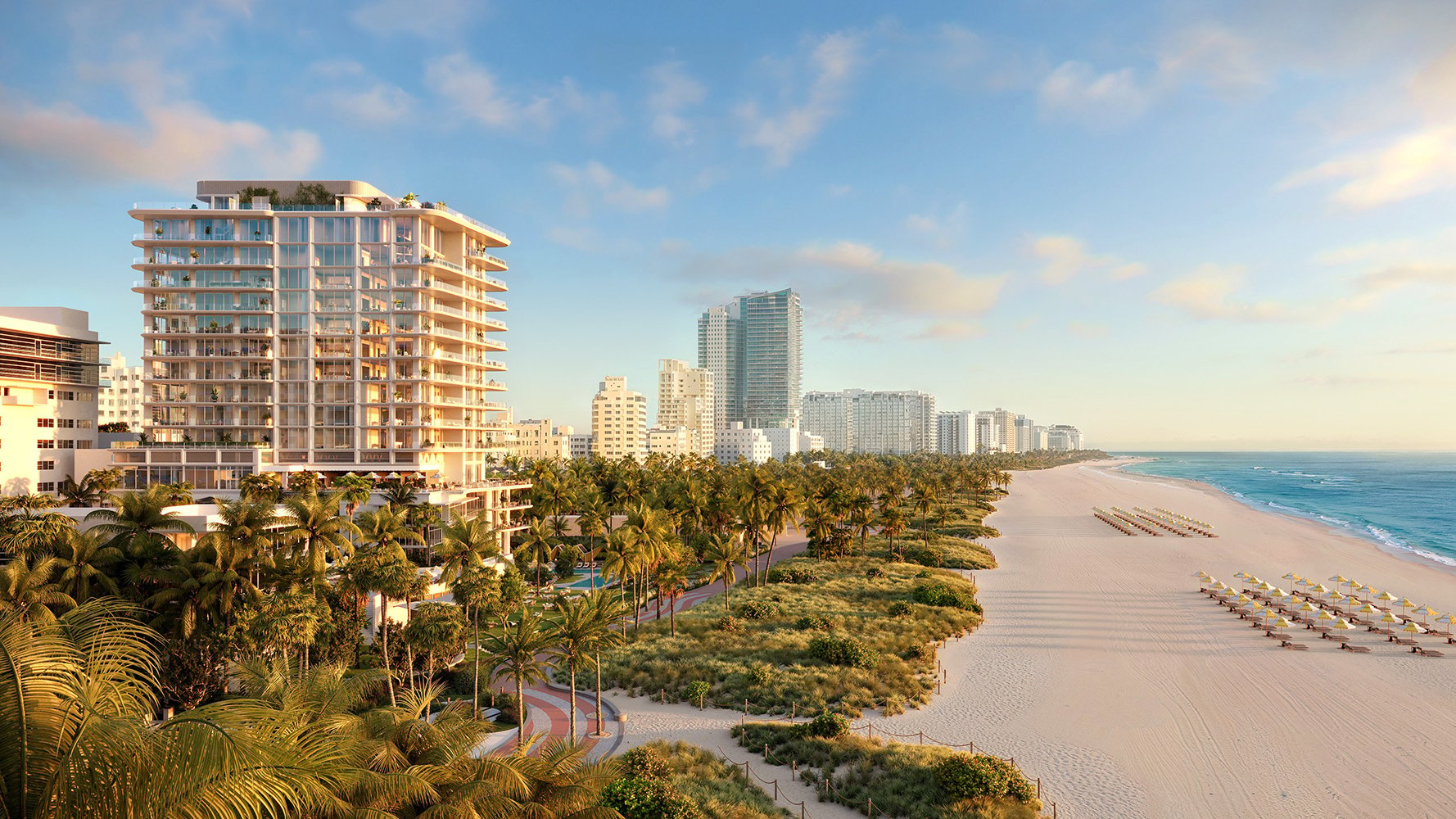
For a more residential, boutique oceanfront posture, 57 Ocean Miami Beach speaks to a buyer profile that prioritizes serenity and restraint, where the building’s scale can contribute to a quieter daily rhythm.
These examples are less about any single amenity and more about a shared expectation: the building should behave like a private environment, with systems and circulation that protect residents without advertising the protection.
Invisible luxury rewards buyers who ask precise questions. The goal is not to interrogate sellers or building teams. It is to confirm that the property’s promise is supported by design, operations, and a coherent security posture.
Bring the conversation back to intent and workflow. If a residence claims to be private, ask how it stays private during normal life: deliveries, vendors, weekend guests, and quiet weekdays. If a building claims to be secure, ask how that security is experienced, not just how it is equipped.
Consider asking:
If the answers are clear and the experience feels calm, you are likely looking at a residence designed for real life, not simply for marketing. The most valuable luxury is the kind you do not have to manage.
What does “security by design” mean in a luxury home? It means protection is integrated into the property from the beginning through planning, access logic, and coordinated systems rather than added later as visible hardware.
Is a layered security approach better than buying more technology? Yes in principle. Layering spreads risk across perimeter, envelope, and interior controls so no single failure compromises the whole property.
Do biometrics make sense for a private residence? They can, but it is a preference. The core value is controllable access and accountability, whether via biometrics or other high-end access systems.
Why do back-of-house spaces matter if I do not have full-time staff? Because deliveries, storage, maintenance, and entertaining still create operational traffic. Good service circulation protects privacy and keeps living spaces serene.
Is community security really meaningful for privacy? Often yes. A controlled-entry neighborhood or well-managed building can reduce exposure before anyone reaches your front door.
For tailored guidance on privacy-first homes and discreetly exceptional residences, explore MILLION Luxury.
If branded residences are on your mind — as a home or as an allocation — we would be glad to share what we are seeing, privately.
Begin a quiet conversation