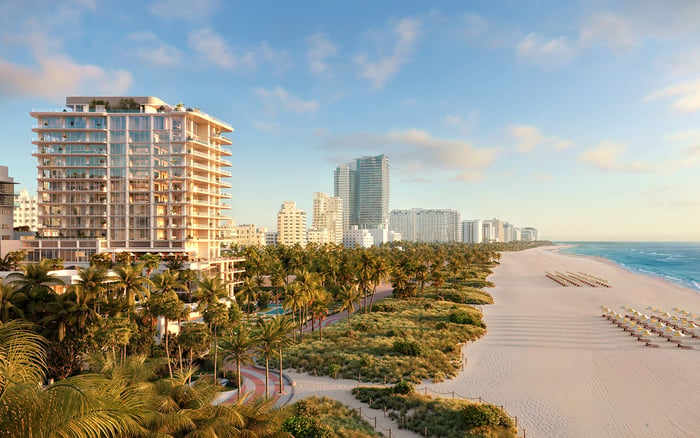
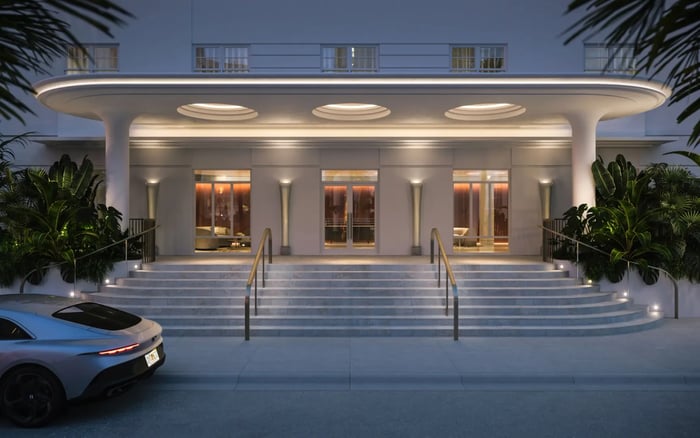
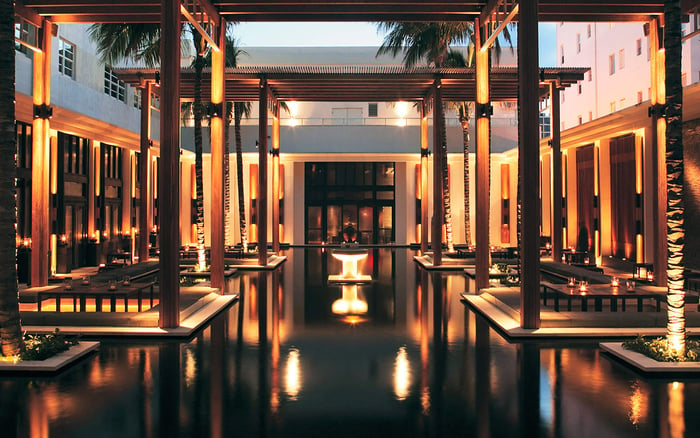
Ultra-wealth buyers are prioritizing privacy, indoor-outdoor living, and design-forward discretion over flash. For South Florida, the result is a sharper focus on sightlines, security, and lifestyle outcomes that feel effortless, not performative.
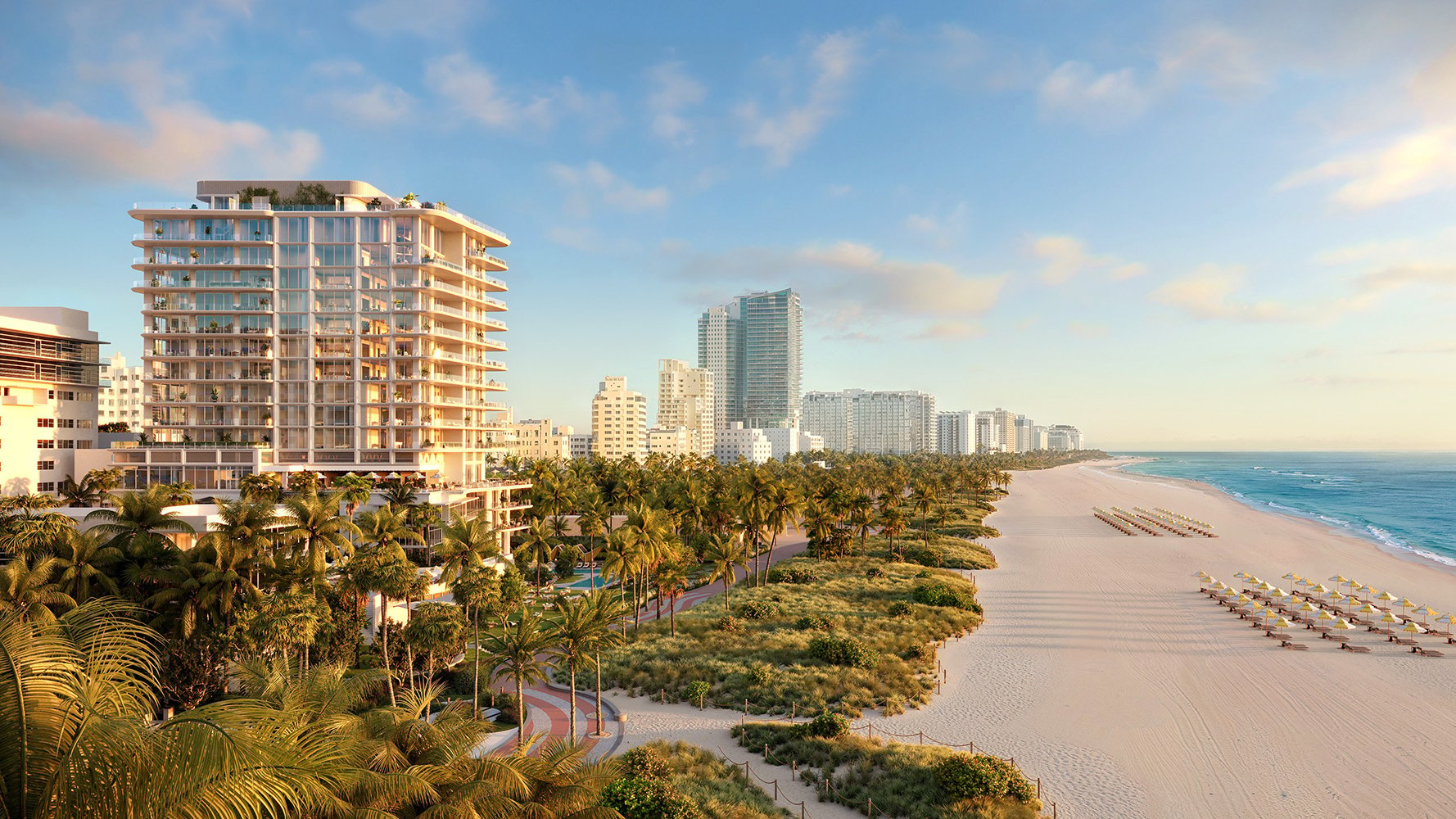
Quiet luxury is not a step down from excellence. It is a sharper definition of excellence for buyers who no longer need a home to broadcast status. Across U.S. luxury markets, pricing and buyer behavior increasingly reward discretion, control, and ease over spectacle.
In Orange County, California, Realtor.com reported the median listing price rising from about $800,000 in October 2016 to about $1.36 million in recent months, a shift tied to demand for “quiet luxury” and gated, exclusive enclaves. Laguna Beach was a standout example, with a median listing price climbing to about $4.13 million from about $2.79 million nine years earlier. The takeaway is not simply that values increased. Buyers are paying for a more edited prestige: calmer design, protected privacy, and the confidence that daily life feels managed.
South Florida is built for this recalibration. Oceanfront living, service-driven buildings, and the emotional pull of light and water are already core here. The new question is not whether you can see the ocean. It is whether you can live with that view while feeling insulated from being seen.
Recent headlines around ultra-luxury deals have become a proxy for what privacy now commands. The Colorado Sun reported the $120 million sale of St. Benedict’s Monastery in Snowmass, described as a roughly 3,700-acre private mountain valley with views of the Elk Mountain Range. Realtor.com also covered Palantir CEO Alex Karp’s purchase of the Snowmass monastery property, framing the appeal around seclusion.
For a Miami Beach buyer, the lesson is not that you need 3,700 acres. It is that the top of the market explicitly prices in perimeter control: who can approach, who can observe, and how predictable the home feels day to day.
In vertical coastal living, privacy becomes both a design challenge and an operational one. Your perimeter is not a fence line. It is the arrival sequence, elevator behavior, sightlines from neighboring terraces, and whether you can use indoor-outdoor spaces without feeling on display.
That is where a building’s culture matters as much as its finishes. In a residence like Setai Residences Miami Beach, many buyers shop for composure: an experience that stays protected and unhurried even in peak season.
South Florida buyers instinctively understand the emotional value of a clean horizon. Yet the quiet-luxury buyer is underwriting more than today’s view. They are paying for the odds that the view remains usable, undisturbed, and private.
Coldwell Banker Global Luxury highlighted a “rare double oceanfront promontory parcel” in Laguna Beach listed at $32 million, noting there are only about six promontory parcels in town and few are as large as this double parcel. Scarcity explains part of the premium, but geometry does too. Promontory positioning and setbacks help buffer neighboring sightlines.
Condo buyers can apply the same logic through due diligence.
“View risk” is not only aesthetic. Sightlines depend on zoning, future development rights, and what is likely to rise nearby. Quiet luxury is the discipline to pressure-test the future around you, not only the staging in front of you.
The outdoor room has moved from a nice-to-have to a requirement. House Beautiful’s 2025 luxury feature roundup reported that indoor-outdoor living is a top priority, with more than 60% of luxury property specialists ranking it among clients’ leading demands.
In South Florida, the priority is not novelty. It is continuity. The most compelling residences make the terrace feel inevitable: breakfast outside that functions like a dining room, shaded seating that feels like a living room, and materials that perform in salt air while still reading as polished at night.
This is also where “quiet” becomes visible. A terrace can be generous yet still discreet when it is layered with planting, lighting that avoids glare, and furniture plans that pull attention outward instead of toward nearby units.
Projects with a strong hospitality mindset can resonate for exactly this reason. In Faena House Miami Beach, the appeal for certain buyers is not merely the address. It is the sense of a curated experience, with fewer rough edges between private life and the city beyond.
Real privacy is not achieved by sealing off a home or sacrificing natural light. The best solutions preserve openness while removing the feeling of being watched.
Houzz notes that privacy can be improved while preserving daylight through tactics like frosted or obscure glazing and window films that block sight lines without fully enclosing a home. In high-rise living, these approaches are especially relevant at sensitive thresholds such as baths, dressing areas, and certain indoor-outdoor transitions.
For outdoor space, House Beautiful’s guidance on private yards emphasizes design solutions like landscaping and screening strategies rather than relying only on tall barriers. On a terrace, that can translate to:
Even hillside planning offers a useful analogy. Forbes & Partners points to Koh Samui, where orientation and elevation can preserve sea views while limiting exposure to neighboring homes. Fratantoni Design similarly describes multilevel, tiered planning and terraces that capture panoramic views while using changes in level to separate spaces. In a South Florida condo, “elevation” becomes the interplay of floor height, parapets, and micro-topography created by planting, screens, and furniture placement.
Quiet luxury requires a broader definition of safety. A lobby desk and garage cameras are baseline. Ultra-prime buyers look for layered protection that is present, disciplined, and understated.
Champion Security Agency argues that high-end estates often combine professional on-site guards with advanced surveillance and access control to deter threats before they escalate. In a condominium, the parallel questions are practical:
Cybersecurity is now part of the same conversation. Champion Security Agency also flags cybersecurity as a growing concern in smart luxury homes, recommending secured networks, encryption, and multi-factor authentication. For buyers, that becomes actionable due diligence: clarify which systems are connected, who can access them, and how credentials are managed.
This is where branded, service-forward buildings can stand out, particularly when they emphasize controlled arrivals and a consistent operational culture. For example, The Ritz-Carlton Residences® Miami Beach can appeal to buyers who value discretion and service as part of the security equation.
Even in a national market, the highest-end sales continue to cluster in a few lifestyle-led places. Realtor.com’s 2025 roundup of the most expensive U.S. home sales reported the year’s priciest deal at $225 million in Naples, Florida, and noted that Florida and California accounted for 8 of the top 10 sales.
That concentration matters. In the ultra-prime tier, Investment logic often follows lifestyle logic. Liquidity and long-term demand tend to favor markets where global buyers genuinely want to spend time, and where the product is scarce and defensible.
It is also a reminder that quiet luxury is not anti-glamour. It is glamour with gates, protocols, and pause. That is why gated-community thinking continues to influence decisions even in urban beachfront settings: buyers want environments that feel curated, not merely expensive.
In Miami Beach, a project like Shore Club Private Collections Miami Beach can speak to this sensibility when the proposition is private residential living supported by a hospitality-grade ecosystem, with discretion positioned as a core amenity.
Quiet luxury becomes clear when you audit the details that shape daily life.
Privacy geometry: not just square footage Study cross-views, terrace relationships, and corridor exposure. Identify where sightlines originate, not only what you can see.
Light discipline Prioritize residences that retain daylight even with privacy measures in place. Solutions that preserve brightness tend to read as more luxurious over time.
Indoor-outdoor usability A terrace should function as a real room, with shade, wind comfort, and a layout that supports entertaining as well as solitude.
Security layers Assess arrival control, staffing, access protocols, and surveillance as one integrated system. Quiet luxury is when you stop thinking about it.
Digital hygiene Treat smart-home features like an IT environment. The more capable the technology, the more important the controls.
What does quiet luxury mean in real estate? It describes a premium placed on discretion, comfort, personalization, and lifestyle outcomes rather than overt display.
Why is privacy rising in importance for luxury buyers? Recent ultra-luxury purchases are frequently framed around seclusion, and buyers increasingly price in control over visibility and access.
Is Oceanfront living compatible with true privacy? Yes, but it depends on sightlines, terrace design, building operations, and the surrounding development context.
How can I improve privacy without losing natural light? Options such as obscure glazing and window films can reduce sight lines while keeping rooms bright.
What makes a terrace feel “quiet luxury” rather than exposed? Layered screening, thoughtful furniture orientation, and lighting that avoids glare can make outdoor space feel like a private room.
Should buyers worry about view permanence? Yes. A view is not only today’s horizon; future zoning and nearby development rights can alter sightlines and privacy.
What security features matter most in ultra-prime living? Layered access control and surveillance are key, ideally supported by staff and protocols that deter issues before they escalate.
Why does cybersecurity matter in a luxury home? Connected locks, cameras, and controls can create vulnerabilities if networks and credentials are not properly secured.
Does quiet luxury impact Investment potential? It can, since homes that deliver durable lifestyle benefits like privacy, usability, and defensible views often sustain demand.
How do I compare buildings when finishes look similar? Focus on what is hardest to replicate: privacy geometry, operational culture, arrival control, and the quality of indoor-outdoor living.
Explore discreet buying guidance with MILLION Luxury.
If branded residences are on your mind — as a home or as an allocation — we would be glad to share what we are seeing, privately.
Begin a quiet conversation