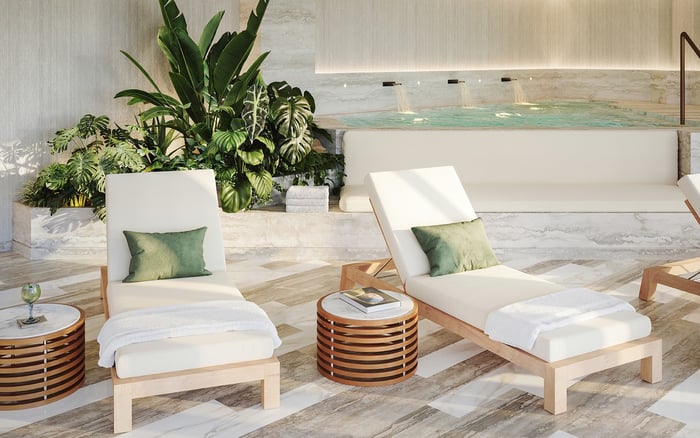
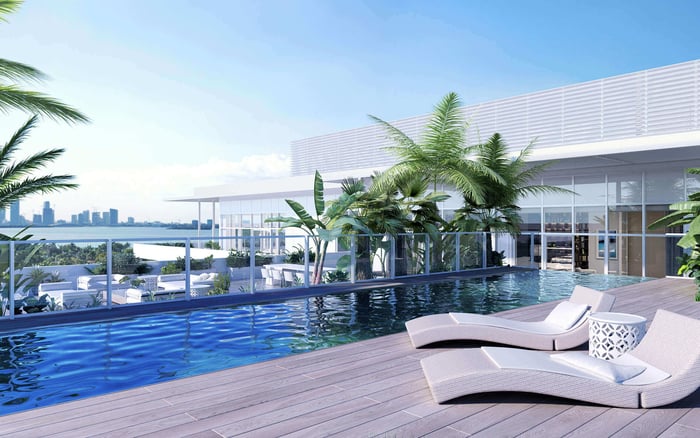
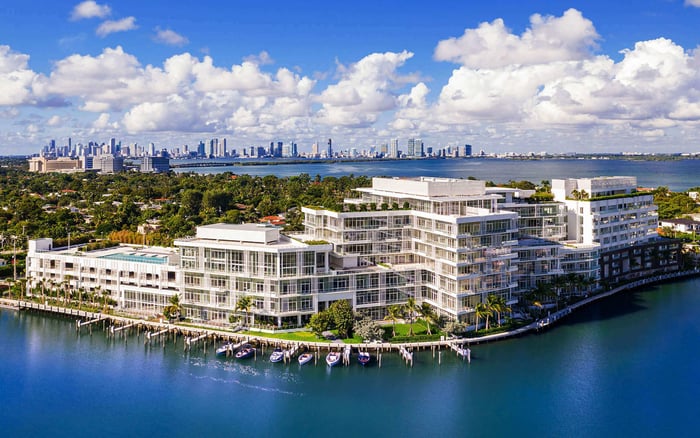
In South Florida, luxury has always been a lifestyle story. Increasingly, that story is written outside. From shaded entertaining lounges to resort-caliber pools and layered, professionally designed landscaping, buyers are treating outdoor environments as a functional extension of the interior, not a decorative afterthought. For sellers, this shift is meaningful. MILLION Luxury has reported that comprehensive outdoor upgrades can lift perceived value and resale appeal by roughly 15% to 20% when executed at a high level, a range that often outperforms many interior refreshes that fail to change how a home lives day to day. For buyers, it changes what “turnkey” means: not just pristine finishes, but comfort, privacy, and atmosphere across the terrace, courtyard, and poolscape. The result is a new hierarchy of features, and it is surprisingly consistent across single-family estates, gated waterfront compounds, and the most design-forward condos in Miami-beach. Here is how to evaluate an outdoor “oasis” like an underwriter: as architecture, infrastructure, and daily ritual, all in one.

South Florida luxury has always been inseparable from climate: bright light, warm water, and a long season built around open-air entertaining. What has changed is how clearly the market now prices that experience. Outdoor space is no longer treated as scenery framed by glass. It is being designed, constructed, and marketed as functional square footage, with deliberate zones for dining, lounging, cooking, and wellness.
MILLION Luxury has reported that comprehensive, professionally designed landscaping and true “outdoor rooms” can deliver roughly a 15% to 20% lift in perceived luxury and resale appeal when executed thoughtfully. That is not a promise of dollar-for-dollar reimbursement. It is a practical reflection of high-end buyer psychology: when the exterior feels complete, the home reads as finished, calm, and ready for immediate living.
That distinction matters because many “simple” upgrades underperform. A pool without shade and flattering lighting often feels like an accessory, not a lifestyle. A terrace without privacy planting can feel exposed, even if the finishes are expensive. At the top end, value is rarely tied to a single item. It is created through layers, and layering is what separates an expensive yard from a coherent outdoor environment.
In Miami and across South Florida, the outdoors is increasingly judged like interior architecture. Buyers look for circulation and intention. They want spaces that function at noon and at night, in humidity and after a brief coastal squall. When the exterior is built to perform, it becomes easier to justify premium pricing and harder for a buyer to mentally discount the home for “projects later.”
Buyers touring premium homes clock the outdoors quickly. Within minutes they can tell whether exterior space is decorative or genuinely livable. The latter usually shares a consistent set of characteristics.
First is programming. The strongest exterior plans function like an interior plan: an arrival moment, a primary lounge, a dining zone, and a quieter retreat. That structure can be expressed on a ground-level patio, in a sheltered courtyard, or on a high-rise terrace. What matters is that the layout guides real behavior, not just photos.
Second is comfort infrastructure. In South Florida, “comfort” is a technical category, not a mood. It includes shade that can be adjusted, lighting that flatters rather than floods, surfaces that stay cooler under sun exposure, and planting that is intentional rather than random. Buyers increasingly ask whether they can actually use the space through a full day, not just during a golden-hour showing.
This is also where details stack up. A dining zone that is partially protected is more convincing than an oversized table set in direct sun. A lounge that has task lighting and soft ambient lighting reads as a room, not a patio. Even the way a space handles sudden rain can influence perception. If the exterior feels designed for real life, buyers treat it as part of the home’s livable footprint.
Third is privacy. Luxury buyers do not want to feel staged for neighbors, boat traffic, or adjacent balconies. Layered landscaping, thoughtful wall heights, and screening elements matter as much as the pool finish. This is one reason professionally designed tropical planting schemes remain so persuasive in Miami and the surrounding coastal markets. They soften hard lines, frame views, and create the sense of a private resort, while also managing sightlines in a way a single hedge rarely can.
Finally, the exterior must look like it belongs to the architecture. South Florida’s “new luxury” conversation continues to emphasize indoor-outdoor continuity, with terraces, loggias, and courtyards treated as primary rooms. When the outdoor areas feel like an extension of the home’s design language, buyers stop seeing them as add-ons. They see a unified property.
Shade is often the decisive differentiator between an outdoor area that photographs well and one that is actually used. In a coastal climate, shade is also an engineering question. It has to endure sun, salt air, and shifting weather without becoming a maintenance headache.
Motorized louvered pergolas have become a particularly coveted upgrade because they allow residents to modulate sun and rain while preserving an open-air feel. They also support the broader goal buyers now expect: outdoor dining and lounging should be protected, not improvised. The best exterior environments do not force residents to choose between comfort and the outdoors. They deliver both.
In salt air, however, the romance has to be backed by materials science. Coastal exposure can punish inferior metals, fasteners, and finishes. Systems positioned for this market typically emphasize corrosion-resistant construction and appropriate coatings, because longevity is part of luxury. Buyers notice when a structure looks tired early, and they also notice when a system feels intentionally specified for the environment.
Compliance matters just as much. Exterior structures in South Florida intersect with hurricane risk, wind loads, and local approvals. Many buyers, and their advisors, now ask whether a shade system has Miami-Dade pathways such as a Notice of Acceptance. It is the kind of detail that rarely appears in a glossy brochure, yet it can influence a closing timeline and a buyer’s willingness to proceed.
A practical signal of demand is where these systems are being used. Documented installations show motorized louvered structures sized to cover substantial outdoor kitchens and entertaining footprints, not just a small grill alcove. That sizing communicates intent: the exterior is meant to carry the weight of gatherings, not merely supplement the interior.
At the top of the market, a pool is no longer a checkbox. It is a design thesis, and buyers read it that way.
One category is the engineered statement pool. Think clean geometry, high-spec finishes, considered lighting, and an edge detail that feels deliberate. In these environments, the pool reads like a piece of contemporary architecture. Hardscape and planting are composed to create calm, with materials and lines that reinforce the home rather than compete with it.
The other category is the experiential resort lagoon. Lagoon-style pools have been widely showcased with natural rock, waterfalls, and beach entries that turn a backyard into a private destination. For certain properties, especially larger parcels, the lagoon approach can deliver what a minimalist pool sometimes cannot: narrative. It tells guests where to gather, where to wade, and where to linger.
For resale, the question is not which style is objectively “better.” The question is whether the concept matches the property’s scale and tone. A lagoon on a constrained lot can feel theatrical. A sharp-edged modern pool behind a Mediterranean-style home can feel emotionally mismatched. The highest-performing outdoor environments are the ones where the pool, planting, and architecture speak the same language and feel like one decision, not three.
Buyers also respond to how the pool integrates with the rest of the outdoor room. If the pool is visually isolated from seating, shade, and circulation, it reads as a separate feature. If it is anchored by a lounge zone, supported by lighting, and framed by privacy planting, it becomes the centerpiece of a cohesive lifestyle.
Outdoor living in South Florida is not monolithic. It is shaped by neighborhood DNA, local architecture, and what buyers have learned to expect at each price point.
In Coral-gables, courtyards and cohesive exterior character are part of the region’s luxury identity. Mediterranean design principles have been actively codified locally, reinforcing why courtyard-driven outdoor living remains so central. Here, outdoor rooms often prioritize privacy, shade, and a sense of arrival: arched openings, landscaped forecourts, and sheltered dining that feels protected from street energy. A well-formed courtyard does not just add beauty. It organizes the experience of the home.
On the ultra-prime end, waterfront enclaves such as Gables Estates are widely covered as benchmarks for exclusivity, with large lots and a lifestyle built around water access and barriers to entry. In these contexts, outdoor investment becomes more than aesthetic. It becomes infrastructure: dock interfaces, lighting calibrated to the property’s scale, and landscape architecture that frames long sightlines without losing intimacy. Buyers expect the outdoors to match the seriousness of the interior, both in design and in execution.
Even where buyers are not shopping at that altitude, the psychology carries. In a strong luxury market, exterior environments help a home feel scarce. The property offers a complete private world, not just an interior volume with a backyard attached. That feeling can be decisive when buyers are comparing homes that, on paper, look similar.
The outdoor-room thesis is not confined to estates. It is increasingly central to high-end condo decision-making, particularly in Miami-beach, where the best buildings compete on lifestyle as much as on views.
At Setai Residences Miami Beach, the appeal for many buyers is the hospitality-coded expectation that life is curated, including how residents move between interior calm and exterior leisure. In that context, the outdoor component is not simply “a pool deck.” It is part of a broader resort logic, and buyers evaluate it as such.
Similarly, The Ritz-Carlton Residences® Miami Beach speaks to a buyer who values service and predictability. Outdoor living is judged less by novelty and more by execution: comfortable lounging zones, privacy, and a sense of effortless order. The space has to feel managed, intentional, and reliable, because that is what the brand promise implies.
For buyers who want ocean proximity paired with a more residential, design-forward sensibility, 57 Ocean Miami Beach sits naturally within the larger South Florida emphasis on terraces and indoor-outdoor continuity. The market has learned to read exterior space as functional: a place to host, to decompress, and to extend daily life beyond the living room. A terrace that is properly proportioned and thoughtfully appointed changes how the residence lives.
And for those drawn to private-club culture, Casa Cipriani Miami Beach aligns with a broader trend in which luxury residences compete through amenity-first living. In a region where branded and hospitality-led concepts have proliferated, outdoor programming can become a decisive part of the identity story.
Across the condo segment, the buyer’s mental math is consistent. A beautiful interior with an unusable exterior feels incomplete. A well-planned exterior, even if compact, can make a residence feel larger, calmer, and more tailored. In a market as lifestyle-driven as Miami, that translation from “space” to “ritual” is what supports premium demand.
When advisors discuss outdoor ROI, the most useful lens is rarely a single payback number. It is a set of value levers that show up repeatedly in real transactions.
One lever is marketability. A layered outdoor environment photographs well and tours well, which can influence buyer urgency. Another lever is time-to-yes. When a buyer believes the home is truly turnkey, they are less likely to negotiate based on future projects, timelines, or uncertainty.
A third lever is risk reduction. Shade structures that feel properly engineered and code-considered can prevent late-stage due diligence concerns. A fourth lever is emotional fit. Luxury buyers purchase a feeling as much as a floor plan, and outdoor rooms are where that feeling becomes daily life.
If you are buying, prioritize outdoor spaces you will actually use, and verify that the comfort systems are real, not cosmetic. If you are selling, invest in cohesion: shade, lighting, planting, and hardscape that read as one integrated design decision.
What is an “outdoor room” in South Florida luxury terms? It is an exterior space designed to function like an interior room, typically with programmed seating, shade, lighting, and landscaping rather than a standalone patio.
Do outdoor upgrades really move value, or just aesthetics? High-end buyers often pay more for a home that feels complete and effortless. Well-executed outdoor upgrades can improve marketability and buyer willingness to pay for turnkey living.
What matters most for pergolas near the coast? Materials and finishes suited to salt air, plus confidence in local compliance and wind-load considerations. Comfort features like adjustable louvers can meaningfully increase use.
Should I choose a modern pool or a lagoon-style pool? Choose the concept that matches the property’s architecture and scale. The best results come when the pool, planting, and hardscape feel like one cohesive design.
For tailored guidance on valuing and positioning outdoor living in South Florida’s luxury market, connect with MILLION Luxury.
If branded residences are on your mind — as a home or as an allocation — we would be glad to share what we are seeing, privately.
Begin a quiet conversation