A discreet, buyer-oriented look at how Flagler Drive’s Intracoastal corridor is reshaping West Palm Beach, from boutique trophy residences to amenity-heavy towers and branded service.
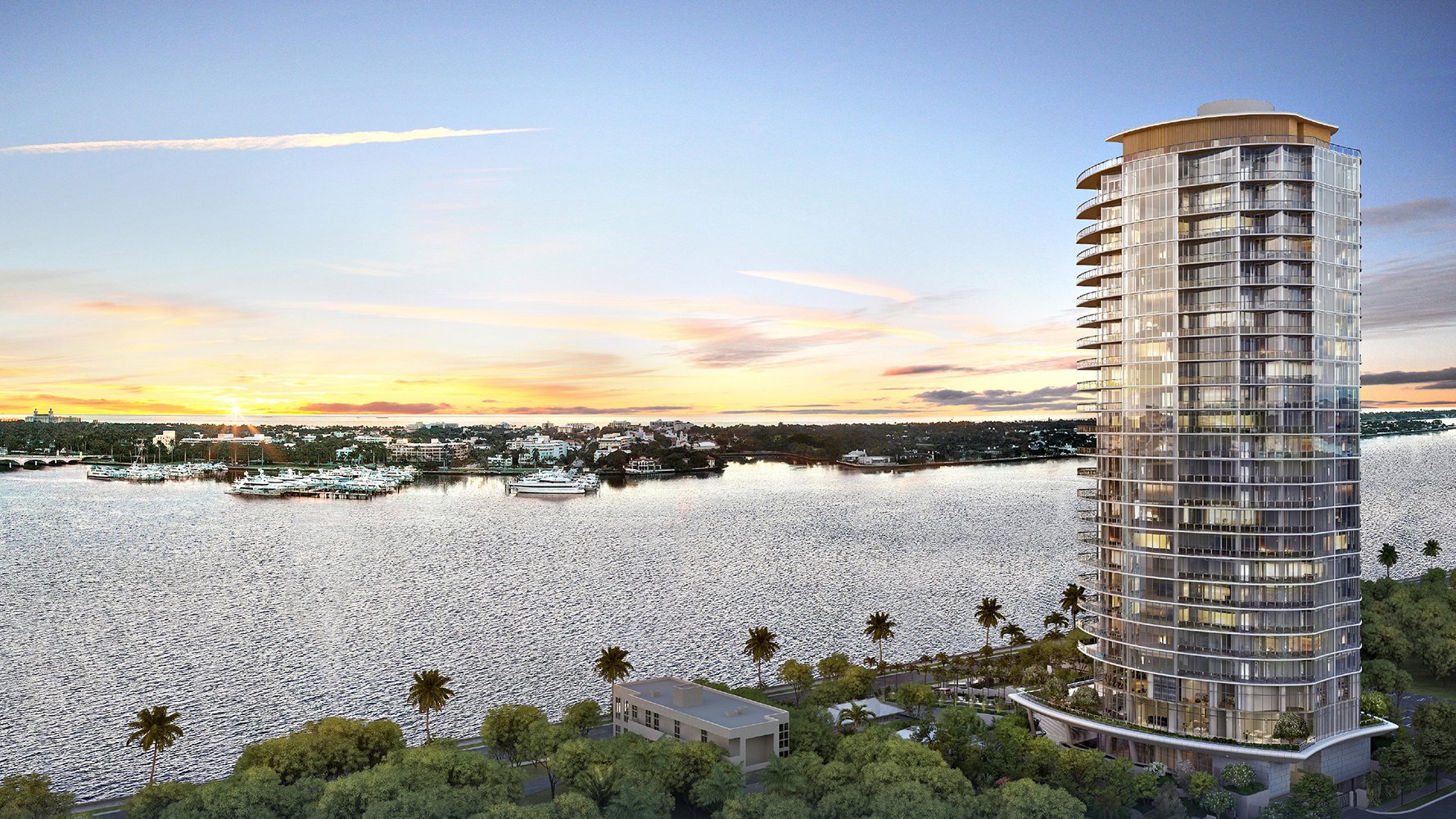
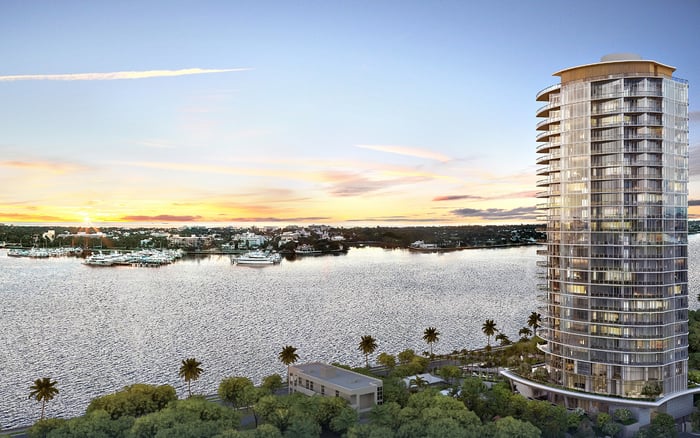
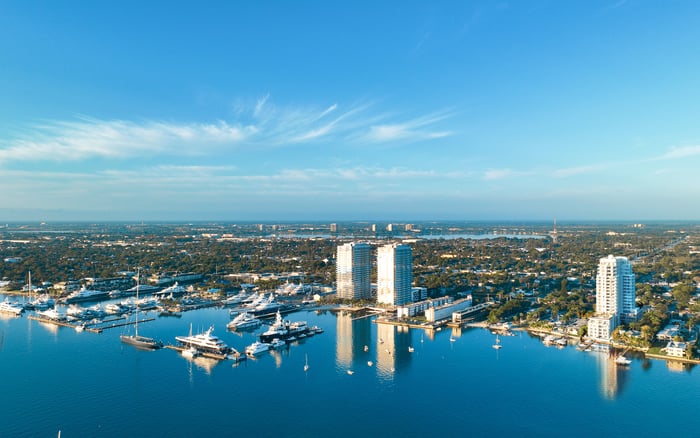
Along the Intracoastal, Flagler Drive has emerged as the most consequential address in West Palm Beach’s current luxury condominium cycle. The shift is not only the volume of proposals and active construction along North and South Flagler, but the sophistication of what is being delivered: ultra-luxury residences designed around service, privacy, and fully realized amenity ecosystems that match the expectations of a global buyer.
For high-end purchasers, the message is clear. Flagler Drive is no longer a single, isolated “trophy building” storyline. It is becoming a corridor with real choice across building scale, architectural positioning, and day-to-day lifestyle, from low-density residences that emphasize discretion to larger towers that treat amenities and staffing as an extension of the home.
That choice matters because these offerings are not interchangeable. Floorplate planning, elevator and arrival circulation, staffing depth, and the amenity-to-residence ratio can shape lived experience more than any single view line. Even docking and marina components can change how a waterfront address functions, particularly for buyers who treat the Intracoastal as access, not just scenery.
If you are evaluating West Palm Beach from its Intracoastal edge, it pays to understand what this generation of inventory is optimizing for. The best decision is usually less about “new” and more about alignment: how a building intends to operate, who it is designed to serve, and whether that culture matches how you actually live.
Palm Beach County’s luxury outlook is increasingly supported by measurable wealth concentration, paired with headline transactions that reset local reference points. In South Florida, this matters because a concentrated top tier tends to move quickly when the right product appears, and that velocity influences everything from absorption rates to pricing power in new construction.
Publicly summarized wealth research has cited roughly 11,500 millionaires, 78 centimillionaires, and 10 billionaires in the combined West Palm Beach plus Palm Beach area. At the same time, the region continues to record eye-catching transactions, including a reported $97.5 million waterfront sale highlighted as the most expensive home sale of 2025.
West Palm Beach has also been singled out nationally for outsized luxury appreciation. One widely reported metric points to luxury sale prices rising 187.3% over the last decade to a median around $4.04 million.
For buyers, these numbers are not abstract. They shape the competitive set for every new development: how quickly early releases are absorbed, how aggressively buildings compete on service and experience, and how much importance is placed on privacy and operational reliability. In a market where the top end is deepening, developers are not simply selling square footage. They are selling a complete lifestyle, with consistency as a premium feature.
Flagler Drive’s current pipeline largely falls into two recognizable archetypes.
First is the boutique, “trophy condo” model: fewer residences, larger homes, and a quieter building rhythm. These projects often prioritize discretion, space, and a residential feel over expansive, public-facing programming. The goal is a private residence experience in a condominium format.
Second is the amenity-forward tower: a larger residence count that supports expansive indoor-outdoor amenities and a staff-and-service approach that can feel closer to a private club. These buildings frequently aim to replace off-site routines with on-site capability, from wellness to entertaining to everyday convenience.
Both categories can deliver true luxury, but they attract different buyer motivations. Boutique buyers tend to optimize for fewer neighbors, fewer touchpoints, and a calmer cadence that reads more like a single-family alternative. Amenity-first buyers often want the building to carry more of the lifestyle load: wellness facilities that get used daily, spaces that host friends without needing to “borrow” the residence, and service that removes friction during season.
This is why new-construction and pre-construction diligence on Flagler Drive is increasingly about intent. Finishes matter, but operations, staffing philosophy, and the way a building is designed to circulate people and service are what determine whether it lives quietly and efficiently, or feels busy even at the top end.
A useful reference point on the boutique end of the spectrum is the Bristol, positioned as a marquee ultra-luxury condominium on South Flagler Drive. The publicly disclosed building profile is notably intimate for a waterfront tower: a 24-story condominium with 68 residences. In a market that is now entertaining much larger residence counts, that mix signals a specific experience: calmer common areas, fewer elevator trips, and a day-to-day rhythm that feels intentionally residential.
In the same boutique spirit, Forté on Flagler West Palm Beach has been positioned as a small-residence-count, large-floorplan product, reinforcing that some buyers are explicitly choosing low density over sheer amenity volume.
When comparing boutique buildings, the most useful questions are the ones that predict daily cadence rather than marketing language.
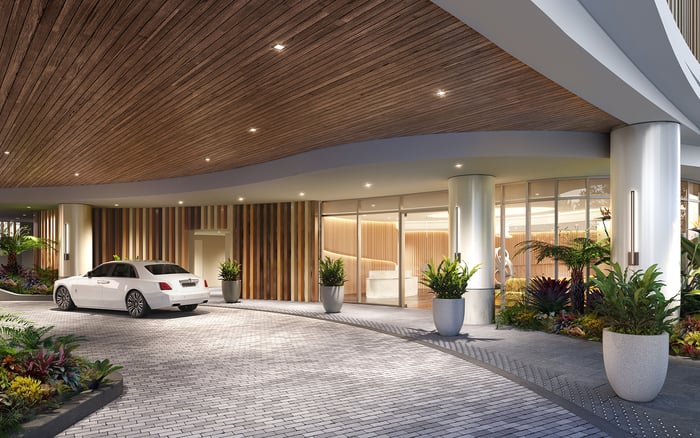
How many residences share each elevator bank? How are arrivals handled during peak season, and what is the plan for valet flow and privacy at the curb? What is the staffing philosophy, and how is discretion preserved in amenity spaces that can easily become social? A boutique building should not just be smaller. It should feel designed for quiet: secure entry, thoughtful circulation, and a sense that residents can move through the property without feeling on display.
Buyers also benefit from aligning expectations. Boutique often means fewer “programmed” experiences, and a more self-directed lifestyle. For many, that is the point. For others, it is a trade they only discover after closing. Clarity up front is what prevents lifestyle mismatch later.
North Flagler introduces a different value proposition: larger, amenity-intensive towers that use scale to deliver breadth.
Olara, planned at 1919 North Flagler Drive, has been presented as a 26-story building with 275 residences. That scale supports a modern amenity strategy. Olara promotes roughly 80,000 square feet of indoor and outdoor amenity space. Even for seasoned South Florida luxury buyers, that figure signals a building designed to provide a self-contained lifestyle, closer to club living than a conventional condominium model.
For buyers who use wellness facilities daily, entertain frequently, or simply want the freedom to stay on property without sacrificing variety, this approach can feel effortless. Larger towers can offer more zones to spread out, more dedicated rooms for different uses, and service teams sized for a more consistent operating rhythm.
The trade is cultural. Larger residence counts can introduce more energy, more activity, and a different social density. That is not inherently negative, but it should be evaluated honestly. The right due diligence is less about total amenity square footage and more about how amenities are curated, staffed, and managed. Amenity space is only as valuable as its operations, including rules, access, maintenance standards, and how peak-season demand is handled.
If you are deciding between boutique and scale, consider how you use shared spaces. Do you want the building to feel like an extension of your home, or a curated set of destinations? Both can be excellent, but they deliver different daily experiences.
Along Flagler Drive, waterfront views are increasingly table stakes. What is becoming more differentiating is meaningful water access.
Olara’s plans include a private marina or dock component, marketed as a lifestyle feature. That type of offering does more than add a checkbox. It changes the buyer profile and the way the address is used. It appeals to residents who see the Intracoastal not as backdrop, but as a practical corridor that connects to how they spend their time.
In this next cycle of West Palm Beach waterfront luxury, expect a clearer split between “waterfront living” and “waterfront using.” If boating is central to your lifestyle, evaluate dock offerings the way you would evaluate a home’s garage: capacity, rules, access, and everyday practicality. Ask how docking will be governed, how use will be allocated, and what the real-world experience will feel like on peak weekends.
Even if you do not own a boat today, docking access can influence resale appeal within a buyer segment that is both high net worth and decisive. In a corridor with multiple new towers, distinctive functionality can matter as much as design.
Another major evolution on Flagler Drive is the rise of branded residences and the expectations they introduce.
The Ritz-Carlton Residences® West Palm Beach is planned as a branded residence tower with no hotel component. Publicly disclosed plans cite 138 residences. For buyers, the value proposition is less about a logo and more about operational discipline: service standards, staffing depth, and an ownership experience designed to remain consistent year after year.
Branded residences often resonate with second-home owners and global buyers who want a concierge-forward environment with predictable execution. They can also appeal to full-time residents who prioritize reliability, especially during the seasonal surge when service can be stretched elsewhere.
The counterpoint is cultural. Some primary residents prefer a quieter building with less formal programming, where the tone is more residential than curated. Neither preference is “more luxury.” They are simply different operating philosophies.
Make the decision explicit. Are you buying a residence that happens to be in a luxury building, or a luxury building that happens to contain residences? That framing tends to clarify whether branded rigor is a feature you will use and appreciate, or one you would rather not pay for.
Flagler Drive’s story is not only about any single headline tower. It is about volume across a broader pipeline that continues to widen buyer choice.
South Flagler House has been planned as two 28-story towers on the Intracoastal, and it is designed by Robert A.M. Stern Architects, a meaningful signal for buyers drawn to heritage-forward, classic luxury positioning. La Clara is a recently delivered luxury waterfront condominium that has added to the concentration of upscale product along the Intracoastal edge of downtown. The Berkeley has been highlighted as another large luxury condominium project in the development pipeline, expanding choice beyond the most Flagler-centric narratives.
Additional projects indicate that the corridor’s momentum remains active. Shorecrest Flagler Drive West Palm Beach is tied to Related Ross, underscoring that institutional developers continue to view this waterfront as a long-run luxury address.
For buyers, pipeline matters because it changes leverage and selection. When a market transitions from “few options” to “many options,” the definition of best-in-class evolves. Resale competition becomes more nuanced, and negotiation dynamics can shift as comparable inventory increases.
It also heightens the importance of differentiation. In a wave cycle, long-term winners are often the buildings that remain easiest to live in: clarity of arrival, sound operations, thoughtfully designed shared spaces, and a residence experience that holds up once the novelty of new construction fades.
Not every Flagler Drive offering sits at the absolute pinnacle of trophy pricing, and that range is part of what makes the current cycle compelling.
Alba West Palm Beach is a waterfront condominium tower with 55 residences, marketed with pricing roughly from the mid $2 millions into the upper $7 millions. That positioning can appeal to buyers who want a new, limited-count waterfront building without needing the perceived formality, staffing scale, or social intensity of the most rarefied product.
Alba’s profile is a reminder that Palm Beach adjacent luxury is becoming more tiered. For some buyers, the goal is simply to secure an Intracoastal address with fresh construction and a manageable building culture. For others, only the most service-intensive, statement-making towers fit the brief.
As you evaluate this middle-to-upper tier, pay attention to what “value” means in practice. It may be the balance between privacy and simplicity, the ease of ownership, or the ability to enjoy a waterfront setting without signing up for an ecosystem that feels larger than you want.
With so much new-construction and pre-construction product converging on one corridor, sophisticated buyers benefit from a consistent evaluation framework.
Unit count and privacy: Fewer residences generally means fewer touchpoints and a calmer building cadence. Larger towers can still feel private, but it depends on circulation design and staffing.
Amenity intent: Ask what the amenity program is designed to replace. Is it meant to be occasional leisure, or daily wellness and social life? Look for operational commitments, not just renderings.
Service model: Branded residences tend to formalize service. Boutique buildings can be exceptional too, but you should understand staffing depth, hours, and how requests are handled in season.
Waterfront practicality: Views matter, but boating access is increasingly a value layer. If docks are part of the pitch, understand how they will be used and governed.
Neighborhood trajectory: Flagler Drive benefits from adjacency to downtown West Palm and the Palm Beach bridge approach, but each site has its own micro-context, including traffic patterns, marina activity, and future construction nearby.
A final note for serious buyers: supply waves have a way of redefining what “premium” means. In a corridor where multiple luxury towers arrive within a similar timeframe, the projects that hold their position tend to be the ones that feel most livable after the first season. Prioritize the elements you will experience every day: quiet arrivals, efficient circulation, disciplined operations, and a building culture that fits your temperament as much as your design preferences.
Is Flagler Drive primarily a boutique condo market or a high-rise tower market? It is becoming both. The corridor now includes boutique, low-density buildings and larger, amenity-forward towers, giving buyers more lifestyle choice than in prior cycles.
What is driving West Palm Beach’s luxury price momentum? A combination of rising wealth concentration in the region and strong national attention on luxury price growth, including widely reported decade-long gains and headline transactions at the top end.
Do branded residences matter if I plan to live there full-time? They can. Brand affiliation often signals a defined service and operations standard, which may appeal to full-time residents who value consistency as much as second-home owners do.
How important are amenities relative to the residence itself? It depends on how you live. For daily wellness users and frequent hosts, amenities can function like additional square footage. For privacy-first buyers, lower density may be the more meaningful “amenity.”
For tailored guidance on West Palm Beach waterfront opportunities, connect with MILLION Luxury.
If branded residences are on your mind — as a home or as an allocation — we would be glad to share what we are seeing, privately.
Begin a quiet conversation