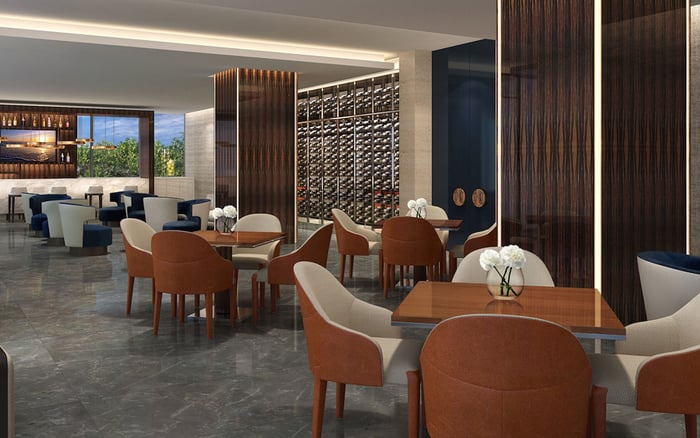
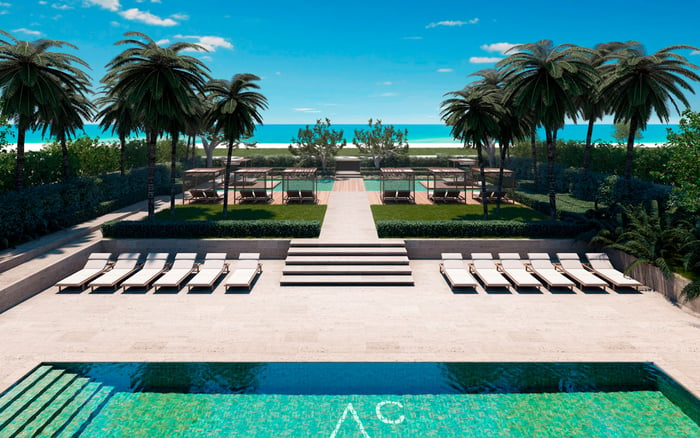
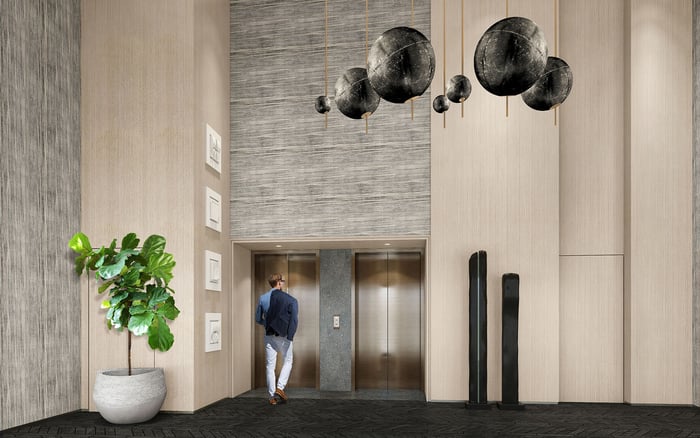
A buyer-focused look at how The Surf Club Four Seasons Surfside balances oceanfront access, residential privacy, Four Seasons service, historic architecture, and long-term ownership considerations.
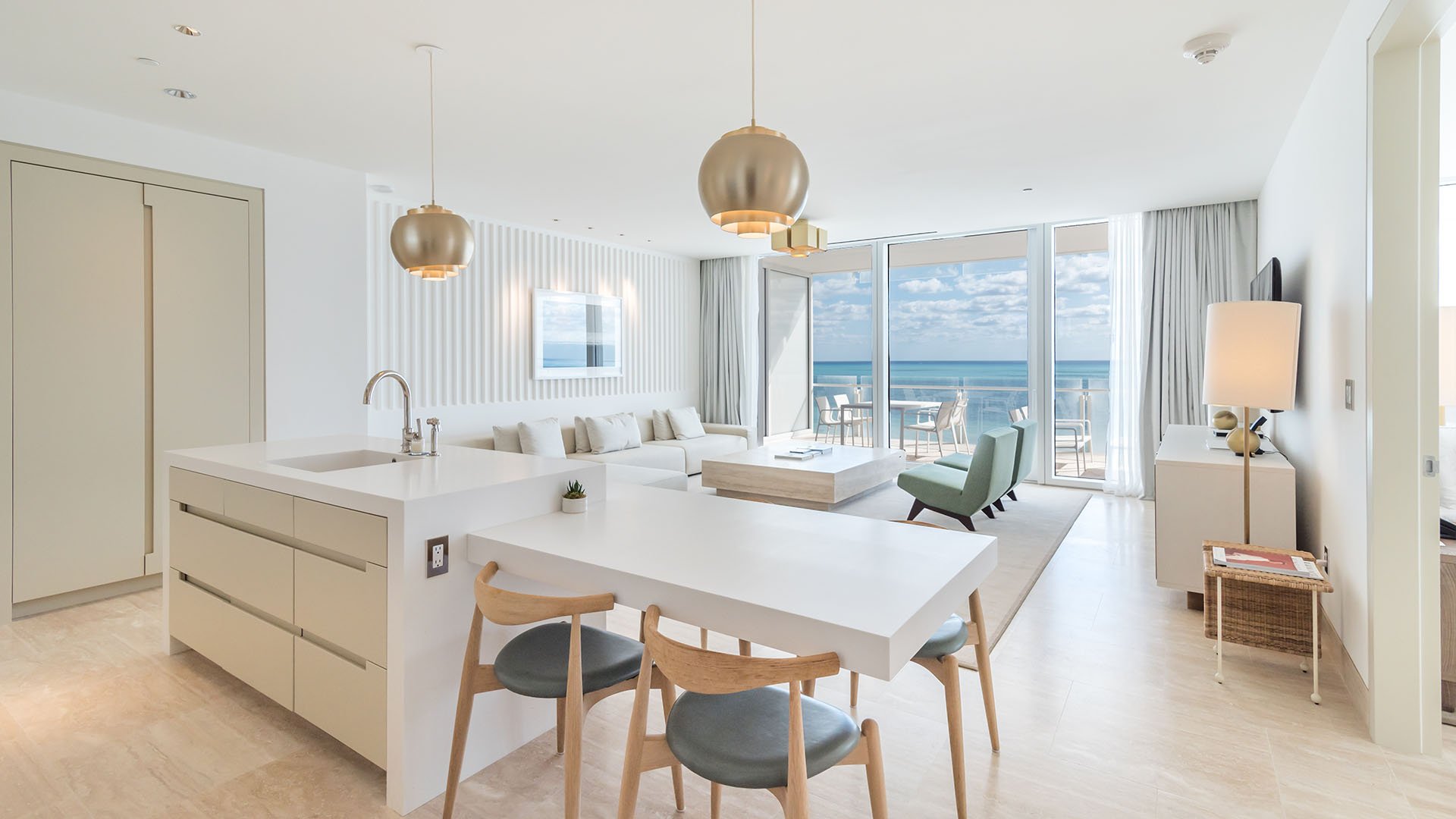
The Surf Club Four Seasons Surfside occupies one of the most closely studied positions in South Florida luxury real estate: an oceanfront estate in Surfside set between Collins Avenue and the Atlantic shoreline. Its appeal is not simply that it sits on the beach. It is that the property layers arrival, gardens, pools, dunes, clubhouse rooms, cabanas, bungalows, hospitality, and private residences into a single, controlled environment.
That layered composition is why buyers continue to return to The Surf Club Four Seasons Surfside as a reference point for branded coastal living. It is also why the asset deserves a more careful reading. This is not a conventional private condominium, nor is it merely a hotel with residences attached. It operates as a hybrid of Four Seasons hospitality, branded private residences, historic clubhouse spaces, cabanas, and bungalows.
The original Surf Club opened in 1930 as a private oceanfront social club designed by Russell Pancoast. The modern redevelopment, led by Fort Partners, restored that legacy while adding newer glass residential and hospitality structures. Architecture by Richard Meier, with Kobi Karp also associated with the project team, introduced a cleaner contemporary language: expansive glazing, terraces, light, and ocean views set against the more romantic memory of the historic club.
For a buyer, that combination is the point. The Surf Club offers heritage without sacrificing contemporary resort service. It also asks the buyer to understand exactly how beach access, privacy, and long-term maintenance interact on a property where multiple audiences share the same estate.
The Surf Club’s ocean-to-street configuration makes beach access central to the ownership experience. A resident’s day can move from private residential space to landscaped interiors, pool areas, dune edges, and the Atlantic. That choreography is one of the strongest arguments for ownership here, especially for buyers who value immediacy over spectacle.
Yet beach access should be separated from the idea of legally private beach ownership. At the high end of the South Florida market, beach service can feel exceptionally private when entry points, staff protocols, seating, and arrival sequences are well managed. That private feeling matters, but it is not the same as assuming that every part of the sand functions as private property. Buyers should review governing documents, service rules, easements, access practices, and local conditions with qualified counsel before treating beach experience as ownership control.
This distinction matters across Surfside. Buyers comparing the mood of The Surf Club with Arte Surfside or Fendi Château Residences Surfside are often comparing more than floor plans. They are comparing the path from residence to sand, the way staff mediates that path, and whether the beachfront experience remains serene during peak seasonal use.
Oceanfront ownership rewards precise questions. Where are resident beach setups staged? How are hotel guests and residents assigned space? What happens on holiday weekends? How are cabanas, bungalows, pools, and dining areas sequenced? The best answer is not a sales phrase. It is an operational map.
The Surf Club’s residential privacy depends partly on how hotel, restaurant, spa, and residence circulation are separated and managed. The estate’s hospitality component means residents share the broader property with transient hotel guests and service users, unlike a purely private condominium.
That distinction is not a flaw. For many owners, it is the reason to buy. Four Seasons service gives the property a staffed, polished, continuously managed quality that a traditional condominium may struggle to replicate. But service intensity brings movement: arrivals, restaurant traffic, spa appointments, housekeeping, engineering, valet, security, and beach operations.
A sophisticated buyer should evaluate privacy through daily patterns. Which elevators serve residences? How visible are residential entries from hotel and dining areas? Are pool decks divided by use? How does the property handle outside guests invited to restaurants or spa facilities? Does the building feel calm during breakfast, sunset, and weekend arrival periods?
The broader Surfside market offers useful context. Eighty Seven Park Surfside speaks to buyers who want a different coastal rhythm, while The Delmore Surfside is part of the continuing appetite for rarefied Surfside addresses. The Surf Club’s distinguishing value is its hybrid culture: private residence, restored club, and branded hospitality on one oceanfront site.
Privacy here is not measured only by gates or exclusivity language. It is measured by whether residents can move through the property without feeling like hotel guests, and whether hotel guests can enjoy the estate without compromising the residential atmosphere.
Long-term maintenance is where architectural glamour meets ownership discipline. The newer glass towers introduce expansive glazing, terraces, and ocean views. Those features help define the property’s aesthetic, but any coastal, glass-forward building requires careful attention to exterior systems, terrace components, mechanical infrastructure, waterproofing, salt exposure, and ongoing service standards.
The restored clubhouse adds a different layer. Historic architecture carries its own stewardship obligations, particularly when legacy spaces are central to the property’s identity. At The Surf Club, the appeal depends on the restored clubhouse and cabana setting preserving the memory of the original private-club experience. That makes long-term care not only technical, but curatorial.
Buyers should examine how the condominium and hospitality components allocate responsibilities, how shared areas are maintained, and how future capital needs are planned. The relevant questions include: what belongs to the residential association, what belongs to hotel operations, and what is shared across the estate? How are service standards funded? How are major repairs prioritized when a property includes residences, clubhouse spaces, hospitality areas, cabanas, bungalows, gardens, pools, dunes, and beachfront operations?
The luxury market often focuses on acquisition price, view line, and brand. Long-term owners focus just as intently on governance, reserves, maintenance history, insurance framework, vendor quality, and the practical cost of preserving a complex asset in a coastal environment. At a property like this, maintenance is not a back-office detail. It is part of the ownership experience.
Branded residences work when the brand is not merely decorative. At The Surf Club, the Four Seasons component is embedded in the way the property operates. The buyer is not simply purchasing a residence adjacent to a famous hotel name. The buyer is entering an estate where service, design, hospitality, and history reinforce one another.
That premium should still be tested. A buyer should ask whether the service model aligns with personal use. A seasonal owner may place a premium on lock-and-leave ease, staff coordination, and a polished arrival experience. A full-time resident may care more about quiet corridors, predictable circulation, storage, deliveries, guest management, and separation from hotel energy.
This is where the term condo-hotel can be too blunt. The Surf Club is not easily reduced to a single category because its luxury positioning depends on combining heritage architecture, Four Seasons service, private residences, and controlled resort-style amenities. The estate’s strength is the synthesis. The due diligence challenge is understanding the seams.
The strongest buyers approach The Surf Club with both admiration and discipline. First, study the physical path from Collins Avenue to the beach. The property’s layout creates layered access zones, and each layer affects daily living. Second, evaluate where residents encounter hotel guests, restaurant patrons, spa users, and staff.
Third, review beach service rules, not just beach proximity. Fourth, understand association governance and the division of maintenance responsibilities. Fifth, inspect how historic and modern components are preserved together. Sixth, consider whether the Four Seasons service culture matches the way you intend to live.
For the right buyer, The Surf Club remains one of South Florida’s most compelling residential ideas: a restored private-club legacy made contemporary through architecture, hospitality, and coastal estate planning. Its questions are not reasons to look away. They are the questions a serious buyer asks before paying for permanence.
Is The Surf Club Four Seasons Surfside an oceanfront property? Yes. It is positioned in Surfside between Collins Avenue and the Atlantic shoreline.
Does the property include both residences and hotel uses? Yes. It operates as a hybrid of Four Seasons hotel, branded private residences, clubhouse spaces, cabanas, and bungalows.
When did the original Surf Club open? The original Surf Club opened in 1930 as a private oceanfront social club.
Who designed the historic Surf Club? The historic club was designed by architect Russell Pancoast.
Who led the modern redevelopment? The modern redevelopment was led by Fort Partners.
What architectural team is associated with the redevelopment? Richard Meier’s architecture shaped the modern glass structures, with Kobi Karp also associated with the project team.
Is the beach experience completely private? Buyers should distinguish private-feeling beach service from legally private beach ownership and verify all rights and rules independently.
Why does circulation matter for privacy? Residents share the broader estate with hotel guests and service users, so elevator, lobby, spa, dining, and pool circulation are crucial.
What long-term maintenance issues should buyers study? Buyers should review responsibilities for glass, terraces, waterproofing, mechanical systems, historic areas, pools, dunes, and shared amenities.
Is The Surf Club best understood as a branded residence? Yes, but with nuance. Its value comes from the combination of Four Seasons service, private residences, restored heritage spaces, and controlled amenities.
For a tailored shortlist and next-step guidance, connect with MILLION.
If branded residences are on your mind — as a home or as an allocation — we would be glad to share what we are seeing, privately.
Begin a quiet conversation