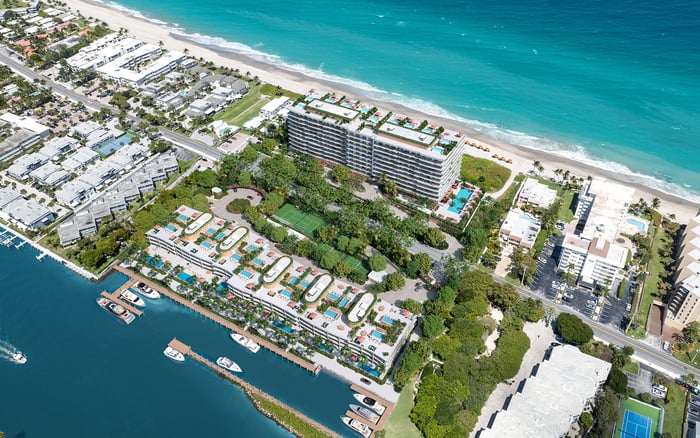
Bridge clearance is one of the quiet variables that can reshape the true economics of a South Florida marina-adjacent home, affecting vessel choice, resale depth, insurance conversations, daily convenience, and the premium a buyer should assign to dock access.
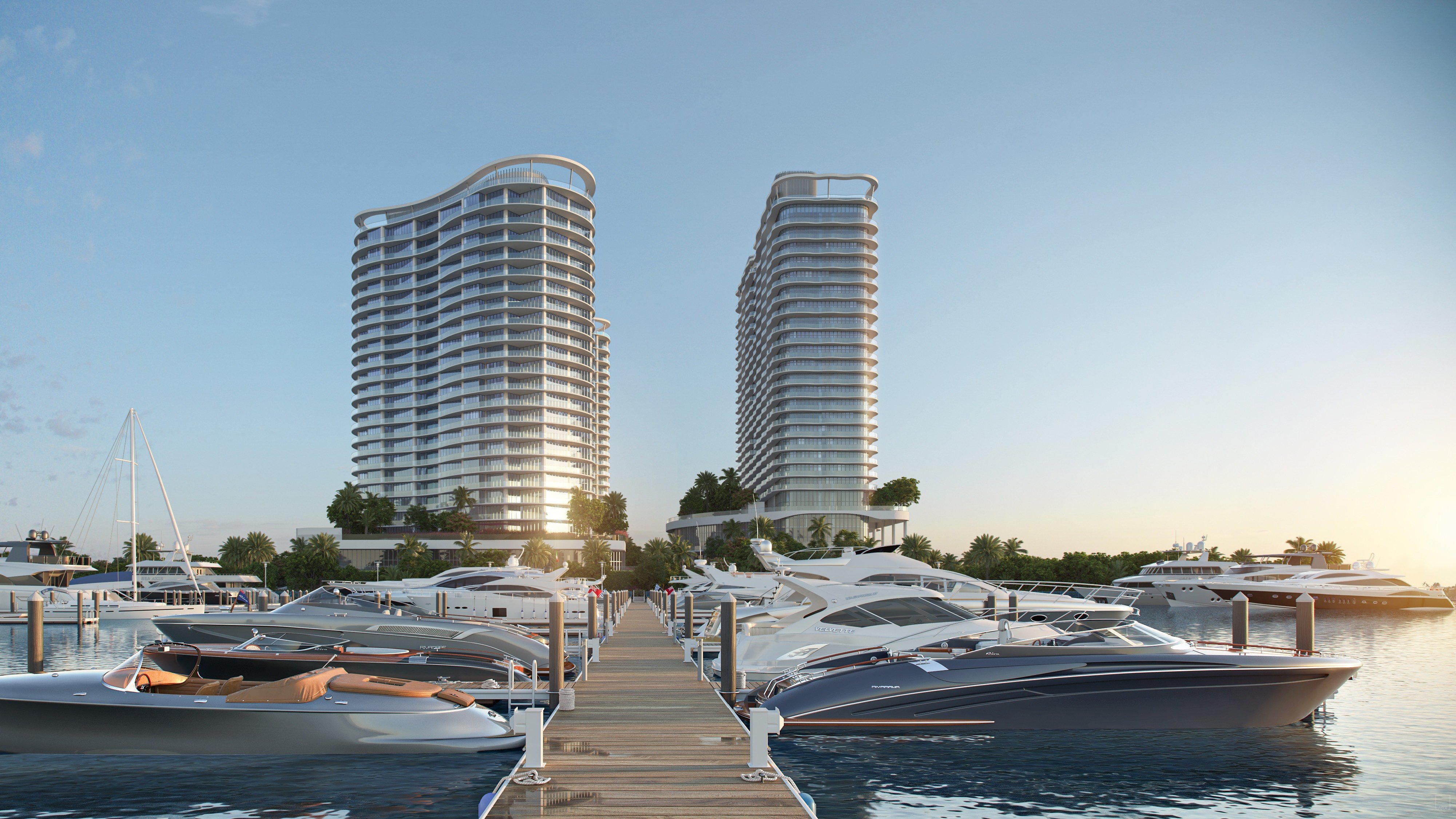
In South Florida, a marina-adjacent home is often judged first by its view, dockage, terrace depth, and the effortless theater of boats moving across the water. Yet for buyers who intend to use the water, one quiet variable can change the real cost of ownership: bridge clearance.
A residence can be minutes from a marina, framed by palms, and marketed with an enviable waterfront setting. But if the route to open water passes under fixed bridges, the practical value of that address becomes more specific. The question is not simply whether a boat can be docked nearby. It is which boat, at what tide, with what equipment folded, and with how much tolerance for operational compromise.
That distinction matters because luxury buyers are not only purchasing interiors. They are purchasing time, ease, and optionality. A waterfront home that narrows the owner’s vessel choices may still be exceptional, but it should be valued with clear eyes.
Bridge clearance influences cost in several ways. The most obvious is vessel selection. A buyer who wants a flybridge, tower, hardtop, radar arch, or larger profile may find that the home’s canal or marina route favors a different kind of boat. That can mean buying a smaller vessel, choosing a model with collapsible equipment, or keeping the preferred yacht elsewhere.
The second cost is convenience. If clearance is tide-sensitive, outings may require more planning than the property brochure implies. A spontaneous sunset cruise can become a calculation. For some owners, that is acceptable. For others, it undermines the very purpose of owning near the water.
The third cost is resale. The future buyer pool for a marina-adjacent property is shaped by the same constraints. A home that works beautifully for a center-console owner may be less compelling to a buyer seeking taller sportfishing equipment or a more substantial cruiser. This does not necessarily reduce value in a simple way, but it changes who will pay the strongest price.
The best buyers reverse the usual order of discovery. Before falling in love with stone finishes, ceiling heights, or a private elevator vestibule, they study the path from dock to open water. They ask whether the route includes fixed bridges, movable bridges, no-wake segments, narrow turns, shallow sections, or congestion points.
That inquiry should be specific to the vessel, not generic to the home. A boat slip that fits the length of a vessel may still be mismatched if vertical clearance, beam comfort, maneuvering room, or turning radius create friction. In practice, a property can be physically waterfront while functionally suited to a narrower boating profile.
This is why two nearby residences can carry very different ownership economics. One may offer direct, uncomplicated access. Another may deliver a more protected setting with more navigational considerations. Neither is universally superior. The right answer depends on the owner’s boating life.
Waterfront value is local, and bridge clearance is part of that local language. In Fort Lauderdale, where boating culture is deeply woven into the residential experience, clearance and route quality often sit alongside architecture, privacy, and dock configuration in serious buyer conversations. A buyer considering Riva Residenze Fort Lauderdale, for example, should think not only about the residence but also about how the surrounding waterways fit the intended boating routine.
The same discipline applies near destination marinas. At St. Regis® Residences Bahia Mar Fort Lauderdale, the appeal of a yacht-oriented setting should be paired with practical questions about where the vessel will live, how often it will be used, and what route best supports the owner’s expectations.
In Miami Beach, waterfront buyers often balance an iconic setting, access to dining and culture, and boating practicality. A residence can be superb for entertaining and still require a careful review of water access if boating is central to the purchase. In Bay Harbor Islands, a project such as La Maré Bay Harbor Islands may appeal to buyers seeking a quieter waterfront rhythm, but the same navigational diligence remains essential.
Boca Raton buyers often approach the decision with a different sensibility: private-club lifestyle, beach proximity, estate privacy, and a polished year-round cadence. A buyer studying The Residences at Mandarin Oriental Boca Raton can use the same framework when comparing marina proximity, lifestyle convenience, and the true role of boating in daily life.
The right due diligence is not complicated, but it must be thorough. Start with the vessel you own or expect to own. Measure total air draft in its real operating configuration, including antennas, outriggers, hardtops, electronics, canvas, and any equipment that changes height.
Then map the entire route from dock or marina berth to the preferred waterway. Do not assume that a short distance on a map equals easy access. Bridges, tide windows, wake restrictions, and traffic patterns can all influence the lived experience.
Ask whether access changes at different tides. A clearance that feels manageable on one outing may be less comfortable on another. If boating is central to the purchase, a captain or marine professional should review the route before the real estate decision is final.
Also consider guest usage. A home that suits the owner’s boat may not suit visiting friends, charter arrangements, or a future vessel upgrade. Ultra-prime real estate is often purchased for flexibility, and bridge clearance can either preserve or narrow that flexibility.
A marina-adjacent condo requires a slightly different evaluation than a single-family estate. With a condo, the buyer should clarify whether dockage is owned, assigned, leased, managed separately, or simply nearby. The residence may deliver a refined waterfront lifestyle without guaranteeing the exact boating infrastructure an owner imagines.
Single-family waterfront homes add another layer. Dock condition, seawall quality, lift capacity, basin depth, and route clearance all interact. An estate with magnificent interiors but constrained access may suit a buyer who values the view more than the voyage. Another buyer may accept a less dramatic façade in exchange for a better route to open water.
New-construction and branded residences can make the comparison more seductive because the amenity narrative is polished. Still, the water remains literal. Buyers evaluating The Ritz-Carlton Residences® Pompano Beach, for instance, should separate the appeal of service and design from the specific boating questions that apply to their vessel and routine.
The larger lesson is simple: marina adjacency is not a single category. It ranges from view-driven waterfront living to deeply functional yacht access. The real cost of a home is shaped by where it sits on that spectrum.
Why does bridge clearance matter when buying near a marina? It can determine which boats can comfortably reach open water from the property or berth. That affects daily convenience, vessel choice, and future resale appeal.
Is a waterfront home always better if it has nearby dockage? Not necessarily. Waterfront setting and usable boating access are related, but they are not the same thing.
What is air draft? Air draft is the height of a vessel above the waterline, including equipment such as hardtops, antennas, and towers. It is central to evaluating bridge clearance.
Should buyers measure their boat before shopping? Yes. A buyer should know the vessel’s real operating height before assigning value to a dock, boat slip, or marina-adjacent address.
Can tide change the usability of a route? Yes. Some routes may feel more comfortable at certain tide levels, so buyers should study access in practical conditions.
Does bridge clearance affect resale value? It can affect the depth of the buyer pool. A property with more flexible access may appeal to a broader range of boating buyers.
Are condos different from single-family waterfront homes? Yes. Condo buyers must understand how dockage is controlled or accessed, while estate buyers must evaluate the dock, seawall, depth, and route.
Should a captain review the route? For serious boating buyers, yes. A qualified marine professional can identify practical issues that may not be obvious during a showing.
Is marina adjacency valuable for non-boaters? Often, yes. Many buyers value the view, atmosphere, and walkable water lifestyle even if they do not own a vessel.
What should luxury buyers prioritize first? They should define the intended boating lifestyle, then evaluate the residence, dockage, and water route as one connected purchase.
For a tailored shortlist and next-step guidance, connect with MILLION.
If branded residences are on your mind — as a home or as an allocation — we would be glad to share what we are seeing, privately.
Begin a quiet conversation