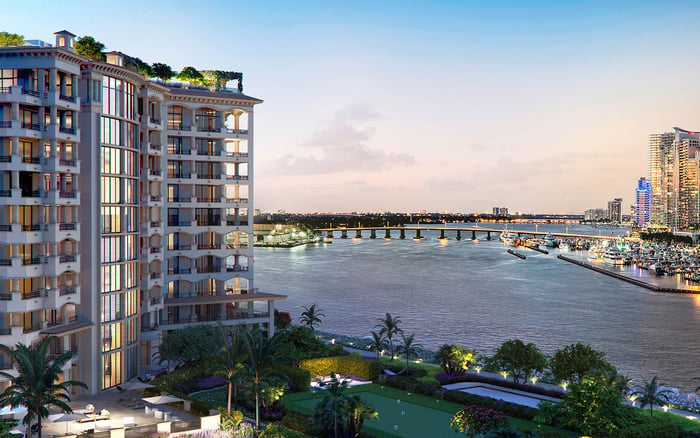
A discreet closing guide for seasonal buyers considering The Links Estates at Fisher Island, with focus on ownership rhythm, access planning, service continuity, and long-term positioning.

Buying at The Links Estates at Fisher Island is not simply a transaction measured by finishes, views, or the prestige of an address. For seasonal owners, the more important question is operational: how the property will live when you are in residence, when you are away, and when your household returns on short notice.
That distinction matters. A primary residence can absorb some imperfection because the owner is present to solve issues in real time. A second-home requires a different standard. The residence must be predictable, secure, easy to open, easy to close, and supported by a team that understands the tempo of seasonal living. Before closing, buyers should treat the property less as a static asset and more as a private hospitality platform.
On Fisher Island, discretion is part of the appeal. Yet privacy also makes preparation more important. Contractors, household staff, deliveries, guest arrivals, pet care, car logistics, and maintenance routines should be mapped before the first season begins. The strongest closings are not always the fastest; they are the ones that leave the owner with fewer surprises after the keys change hands.
The pre-closing review should extend beyond the standard purchase checklist. Seasonal buyers should understand association rules, architectural controls, guest procedures, pet policies, leasing limitations if relevant, insurance expectations, vendor access, and the practical requirements of maintaining a home during extended absence. These are not minor administrative details. They determine whether ownership feels effortless or fragmented.
Carrying costs deserve particular attention. A luxury residence can include multiple layers of expense, from association obligations and maintenance contracts to staffing, insurance, utilities, landscaping, technology, and security systems. Rather than asking whether costs are high or low, sophisticated buyers ask whether they are legible. The goal is to know what recurs monthly, what is seasonal, what is discretionary, and what may change once occupancy patterns are established.
A careful buyer should also clarify what transfers at closing. Built-ins, lighting, window treatments, outdoor furnishings, smart-home equipment, wine storage systems, audio components, and service contracts can materially affect the first season. When a home is intended for immediate use, ambiguity is expensive.
Seasonal ownership succeeds when arrivals feel choreographed. Before closing, buyers should decide how the household will use the residence during peak periods, holiday periods, and unplanned visits. That includes the arrival sequence itself: who opens the home, who tests systems, who stocks the kitchen, who checks terraces and outdoor areas, who prepares vehicles, and who confirms climate settings.
This is also the time to define access authority. A property manager, family office, house manager, assistant, or trusted local representative should have clear instructions. The same applies to vendors. If the home needs attention while the owner is elsewhere, service access should not depend on improvised approvals across time zones.
Technology requires its own audit. Buyers should understand alarms, cameras, climate controls, lighting scenes, irrigation, pool systems if applicable, audiovisual equipment, and backup procedures. Luxury buyers often inherit complex systems. The question is not whether technology exists, but whether the household can operate it without friction.
Waterfront living is often central to South Florida ownership, but buyers should separate atmosphere from assumption. If a specific view, exposure, breeze pattern, dock arrangement, terrace use, or outdoor entertaining function is essential, it should be examined before closing. A beautiful setting can still require practical review around maintenance, weather preparation, furnishings, drainage, and privacy from neighboring sightlines.
Golf may also shape the lifestyle conversation at The Links Estates at Fisher Island. Buyers who care about golf should clarify how the residence supports that rhythm: storage, staff coordination, guest planning, morning routines, and the balance between sport, social life, and retreat. The right estate is not only close to what an owner enjoys; it quietly supports the way that owner moves through the day.
Privacy should be evaluated with equal care. Ultra-premium buyers often focus on who can see into a home, how guests circulate, where service teams enter, and how entertaining can occur without compromising calm. Gated-community living can be highly appealing, but the experience still depends on the individual property, its orientation, and the protocols surrounding it.
Fisher Island buyers often consider multiple forms of ownership before deciding what is right. Comparing The Residences at Six Fisher Island with estate-style opportunities can clarify whether the household wants a more vertical residential experience, a larger private residence, or a lock-and-leave format with different maintenance expectations.
Legacy condominium options such as Palazzo del Sol and Palazzo della Luna can also provide useful context. The comparison is not about declaring one format superior. It is about identifying which ownership structure best matches a buyer’s season: frequent entertaining, extended family stays, staff needs, privacy expectations, and appetite for hands-on management.
For an investment-minded buyer, liquidity and future audience matter. A residence that is easy to understand, easy to maintain, and easy to present to the next qualified buyer can hold broader appeal. That does not mean compromising on personal taste. It means distinguishing between bespoke choices that enhance the property and highly specific decisions that may narrow the future market.
Before closing, assemble an ownership file that can travel with the family office, property manager, or trusted advisor. It should include association contacts, insurance documents, warranties, vendor lists, system manuals, appliance details, access instructions, emergency protocols, preferred maintenance schedules, inventory notes, and seasonal opening and closing checklists.
The file should also define decision rights. Who can approve an urgent repair? Who can authorize a vendor? Who handles storm preparation? Who communicates with the association? Who is notified when guests arrive? These questions may seem basic, but they prevent a luxury property from becoming dependent on the owner’s constant attention.
Finally, consider the first 90 days after closing as a calibration period. Systems should be tested, staff routines refined, storage assessed, furnishings adjusted, and service relationships evaluated. The most polished seasonal homes are not accidental. They are edited, observed, and improved until the residence works with the owner’s life rather than interrupting it.
The Links Estates at Fisher Island should be approached with that level of discipline. For the right buyer, the reward is not only privacy or prestige. It is the ability to arrive in South Florida and feel that the season has already been prepared.
What should seasonal buyers confirm before closing? Confirm rules, carrying costs, vendor access, service routines, insurance expectations, and what transfers with the property.
Why does seasonal ownership require extra diligence? A seasonal residence must perform when the owner is absent, so management, access, and maintenance plans matter from day one.
Is The Links Estates at Fisher Island best viewed as a second-home purchase? Many buyers will evaluate it through a second-home lens, focusing on arrival ease, privacy, and long-term household use.
How should buyers think about golf in the decision? If golf is part of the lifestyle, confirm how the property supports routines, storage, guests, and daily movement during season.
What makes Fisher Island ownership different from mainland living? Buyers should plan carefully for access, staffing, deliveries, guests, and maintenance because convenience depends on preparation.
Should buyers compare other Fisher Island residences? Yes. Comparing formats can clarify whether an estate, condominium, or lock-and-leave residence better matches the household.
What should be included in an ownership file? Include contacts, manuals, warranties, vendor lists, insurance documents, access rules, emergency plans, and seasonal checklists.
How should an investment buyer evaluate the property? Focus on clarity, maintainability, privacy, presentation quality, and the likely expectations of a future qualified buyer.
When should a property manager be selected? Ideally before closing, so access, systems, vendors, and opening procedures are organized before the first arrival.
What is the most common mistake seasonal owners make? They focus on the purchase and delay operational planning, which can make the first season less seamless than it should be.
For a tailored shortlist and next-step guidance, connect with MILLION.
If branded residences are on your mind — as a home or as an allocation — we would be glad to share what we are seeing, privately.
Begin a quiet conversation