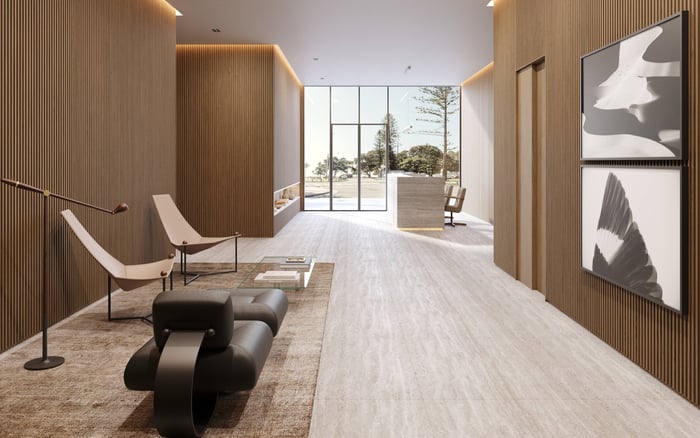
An editorial look at The Lincoln Coconut Grove and why its boutique, walkable, low-maintenance lifestyle may resonate with affluent owners leaving larger estates.
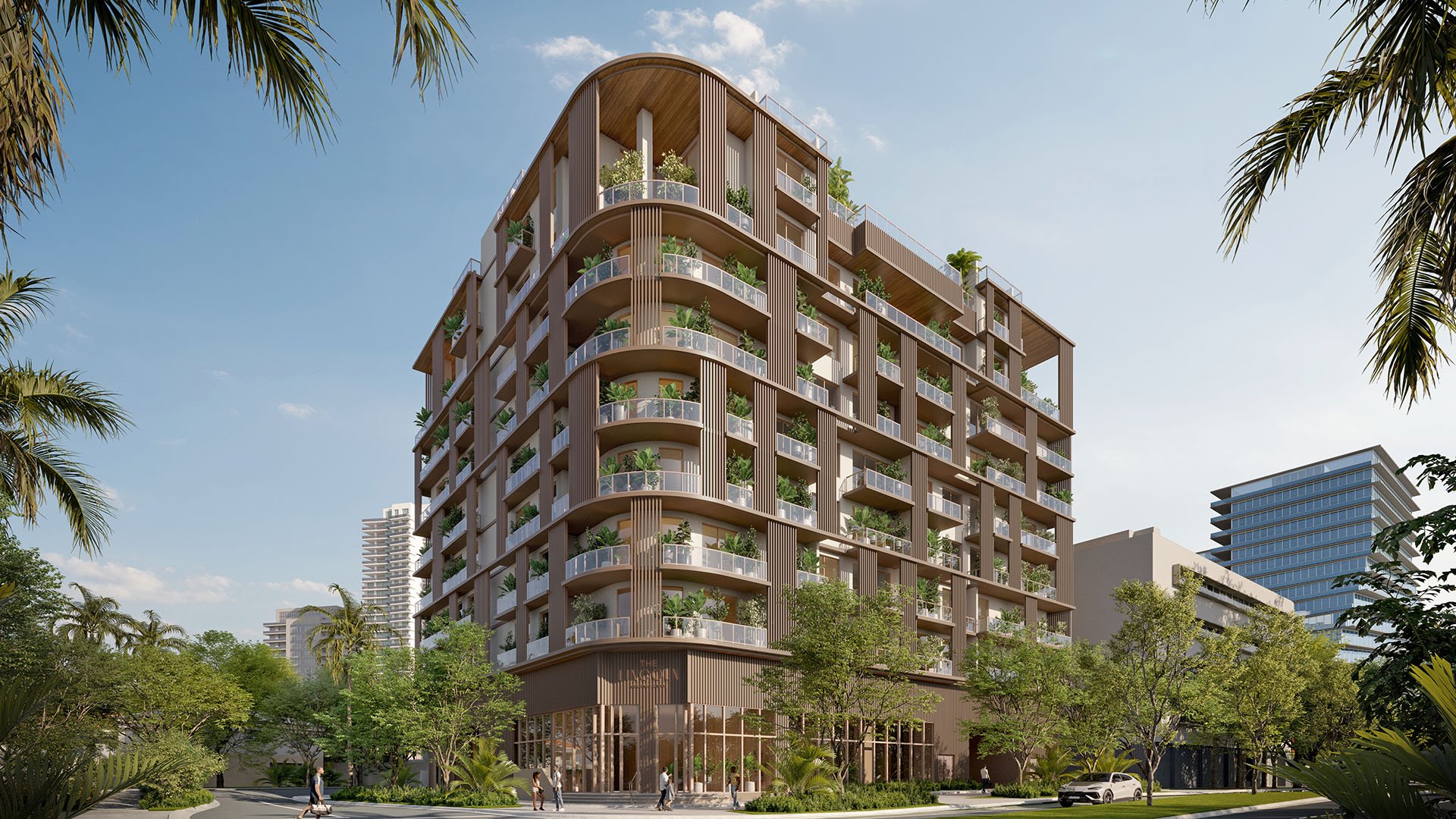
For affluent South Florida homeowners, the move out of a large single-family estate is rarely about wanting less life. It is about wanting less friction. The daily mechanics of estate ownership, from grounds to staffing to maintenance, can begin to compete with the pleasures those properties were meant to deliver. That is the psychological opening for The Lincoln Coconut Grove, a boutique urban residence positioned for buyers who are rightsizing from larger private homes without accepting the emotional vocabulary of a downgrade.
The important word is rightsizing. Downsizing suggests surrender. Rightsizing suggests editing. In Coconut Grove, that distinction matters because the neighborhood can offer a more graceful transition than a direct move into a dense, vertical district. The Lincoln Coconut Grove is framed less as an amenity spectacle and more as a residential alternative built around privacy, walkability, service, and design. For a buyer accustomed to control, quiet, and cultivated surroundings, those priorities may be more persuasive than a long inventory of shared facilities.
Coconut Grove has a rare advantage in Miami: it feels mature. Its low-scale streets, layered landscaping, and village-like rhythm soften the shift from private acreage to urban residence. For owners leaving waterfront or inland estates, the Grove can preserve a sense of neighborhood texture that is harder to find in more intensely vertical markets such as Brickell or Edgewater.
That is central to The Lincoln’s lifestyle fit. Former estate owners often do not want to abandon greenery, privacy, or a residential cadence. They want to reduce the burden of maintaining it all personally. Coconut Grove’s tree canopy, human-scaled streets, and proximity to Biscayne Bay create a setting where less private square footage can be balanced by a stronger everyday environment. The surrounding neighborhood becomes part of the home’s value proposition.
This is also why the broader Coconut Grove residential conversation includes projects such as Four Seasons Residences Coconut Grove and Park Grove Coconut Grove. They speak to buyers who want refinement in the Grove’s established setting rather than a move defined only by skyline height or spectacle.
Boutique is not merely a size descriptor in this context. It is a lifestyle signal. The Lincoln Coconut Grove is positioned for buyers who value discretion, privacy, and a curated residential experience more than the energy of a mega-tower amenity stack. For many estate sellers, that distinction is crucial. They are not seeking constant activation. They are seeking ease.
The most compelling rightsizing move replaces complexity with intelligence. Instead of managing an expansive property, the buyer gains a more manageable residential format. Instead of driving for every daily errand or relying on a home that must provide everything internally, the buyer steps into a neighborhood where restaurants, parks, marinas, yacht clubs, and waterfront recreation can form part of the living pattern.
That does not mean the private residence becomes less important. It means the residence carries a different role. Design, service, and privacy become the core. The surrounding Grove supplies some of the lifestyle breadth that a larger estate once had to contain on its own.
The lifestyle proposition at The Lincoln is best understood as simplification without compromise. For the affluent buyer, maintenance is not only a cost. It is a demand on attention. A large estate may require continual oversight, even when expertly staffed. A boutique residence in a walkable Grove setting can appeal because it allows owners to preserve quality while reducing the number of decisions attached to daily life.
That is a meaningful shift for the Estates & Single-Family buyer who has already experienced the rewards and burdens of large-property ownership. The goal is not to replicate the estate exactly. It is to retain what mattered most: privacy, calm, elegant design, and access to the natural and social assets that shape South Florida living.
Waterfront access is part of that calculus, even when a buyer is no longer maintaining private dockage or extensive grounds. Coconut Grove’s proximity to Biscayne Bay, marinas, yacht clubs, and parks can help replace some estate-based amenities with nearby shared or public assets. The result is a more fluid version of luxury, defined by access rather than ownership of every element.
The strongest rightsizing decisions are not framed around subtraction. They are framed around what improves. For some buyers, the improvement is time. For others, it is walkability, service, or the ability to lock and leave with greater confidence. For others still, it is the appeal of living in a neighborhood where culture, greenery, water access, and a residential atmosphere sit close together.
That is why The Lincoln Coconut Grove sits within a broader South Florida pattern: wealthy homeowners trading sprawling estates for highly curated urban residences. The shift is not universal, and it is not for every buyer. It is strongest for sophisticated owners who have reached a point where refinement matters more than scale for scale’s sake.
Coconut Grove’s current residential landscape gives those buyers several ways to think about the transition. The Well Coconut Grove speaks to the neighborhood’s wellness-oriented residential identity, while Vita at Grove Isle connects the Grove conversation to bayfront living and a more private island context. Within that spectrum, The Lincoln’s positioning is especially focused on boutique urban ease.
The essential question is not whether a residence has less private land than an estate. It is whether the new life feels more aligned with how the buyer actually wants to live now. For many, the answer depends on privacy, storage, service, parking, outdoor space, and the degree to which the neighborhood can replace the estate’s self-contained lifestyle.
The Grove offers a strong argument because it does not ask estate sellers to abandon residential character. It offers a softer landing: mature landscaping, bay proximity, walkable village energy, and a scale that feels less abrupt than Miami’s denser high-rise districts. The Lincoln Coconut Grove fits that narrative by presenting rightsizing as a move toward precision, not austerity.
For the right buyer, the value is emotional as much as practical. The home becomes easier to manage. The day becomes easier to shape. The setting still feels cultivated. That is the quiet luxury at the center of The Lincoln’s appeal.
Is The Lincoln Coconut Grove designed for buyers leaving large estates? It is positioned for affluent buyers rightsizing from larger single-family estates into a more manageable boutique urban residence.
Is rightsizing the same as downsizing? Not in this context. Rightsizing emphasizes a better fit for current lifestyle priorities rather than a loss of quality or status.
Why is Coconut Grove important to the appeal? Coconut Grove offers mature landscaping, low-scale streets, and a village-like setting that can feel familiar to former estate owners.
Does The Lincoln focus on a mega-tower amenity model? Its appeal is framed more around privacy, walkability, service, and design than an expansive mega-tower amenity stack.
Who is the strongest fit for The Lincoln Coconut Grove? The strongest fit is a sophisticated estate seller seeking privacy and refinement in a more manageable residential format.
Can the Grove replace some private estate amenities? For some buyers, yes. Nearby bay access, marinas, yacht clubs, and parks can support a lifestyle once centered on private grounds.
Is this move mainly about reducing maintenance? Reduced maintenance is a major part of the appeal, but the broader value is preserving a high-quality daily environment with less oversight.
How does Coconut Grove compare with denser districts? The Grove can feel like a softer landing than Brickell or Edgewater because of its mature, residential, human-scaled character.
Should buyers expect the same lifestyle as a waterfront estate? Not exactly. The appeal is a more efficient version of luxury, with access to waterfront recreation without the same private-property burden.
What should estate sellers prioritize when evaluating The Lincoln? They should focus on privacy, service, walkability, design, and whether Coconut Grove supports the daily rhythm they want next.
For a discreet conversation and a curated building-by-building shortlist, connect with MILLION.
If branded residences are on your mind — as a home or as an allocation — we would be glad to share what we are seeing, privately.
Begin a quiet conversation