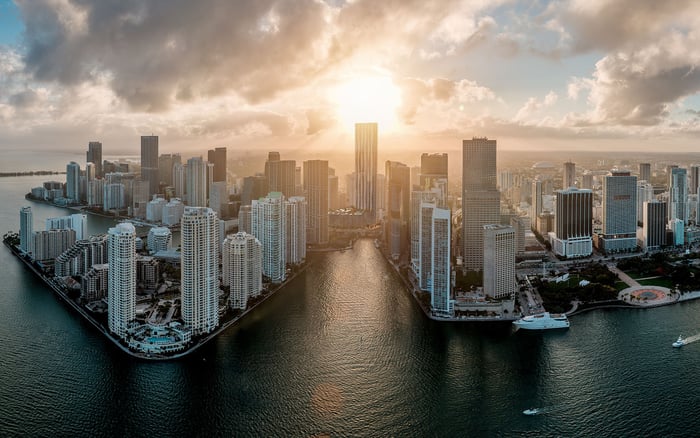
A discreet buyer’s guide to water-intrusion diligence before purchasing luxury real estate in Brickell Key, from unit history and building envelope questions to association records, insurance posture, and inspection strategy.
Buying on Brickell Key is not simply a search for square footage, views, and finish levels. It is a decision about stewardship. In a luxury condominium, the most consequential questions often sit behind the surface: inside exterior walls, beneath flooring, around balcony thresholds, within mechanical rooms, and in the minutes of an association meeting.
Water intrusion history is not automatically a reason to walk away. In South Florida, sophisticated buildings are maintained, repaired, resealed, improved, and monitored over time. The issue is whether a past condition was isolated or recurring, whether it was corrected at the proper level, and whether the buyer can price, insure, renovate, and live with confidence. This buyer’s guide perspective is especially relevant for Brickell purchasers who want the elegance of island living without inheriting avoidable ambiguity.
A well-advised buyer should treat water history as part of luxury due diligence, not as a late-stage inspection surprise. The questions below are designed to make the conversation precise, discreet, and document-driven.
Ask the seller directly whether the residence has ever had water intrusion, moisture staining, active leaks, prior mold assessment, flooring replacement linked to moisture, window or door leakage, balcony threshold issues, plumbing overflow, appliance-related discharge, or air-conditioning condensate problems. The key is to ask in writing and to define water intrusion broadly enough that the answer cannot be limited to dramatic events.
Then ask what was done. Who identified the issue? Was the repair performed inside the unit only, or did it involve common elements? Were drywall, baseboards, millwork, stone, wood flooring, cabinetry, or electrical components removed or replaced? Were moisture readings taken before and after? Was any remediation completed? Were warranties, invoices, photographs, or close-out documents retained?
For resale residences, the highest-value question is not simply, “Has there been a leak?” It is, “Was the cause found, corrected, and documented?” A beautiful living room can be restored quickly. A poorly understood source can reappear slowly.
In a condominium tower, water often follows paths that do not respect unit lines. A buyer should ask whether similar issues have occurred in the same vertical stack, neighboring residences, balcony line, window line, mechanical chase, or amenity level. This is not an accusation. It is a way to determine whether the unit event was isolated or part of a broader pattern.
If a seller mentions a minor ceiling repair, ask whether it came from the unit above, the building envelope, an air-conditioning line, a plumbing component, or a roof or terrace condition. If the answer is uncertain, that uncertainty itself deserves further review. A luxury buyer is not looking for perfection. The buyer is looking for traceability.
When comparing the Brickell Key lifestyle with mainland Brickell options such as Una Residences Brickell or St. Regis® Residences Brickell, the same principle applies: building performance is part of the amenity package, even when it is not visible in renderings or staging.
Water intrusion can begin at windows, sliding doors, balcony transitions, exterior walls, roofs, terraces, garage levels, planters, and penetrations for mechanical or life-safety systems. Ask whether the building has completed recent waterproofing, painting, caulking, window, door, roof, balcony, garage, or façade-related work. Ask whether additional work is planned, under discussion, or subject to owner assessment.
The phrase “building envelope” may sound technical, but for a buyer it translates into everyday comfort: dry interiors, reliable finishes, stable ownership costs, and fewer surprises after closing. In a waterfront setting, the building’s maintenance culture matters. A tower that documents, schedules, and funds envelope work thoughtfully gives buyers a clearer picture than one where answers are vague.
For a waterview residence, pay special attention to openings and thresholds. Expansive glass, balconies, and terraces are central to the luxury experience, but they also deserve careful inspection. Ask whether doors glide properly, whether tracks show staining or corrosion, whether seals appear consistent, and whether any prior repair altered the original condition.
The best buyers do not rely on reassuring adjectives. They ask for records. Request seller disclosures, prior inspection summaries, repair invoices, moisture or remediation documentation, association communications concerning the unit, relevant meeting minutes, maintenance notices, insurance correspondence available to the seller, and any warranties tied to windows, doors, waterproofing, flooring, or recent interior work.
If the property has been renovated, ask whether walls or floors were opened and whether any moisture concerns were discovered during construction. If a designer, contractor, or property manager oversaw the work, ask whether close-out files exist. A highly finished residence without a paper trail can still be excellent, but the absence of documentation should shape negotiation strategy.
Buyers considering new-construction alternatives in the broader Brickell market, including Baccarat Residences Brickell and Cipriani Residences Brickell, should apply a parallel mindset. Newer product may shift the document set toward warranties, delivery standards, association formation, and developer-related materials, but the goal remains the same: clarity before commitment.
A general home inspection is useful, but luxury condominium diligence may require additional expertise. Consider inspectors familiar with high-rise construction, moisture meters, thermal imaging where appropriate, mechanical systems, balcony and window conditions, and post-renovation evaluation. If any concern appears, a targeted follow-up by the right specialist can be far less expensive than a vague credit negotiated under pressure.
Ask your inspector to distinguish between active moisture, historical staining, poor prior repair, deferred maintenance, condensation, plumbing-related damage, and exterior intrusion. These distinctions matter. They affect insurance conversations, renovation planning, closing timelines, and long-term confidence.
It is also wise to coordinate document review with legal and insurance professionals. Association obligations, common element responsibilities, owner maintenance duties, and claim history can be nuanced. In a premium purchase, the objective is not to collect fear. It is to convert uncertainty into a known variable.
If water history is disclosed and properly documented, the buyer may still proceed comfortably. The negotiation may focus on price, escrow, specific repairs, additional inspections, transfer of warranties, or confirmation that open issues have been closed. If the seller cannot answer basic questions, the buyer may request more time, more access, or more documentation before waiving contingencies.
The most powerful position is calm specificity. Ask what happened, when it was observed, how the source was diagnosed, who repaired it, what was replaced, whether the condition returned, and what documents prove closure. A seller who can answer those questions gives the buyer confidence. A seller who cannot may still have a fine residence, but the buyer should not pay as though every risk has been retired.
Brickell Key rewards buyers who value both beauty and discipline. Water history diligence is part of that discipline, especially when the residence is intended as a primary home, second home, or legacy asset.
Should I avoid a Brickell Key condo with past water intrusion? Not automatically. The key is whether the source was identified, corrected, documented, and has not reappeared.
What is the first question to ask the seller? Ask whether the unit has ever had leaks, moisture, staining, mold evaluation, water damage, or repairs related to water.
Should I ask about neighboring units? Yes. Similar issues in the same stack, line, or adjacent residences may suggest a broader building condition.
Are cosmetic repairs enough evidence that a problem is solved? No. Fresh paint or flooring does not prove that the original source of moisture was corrected.
What documents should I request? Request disclosures, invoices, inspection notes, remediation records, photographs, warranties, and relevant association communications.
Can water intrusion affect insurance? It can influence underwriting questions and buyer comfort, so insurance review should occur before closing whenever possible.
Is a standard inspection sufficient? Sometimes, but a high-value condo may warrant moisture-focused review, mechanical review, or specialist follow-up.
Should renovated units receive extra scrutiny? Yes. Renovations can reveal, conceal, or correct prior conditions, so close-out files and contractor records matter.
How should I handle vague answers from a seller? Ask for more documentation, extend diligence if possible, and avoid treating uncertainty as a resolved condition.
What is the best way to shortlist comparable options for touring? Start with location fit, delivery status, and daily lifestyle priorities, then compare stacks and elevations to validate views and privacy.
If you'd like a private walkthrough and a curated shortlist, connect with MILLION.
If branded residences are on your mind — as a home or as an allocation — we would be glad to share what we are seeing, privately.
Begin a quiet conversation