A lifestyle-led guide to Arbor Coconut Grove for pet-owning luxury buyers, focused on boutique scale, walkable greenery, daily routines, and the due diligence questions to ask before purchasing.
For pet owners, the most meaningful residential luxuries are often the least theatrical. A gracious lobby matters, but so does the ease of stepping outside for the first walk of the morning. Privacy matters, but so does a neighborhood where daily routines feel natural rather than negotiated. That is the more intentional lens through which Arbor Coconut Grove deserves to be considered.
Arbor Coconut Grove is best understood as a boutique-luxury lifestyle choice in Miami’s Coconut Grove, not simply as another condominium profile. Its appeal for households with companion animals comes from the combination of scale, setting, and design language: a more intimate residential environment, a village-like neighborhood, and a garden-inspired sensibility that gives greenery a central role in daily life.
This is not an article about claimed pet amenities, pet spas, grooming stations, or building-specific rules. Those details should always be verified through association documents and current sales materials. The more durable question is lifestyle-based: does the building and neighborhood support the way pet-owning buyers actually live?
Boutique scale can carry a practical elegance. In a smaller residential setting, the route from residence to street may feel more direct, the common areas more personal, and the rhythm of the building less anonymous. For dog owners in particular, repeated daily walks can feel less like a production and more like a quiet extension of home.
This is where Arbor’s positioning as a boutique alternative becomes relevant. It sits conceptually between traditional low-rise living and the large resort-style condominium tower. The point is not that one format is universally better. Rather, Arbor’s scale can appeal to buyers who prioritize privacy, intimacy, and routine over spectacle.
In South Florida luxury, the default aspiration is often vertical: higher floors, wider views, more dramatic arrivals. Arbor suggests another kind of aspiration, one grounded closer to the street, the garden, and the neighborhood. For pet-owning households, that lower-friction relationship with the outside world may be as important as any grand amenity program.
Coconut Grove has long attracted buyers who want Miami without surrendering to Miami’s intensity. Its appeal is tied to greenery, walkability, and a village-like character that feels distinct from the more towered corridors of Brickell, Edgewater, or the beaches. For pet owners, that neighborhood texture can be decisive.
A walk is rarely just a walk. It is exercise, decompression, social contact, and a way for both owner and animal to read the neighborhood. In Coconut Grove, the daily loop can feel more human-scale, with shaded moments, a residential cadence, and a sense of outdoor adjacency that aligns with Arbor’s garden-inspired design narrative.
Buyers comparing Grove options may naturally look at different expressions of the neighborhood. Four Seasons Residences Coconut Grove speaks to one kind of luxury expectation, while Mr. C Tigertail Coconut Grove represents another point of reference within the Grove conversation. Arbor’s distinction is its intimate, garden-forward lifestyle proposition for those who want the neighborhood itself to carry more of the daily experience.
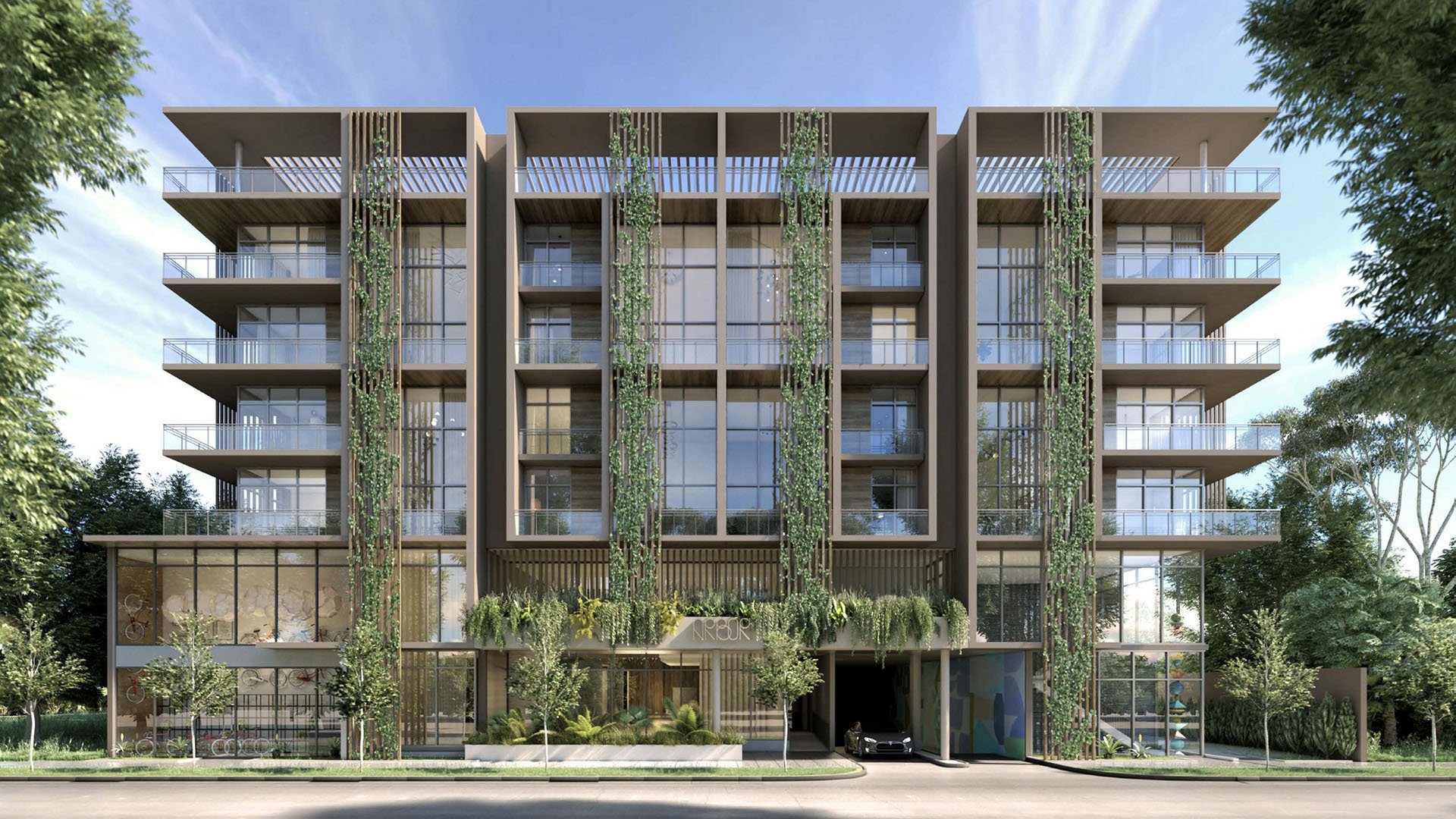
Arbor’s design language is presented around gardens, plantings, shaded outdoor spaces, and visual continuity between interior and exterior living. For pet-owning households, that matters because animals experience a residence through thresholds: light, shade, terrace edges, lobby transitions, elevator rhythms, and the small rituals that occur between inside and out.
The appeal is not merely decorative. A garden-inspired setting can soften the feeling of condominium living. It can make a residence feel less detached from the surrounding ecology and more connected to the daily patterns of air, greenery, and movement. That sensibility is especially relevant in Coconut Grove, where outdoor life is part of the residential identity.
Balcony considerations still require caution. Buyers should evaluate railing conditions, furniture placement, plant toxicity, heat exposure, and how a pet responds to exterior sounds and height. The romance of indoor-outdoor living should always be paired with a practical safety review.
The strongest argument for Arbor as a pet-owner choice is its focus on intentional routine. Morning walks, midday breaks, evening neighborhood loops, and quiet returns home are not secondary details. They are the lived architecture of ownership.
A large waterfront tower may offer a different kind of drama, with resort-style energy and expansive views. Arbor can be considered against that model by emphasizing immediate access to a leafy, human-scale environment rather than distant skyline or bay perspectives. For some buyers, that tradeoff is not a compromise. It is the point.
Within Coconut Grove, projects such as The Well Coconut Grove and Ziggurat Coconut Grove also contribute to a broader conversation about wellness, design, and neighborhood identity. Arbor’s pet-owner relevance comes from how naturally its boutique, garden-led positioning fits into that conversation without needing to become a spectacle.
The most refined buyers ask unglamorous questions early. Before purchasing at Arbor Coconut Grove, pet owners should request the current association rules and confirm the building’s pet policy in writing. Important questions include the number of permitted pets, size or weight limits, breed-related restrictions, pet fees, elevator procedures, lobby and common-area rules, and whether any service or support animal documentation process applies.
Buyers should also study daily logistics. How long is the route from residence to exterior access? Are there times when elevators are more congested? Are there floor surfaces that may be slippery for older animals? How does the building handle deliveries, guests, and service providers when pets are present? Is there convenient nearby veterinary access within the owner’s preferred routine?
For second-home buyers, the questions become even more specific. Who manages the pet’s care when the owner is away? Are there rules affecting dog walkers, pet sitters, or domestic staff? How are noise complaints handled? What procedures apply in storm season or during building maintenance periods? Luxury is the absence of daily friction, and friction is usually revealed in documents before it appears in daily life.
Arbor Coconut Grove is likely most compelling for buyers who want the emotional benefits of a greener Miami lifestyle with the efficiency of condominium ownership. It may suit owners who value discretion, a smaller-scale community, and a more grounded daily rhythm with companion animals.
It is less about choosing the most visible building and more about choosing the most livable pattern. In that sense, Arbor’s strength lies in restraint: a boutique presence, a Coconut Grove setting, and a design vocabulary that invites the outside world closer without turning home into a public stage.
For pet owners, that restraint can be deeply luxurious. The right building is not just where a pet is allowed. It is where the owner’s routines, the animal’s comfort, and the neighborhood’s character align with minimal strain.
Is Arbor Coconut Grove officially pet friendly? Pet policies should be confirmed through current association documents and purchase materials before relying on any assumption.
Why is Arbor Coconut Grove relevant for pet owners? Its boutique scale, garden-inspired design language, and Coconut Grove setting support a lifestyle built around calmer daily routines.
Does Arbor Coconut Grove have a dog park or pet spa? Those amenities should not be assumed unless verified in current building documents or official materials.
What should dog owners ask before buying? Ask about pet limits, elevator rules, common-area access, fees, breed or size restrictions, and procedures for walkers or sitters.
Why does Coconut Grove matter for pet-owning buyers? Coconut Grove’s walkable, leafy, village-like character can make daily walks feel more natural and integrated into home life.
Is a boutique building better than a large tower for pets? It depends on the owner, but a smaller-scale building may simplify repeated daily movements between residence, lobby, and street.
What balcony issues should pet owners review? Review railing safety, heat exposure, furniture placement, plant choices, and how the animal reacts to sounds or height.
Is Arbor Coconut Grove more about views or neighborhood access? Its strongest lifestyle narrative is immediate access to a leafy, human-scale environment rather than high-rise spectacle.
Should second-home buyers ask different pet questions? Yes. They should confirm rules for pet sitters, dog walkers, staff access, emergency planning, and extended absences.
Who is the ideal Arbor Coconut Grove buyer with pets? A buyer seeking privacy, greenery, walkable routines, and a more intentional Coconut Grove residential rhythm.
For a tailored shortlist and next-step guidance, connect with MILLION.
If branded residences are on your mind — as a home or as an allocation — we would be glad to share what we are seeing, privately.
Begin a quiet conversation