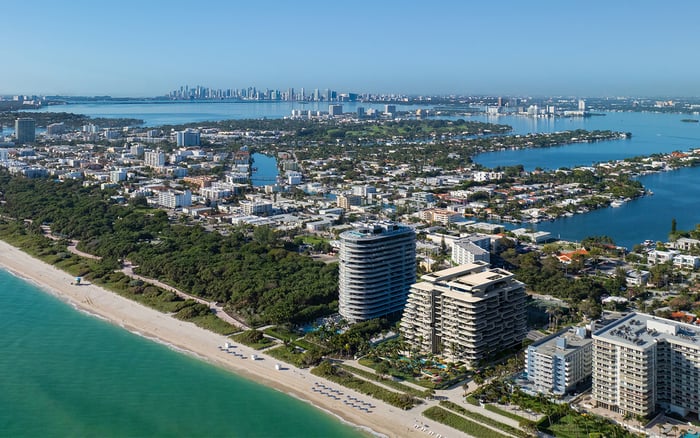
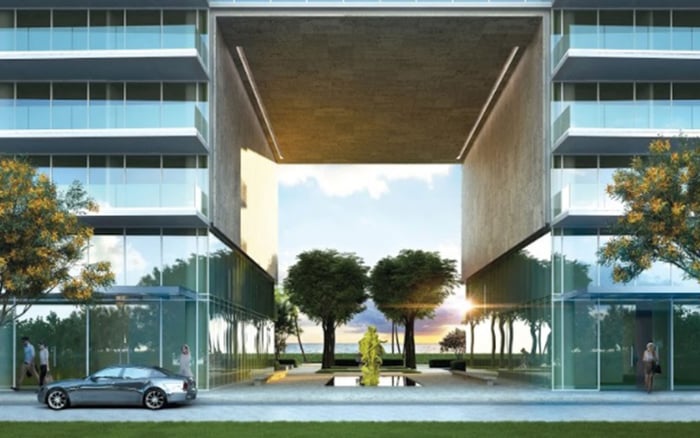
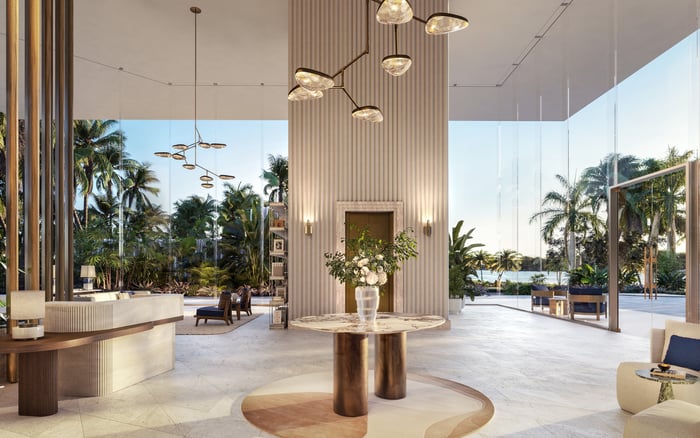
A buyer-focused look at The Delmore Surfside and the practical questions seasonal owners should ask before choosing a lock-and-leave luxury residence in Surfside.
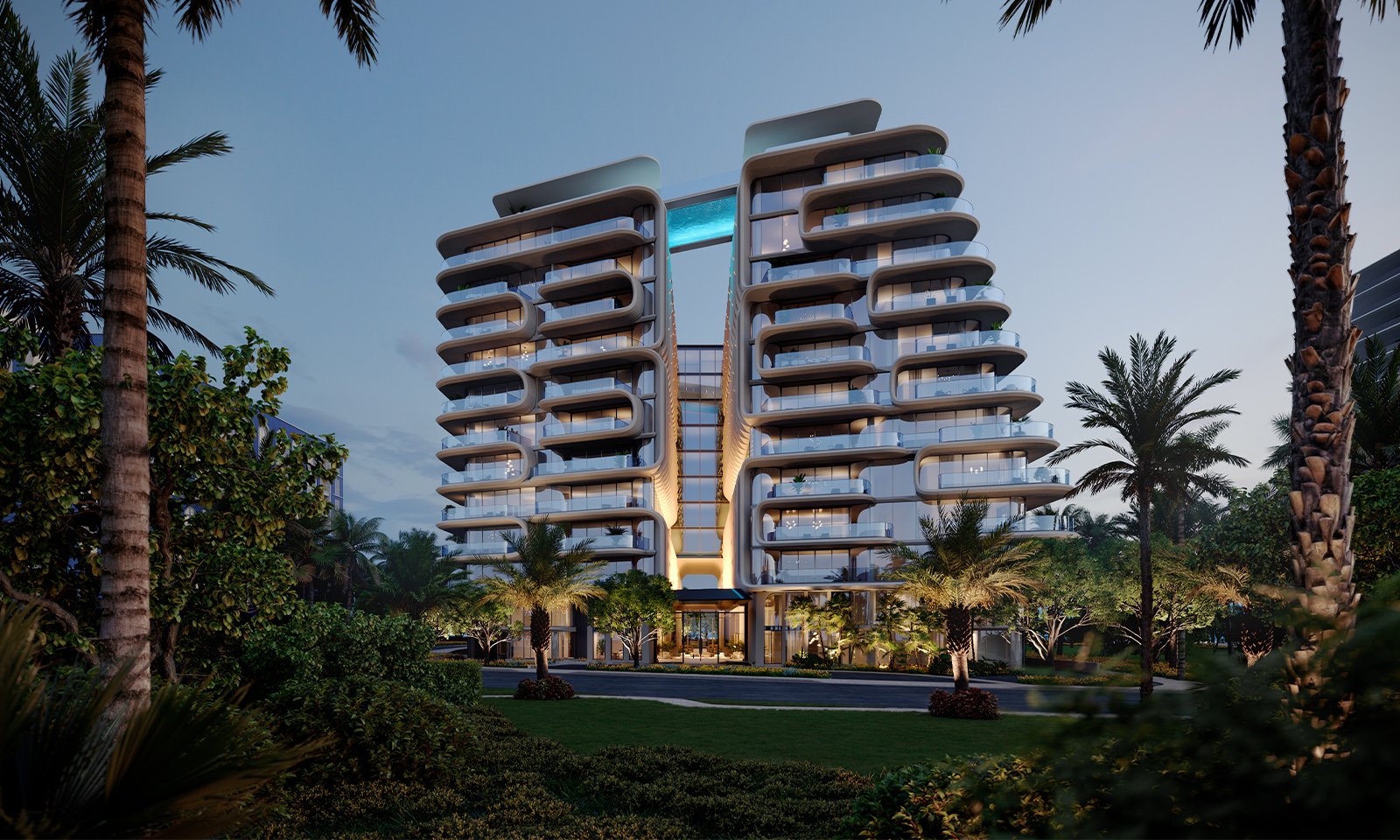
For seasonal luxury owners, the most valuable residence is not always the one with the longest amenity list. It is the one that performs predictably when no one is there. That is the practical lens through which The Delmore Surfside deserves to be viewed: not simply as a boutique condominium concept in Surfside, but as a potential answer to a very specific ownership problem.
Many affluent buyers use South Florida differently than primary-home residents. Some arrive for concentrated seasonal stays. Others rotate among homes, schools, business centers, and vacation properties. For these owners, a residence must be beautiful in person and dependable in absence.
That is the essence of lock-and-leave ownership. It is not a decorative phrase. It is a standard for reducing day-to-day worry while an owner is away, especially in a coastal Miami-Dade market where climate, security, maintenance, and access all matter.
The Delmore Surfside is framed as a boutique luxury condominium concept rather than a large-scale residential tower. That distinction matters because boutique ownership is not judged by spectacle alone. It is judged by proportion, discretion, and how closely operations align with the owner experience.
In a smaller-scale luxury setting, the question is not whether the building has every amenity imaginable. The more serious question is whether the building can execute consistently. Can management identify issues early? Can service teams respond without friction? Can access be controlled when an owner is abroad or at another residence? Can the home be prepared before arrival and secured immediately after departure?
Surfside already understands this type of buyer. The area’s luxury identity is associated with quiet coastal living, proximity to nearby luxury destinations, and an inventory that often emphasizes privacy over urban density. Nearby reference points such as Arte Surfside, Ocean House Surfside, and The Surf Club Four Seasons Surfside reinforce how the submarket attracts buyers who want refinement without losing ease.
Seasonal buyers evaluating The Delmore Surfside should begin with architecture, building systems, operations, and ownership structure. These are the categories that turn luxury into daily confidence.
Architecture matters because a second residence must withstand periods of nonuse. A home that feels dramatic during a showing also needs durable materials, sensible circulation, and thoughtful transitions between private residence, shared spaces, parking, and service areas. The goal is to make every arrival feel calm rather than procedural.
Building systems matter because absence magnifies small failures. Climate control, humidity management, water monitoring, elevator reliability, controlled access, package handling, and maintenance protocols all become part of the ownership experience. A buyer should ask how the residence is monitored when vacant, how alerts are escalated, and who has permission to enter.
Operations matter because service is the living infrastructure of lock-and-leave ownership. Concierge support, owner communications, vendor access, housekeeping coordination, and pre-arrival preparation should be clear rather than improvised. The strongest service models make an owner feel that the home remained under intelligent care between visits.
Ownership structure matters because rules govern convenience. Seasonal owners should understand access policies, rental limitations if relevant, guest procedures, insurance expectations, renovation controls, and association responsibilities. The more valuable the asset, the more important it becomes to know exactly where the owner’s duty ends and the building’s responsibility begins.
Sophisticated buyers increasingly evaluate a second home through risk exposure, asset quality, and ease of use. This is especially true in a coastal market. A residence may be visually compelling, but the owner still needs confidence around storm readiness, maintenance communication, and continuity of operations.
For The Delmore Surfside, the prudent approach is to separate positioning from verification. A buyer should use the boutique luxury positioning as a starting point, then ask operational questions directly. What is the building’s absence-management procedure? How are emergency contacts maintained? How are units accessed for approved maintenance? What happens if an owner is unreachable during an urgent event?
These are not pessimistic questions. They are premium-buyer questions. A truly strong lock-and-leave residence makes the unglamorous parts of ownership feel elegantly resolved.
Surfside’s appeal to second-home owners is rooted in balance. It offers coastal Miami-Dade luxury living while remaining more composed than larger, denser urban districts. For many seasonal buyers, that balance is the attraction: enough sophistication to support a flexible lifestyle, and enough calm to make return visits restorative.
The Delmore Surfside sits within that broader Surfside narrative. It may appeal to buyers who prefer a boutique environment and who value a more intimate ownership experience than a very large tower may provide. Oceanfront and near-ocean luxury in this part of Miami-Dade is not only about the view. It is about the rhythm of use.
A seasonal owner may arrive with family for several weeks, leave for business, return for a long weekend, and then be absent for months. In that pattern, the residence must perform like a private asset supported by professional infrastructure. This is why lock-and-leave practicality deserves as much attention as finishes or views.
A buyer considering The Delmore Surfside should ask for clarity on several points before treating the residence as an effortless seasonal base.
Start with security. How is access controlled for residents, guests, staff, vendors, and deliveries? Then move to maintenance. How often can residences be inspected if an owner is away, and what is the protocol for documenting those checks? Climate control is equally important. In South Florida, humidity management is not a minor convenience.
Storm readiness should be discussed plainly. Buyers should ask how the building prepares common areas, communicates with owners, handles post-storm access, and coordinates urgent repairs. Concierge support should be examined beyond lifestyle requests. Can the team coordinate arrival preparation, receive approved vendors, and help close the residence after departure?
It is also useful to compare the operating philosophy of Surfside with other luxury nodes. A buyer who studies Fendi Château Residences Surfside may be thinking about discreet coastal prestige, while someone reviewing Rivage Bal Harbour may be weighing the broader Bal Harbour corridor. The Delmore Surfside belongs in that conversation when the priority is less about constant occupancy and more about dependable return.
The strongest case for lock-and-leave ownership is psychological. A seasonal residence should not create a second layer of management in an already complex life. It should reduce friction.
That is where The Delmore Surfside’s boutique positioning becomes intriguing. If the building delivers on the practical dimensions that seasonal owners care about, it can compete through service intensity and operational reliability rather than sheer amenity volume. For the right buyer, that may be the more durable luxury.
A polished residence is expected at this level. A residence that remains orderly, protected, climate-conscious, and easy to re-enter after months away is rarer. In Surfside, where buyers often have choices across Miami Beach, Bal Harbour, Sunny Isles, and beyond, practicality can be the quiet differentiator.
Is The Delmore Surfside suitable for seasonal owners? It may be relevant for buyers who want a refined Surfside residence with lock-and-leave potential, provided they verify the building’s specific services and procedures.
What does lock-and-leave mean for a luxury condo? It means the residence can be secured, maintained, monitored, and re-entered with minimal worry when the owner is away.
Why is Surfside attractive to second-home buyers? Surfside offers coastal Miami-Dade luxury living with a quieter, more residential character than many larger urban condo markets.
Should buyers focus more on amenities or operations? Amenities matter, but seasonal owners should give equal weight to building systems, staff responsiveness, security, and absence procedures.
What should seasonal buyers ask before buying? They should ask about climate control, maintenance checks, storm communication, vendor access, and pre-arrival residence preparation.
How should buyers verify The Delmore Surfside’s lock-and-leave value? They should request details on access policies, maintenance protocols, emergency communications, and owner services before relying on the concept.
How can a boutique building compete with a larger tower? A boutique building can compete through discretion, service intensity, operational consistency, and a more personal ownership experience.
Why does storm readiness matter for seasonal owners? Owners may be away during severe weather, so clear communication and building-level procedures are central to protecting the residence.
What role does ownership structure play? Rules around access, guests, vendors, insurance, and association responsibilities shape how effortless the residence feels when owners are absent.
Is lock-and-leave ownership only about convenience? No. It also relates to risk management, asset quality, privacy, and confidence that the home is cared for between visits.
If you'd like a private walkthrough and a curated shortlist, connect with MILLION.
If branded residences are on your mind — as a home or as an allocation — we would be glad to share what we are seeing, privately.
Begin a quiet conversation