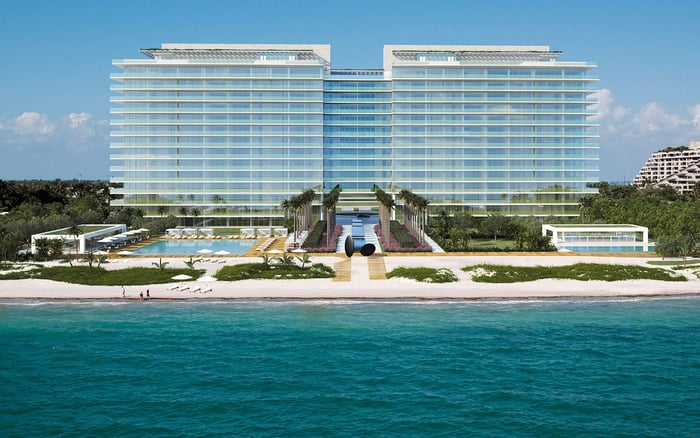
A discreet buyer’s guide to how private club obligations, dues, guest rules, transfer rights, and lifestyle expectations can influence the choice between Miami Beach and Bal Harbour.

For many luxury buyers, the first comparison between Miami Beach and Bal Harbour begins with the obvious variables: sand, views, architecture, dining, privacy, and proximity to daily rituals. Yet the more revealing question often surfaces later, after a residence has already become emotionally compelling: what club membership obligations come with ownership, and how do they change the way the property is lived?
In South Florida’s upper tier, the word “club” can mean several things. It may refer to a private amenity program, a beach or wellness club, a dining membership, a marina-style social framework, or a broader lifestyle ecosystem attached to a residential address. Some memberships may be optional; others may be tied to ownership. Some may transfer cleanly on resale; others may require approvals, initiation fees, recurring dues, guest limitations, or separate house rules. The details, not the label, shape the decision.
A polished buyer does not treat club access as a decorative amenity. It is part of the ownership structure. It affects monthly carrying costs, household privacy, how often guests can be hosted, whether adult children can use facilities independently, and how the residence may be perceived by a future purchaser. The issue is less whether a club is desirable and more whether its obligations match the buyer’s actual pattern of use.
Miami Beach often appeals to buyers who want a broader lifestyle field. The appeal is not limited to a single routine. A Miami Beach owner may want an oceanfront morning, a wellness appointment, a private dinner, a cultural evening, and a guest-friendly weekend without feeling bound to one formal ecosystem. That flexibility can be especially valuable for buyers who divide their time among several homes or entertain different circles throughout the year.
In this setting, club obligations should be read through the lens of optionality. Does the membership deepen the experience of the building, or does it add a layer of use restrictions that may not fit the owner’s rhythm? A buyer considering The Perigon Miami Beach, for instance, may be thinking about architecture, privacy, and a refined waterfront lifestyle; the club question then becomes whether any attached or adjacent privileges enhance that lifestyle without narrowing it.
The same applies to legacy-minded buyers drawn to established hospitality and service cues. At Shore Club Private Collections Miami Beach, the conversation naturally extends beyond square footage into service, social access, and how a household wants to engage with its surroundings. Miami Beach buyers often value the ability to move fluidly between private and public worlds. A club obligation that feels elegant for one household may feel unnecessary for another.
Bal Harbour is a different proposition. The buyer drawn north is often prioritizing quiet, controlled arrival, refined retail proximity, walkability on a more intimate scale, and a sense of residential composure. Here, the idea of a club can feel less like an add-on and more like an extension of the village’s discreet rhythm. The value is not merely access; it is curation.
That does not mean every buyer should accept club obligations automatically. It means the obligations should be measured against the premium a buyer places on order, privacy, and predictability. If a membership limits crowding, protects the resident experience, or supports a more composed social environment, the cost may feel aligned with the address. If the buyer is rarely in residence or prefers to maintain a lighter footprint, the same obligation may feel inefficient.
At Rivage Bal Harbour, the conversation often centers on the character of an ultra-private coastal life, where waterfront living is framed by restraint rather than spectacle. Similarly, Oceana Bal Harbour invites a buyer to think about ownership as a quieter residential statement. In Bal Harbour, the most important membership question is not “what do I receive?” It is “does this structure preserve the atmosphere I am paying to enter?”
The practical questions are straightforward, but they should be asked before negotiations harden. Is the membership mandatory or optional? Are initiation fees due at purchase, at closing, or after approval? Are dues charged monthly, annually, or through the association? Can guests use facilities without the owner present? Are privileges extended to immediate family, adult children, house staff, or seasonal guests? What happens at resale?
Transferability is particularly important. A membership that transfers cleanly may support future liquidity. A membership that requires new approval, separate fees, or limited assignment rights can become a negotiating point. Buyers should also examine whether the club is governed by the condominium association, a separate operating entity, or a third-party hospitality structure. Governance determines how rules change and who has influence when service standards, access policies, or cost structures evolve.
Miami Beach may win when a buyer wants flexibility, broad social access, and less dependence on a single residential ecosystem. Bal Harbour may win when the buyer wants a more controlled environment where private access and shared expectations are part of the value proposition. Neither is inherently better. The stronger choice is the one whose obligations feel natural, even during the months when the owner is not in residence.
Sophisticated buyers rarely object to dues in the abstract. They object to misalignment. A high annual obligation can be entirely rational if the household uses the facilities consistently, values privacy, and sees the membership as an extension of daily life. A modest obligation can feel excessive if it creates unwanted approvals, limits guest patterns, or duplicates memberships the family already holds elsewhere.
The true cost is the friction between lifestyle and rulebook. A buyer who regularly hosts visiting friends may care more about guest policies than spa access. A buyer with teenagers or adult children may care about family privileges. A buyer with staff may need clarity on service entries, deliveries, beach setup, and reservation authority. A buyer planning to rent, even occasionally where permitted, must understand whether club privileges follow the occupant, remain with the owner, or are restricted altogether.
This is also where beach access becomes more than a marketing phrase. Direct access may be operationally simple in one setting and more protocol-driven in another. The difference can shape how effortless the residence feels day to day.
Choose Miami Beach if you want a residence that can adapt to many versions of the season. It is especially compelling for buyers who value restaurants, art, hospitality, wellness, and a larger social map, while still wanting private retreat at home. Club obligations in Miami Beach should add convenience and polish without making ownership feel overprogrammed.
Choose Bal Harbour if you prefer a quieter cadence and are willing to accept more defined structures in exchange for composure. The best Bal Harbour ownership experience often depends on shared expectations: refined behavior, discreet service, and a residential atmosphere that feels protected. In that context, a club obligation can be less a cost center than a boundary that supports the lifestyle.
The final decision should be made with documents, not assumptions. Review membership agreements alongside condominium documents, budgets, rules, and resale provisions. Ask how rules have changed, how future changes are approved, and whether membership economics are separate from association economics. The most elegant purchase is the one where the beach, the building, and the obligations all tell the same story.
Can club membership obligations affect a Miami Beach or Bal Harbour purchase? Yes. They can influence carrying costs, guest use, resale terms, and how freely an owner uses the property.
Is a mandatory membership always a negative? No. It can be valuable when the services, access, and privacy align with the owner’s lifestyle.
Why might Miami Beach appeal to buyers wary of club obligations? Miami Beach can offer broader lifestyle optionality, which may suit buyers who do not want one club structure to define their use.
Why might Bal Harbour buyers accept more structured obligations? Some Bal Harbour buyers value discretion, predictability, and a quieter environment supported by clear rules.
What is the first membership question to ask? Ask whether the membership is mandatory, optional, transferable, and separately approved.
Do guest rules matter for luxury buyers? Yes. Guest access can affect entertaining, family visits, seasonal use, and staff-supported living.
Can club dues influence resale? They can. Future buyers may view dues as either a lifestyle benefit or an added ownership burden.
Should membership documents be reviewed before an offer? Ideally, yes. The documents can reveal obligations that are not obvious during a property tour.
Is oceanfront access the same as club access? Not necessarily. Beach use, service protocols, and guest privileges may be governed separately.
Which market is better for club-oriented buyers? It depends on the desired rhythm: Miami Beach for flexibility, Bal Harbour for a more controlled residential atmosphere.
When you're ready to tour or underwrite the options, connect with MILLION.
If branded residences are on your mind — as a home or as an allocation — we would be glad to share what we are seeing, privately.
Begin a quiet conversation