Indian Creek Village, the famously discreet “Billionaire Bunker,” has become a shorthand for modern privacy in South Florida. But the island’s mystique is not just celebrity. It is a specific blend of geography, governance, and purpose-built security that creates a rare, buyer-relevant proposition: controlled access, tightly limited scale, and a lifestyle anchored by a private country club. For high-net-worth buyers comparing a single-family compound to a condo with white-glove staff, Indian Creek offers an unusually clear thesis. The approach road narrows to a single bridge. Vehicle entry is screened. A dedicated public safety department operates around the clock. Water approaches are monitored. Even by South Florida standards, this is layered defense, designed for residents who value predictability as much as views. Below are the ten reasons the island continues to be framed as Miami’s most guarded address, followed by what that reality means for acquisition, holding strategy, and adjacent alternatives.
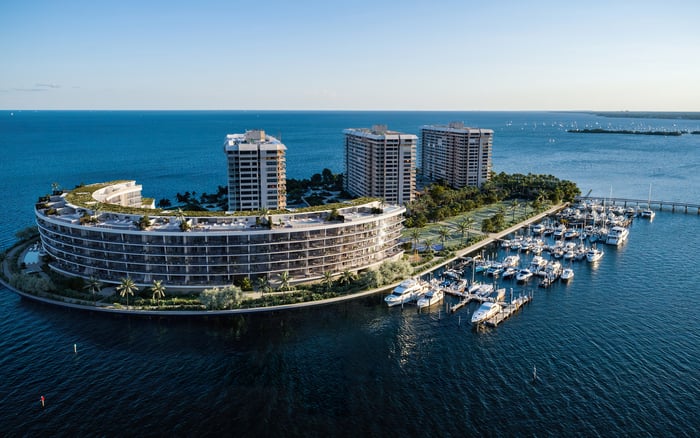
Indian Creek Village-often nicknamed the “Billionaire Bunker”-sits in Miami-Dade County with a profile that far exceeds its physical size. The Village describes the enclave as a private island community, and that framing isn’t marketing fluff. It’s an operational reality that shapes daily life, guest management, and even how owners think about risk.
Across much of South Florida, “security” can mean a staffed lobby, a roaming guard, or a residential gate-reassuring until it’s tested. Indian Creek is built around control. The island’s layout concentrates movement, and governance runs through a municipality that operates its own public safety department. The result is a community where the perimeter is treated as an asset.
For buyers who prioritize discretion, the question isn’t whether protection exists. It’s whether the environment is engineered to reduce variables: fewer entrances, fewer unknowns, fewer opportunities for access to become casual.
1. A single bridge is the island’s choke point Indian Creek’s only road connection is a single bridge linking the island to Surfside. From a security standpoint, one controlled entry point is the gold standard. It simplifies screening, reduces perimeter complexity, and makes access policies enforceable in real time.
It’s also why the island’s “privacy” feels tangible, not aspirational. Arrivals and departures funnel through the same narrow corridor-and that corridor can be managed.
2. Vehicle visitors are screened at a checkpoint Visitors entering by car are screened at a police checkpoint staffed by the Indian Creek Village Public Safety Department. That detail matters because it turns access into a protocol, not an informal courtesy.
For residents, the lived benefit is consistency. For their teams, it creates a process that can be planned around rather than improvised.
3. The Village operates its own 24/7 public safety department Indian Creek Village runs its own police and public safety department, providing 24/7 coverage and specialized capabilities. Many private communities outsource key elements of security. A municipal department dedicated to a single island signals continuity, training, and a mission calibrated to resident expectations.
It also reflects governance. When security is part of the municipality’s identity, priorities stay concentrated.
4. High-tech perimeter monitoring elevates the baseline The island has been associated with a high-tech perimeter security system described as Israeli-designed, incorporating radar and thermal or infrared camera surveillance to monitor approaches.
This matters less as a headline and more as a capability: security isn’t only about who is at the gate. It’s about detection and awareness-especially in a waterfront environment where boundaries can be porous.
5. The waterline is treated as a perimeter, not a view Indian Creek’s security posture includes marine patrol and boat monitoring to deter waterborne approaches. In many waterfront neighborhoods, the canal or bay is a lifestyle feature that also introduces vulnerability.
Here, the water is treated as a legitimate access route requiring active oversight. For owners, that can translate into greater comfort when entertaining or traveling.
6. The island’s scale supports real enforcement Indian Creek is a tiny municipality, and that small footprint is part of the formula. A compact community means fewer entry events to manage, fewer variables to track, and a tighter feedback loop between residents and public safety.
In practical terms, smaller can be safer-particularly when the community’s identity is built around controlled access.
7. A private country club anchors resident life inward The island is dominated by the Indian Creek Country Club, a private club centered on an 18-hole golf course. Membership is invitation-only with multiple membership categories.
Security benefits from this kind of inward-facing amenity stack. When the primary social and recreational gravity is on-island, there’s less need for constant off-island movement, fewer outsiders circulating, and a stronger culture of familiarity among residents and staff.
Beyond celebrity, these transactions underscore a market reality: buyers treat Indian Creek as a strategic address worth consolidating around, not simply a place to buy one house.
9. Land pricing signals scarcity, not just luxury Indian Creek’s scarcity is most visible in land values. A waterfront lot next to Bezos’s property sold for about $105 million in 2025. Separately, a rare land parcel has been marketed at $200 million, with the pitch explicitly tied to adjacency.
These numbers aren’t just spectacle. They indicate how the island’s value proposition-finite product, limited frontage, intense demand-gets priced into the land itself.
10. Even infrastructure debates underscore how self-contained the enclave is The island has drawn attention for disputes and pressure around wastewater management and sewage disposal, in a community historically reliant on septic systems. The issue became a public fight involving nearby Surfside and broader regional concerns.
For buyers, it’s a reminder that “private island” living still intersects with regional infrastructure. Due diligence on utilities and long-term municipal planning isn’t optional, especially at this level.
For ultra-premium buyers, Indian Creek’s most compelling feature is that privacy is built into the physical and civic architecture. The bridge limits access. Screening is institutionalized. Surveillance extends the perimeter. Marine monitoring reflects the realities of waterfront living.
That’s why comparisons to standard gated communities often fall flat. Indian Creek reads less like a neighborhood with a gate and more like a controlled campus.
Not every buyer wants the operational intensity of a single-family estate, even when the security profile is exceptional. For those who want a similar sensibility-controlled access, smaller scale, and discretion-certain boutique or service-rich buildings in nearby coastal enclaves can feel like the vertical counterpart.
In Surfside, Arte Surfside and The Surf Club Four Seasons Surfside often appeal to buyers who want privacy with a managed residential experience. In Bay Harbor Islands, Origin Bay Harbor Islands can speak to a similar preference for refined scale and proximity to the Indian Creek corridor.
For buyers who prefer Miami Beach’s energy while maintaining a more controlled residential environment, 57 Ocean Miami Beach can be a logical point of comparison.
These aren’t substitutes for Indian Creek’s single-bridge, municipality-run security model. They’re alternatives for buyers who prioritize white-glove management, locked-and-leave convenience, and a different kind of perimeter.
When security is a defining feature, buyers should align the rest of their diligence accordingly.
First, clarify access protocols: how guests are handled, how vendors are scheduled, and how household staff enter and exit. Second, treat waterfront exposure as both a lifestyle upgrade and a perimeter consideration. Third, pay attention to municipal infrastructure, especially given the visibility of wastewater and septic-related disputes. Finally, recognize that prestige pricing can be driven by land scarcity as much as architecture. In Indian Creek, the “site” is often the main event.
Why is Indian Creek called the Billionaire Bunker? It’s a widely used nickname tied to the island’s concentration of ultra-wealthy residents and unusually heavy security.
How do you get onto Indian Creek Island by car? The island connects to the mainland via a single bridge, and vehicle visitors are screened at a checkpoint.
Does Indian Creek have its own police department? Yes. The Village operates its own public safety department with 24/7 coverage.
Is security limited to the gate, or does it include the waterfront? The island’s posture includes marine monitoring, reflecting the reality of waterborne access routes.
What kind of technology is used for perimeter monitoring? The island has been linked to radar and thermal or infrared camera surveillance designed to monitor approaches.
What is the lifestyle anchor on the island? The Indian Creek Country Club, centered on an 18-hole golf course, is the dominant on-island amenity.
Is Indian Creek Country Club membership open to anyone who buys a home? Membership is invitation-only, with multiple categories, so it isn’t automatically guaranteed by ownership.
Have there been major recent home purchases on the island? Yes. Multiple high-profile purchases have been publicly disclosed, including several by Jeff Bezos.
Are Indian Creek land prices really that high? Recent deals and marketing have placed certain waterfront parcels in the nine-figure range, reflecting extreme scarcity.
Are there any ongoing community issues buyers should note? Wastewater management and sewage disposal have been a point of dispute and remain a practical diligence topic.
When you're ready to tour or underwrite the options, connect with MILLION Luxury.
If branded residences are on your mind — as a home or as an allocation — we would be glad to share what we are seeing, privately.
Begin a quiet conversation