A buyer-focused guide to evaluating dog-wash rooms as functional luxury spaces, with emphasis on placement, finish quality, maintenance, and resale clarity in South Florida homes.
In South Florida’s top residential market, the dog-wash room has evolved from charming extra to serious utility space. It is no longer enough for a residence to offer a tiled niche with a handheld sprayer. Buyers are asking whether the room performs after a wet beach walk, a garden run, a boat day, or a week of daily use by household staff.
The underwriting question is simple: does this feature protect the rest of the residence, or does it merely photograph well? A proper dog-wash room should reduce wear on primary baths, keep service circulation discreet, and create a durable transition between outdoors, garage, elevator landing, laundry, or mudroom. When designed well, it belongs to the same family as a catering kitchen, wine room, or owner’s entry: private infrastructure that supports a polished life.
Pets are part of the luxury household program, but the best pet spaces are rarely sentimental. They are quiet, washable, well-drained, and positioned where routine is easiest. The underwriting lens changes by setting: Brickell vertical residences, Miami Beach waterfront condominiums, Coconut Grove estates, new-construction specifications, and single-family homes each raise different questions of scale, drainage, and discretion.
Before reviewing fixtures, study the room’s location. A dog-wash station placed too far inside the home can undermine its purpose. The strongest layouts position the wash zone near a service entrance, garage, laundry room, secondary elevator access, or outdoor circulation point. In a condominium, the best version may be a compact but fully resolved utility bay near a laundry or staff corridor. In an estate, it may sit within a larger mudroom with storage, a grooming counter, and direct exterior access.
Underwriting should begin with the path of a wet dog through the property. Will paws cross polished stone, wood flooring, or formal rooms before reaching the wash? Can a handler access towels, leashes, cleaning supplies, and waste bags without opening multiple cabinetry zones? Is there a logical place for a dog to shake off, dry, and wait?
The location should also respect privacy. A pet wash beside a formal powder room or visible from a main entertaining corridor can feel like a retrofit. A concealed, service-oriented placement reads more expensive because it supports the way the home is actually operated.
The principal underwriting issue is water management. A beautiful dog-wash room without proper drainage is a liability. Buyers should examine whether the floor slopes appropriately, whether the basin or pan is sized for real use, and whether the drain placement allows water and hair to be managed without constant intervention.
The finish package matters, but only after the wet-room logic is resolved. Wall protection should extend beyond the obvious splash zone. Flooring should be selected for traction when wet, not only for appearance when staged. Grout, sealants, thresholds, and corners deserve attention because these are the areas that age first.
A dog-wash room should not rely on household discipline to prevent damage. The space should be built to tolerate imperfect use: a sandy coat, a wet leash, a dropped towel, or repeated rinsing. If the room requires delicate behavior, it is not truly underwritten for a pet household.
The best dog-wash rooms are sensory-controlled. Ventilation is essential because moisture and pet odor can quickly undermine an otherwise refined utility area. Underwrite the space by asking how air moves, how quickly the room dries, and whether adjacent rooms are protected from dampness.
Acoustics also deserve attention. Handheld sprayers, dryers, cabinetry doors, and excited dogs can create more sound than buyers expect. In a high-rise residence, proximity to bedrooms or formal living areas may matter. In a single-family home, distance from entertaining zones may be more important than absolute room size.
A quiet, well-ventilated room suggests architectural intent. A loud, damp, or poorly exhausted corner suggests an amenity added late in the design process. That distinction can influence how sophisticated buyers interpret the entire service program of the residence.
A dog-wash room should have a clear storage plan. Towels, grooming tools, pet shampoos, brushes, medications, collars, drying mats, and food-related accessories all need a place. Without storage, the room becomes cluttered, and a cluttered utility space quickly loses its luxury character.
Cabinetry should be evaluated for water tolerance and ease of cleaning. Open shelves may look attractive, but closed storage usually maintains a calmer appearance. Consider whether there is a landing surface for towels, a hook or rail for leashes, and a concealed area for supplies that should not be visible.
The highest-value version of the room supports repetition. It should make the daily routine easier every time, not simply solve an occasional mess. In underwriting terms, frequency of use is the difference between a lifestyle enhancement and a novelty.
A strong specification feels integrated. The plumbing fixtures, wall protection, lighting, millwork, and floor assembly should appear to have been designed together. If the station looks like a secondary shower awkwardly inserted into a utility room, it may still function, but it will not carry the same value signal.
Look for practical proportions. The wash area should allow a person to work comfortably without bending excessively or flooding the surrounding floor. The handheld fixture should be easy to control with one hand. Edges should be forgiving, especially in homes with larger dogs or multiple animals.
Lighting matters more than many buyers assume. A dim utility room makes grooming harder and cleaning less precise. Layered, glare-conscious lighting helps the room feel finished while supporting real use. Underwriting should reward clarity, not ornament.
In a condominium, the dog-wash room must be compact, quiet, and carefully coordinated with the building’s mechanical and plumbing realities. The buyer should focus on whether the feature feels permanent and serviceable within the residence, not whether it resembles an estate mudroom. A discreet, well-finished utility bay can be more valuable than an oversized but inefficient area.
In an estate, the underwriting standard rises. There may be room for a full pet suite with exterior access, drying zones, supply storage, and adjacent laundry. But more square footage is not automatically better. A large room with poor drainage or inconvenient placement is still weak design.
The common denominator is operational grace. Whether the home is a waterfront condominium or a gated single-family residence, the dog-wash room should reduce friction for the owner, staff, and guests.
Dog-wash rooms rarely drive a purchase alone, but they can influence perception. For a pet-owning buyer, the feature signals that the home understands daily life. For a non-pet buyer, it can still read as a durable utility space if designed with restraint.
The safest underwriting approach is to treat the room as adaptable infrastructure. A well-designed dog-wash area can support sports gear, sandy shoes, beach equipment, gardening cleanup, or service tasks. The more flexible it feels, the less narrow the resale story becomes.
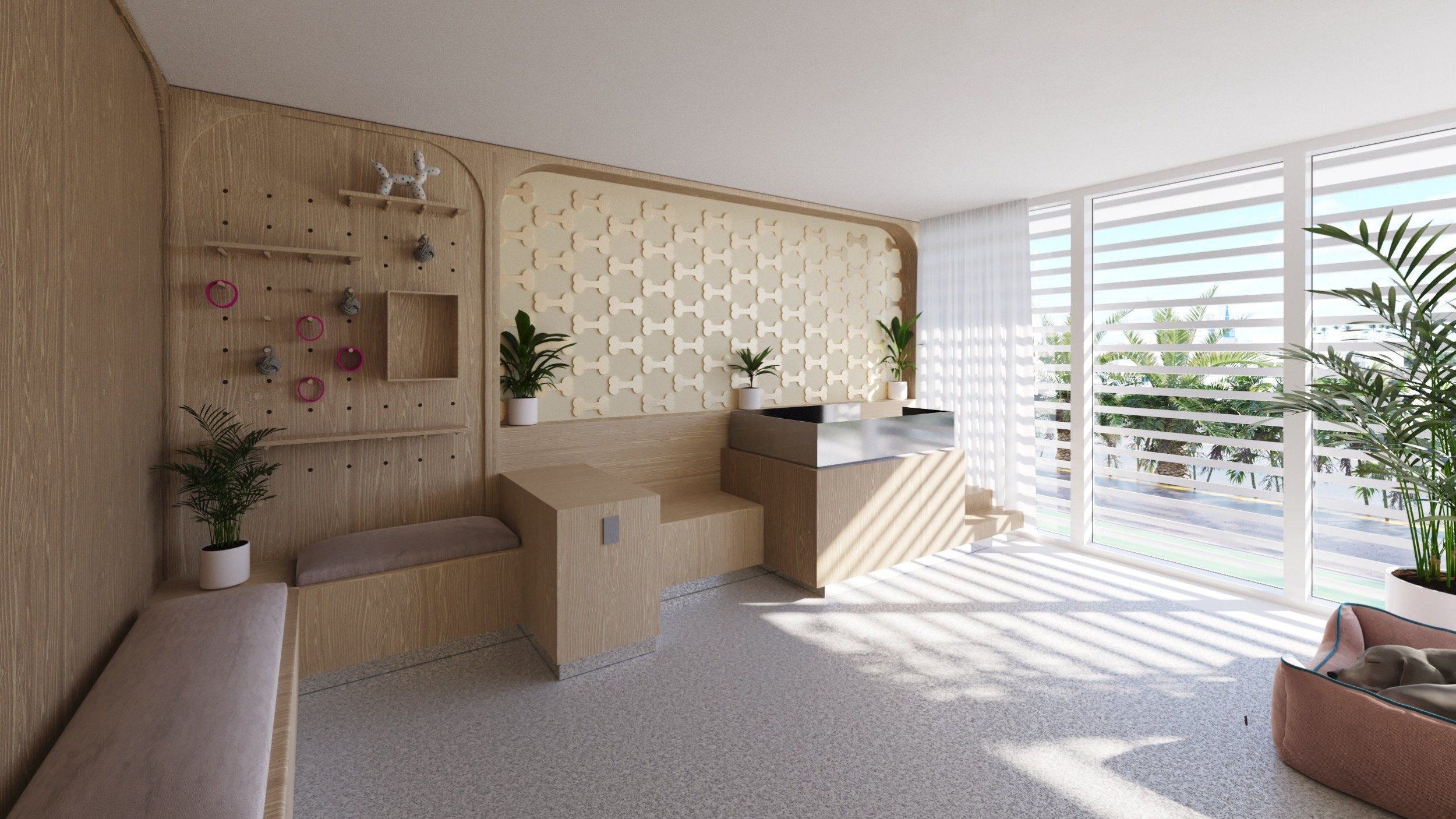
Avoid over-personalization. Highly themed tile, novelty fixtures, or conspicuous pet branding can limit appeal. In the luxury segment, discretion generally travels better than cuteness. The best dog-wash rooms look like refined utility spaces that happen to serve pets exceptionally well.
For 2026 buyers, the checklist should be direct. First, confirm placement relative to exterior or service circulation. Second, evaluate drainage, waterproofing logic, and floor traction. Third, review ventilation, lighting, and acoustics. Fourth, inspect storage and drying space. Fifth, ask whether the finish level aligns with the rest of the residence.
Then consider maintenance. Who will clean the drain? Where do wet towels go? Can cabinetry handle moisture? Are supplies visible from guest areas? Does the room still look composed after use?
A dog-wash room is not an isolated amenity. It is a small but revealing test of how carefully a residence has been planned. In South Florida, where indoor-outdoor living is central to the ownership experience, that test can be meaningful.
Is a dog-wash room worth underwriting in a luxury purchase? Yes, if it is treated as functional infrastructure rather than decoration. The value is strongest when it protects finishes and improves daily routines.
Where should a dog-wash room be located? The strongest placement is near service circulation, garage access, laundry, or an exterior transition. It should not require a wet pet to cross formal rooms.
What is the most important technical feature? Drainage is the core issue. Without proper water management, even beautiful finishes can become a maintenance concern.
Should the room be large? Not necessarily. A compact, well-planned room can outperform a larger space with awkward circulation or poor ventilation.
Which finishes matter most? Prioritize traction, wall protection, moisture-resistant cabinetry, and easy-clean surfaces. Decorative selections should remain secondary to durability.
Does a dog-wash room help resale? It can help when it reads as adaptable utility space. Overly personalized pet design may narrow the audience.
How should condo buyers evaluate this feature? Condo buyers should focus on discretion, serviceability, sound control, and integration with the residence’s existing utility areas.
How should estate buyers evaluate this feature? Estate buyers can expect a more complete program, including storage, drying zones, and convenient exterior access. Scale should still follow function.
What is a common underwriting mistake? Focusing on tile before evaluating drainage, ventilation, and placement. The technical sequence determines long-term performance.
What is the best way to shortlist comparable options for touring? Start with location fit, delivery status, and daily lifestyle priorities, then compare stacks and elevations to validate views and privacy.
When you're ready to tour or underwrite the options, connect with MILLION.
If branded residences are on your mind — as a home or as an allocation — we would be glad to share what we are seeing, privately.
Begin a quiet conversation