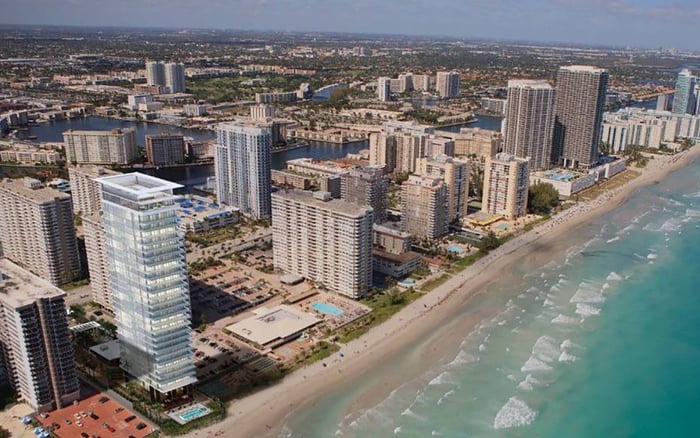
A buyer-focused comparison of Continuum on South Beach and 2000 Ocean Hallandale Beach, framed around cash-buyer leverage, closing certainty, diligence risk, and deal-specific concessions in South Florida’s luxury condominium market.

For the ultra-prime buyer comparing Continuum on South Beach with 2000 Ocean Hallandale Beach, the central distinction is not simply name recognition. It is the way cash changes the risk profile of the transaction. Cash does not create an automatic discount. It can, however, remove a major variable from the closing calendar, allowing a buyer to present speed, certainty, and clean execution as negotiable value.
That value operates differently at each property. Continuum on South Beach belongs in the established-building conversation unless current offering documents or live transaction materials show otherwise. The buyer’s leverage is therefore tied to the seller’s priorities, the condition of the specific residence, association documentation, title clarity, and the ability to close without financing contingencies.
At 2000 Ocean Hallandale Beach, the first question is the ownership posture of the unit being pursued. If the opportunity involves newer-luxury-condo inventory, sponsor inventory, developer-related inventory, or conventional Resale, the diligence sequence changes. Cash remains powerful, but the buyer must understand whether timing pressure, documentation obligations, deposits, punch-list items, or association transition issues are part of the transaction.
Continuum on South Beach should be approached as an established condominium unless the live transaction proves otherwise. In that context, the cash buyer’s advantage is not the promise of a lower number. It is the ability to make the seller believe the contract will perform.
For a seller choosing between offers, certainty can be more valuable than a higher headline price tied to financing, appraisal, or extended contingency risk. A cash offer may allow the buyer to request a shorter diligence window, a flexible closing date, or a cleaner contract structure. Still, sophisticated buyers should resist treating cash as theater. The strongest cash position is documented, liquid, and paired with disciplined due diligence.
The diligence file at Continuum should focus on items the buyer can verify directly: condominium documents, association financials, insurance, assessments, inspection findings, title, seller disclosures, and any residence-specific condition concerns. A residence may carry emotional scarcity, but the buyer still needs a precise understanding of future carrying costs, association exposure, and any open issues that could affect ownership after closing.
Negotiable concessions at Continuum are best understood as bespoke rather than assumed. Price may be negotiable, but so may furniture, closing timing, repair credits, treatment of assessments, or other closing economics. In a luxury transaction, the most valuable concession is not always the most visible one. Sometimes it is timing. Sometimes it is certainty around what stays with the residence. Sometimes it is simply a contract that minimizes ambiguity.
2000 Ocean Hallandale Beach sits in a different market setting with potentially different seller motivations. A cash buyer may appeal to a seller or sponsor because financing uncertainty is reduced and closing can move faster. Before leaning into that advantage, however, the buyer should identify the transaction type with precision.
If the unit is being sold in a newer-luxury-condo posture, the buyer’s review should extend beyond the residence itself. Contract structure, seller or developer obligations, deposits, punch-list items, certificate or turnover status, association budget, reserves, insurance, and any pending litigation or assessments all belong in the review. If the unit is a conventional Resale, the analysis may look closer to an established-condominium purchase, though the documentation still deserves the same seriousness.
The negotiation menu can be broader when a seller has timing objectives or inventory considerations. Possible concessions may include price adjustments, closing-cost credits, parking or storage terms, furniture packages, upgrade credits, HOA or maintenance credits, or closing-date flexibility. None should be treated as standard. A polished buyer asks for what matches the facts of the specific opportunity.
For Investment buyers, the difference between a concession and a distraction is measurable. A credit that reduces near-term cash outlay may be more useful than a symbolic price movement. A timing concession may matter if the buyer is coordinating liquidity, exchange planning, design work, or occupancy. At this level, negotiation is not about pushing broadly. It is about identifying the pressure point a seller can actually satisfy.
The phrase closing risk can sound abstract until a buyer is inside the contract. At Continuum, the risk tends to concentrate around what can be uncovered in the condominium file and residence-level diligence. The buyer wants to know whether association financials, assessments, insurance, inspections, title, and seller disclosures align with the purchase price and the intended ownership horizon.
At 2000 Ocean, the risk can be more layered if the current opportunity involves newer-condominium documentation or sponsor-style obligations. The buyer should understand deposit treatment, the timing and enforceability of seller obligations, punch-list completion, budget assumptions, reserves, insurance, and any items that could affect the association or the residence after closing.
This is why cash buyers should avoid the trap of moving too quickly simply because they can. Speed is valuable only when paired with control. A clean cash offer may win attention, but a clean cash close requires disciplined review of the documents that define ownership after the wire has cleared.
In both buildings, negotiable concessions are possible but never guaranteed. The right request depends on the unit, the seller, the length of exposure, the desired closing date, the state of the documentation, and the buyer’s willingness to offer certainty in return.
At Continuum, a buyer may focus on price, closing-date flexibility, furniture, repairs, credits, or assessment treatment. The case for any concession should be tied to a real issue or a meaningful seller benefit. If the buyer can close quickly, waive financing uncertainty, and keep the contract efficient, that certainty may support a focused request.
At 2000 Ocean Hallandale Beach, the concession conversation may include closing-cost credits, parking or storage terms, furniture packages, upgrade credits, HOA or maintenance credits, or timing flexibility, depending on the specific seller posture. New-construction style negotiations can involve different paperwork and obligations than an established resale trade, so the buyer should align every ask with the contract structure.
The best luxury negotiations are quiet. They do not rely on sweeping claims about market softness or buyer power. They rely on the specific economics of the deal and the credibility of the buyer.
Choose Continuum on South Beach if the priority is an established Miami Beach condominium framework where diligence centers on the association, the seller, the residence, and the title path. The buyer’s cash strength is most useful when it simplifies seller decision-making and reduces execution risk.
Choose 2000 Ocean Hallandale Beach if the buyer is comfortable first confirming the current ownership posture and then tailoring diligence to that posture. The opportunity may reward a buyer who can move quickly, but only after contract terms, association matters, seller obligations, and post-closing exposure are clearly understood.
Neither model is inherently safer for every buyer. Continuum may feel more familiar because established-building resale processes have recognizable diligence checkpoints. 2000 Ocean may offer a different negotiation dynamic if seller motivation, inventory, or timing aligns. The buyer’s task is to convert cash from a blunt instrument into a precise advantage.
For the South Florida luxury buyer, the enduring rule is simple: cash improves credibility, not judgment. The best outcome comes when certainty of funds is matched by clarity of documents, disciplined negotiation, and patience around the concessions that actually matter.
Does cash guarantee a discount at Continuum on South Beach? No. Cash can improve certainty and speed, but any discount depends on the seller, the unit, and the full transaction context.
How should a buyer view Continuum in this comparison? It should be treated primarily as the established-building side of the discussion unless current transaction documents show another posture.
What diligence matters most at Continuum? Buyers should review condominium documents, association financials, assessments, insurance, inspections, title, and seller disclosures.
Is 2000 Ocean Hallandale Beach always a new-development purchase? Not necessarily. Buyers should confirm the current seller posture and contract structure before treating it as newer-luxury or sponsor-style inventory.
What does cash change at 2000 Ocean? Cash may reduce financing uncertainty, support faster closing, and appeal to a seller or sponsor with timing or inventory priorities.
What risks should buyers review at 2000 Ocean? Contract structure, deposits, seller obligations, punch-list items, turnover status, budgets, reserves, insurance, litigation, and assessments all matter.
Are concessions standard in either building? No. Concessions are deal-specific and may include price, credits, timing, furniture, repairs, parking, storage, or maintenance-related terms.
Which property is better for a cash buyer? The better fit depends on whether the buyer values established Resale certainty or is comfortable navigating newer-condominium documentation.
Why does seller motivation matter so much? Seller motivation determines whether cash certainty can be exchanged for a meaningful concession, faster timing, or cleaner terms.
What is the best way to shortlist comparable options for touring? Start with location fit, delivery status, and daily lifestyle priorities, then compare stacks and elevations to validate views and privacy.
For a discreet conversation and a curated building-by-building shortlist, connect with MILLION.
If branded residences are on your mind — as a home or as an allocation — we would be glad to share what we are seeing, privately.
Begin a quiet conversation