For Toronto buyers evaluating Boca Raton and South Florida, residential privacy is less about height alone and more about orientation, setbacks, balcony exposure, and future view risk.
For a Toronto buyer, residential privacy is often defined by a dense vertical skyline. A beautiful suite can still look directly into another tower. A corner residence can feel exposed at breakfast. A balcony can become less a retreat than a stage. When that same buyer begins evaluating Boca Raton and the wider South Florida market, the question shifts from simply “How high is the floor?” to “Who can see me, from where, and for how long?”
That shift is central to a sophisticated purchase. Privacy in South Florida can be created by distance, water, landscaping, low-density surroundings, building orientation, deep terraces, careful glazing, and the absence of direct tower-to-tower alignment. It can also be compromised by the wrong exposure, even in an expensive building. A high floor with a direct neighbor may feel less private than a lower floor facing a garden, marina, or protected view corridor.
This is a buyer’s guide conversation as much as a lifestyle one. The strongest purchase is not merely the residence with the grandest view, but the one where daily life feels discreet: morning coffee, family dinners, evening entertaining, and bedroom routines protected from unintended sightlines.
Before falling in love with finishes, study the building like an architect. Stand on the balcony line, not just in the living room. Ask what sits across the street, beside the amenity deck, below the primary suite, and beyond the pool edge. Privacy is often decided in the margins of a plan: the angle of a terrace, the placement of a service corridor, the height of a neighboring podium, or whether the main bedroom faces open air or another facade.
For Toronto buyers used to close tower grids, South Florida can feel immediately more generous. Yet not every residence is equally secluded. Waterfront exposure can provide visual relief, but it should still be assessed carefully. A residence facing open water may feel private during the day, while a unit looking across a narrow canal or toward another illuminated tower may read differently at night.
In Boca Raton, projects such as Alina Residences Boca Raton invite buyers to think beyond the downtown tower logic many Canadians know well. The essential exercise remains the same: compare the residence’s primary living spaces against neighboring structures, not only against the view in the marketing image.
Boca Raton tends to attract buyers who want polish without excessive exposure. For a Toronto family looking south, that may mean a more relaxed relationship with density, a stronger sense of arrival, and a lifestyle in which privacy is woven into the day rather than negotiated each time the shades rise. The privacy premium often lives in the relationship between building, landscape, and surrounding context.
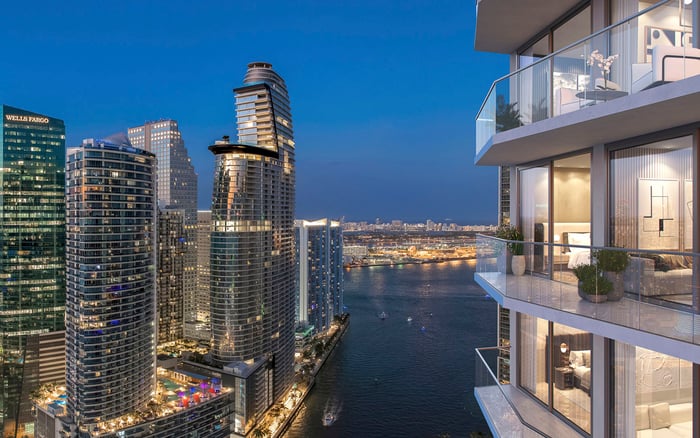
By contrast, Brickell offers a more urban calculus. It can be compelling for buyers who want energy, services, restaurants, offices, and skyline drama. But in a dense urban setting, privacy must be tested with extra rigor. At The Residences at 1428 Brickell, as with any vertical address in the city core, the critical buyer question is not only what the residence sees, but what sees the residence.
Sunny Isles Beach presents another version of the equation. Oceanfront towers can provide sweeping horizons, but buyers should still evaluate lateral exposure, balcony adjacency, and the relationship between neighboring buildings along the shoreline. A residence associated with Bentley Residences Sunny Isles may appeal to someone considering a more vertical coastal lifestyle, but the privacy review should remain disciplined: elevation, angle, distance, and night visibility all matter.
High-floors can deliver light, air, and a sense of separation, yet they are not automatically private. If a neighboring tower aligns window to window, height can simply move the exposure upward. Buyers should examine whether the primary bedroom, bath, kitchen, and terrace face another building directly or at an oblique angle. Oblique is often preferable; direct alignment is where privacy tends to erode.
Low-floors can also be misunderstood. A lower residence facing a landscaped setback, private garden, or open amenity plane may feel more discreet than a higher residence opposite another glass facade. The issue is not prestige by elevation alone. It is the choreography of sightlines.
This is especially relevant when considering boutique-scale living in Boca Raton. Glass House Boca Raton, by its very name and setting, encourages buyers to think carefully about glass, exposure, and the balance between openness and seclusion. The right question is not whether glass is private or public, but how the residence is positioned within its surroundings.
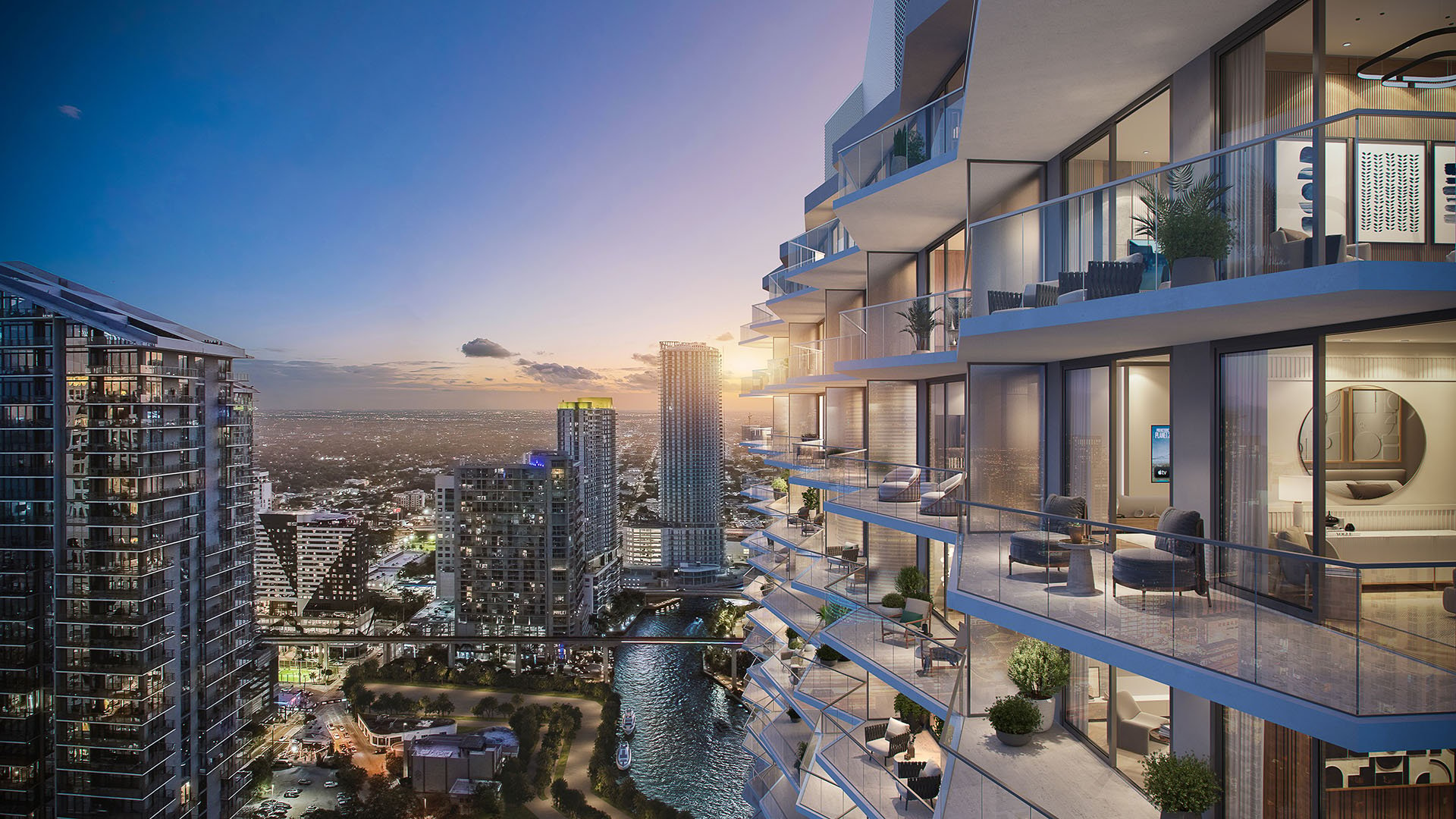
A South Florida home is often judged from the terrace. For privacy-sensitive buyers, the terrace deserves its own inspection. Visit at different times of day if possible. Morning light can reveal one relationship, while evening illumination reveals another. Stand where a dining table, lounge chair, or outdoor seating might be placed. Look left, right, down, and diagonally across. Privacy breaches rarely announce themselves from the center of the living room.
The best terraces feel usable without performance. They allow a robe at sunrise, a quiet call after dinner, or a family lunch without the sense of being observed. Deep terraces can help, but depth alone is not enough if the terrace faces directly into a neighboring stack. Screening, overhangs, side walls, and orientation are all part of the experience.
In Boca Raton, buyers also may compare different versions of branded or service-oriented living, including The Residences at Mandarin Oriental Boca Raton. Regardless of the service model, privacy should be evaluated at the level of daily rituals: arrival, elevator access, terrace use, bedroom exposure, and the separation between entertaining spaces and personal rooms.
A residence can feel private today and less private later if the surrounding parcels change. Without relying on speculation, a prudent buyer should ask direct questions about adjacent lots, allowable building envelopes, planned construction, and whether any nearby site could alter the view or create new sightlines. This is where patience pays. Privacy is not only a present condition; it is a risk profile.
For Toronto buyers accustomed to cranes, preconstruction activity, and evolving skylines, this diligence should feel familiar. The difference in South Florida is that the most desirable homes often combine view, light, outdoor living, and hospitality-level amenities. Those same qualities can increase exposure if the residence is not well shielded.
The ideal result is a home that remains elegant even when every shade is open. That may be a Boca Raton residence with softer density, a Brickell home with intelligent orientation, or a Sunny Isles Beach tower position where ocean, angle, and separation work together. Privacy is not a single feature. It is the quiet success of many decisions made before closing.
Is a higher floor always more private in South Florida? No. High-floors can still face neighboring towers directly, so angle and separation matter as much as elevation.
What should Toronto buyers look for first when evaluating privacy? Start with the view corridor from the living room, terrace, primary bedroom, and bath. These are the spaces where exposure is most noticeable.
Is Boca Raton generally better for buyers who value discretion? Boca Raton can appeal to privacy-focused buyers because many options feel less intensely urban, but each residence still needs a sightline review.
Can a low floor be more private than a high floor? Yes. Low-floors can feel discreet when they face landscaping, open space, or a well-buffered setback rather than another facade.
How should I evaluate a terrace for privacy? Stand where you would actually sit, dine, or entertain. Then check side angles, downward views, and neighboring balconies.
Does waterfront exposure guarantee privacy? Not always. Waterfront can create distance, but privacy depends on the width of the view corridor and what sits across or beside it.
What rooms are most important for privacy? The primary bedroom, primary bath, kitchen, living room, and terrace deserve the closest review because they shape daily comfort.
Should I worry about future construction nearby? Yes. Ask about adjacent parcels and potential building envelopes so today’s private view does not become tomorrow’s direct exposure.
Are corner residences always more private? Not necessarily. Corners can add light and views, but they may also increase exposure from multiple directions.
What is the simplest privacy test before buying? Imagine the shades fully open at night. If the home still feels calm and discreet, the orientation is likely working in your favor.
If you'd like a private walkthrough and a curated shortlist, connect with MILLION.
If branded residences are on your mind — as a home or as an allocation — we would be glad to share what we are seeing, privately.
Begin a quiet conversation