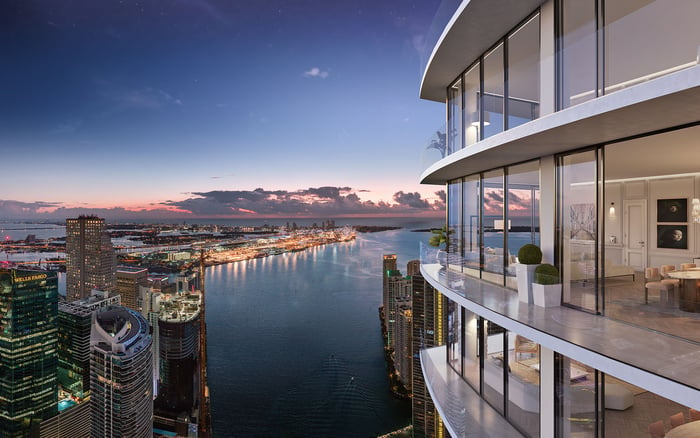
Generator integration is reshaping the Miami residence search by moving backup power from a maintenance detail into a core luxury criterion. For high-net-worth buyers, the question is no longer simply whether a property has backup power, but how intelligently it supports daily comfort, building systems, security, connectivity, and long-term ownership.

In Miami, the residence search has always been shaped by water, light, privacy, architecture, and access. Increasingly, another criterion is entering the conversation earlier: generator integration. For the ultra-premium buyer, backup power is no longer a technical footnote to be reviewed after an offer. It is becoming part of the lifestyle brief, alongside ceiling heights, terrace depth, parking, wellness amenities, and building services.
The shift is subtle but meaningful. A generator alone does not define a luxury residence. Integration does. Buyers want to understand which systems are supported, how quickly power transfers, whether the design is quiet and discreet, how fuel and maintenance are handled, and whether the residence or building can preserve comfort during an interruption. In a market where buyers may compare waterfront condominiums, private estates, and new development residences in the same search, resilience is now part of the definition of quality.
For a brief that compares Brickell, Miami Beach, Coconut Grove, new construction, single-family homes, and second-home options, generator planning can help separate cosmetic appeal from operational sophistication.
Generator integration is not simply the presence of equipment. It is the relationship between backup power and the systems that define daily living. In a high-value Miami residence, buyers may want to know whether backup power supports air conditioning, refrigeration, lighting, elevators, water pressure, security, access control, internet infrastructure, home automation, or only a smaller emergency load.
That distinction is essential. One residence may offer partial backup for critical circuits, while another may be designed to support a more complete living environment. In a condominium, the building may prioritize common-area systems, life-safety equipment, elevators, garage access, and lobby operations. In a single-family estate, the conversation may extend to whole-home loads, pool systems, gates, irrigation controls, and climate zones.
The most refined approach is invisible. Buyers are not looking for machinery to become the feature. They are looking for continuity without visual or acoustic intrusion. In luxury terms, the best integration is felt during a disruption and barely noticed the rest of the year.
The Miami buyer now benefits from asking more precise questions. Instead of asking, "Does the property have a generator?" the more useful inquiry is, "What does the generator actually power, and under what conditions?" That opens a more disciplined review of capacity, transfer systems, maintenance records, fuel arrangements, ventilation, sound attenuation, and the age and placement of equipment.
For condominium buyers, the focus should include building-level operations. Does backup power support elevators serving the residence? Are garage gates and access systems covered? Is cooling preserved in common areas or only in essential zones? How are residents informed when systems switch over? Are written maintenance protocols in place?
For single-family buyers, the questions become more customized. Which circuits are included? Can the home maintain primary bedroom comfort, kitchen use, security, and communications? Is the generator placed in a way that respects sight lines, setbacks, neighboring properties, and outdoor entertaining areas? A polished listing may present the equipment as an amenity, but serious evaluation requires understanding the operating plan.
In Miami's luxury condominium market, buyers often focus first on views, service, floor height, brand, architecture, and amenity programming. Generator integration adds another layer. The most compelling residences are not only beautiful in a marketing suite; they also function elegantly when conditions are less ideal.
For high-floor buyers, elevator performance and building operations can become central to the decision. A private residence in the sky depends on the building's infrastructure in ways that a ground-level estate does not. Backup power strategy can influence perceived convenience, privacy, and confidence, particularly for owners who travel frequently or use the residence seasonally.
This does not mean every buyer needs the same level of backup capability. Some owners prioritize uninterrupted climate control. Others care most about security, refrigeration, communications, or elevator access. The important point is alignment. The backup power profile should match how the owner actually lives.
In the single-family segment, generator integration often feels more personal because the owner controls the property envelope. Estate buyers tend to evaluate systems with the same seriousness they bring to roof condition, impact glazing, drainage, smart-home platforms, and mechanical rooms. A generator can support privacy and independence, but only when it is planned with the rest of the home.
Placement is a luxury issue. Equipment should not compromise arrival, garden design, entertaining terraces, or bedroom acoustics. Fuel logistics should be understood before closing. Maintenance access should be practical without disturbing the home's presentation. If the estate includes staff areas, guest houses, gates, dock equipment, or extensive outdoor lighting, the power plan should be reviewed with those uses in mind.
The best estates make resilience feel designed rather than added. That is the difference between a feature and an integrated ownership experience.
Generator integration is not a substitute for location, architecture, or finish quality, but it can influence confidence. Luxury buyers are often comparing properties that all appear compelling on the surface. When two residences offer similar views, scale, and design language, the one with clearer infrastructure planning may feel more complete.
This is especially relevant in the upper tier, where the purchase is as much about ease as it is about beauty. A buyer acquiring a Miami residence may be relocating, adding a seasonal home, diversifying a property portfolio, or creating a family base. In each scenario, operational certainty has value. The ability to preserve comfort, communication, and access can make a residence feel more privately managed, even when the owner is away.
It also changes how advisors frame the search. Instead of treating mechanical systems as inspection items at the end, a more sophisticated process considers them alongside lifestyle priorities from the beginning. That helps buyers avoid becoming emotionally attached to a residence that cannot support their expectations.
Before a buyer becomes captivated by a terrace, bay view, or sculptural staircase, infrastructure should be part of the conversation. Ask for clarity on what is backed up, what is not, and how the system is maintained. In condominiums, request an explanation of the building-level backup strategy. In private homes, review load capacity, transfer equipment, fuel type, service history, sound, and placement.
The goal is not to turn a residence search into an engineering exercise. It is to ensure the home's operational character matches its visual promise. In Miami's luxury market, beauty and resilience are no longer separate ideas. The most compelling residences increasingly combine both.
Does every Miami luxury residence need a generator? Not every buyer requires the same level of backup power, but every luxury buyer should understand how a residence or building performs during an outage.
What is the most important generator question to ask first? Ask what the system powers. The answer is more useful than simply confirming that a generator exists.
Is generator integration different in a condominium? Yes. Condominium buyers should review building-level systems such as elevators, access control, common areas, and life-safety operations.
What should single-family buyers review? They should review supported circuits, fuel arrangements, maintenance access, sound, placement, and whether the system aligns with daily living needs.
Does backup power affect luxury resale appeal? It can support buyer confidence, especially when the system is well documented, discreetly placed, and aligned with the property's lifestyle promise.
Should a buyer ask about air conditioning backup? Yes. Climate comfort is often central to the ownership experience, so buyers should know whether cooling is fully, partially, or minimally supported.
Can generator equipment affect design quality? It can if poorly placed. In a refined property, equipment should be planned to preserve views, gardens, acoustics, and outdoor living areas.
Is this only relevant for year-round residents? No. Seasonal owners may value backup power because it supports security, climate stability, refrigeration, and remote confidence while they are away.
When should generator due diligence happen? It should begin early in the search, then become more detailed during inspection, contract review, or building document review.
What is the best way to shortlist comparable options for touring? Start with location fit, delivery status, and daily lifestyle priorities, then compare stacks and elevations to validate views and privacy.
For a discreet conversation and a curated building-by-building shortlist, connect with MILLION.
If branded residences are on your mind — as a home or as an allocation — we would be glad to share what we are seeing, privately.
Begin a quiet conversation