A discreet buyer’s guide to separating genuine condo value from false bargains in South Florida, with emphasis on building quality, financial health, resale depth, and long-term optionality.
A softening condo segment can be tempting. Asking prices become more negotiable, sellers listen more carefully, and buyers who felt rushed in a tighter cycle begin to regain leverage. Yet in South Florida luxury real estate, value is never created by a lower number alone. It is created when a lower basis meets the right building, the right line, the right financial condition, and a credible exit path.
The danger is buying a condominium that appears inexpensive because the market has finally recognized its structural disadvantages. A building with weak governance, underfunded reserves, persistent assessment risk, limited owner-user demand, or dated physical systems can look like a bargain at contract and feel like a trap after closing.
The disciplined buyer does not ask, “How much did it come down?” The better question is, “What am I being paid to accept, and is that risk temporary or permanent?”
In a softer environment, the hierarchy should be building first, unit second, price third. A desirable unit in a compromised building remains exposed to building-level risk. A well-priced residence in a respected, carefully maintained property can recover faster when sentiment improves because buyers understand what they are buying.
That is why comparisons should be drawn among properties with similar buyer profiles, not simply similar square footage. A purchaser considering Brickell, for example, may compare the lifestyle, scale, and ownership proposition of The Residences at 1428 Brickell against other prime urban offerings, but the real analysis goes deeper than address. It includes association health, maintenance discipline, architectural relevance, elevator capacity, amenity wear, parking logic, lobby experience, service consistency, and the quality of past and current ownership.
A building is an ecosystem. If that ecosystem is strained, a discounted unit price may be only the opening cost of participation.
Luxury buyers often spend considerable time studying interiors and views, then too little time studying the association. In a softening segment, that order should be reversed. The board package, budget, reserves, meeting minutes, insurance posture, litigation status, pending projects, and history of special assessments all matter.
Healthy reserves do not guarantee a perfect purchase, but weak reserves change the nature of risk. Deferred work may eventually arrive through higher monthly charges, special assessments, or disruption to the resident experience. A building that looks polished from the porte cochere can still have capital needs hidden behind the walls, roof, mechanical systems, seawall, garage, pool deck, or façade.
The most valuable buildings tend to be those where owners have already accepted the cost of stewardship. They may not always be the cheapest on a monthly basis, but they often provide a clearer view of what ownership will truly require.
Not every price reduction signals distress. Sometimes a seller has purchased elsewhere. Sometimes a unit was originally overpriced. Sometimes a floor plan is excellent but the timing is inconvenient. These circumstances can create genuine value.
Permanent discount is different. It attaches to problems the next buyer will also see: awkward layouts, poor natural light, chronic noise, inefficient balconies, limited storage, compromised parking, weak views, dated common areas, or a building reputation that has become difficult to reverse. In South Florida, where views, outdoor space, privacy, and arrival experience influence emotion as much as logic, these issues can materially affect resale.
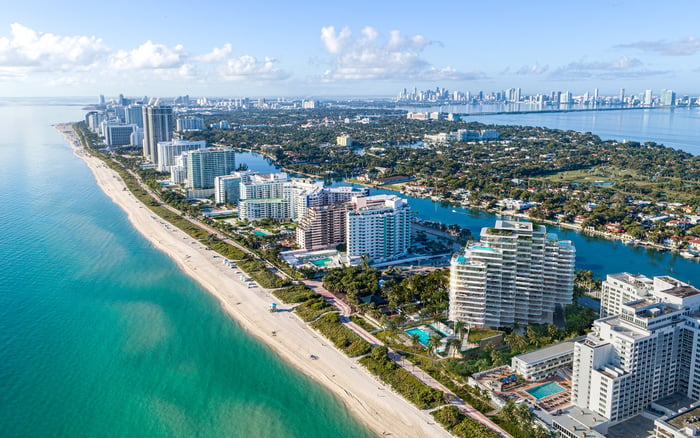
A buyer in Miami Beach might admire the design language surrounding The Perigon Miami Beach while still applying the same sober test used anywhere else: does the residence have attributes that will remain scarce, legible, and desirable when the market becomes more selective?
Luxury and liquidity are related, but they are not identical. A residence can be beautiful and still have a narrow buyer pool. In a softening segment, narrow demand becomes more visible.
Look for evidence of repeatable appeal. Does the building attract primary residents, second-home owners, or investors with staying power? Are the best lines rarely available, or do similar units linger? Is there a meaningful gap between trophy inventory and ordinary inventory within the same tower? Are buyers choosing the building for a specific lifestyle, or merely because pricing looks attractive?
Investment discipline begins with exit discipline. The most resilient purchase is usually one that another sophisticated buyer can understand quickly: the view is obvious, the plan is efficient, the building is credible, and the carrying costs are defensible.
Newer buildings and pre-completion offerings can offer clarity on design, amenities, services, and systems, but they are not immune from risk. Buyers should evaluate developer track record, contract structure, closing timing, likely association costs, deposit exposure, and the durability of the concept. New does not always mean scarce, and branded does not always mean liquid.
In Sunny Isles, a buyer studying St. Regis® Residences Sunny Isles may be drawn to the assurance associated with a clearly positioned luxury product. Still, the essential questions remain the same: who is the end buyer, how deep is that buyer pool, and what will make this residence distinctive when competing inventory appears?
The same discipline applies to boutique coastal projects, urban towers, and resort-style residences. A polished presentation can start the conversation, but the underwriting should finish it.
Resale is not an abstract future event. It is the sum of small decisions made at purchase. Ceiling height, column placement, morning or afternoon light, terrace depth, privacy from neighboring buildings, elevator access, staff professionalism, and the quiet confidence of the common areas all become part of the eventual resale narrative.
In Surfside, a buyer comparing The Delmore Surfside with other ocean-oriented residences should look beyond surface appeal and ask what will remain memorable after the first showing. The best condominiums make their advantages immediately legible without requiring excessive explanation.
That clarity matters when buyers become more cautious. A residence with a simple, compelling story usually trades better than one requiring concessions, persuasion, and creative framing.
In a softer segment, buyers often focus on price because it is the most visible concession. Yet the better deal may include terms that reduce uncertainty: inspection flexibility, extended diligence, repair credits, assessment allocation, closing timing, furniture treatment, parking clarification, storage inclusion, or documentation delivery before major deadlines.
A seller who refuses a headline discount may still provide value through structure. Conversely, a large discount can be insufficient if the buyer inherits unresolved building issues or a residence that requires extensive repositioning.
The strongest negotiators are not aggressive for its own sake. They are precise. They identify the risk, assign a value to it, and decide whether the purchase still deserves capital.
Before writing an offer, apply a five-part filter. First, is the building financially and physically sound enough to own with confidence? Second, is the residence itself one of the building’s better versions, not merely one of its cheaper ones? Third, are the carrying costs aligned with the lifestyle and services offered? Fourth, will future buyers understand the value quickly? Fifth, does the purchase still make sense if the market stays selective longer than expected?
If the answer is unclear, pause. In luxury real estate, patience is not passivity. It is often the difference between buying optionality and buying someone else’s unresolved problem.
Is a lower condo price always a sign of value? No. A lower price only becomes value when the building, residence, and ownership costs remain fundamentally attractive.
What should I review before making an offer? Review the budget, reserves, insurance posture, meeting minutes, assessment history, rules, and any pending capital work.
Are special assessments always a deal breaker? Not always. A clearly defined assessment for necessary improvements may be acceptable if it is priced correctly and improves the building.
Should I prioritize newer buildings? Newer buildings can be compelling, but they still require careful review of costs, governance, demand, and future competition.
What makes a unit more resilient for resale? Strong views, efficient planning, privacy, natural light, outdoor space, and a respected building generally improve resale appeal.
How important are monthly carrying costs? Very important. Carrying costs should feel justified by the building’s service level, maintenance quality, and long-term stewardship.
Can an older building still be a smart purchase? Yes, if it is well maintained, financially disciplined, properly updated, and valued appropriately for its condition.
What is the biggest mistake buyers make in a soft market? Chasing the largest discount instead of the strongest risk-adjusted building and residence combination.
How should investors think about condo value? Investors should begin with exit liquidity, carrying costs, rental rules, building reputation, and the depth of future demand.
When should I walk away from a discounted condo? Walk away when the discount does not adequately compensate for building risk, weak resale appeal, or uncertain future costs.
For a tailored shortlist and next-step guidance, connect with MILLION.
If branded residences are on your mind — as a home or as an allocation — we would be glad to share what we are seeing, privately.
Begin a quiet conversation