A discreet guide to interpreting restaurant noise as a luxury real estate signal, from dining cadence and terrace privacy to arrival rituals, resale confidence, and neighborhood fit.
A tourist hears a restaurant and asks whether it feels lively. A luxury buyer listens differently. The question is not simply, “Is it loud?” It is, “What kind of sound is this, when does it arrive, how does it travel, and does it support or erode the life I intend to live here?”
In South Florida, restaurant energy can be a privilege. A walkable table, a discreet bar, a polished lobby-to-dinner routine, and the soft hum of a mature dining district all contribute to daily ease. Yet the same restaurant corridor can feel charming at lunch, theatrical at dinner, and intrusive after the valet line resets late in the evening. The buyer who reads that sequence clearly is not avoiding urbanity. They are underwriting lifestyle quality.
This is where the luxury lens matters. Noise is not merely sound. It is evidence of operating hours, guest behavior, service logistics, street design, building orientation, and the distance between public pleasure and private calm.
The most common mistake is treating noise as a single condition. Loud or quiet is too blunt. A more refined reading separates tone, cadence, direction, and duration.
Tone is the character of sound. A low dining murmur is different from amplified music, sharp laughter, idling vehicles, or the repeated percussion of doors and service carts. Cadence is rhythm. A room that peaks predictably between dinner seatings may be easier to live with than a block that surges unpredictably through the night. Direction matters because sound that feels modest at street level may reflect upward toward terraces, corners, and glass. Duration is the final test. A festive two-hour window can be pleasurable. A recurring late pattern can become a daily tax.
Luxury buyers should listen as if evaluating a material sample. Marble, bronze, oak, linen, and glass all have character. So does a restaurant district. Some soundscapes feel expensive because they are composed. Others feel expensive only until they repeat every night.
A single dinner reservation is not diligence. A buyer should return at several moments: early weekday morning, late lunch, prime dinner, post-dinner, and a weekend evening. Each visit reveals a different operating layer.
Morning can show whether a celebrated evening corridor has a service backbone. Deliveries, cleaning, staff arrivals, and trash movement may shape the first hours of the day. Lunch shows office, resident, and visitor flow. Dinner reveals the social profile of the block. Late evening tests the transition from hospitality to dispersal: valet doors, ride pickups, lingering guests, and the tone of closing routines.
Do not stand only at the restaurant entrance. Walk the route you would actually use from residence to table, from lobby to parking, from elevator to terrace. Pause at corners. Listen near porte cocheres. Stand under balconies. If possible, listen from an interior space with doors closed, then open the terrace and listen again. The contrast tells you whether the residence is a retreat or merely an elevated seat in the room.
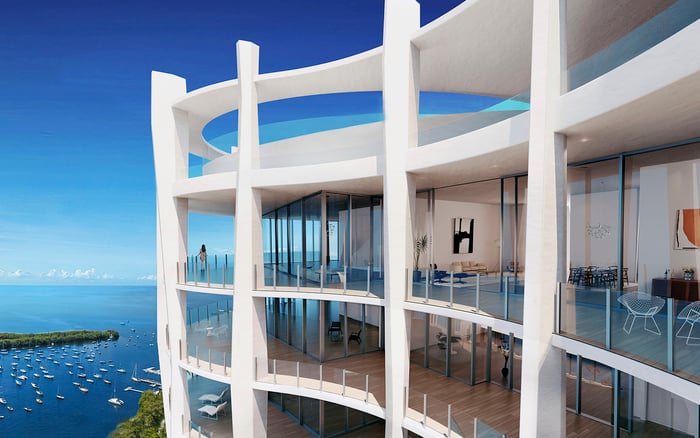
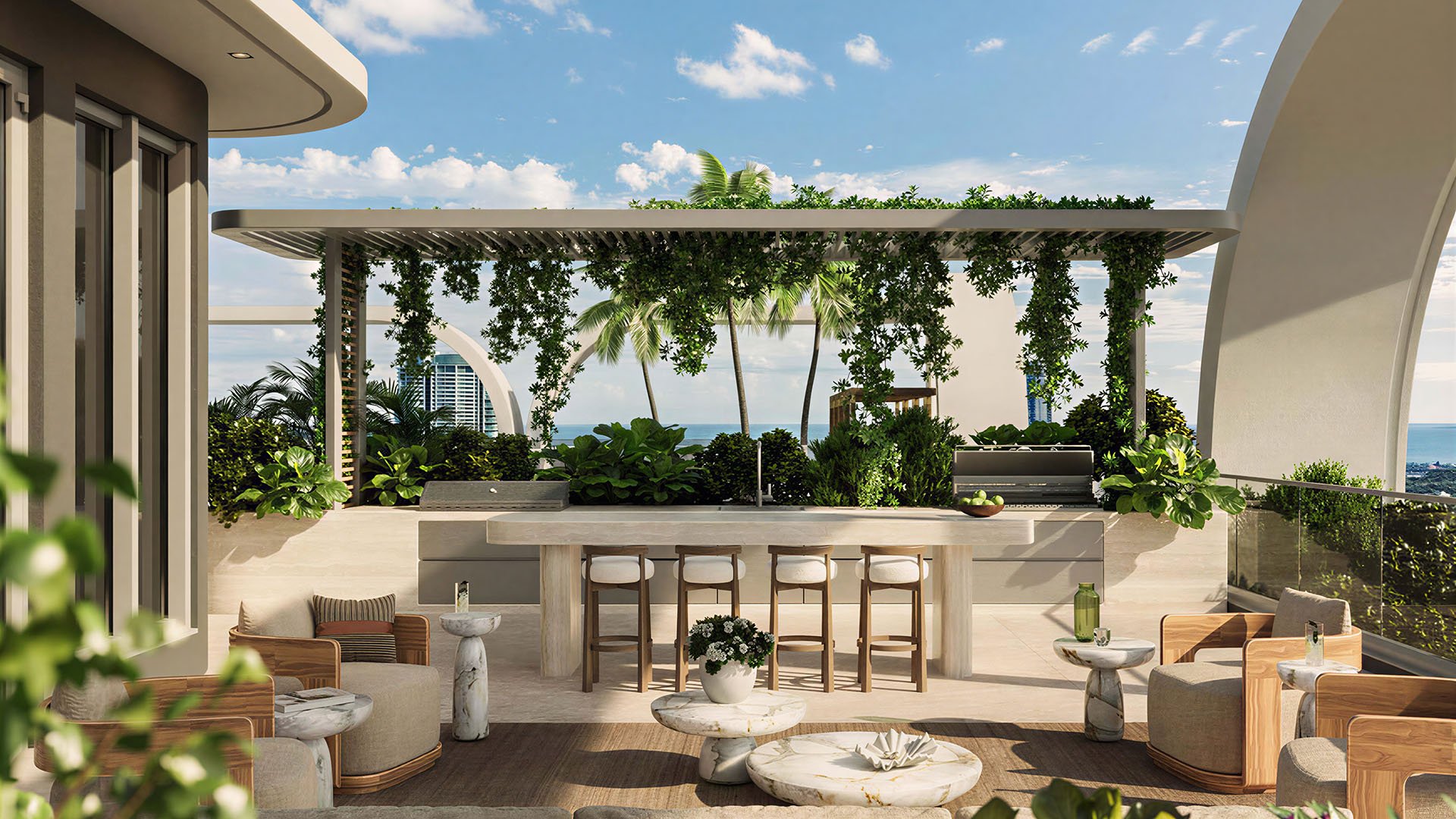
In South Florida, the terrace is not decorative. It is breakfast room, evening salon, yoga platform, reading perch, and sometimes the most persuasive square footage in the home. Restaurant noise should therefore be evaluated from the terrace first, not as an afterthought.
Ask three questions. Can you speak in a low voice outdoors? Does the sound feel ambient or directional? Would you use the space on the nights you are most likely to be home?
A buyer planning a seasonal residence may accept more social energy if the terrace is primarily for sunset cocktails and guests. A full-time owner may need quieter mornings, protected bedrooms, and a more consistent acoustic envelope. A family may care less about dinner buzz and more about school-night routines. A collector or frequent host may value proximity to dining but require absolute privacy once the doors close.
The right answer is personal, but the wrong process is universal: never judge terrace comfort from photography, staging, or a midday showing alone.
Every dining district has a sound signature. Brickell can read as vertical and kinetic, with restaurant activity braided into office, hotel, and residential movement. Miami Beach can feel more theatrical, especially where visitors, nightlife, and destination dining overlap. Coconut Grove may offer a softer village cadence in certain pockets, though every block still deserves its own listening session. Bal Harbour often places discretion at the center of the experience. South of Fifth carries the tension of prestige, walkability, and coveted tables. Fort Lauderdale can shift by waterfront, boulevard, and hospitality cluster.
These labels are not guarantees. They are starting hypotheses. A luxury buyer should never buy a neighborhood reputation. They should buy the exact conditions of the building, exposure, floor level, arrival sequence, and daily routine.
The most valuable question is not, “Is this area quiet?” It is, “Is this area quiet in the ways that matter to me, and alive in the ways that improve my life?”
Restaurant proximity can be emotionally persuasive. The idea of walking to a favorite table in linen, without a car, without planning, is part of the South Florida dream. Yet resale logic requires discipline.
A future buyer may love the same restaurants, but they will still test the primary suite, the terrace, and the lobby approach. If the sound is well buffered, the location may feel like a premium convenience. If the sound is exposed, irregular, or difficult to explain, it can narrow the buyer pool.
Look for balance. The most resilient luxury locations often allow owners to access hospitality without surrendering domestic control. You want dining close enough to enrich life, not so close that the restaurant’s operating rhythm becomes the home’s operating rhythm.
This is especially important for second-home buyers. A weekend visit can make energy feel glamorous. A longer stay may reveal patterns that are invisible in a three-day trip. The sophisticated buyer protects against vacation judgment.
Restaurant noise is not confined to dining rooms. Some of the most consequential sound comes from movement: vehicles arriving, doors opening, guests waiting, staff coordinating, and groups leaving together. Arrival sequence can shape the feeling of a residential entrance even when the residence itself is acoustically strong.
A discreet lobby matters. A protected drop-off matters. The ability to enter calmly, without crossing restaurant overflow or ride-share congestion, matters. These details influence not only comfort but also the psychological threshold between public and private life.
If you are considering a residence near a prized dining address, observe the building entrance at peak dinner time. Does it still feel residential? Are staff movements composed? Do guests from nearby venues drift toward the same curb? Does the street feel elegant or improvised?
Luxury is often the absence of friction. Restaurant noise is one way to detect where friction may appear.
The best purchase is not the quietest purchase. It is the one that matches your actual life with the least compromise.
If you dine out frequently, entertain often, and enjoy city energy, a polished restaurant corridor may be a daily asset. If you rise early, work from home, or prize meditative evenings, the same location may ask too much. If you travel often, you may tolerate certain patterns that a full-time resident would reject. If you have guests, children, pets, or staff schedules, the calculus changes again.
Before buying, write a private “sound brief” for yourself. Include your sleep schedule, terrace habits, dining frequency, entertaining style, work patterns, and tolerance for unpredictability. Then evaluate the residence against that brief, not against a generic idea of what luxury should feel like.
The tourist asks whether the neighborhood is fun. The buyer asks whether the neighborhood will still feel elegant on an ordinary Tuesday.
Should I avoid buying near restaurants? Not automatically. The goal is to distinguish desirable dining energy from sound patterns that compromise privacy, sleep, or terrace use.
When should I visit a property to judge restaurant noise? Visit during weekday mornings, lunch, prime dinner, late evening, and a weekend night. Each period reveals a different layer of the block.
Is a higher floor always quieter? Not always. Sound can reflect upward or across open space, so exposure and building orientation matter as much as height.
What should I listen for besides music? Listen for valet activity, ride pickups, guest dispersal, service movement, doors, and recurring mechanical sounds. These often shape daily comfort.
How important is terrace noise? Very important in South Florida. A terrace that looks spectacular but feels difficult to use may reduce the practical value of the residence.
Can good windows solve restaurant noise? They can help interior comfort, but they do not solve terrace experience or arrival friction. Evaluate both indoor and outdoor living.
Does restaurant proximity help resale? It can, when it adds walkability and lifestyle without overwhelming the residence. The best locations balance access with retreat.
Should second-home buyers be more cautious? Yes. Short visits can romanticize energy, while longer stays reveal routines, late patterns, and service rhythms.
How do I compare two similar luxury buildings? Compare the exact exposure, lobby approach, terrace usability, and evening sound pattern. Neighborhood reputation alone is not enough.
What is the luxury buyer’s best question? Ask whether the soundscape supports the life you will actually live. A beautiful address should feel composed, not merely exciting.
If you'd like a private walkthrough and a curated shortlist, connect with MILLION.
If branded residences are on your mind — as a home or as an allocation — we would be glad to share what we are seeing, privately.
Begin a quiet conversation