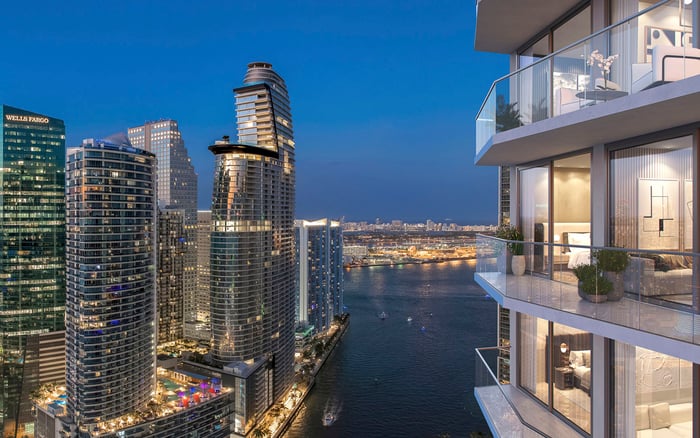
A buyer-focused look at how mechanical-noise exposure can influence lock-and-leave comfort, terrace use, resale confidence, and due diligence at Bay Harbor Towers.

The lock-and-leave buyer is not simply purchasing a home that can be closed for a season. This buyer is purchasing confidence. The residence must feel calm on arrival, effortless during a short stay, and predictable at departure. At Bay Harbor Towers, mechanical-noise exposure belongs in a more refined category of due diligence: not alarmist, not cosmetic, but deeply practical.
Mechanical sound is rarely the first thing a buyer notices in a polished residence. Views, proportion, natural light, and finishes typically lead the conversation. Yet sound has a way of defining daily life after closing. A subtle hum near a primary suite, a cycling tone by a terrace, or vibration that appears only during certain operating periods can determine whether a home feels restorative or merely impressive.
For South Florida owners who divide time among residences, boats, private clubs, and travel schedules, the issue is more specific. A full-time owner may adapt to a building’s rhythms. A second-home buyer often arrives with heightened sensitivity. After weeks away, the ear resets. The first night back matters.
A lock-and-leave residence should reduce friction. It should not require a mental checklist of when systems are audible, which doors to keep closed, or which rooms are best avoided during equipment cycles. The more intermittent the occupancy, the more important the first impression becomes.
That does not mean every mechanical sound is a defect. High-performance residential buildings depend on elevators, cooling systems, ventilation, pumps, generators, garage systems, pool equipment, and service infrastructure. The question is whether those systems are properly separated from private living, whether the sound is constant or occasional, and whether exposure changes by line, floor, orientation, or outdoor condition.
For buyers accustomed to quiet enclaves from Aventura to the beaches, this is a useful distinction. The luxury standard is not silence at all costs. It is control, expectation, and comfort. If a residence performs beautifully with the terrace doors closed but becomes compromised outdoors, the buyer should understand that before negotiating, not after furnishing.
Mechanical-noise exposure is often most revealing in transitional areas: entry halls, bedroom walls, powder rooms near service shafts, corridors adjacent to equipment zones, and the threshold between interior and terrace. The best evaluations are patient. A single walk-through during a busy showing window is not enough to understand acoustic character.
Buyers should listen in the primary bedroom, secondary bedrooms, main living area, kitchen, and any work-from-home space. They should then step outside. Balcony use is part of the luxury equation in South Florida, especially for owners who measure a residence by morning coffee, evening breezes, and the ability to entertain without intrusion. Balcony comfort can be affected even when interiors feel composed.
The most disciplined approach is simple: stand still, stop speaking, and listen. Note whether the sound is a low vibration, a tonal hum, a periodic start-stop cycle, or a rush of air. Different sounds carry different lifestyle implications. A low tonal frequency can feel more intrusive at night. A cycling system may be easy to ignore during the day but distracting in a quiet bedroom. A rooftop or adjacent equipment source may be more relevant to upper or neighboring lines.
Noise is not static. It may shift with cooling demand, building occupancy, service routines, weather, or exterior activity. A residence that feels serene at noon may reveal another character after dinner. A space that sounds active during a weekday may feel different on a weekend. For a buyer who intends to arrive late from the airport and sleep immediately, those differences matter.
A refined inspection strategy includes more than one visit when possible. Daytime, early evening, and a quieter late-day moment each offer a different acoustic reading. If access is limited, the buyer can still ask precise questions: what equipment is nearby, what walls or ceilings adjoin mechanical areas, whether any sound mitigation has been addressed, and whether building operations create recurring audible patterns.
This is not about creating anxiety. It is about turning a vague concern into an informed decision. Boutique buildings can offer intimacy, discretion, and a more residential mood, but they can also place owners closer to shared systems than a buyer might assume. The correct response is not to generalize. It is to examine the specific residence.
Resale markets have a memory for small lifestyle details. A residence with gracious scale and finishes may still face buyer hesitation if a tour reveals a persistent mechanical tone in a key room. Conversely, a home that demonstrates quiet performance can feel more complete, particularly to purchasers comparing multiple premium options in a narrow price band.
Investment thinking in this context is less about speculation and more about defensibility. If two comparable residences offer similar design appeal, the quieter and more predictable home may carry an advantage. The difference can be especially meaningful for buyers seeking low-maintenance ownership, seasonal use, or a private base that must perform without drama.
For sellers, sound should not be ignored. If a mechanical issue is addressable, resolving it before launch can protect perception. If it is inherent to the residence’s position, presentation should be disciplined and transparent within the advisory process. Luxury buyers respect clarity. They are less forgiving of surprises.
A serious buyer should ask whether the residence borders mechanical rooms, elevator infrastructure, roof equipment, pump areas, garage ventilation, or service corridors. They should also understand whether sound transfer is airborne, structural, or related to exterior equipment. Each category carries different implications.
Interior acoustic upgrades may help in some cases, particularly where airborne sound is the issue. Structural vibration can be more complex. Exterior terrace exposure may be difficult to change. This is why pre-contract diligence is so important. Once ownership begins, the buyer’s leverage and options may narrow.
The conversation should be practical, discreet, and documented through the proper channels. For Bay Harbor Towers, the name itself will attract buyers who value the balance of water-oriented living, privacy, and access. The strongest purchasers will not stop at the brochure-level narrative. They will study the lived experience.
Not every audible system should disqualify a residence. The decision depends on the buyer’s lifestyle, tolerance, use pattern, and intended hold period. A pied-a-terre owner who visits briefly may be more sensitive to bedroom sound than a local owner who spends most days away. A buyer who entertains outdoors may place greater weight on terrace acoustics. A remote executive may care most about a quiet work zone.
The most useful test is personal rather than theoretical: could you sleep, read, host, and arrive after travel without feeling aware of the building’s machinery? If the answer is yes, the exposure may be acceptable. If the answer is uncertain, the uncertainty deserves pricing discipline, further inquiry, or a different residence.
Mechanical-noise exposure is ultimately a luxury question because luxury is the absence of distraction. It is the ability to open the door, exhale, and feel that the home is ready for you. In that sense, the quietest due diligence can become the most valuable.
Why is mechanical-noise exposure important for Bay Harbor Towers buyers? It can affect sleep, terrace use, perceived privacy, and confidence during short stays, all central to lock-and-leave ownership.
Does mechanical sound always indicate a defect? No. Residential buildings require operating systems, but buyers should understand whether the sound is normal, isolated, or intrusive.
When should a buyer evaluate sound? Ideally during more than one visit, including a quieter part of the day when subtle tones or cycles are easier to notice.
Which rooms matter most during a sound check? Primary bedrooms, living areas, workspaces, and terraces are the most important because they shape daily comfort and perceived value.
Can balcony enjoyment be affected by mechanical equipment? Yes. Outdoor spaces may reveal sound that is less noticeable indoors, especially from ventilation, rooftop, or service equipment.
Is this mainly a second-home concern? It is especially relevant for second-home owners because they may notice changes more sharply after time away.
How can mechanical noise affect investment value? Persistent sound can influence buyer perception at resale, while quiet performance may support confidence and marketability.
Should resale buyers approach this differently from pre-construction buyers? Resale buyers can listen to the actual residence, which makes in-person acoustic diligence particularly valuable.
Are boutique buildings more exposed to this issue? Boutique buildings are not inherently problematic, but closer proximity to shared systems can make residence-specific review important.
What is the most practical buyer takeaway? Listen carefully, ask precise questions, and decide whether the residence feels calm enough for the way you will actually live.
To compare the best-fit options with clarity, connect with MILLION.
If branded residences are on your mind — as a home or as an allocation — we would be glad to share what we are seeing, privately.
Begin a quiet conversation