A refined guide to evaluating outdoor room furniture as part of a serious South Florida luxury real estate purchase, from proportion and comfort to terrace planning and long-term livability.

A tourist sees outdoor furniture and thinks of the photograph. A luxury buyer sees a diagram of use. The distinction matters in South Florida, where a balcony, loggia, pool deck, garden court, or waterfront terrace can be as important to daily life as the formal living room.
Outdoor room furniture is not simply a lifestyle prop. It reveals whether the residence has been considered from the inside out. The table size, chair depth, circulation path, shade strategy, and relationship between furnishings, doors, and views all indicate how carefully the property has been planned, maintained, and lived in.
This is especially true when comparing urban, coastal, and village-like settings. A buyer considering 2200 Brickell will read outdoor space differently from a buyer touring Miami Beach, Coconut Grove, or Pompano Beach. The furniture becomes a lens. It shows whether the terrace is a true room, a staging afterthought, or a space that will require expensive rethinking after closing.
The first mistake is to be seduced by labels. A recognizable furniture name may suggest taste, but proportion reveals intelligence. Look at how the furniture fits the outdoor room before asking who made it.
A luxury terrace should have breathing room. Dining chairs need space to pull back. Lounge chairs need clearance without blocking doors. Sofas should not force a guest to turn sideways to reach the view. If every piece appears pushed to the perimeter, the space may be smaller than it photographs. If the furniture floats comfortably, the terrace likely has more usable depth.
Scale is equally revealing. Oversized sectionals can make a modest balcony feel theatrical but impractical. Small cafe tables can make a generous terrace feel underdeveloped. The best outdoor rooms are edited, not crowded. They leave room for movement, service, conversation, and the unexpected arrival of another couple for sunset drinks.
A serious buyer should walk the outdoor room as if it were interior square footage. Where do you step out? Where does the conversation group begin? Is the dining area connected to the kitchen or stranded at the far edge? Can someone sit in shade while another person takes the sun? Does the furniture frame the view or compete with it?
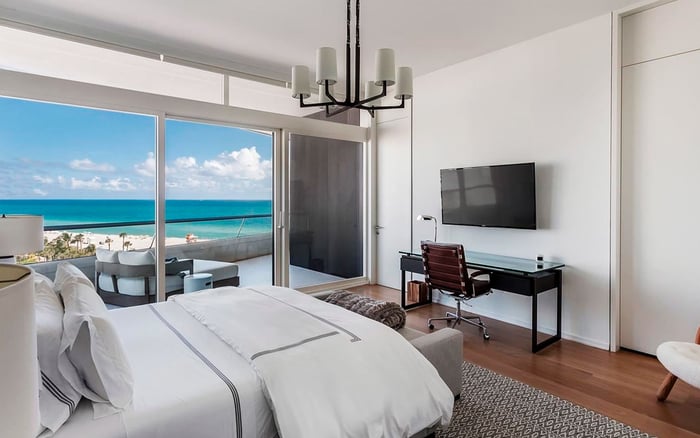
At a beach-facing residence such as The Perigon Miami Beach, the view may dominate the first impression. Still, a buyer should look past the horizon and study the arrangement. If every seat faces outward, the room may be designed for spectacle rather than conversation. If seats are angled subtly toward one another while preserving the view, the outdoor room is more likely to function for both quiet mornings and evening entertaining.
The same principle applies inland. A garden-oriented or tree-lined setting rewards furniture that encourages stillness, reading, and longer meals. A high-energy city setting may call for sharper zoning, with separate areas for coffee, dining, and after-dinner seating. The furniture tells you whether the outdoor room has been assigned a purpose or merely filled.
Outdoor furniture materials are often described in broad categories: wood, metal, woven surfaces, stone, composite, upholstered cushions. A luxury buyer should not make assumptions from appearance alone. Ask what the frames are, how the cushions are stored, what the covers are, and how the pieces have performed over time.
The most important observation is consistency. Are chair legs level? Do table surfaces show careful upkeep? Are cushions taut, faded, compressed, or mismatched? Are zippers, seams, and straps treated as details or ignored? None of these clues requires a laboratory. They require attention.
A staged terrace may look immaculate because it has barely been used. A well-owned terrace may show a softer patina while still communicating quality. The goal is not perfection. The goal is to distinguish honest use from neglect, and thoughtful selection from decorative convenience.
Sit down. It sounds obvious, yet many buyers never test outdoor furniture during a showing. A chair that photographs beautifully may sit too low for dining. A deep sofa may be elegant for lounging but awkward for conversation. A slim dining chair may look sculptural and feel unforgiving after twenty minutes.
Luxury outdoor living is measured in duration. Can you imagine finishing breakfast there? Reading through the heat of the afternoon in a shaded corner? Hosting six people without everyone balancing plates on their knees? If the furniture does not support time, the space is scenic rather than livable.
This is where South Florida buyers should be especially disciplined. The outdoor room often becomes a daily ritual: coffee before calls, lunch between appointments, drinks before dinner, a quiet hour after guests leave. Furniture should make those rituals effortless.
The most elegant outdoor room is undermined if it ignores practical support. Look for evidence of shade planning. Umbrellas, overhangs, pergolas, screens, and nearby planting can all shape how usable the space feels at different times of day. The furniture should relate to those shade zones, not sit randomly in the brightest exposure.
Storage matters as well. Cushions, throws, covers, tabletop objects, and entertaining pieces need a discreet place to go. If no storage is visible or plausible, maintenance may become inconvenient. That does not mean every terrace requires bulky cabinets. It means the home should have a plan.
Service is the final layer. A dining table far from the kitchen may still work if there is a console, bar cart area, or landing surface nearby. A lounge group becomes more useful when guests have a place to set a glass. These small details separate a tourist fantasy from a buyer’s reality.
In Brickell, an outdoor room may need to balance skyline energy with privacy. In Coconut Grove, it may be more about softness, canopy, and indoor-outdoor continuity. In beach communities, it may be about editing the furniture so the water remains the principal artwork.
That is why context matters. A residence such as Four Seasons Residences Coconut Grove invites a different outdoor reading than a coastal property such as The Ritz-Carlton Residences® Pompano Beach. The buyer’s question is not which setting is better. The question is whether the outdoor furniture understands the setting.
Use the word terrace in your notes with intention. A terrace is not automatically an outdoor room. It becomes one only when proportion, comfort, weather thinking, privacy, and service align. When those elements are missing, the space may still be beautiful, but it will ask more from the next owner.
Arrive with a calm eye. Do not judge the furniture only from the doorway. Step outside, close the door behind you, and experience the room as a resident would. Look back toward the interior. Does the outdoor furniture connect to the living area or feel unrelated? Does the arrangement preserve sightlines from inside, or does it block them?
Notice sound and privacy. Furniture placement can either expose a seating group or protect it. A sofa placed too close to a railing may feel cinematic for photos but uncomfortable for private conversation. A dining table tucked into a corner may feel intimate or compromised, depending on access and airflow.
Finally, consider what you would keep. If you would replace every piece immediately, that is useful information. It may not change the value of the property, but it changes the move-in experience and the design budget. A luxury buyer knows that outdoor rooms can be complex to furnish well. The best ones make quality feel inevitable.
Why does outdoor furniture matter in a luxury purchase? It shows how the exterior space actually functions, not just how it photographs. It can reveal proportion, maintenance habits, and the level of design consideration.
Should I judge a terrace by the furniture brand? Brand can be a clue, but fit, comfort, condition, and layout are more important. A lesser-known piece that works beautifully may be more valuable than a famous one used poorly.
What is the first thing to check outdoors? Start with circulation. If you cannot move easily around chairs, tables, and doors, the arrangement may not support daily living.
How can I tell if an outdoor room is over-staged? Look for furniture that prioritizes symmetry or drama over comfort and use. If there is no place for dining, shade, or a drink, it may be more set than room.
Is cushion condition important? Yes. Cushions reveal use, care, and storage discipline, especially when seams, shape, and fabric consistency are examined closely.
Should every outdoor room have dining space? Not necessarily. The right function depends on the residence, but the chosen function should be clear and well supported.
How should I evaluate a small balcony? Focus on scale and purpose. A small balcony can be excellent if it supports a specific ritual, such as morning coffee or evening reading.
What makes an outdoor room feel expensive? Restraint, proportion, tactile comfort, and thoughtful placement usually matter more than excess. Luxury is often visible in what has been edited out.
Can outdoor furniture affect my renovation budget? It can influence the cost of making the space feel complete after closing. Replacing furniture, adding storage, and improving shade can become meaningful design expenses.
What is the best way to shortlist comparable options for touring? Start with location fit, delivery status, and daily lifestyle priorities, then compare stacks and elevations to validate views and privacy.
For a tailored shortlist and next-step guidance, connect with MILLION.
If branded residences are on your mind — as a home or as an allocation — we would be glad to share what we are seeing, privately.
Begin a quiet conversation