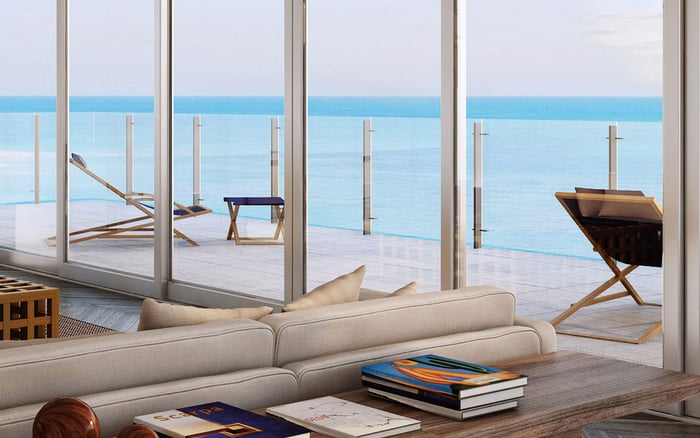
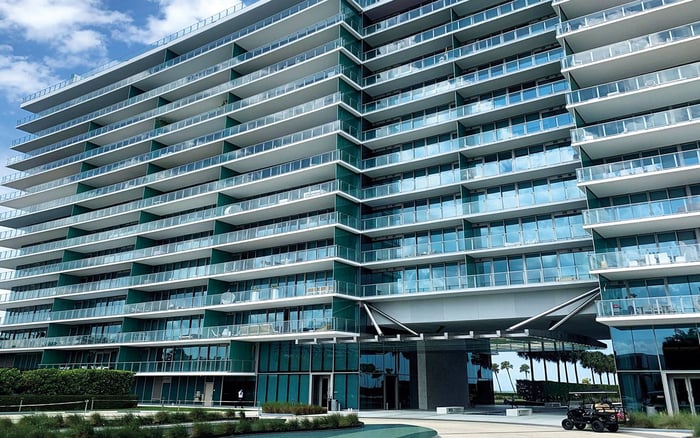
A discreet buyer’s guide to how Oceana Key Biscayne and The Cove Residences Edgewater should be compared through arrival sequence, privacy thresholds, lobby circulation, and valet flow rather than spectacle alone.
For the South Florida buyer choosing between Oceana Key Biscayne and The Cove Residences Edgewater, the practical question sits just beneath the polished surface. It is not simply which building has the more dramatic lobby, the more photogenic entrance, or the more persuasive arrival moment. The more consequential question is how each property manages the choreography of coming home.
At this level, luxury is operational. It is the way a vehicle is received without friction. It is the degree to which guests are welcomed without diluting privacy. It is whether the lobby feels grand only in photographs, or whether it performs when residents, staff, deliveries, visitors, security, and service functions all intersect.
That distinction matters because a residence can impress once and still irritate daily. A well-run entry sequence, by contrast, is felt quietly and repeatedly. It shapes school runs, airport pickups, dinner arrivals, weekend guests, private drivers, and those moments when a resident wants to move from public life into private life with as little exposure as possible.
Oceana’s Key Biscayne setting gives the comparison a different emotional and practical register. The island context naturally changes the approach to privacy. The drive feels more residential, more separated from mainland movement, and more aligned with buyers who prioritize discretion, controlled access, and a quieter rhythm. Key Biscayne, as buyer shorthand, often signals this desire for separation without leaving Miami behind.
Edgewater presents a different proposition. The neighborhood is mainland, vertical, and urban, with convenience as part of the attraction. A buyer considering The Cove Residences Edgewater, often searched within the Cove Miami conversation, is likely weighing proximity and energy against the softer privacy language of an island setting. That does not make one superior. It makes the decision more personal.
This same Edgewater lens appears when buyers compare nearby projects such as EDITION Edgewater, Aria Reserve Miami, and Villa Miami. The neighborhood conversation is less about retreat in the traditional island sense and more about how a building filters a busy urban environment into a polished residential experience.
A large or dramatic lobby can be seductive, especially in a sales presentation. Scale signals arrival. Materials signal expense. Height can create a sense of calm and occasion. But for a serious buyer, lobby volume should be assessed as a working space, not merely an aesthetic one.
At Oceana Key Biscayne, the important question is how the lobby accommodates overlapping patterns of use. Residents arrive. Guests wait. Security observes. Staff circulates. Service needs to remain present without becoming conspicuous. The most refined lobbies manage all of this without making the resident feel watched, delayed, or forced into unnecessary contact.
This is where architectural spectacle and daily usability diverge. A dramatic room may be beautiful, but if circulation is compressed, if waiting areas feel exposed, or if every arrival funnels through the same visible point, the experience becomes less private over time. The better test is not the first tour. It is the weekday evening return, the holiday guest surge, the rainy-day pickup, and the simultaneous arrival of residents and service providers.
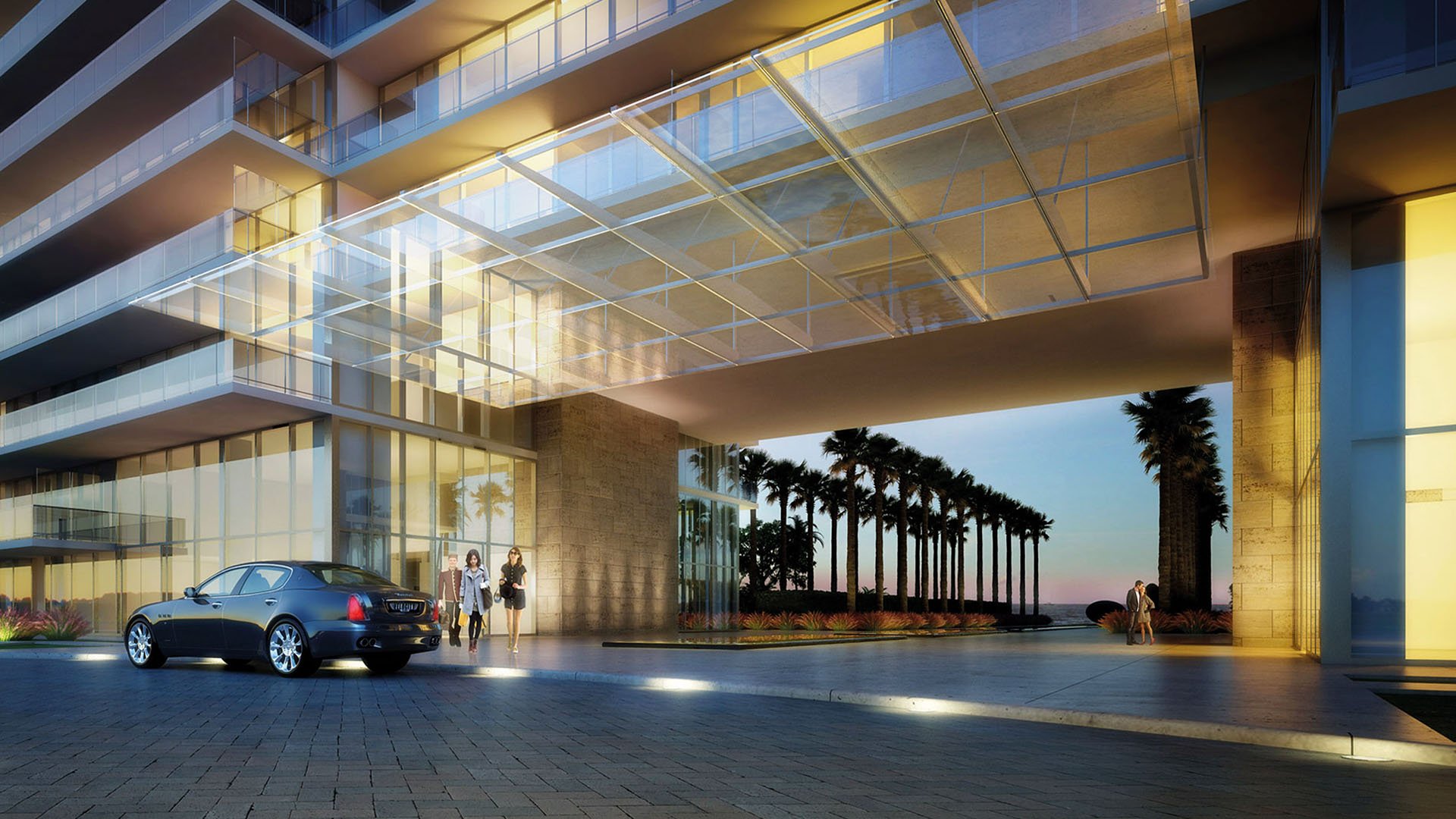
The porte-cochère is often treated as a design flourish, but for luxury buyers it functions as a threshold between public approach and private residence. At Oceana, that threshold should be read through privacy, sequencing, and separation. The question is not only whether the entrance feels elegant. It is whether the transition from vehicle to lobby feels protected.
A strong porte-cochère experience gives residents a moment of decompression. It should make arrivals intuitive and discreet, allowing a driver, valet, resident, guest, and doorman to operate without theatrical congestion. Privacy is not achieved by hiding everything. It is achieved by organizing movement so that each participant knows where to be, what happens next, and how to avoid unnecessary overlap.
This is why the most sophisticated buyers often spend time watching a building entrance rather than simply touring it. They look at how cars stack, how pedestrians cross, how luggage is handled, and whether the front door feels ceremonial without becoming public. Balcony and water-view appeal may dominate search behavior, but the threshold below often determines whether the residence feels genuinely composed.
Valet is not a secondary amenity in a high-end condominium. It is part of the lived residence, especially in buildings where residents rely on staff, private drivers, visiting family, and frequent guest arrivals. The buyer’s test is practical: how smoothly vehicles are received, staged, retrieved, and separated from pedestrian movement.
For Oceana Key Biscayne, valet choreography should be evaluated through calmness. Does the entry sequence feel intuitive? Are vehicles handled in a way that supports discretion? Is there apparent separation between people walking into the lobby and cars moving through the arrival court? Does the service layer feel orchestrated rather than improvised?
For an Edgewater buyer, the valet question may involve a different kind of pressure. Urban settings can add surrounding movement, neighborhood activity, and a tighter relationship between the building and the street. That makes internal choreography especially important. The building must convert city energy into residential order before the resident reaches the elevator.
A serious buyer should tour both concepts at different times of day. The morning tells one story. Late afternoon tells another. Evening guest arrivals, weekend movement, and weather conditions can reveal whether the entrance sequence remains graceful under real conditions.
Ask practical questions, but avoid being distracted by unsupported precision. Exact lobby dimensions, driveway measurements, valet capacity, and wait times should only carry weight when they are verified for the specific building and operating plan. In the absence of hard metrics, the more useful approach is behavioral: observe how movement feels, where friction appears, and whether staff presence enhances privacy or interrupts it.
The correct choice depends on temperament. Oceana Key Biscayne will speak to buyers who place a premium on discretion, controlled arrival, and a calmer residential setting. The Cove Residences Edgewater will appeal to buyers who want the Edgewater lifestyle and are focused on how urban convenience is translated into private residential order. In both cases, the entrance is not a minor feature. It is the daily handshake between the city and the home.
Is Oceana Key Biscayne better for privacy than an Edgewater residence? Oceana’s island setting creates a different arrival context, which may appeal to buyers who value discretion and a quieter residential environment.
Does lobby volume automatically mean a better luxury experience? No. Lobby volume matters most when it supports circulation, privacy, guest handling, security, and service movement.
Why is the porte-cochère important for buyers? It acts as the transition from public approach to private entry, shaping how discreet and composed each arrival feels.
What should buyers observe during valet activity? Watch how vehicles are received, staged, retrieved, and separated from pedestrian movement during active arrival periods.
Is The Cove Residences Edgewater mainly an urban-convenience choice? The Edgewater side of the comparison is best understood through the balance of city access and private building choreography.
Should buyers ask for exact valet wait times? Buyers can ask, but exact wait times should only be relied upon when clearly verified for the building and operating plan.
What is the biggest mistake during a luxury condo tour? Focusing only on finishes and views while ignoring how the building manages arrivals, guests, staff, and service flow.
Does a water view matter less than arrival design? A water view matters, but daily satisfaction often depends just as much on privacy, movement, and operational ease.
How should a privacy-focused buyer compare Key Biscayne and Edgewater? Compare the emotional rhythm first: island-residential calm versus mainland urban convenience and energy.
When is the best time to evaluate an entrance sequence? Visit during active periods such as mornings, late afternoons, weekends, or rainy conditions to see how the building performs.
When you're ready to tour or underwrite the options, connect with MILLION.
If branded residences are on your mind — as a home or as an allocation — we would be glad to share what we are seeing, privately.
Begin a quiet conversation