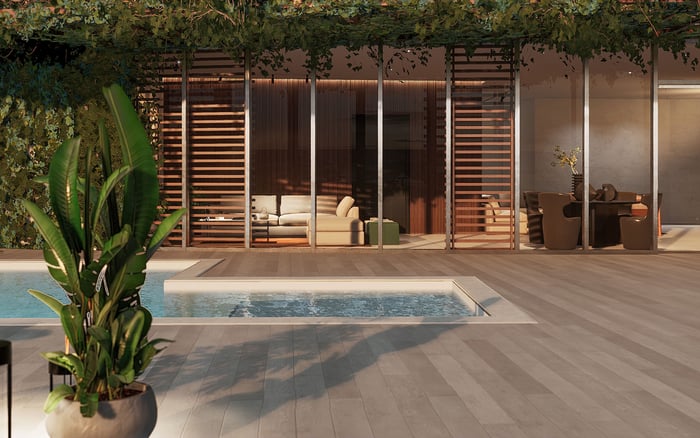
A discreet buyer’s guide to evaluating in-unit wellness rooms in South Florida luxury residences, from spatial logic and materials to privacy, maintenance, and long-term value.
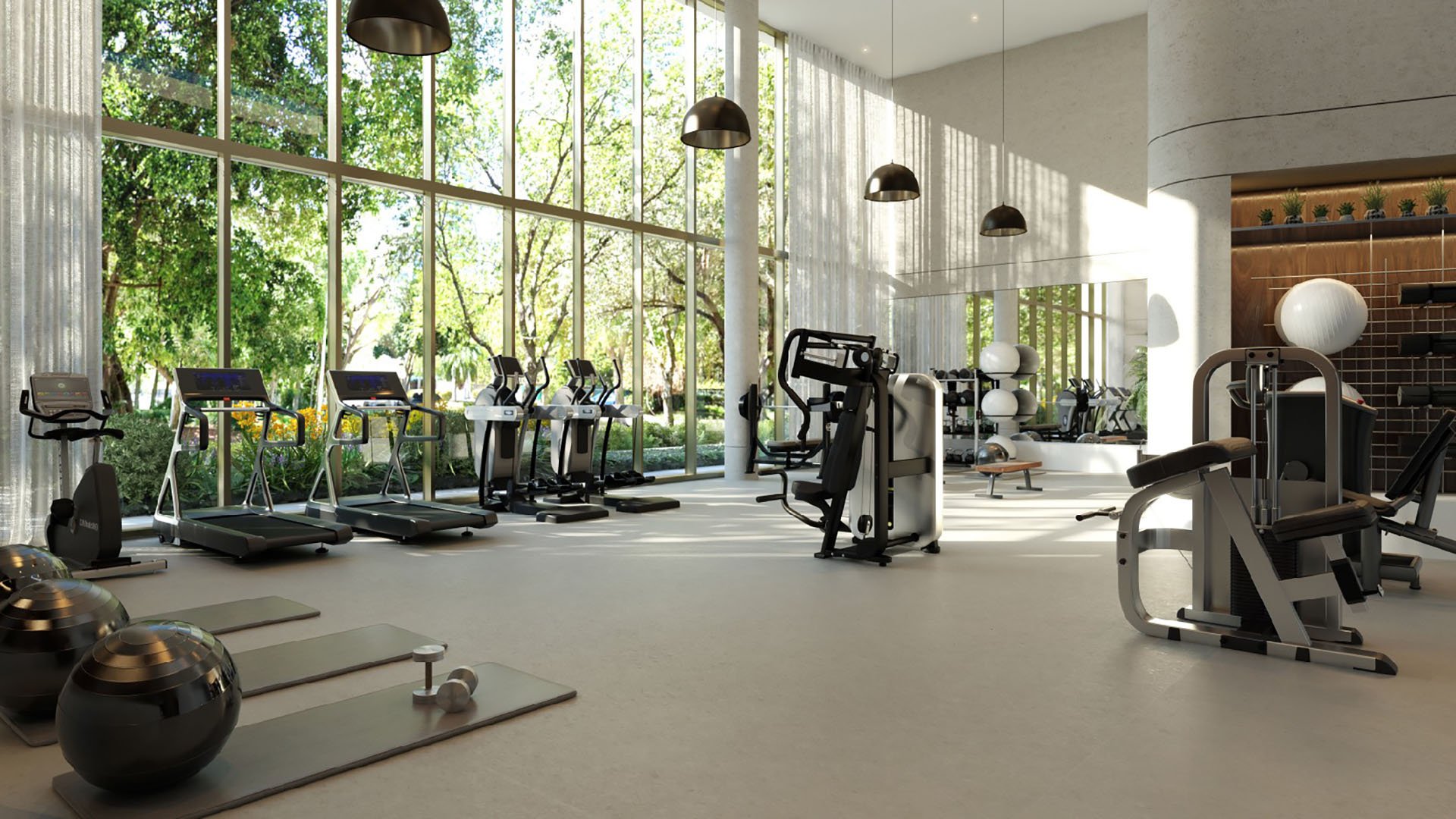
In-unit wellness rooms have become one of luxury real estate’s most seductive phrases, but the serious buyer approaches them with restraint. The question is not whether a room looks tranquil in afternoon light. The question is whether it improves the daily rhythm of the residence without borrowing value from a bedroom, den, or service area.
A tourist sees a meditation cushion, a reformer, a sound bowl, or a chilled towel cabinet. A luxury buyer reads circulation, ceiling height, air movement, electrical capacity, privacy, storage, and how the space will perform after the first season of ownership. In South Florida, where indoor-outdoor living is central to the residential experience, wellness must be more than a mood. It has to function beautifully through humidity, heat, light, and the social patterns of a second-home or primary residence.
The best in-unit wellness room is not necessarily the largest one. It is the one that feels inevitable within the plan. It belongs to the residence rather than announcing itself as a sales flourish.
The first sign of quality is location. A credible wellness room should sit where privacy and quiet are natural, not forced. If it is wedged beside the main entertaining space, directly off the elevator foyer, or exposed to primary circulation, it may photograph well but live awkwardly.
In a Brickell residence, for example, a wellness room may need to buffer the energy of a dense urban setting. In Surfside, the priority may be a quieter dialogue with light, view, and recovery after the beach. In Aventura, where many buyers balance family use, guests, and seasonal living, the wellness room must be adaptable without becoming a miscellaneous overflow room.
Study the door swing, sightlines, and proximity to bathrooms or closets. Ask whether someone can use the space early in the morning without waking the household. Ask whether a guest passing through the residence would immediately see into it. True wellness is private, not performative.
A luxury wellness room must be felt physically. Air quality, ventilation, natural light, and acoustics are not secondary details. They are the difference between a room that becomes part of daily life and a staged corner with expensive accessories.
Light should be controlled rather than merely abundant. Direct glare can be harsh for stretching, meditation, or recovery. A softer exposure, filtered through proper treatments, often makes the room more useful throughout the day. If the room has glass walls, consider what they reveal and what they reflect at night.
Sound matters just as much. A wellness space beside a media room, children’s area, kitchen, or elevator corridor may struggle to feel restorative. Buyers should stand in silence and listen. Mechanical hum, corridor noise, and neighboring activity can erode the premise of the room.
Ventilation is equally important. A space intended for movement, heat, breathwork, or massage cannot feel stale. The most elegant materials will not compensate for a room that traps humidity or odor.
Flexibility is often presented as a virtue, and it can be. But there is a difference between a flexible wellness room and an unresolved spare room. The former has proportion, outlets, storage, lighting layers, and enough clear floor area to support multiple uses. The latter simply has neutral finishes and optimistic language.
A buyer should imagine three realistic scenarios. First, a daily solo ritual such as yoga, strength training, stretching, or meditation. Second, a recovery use such as massage, compression, infrared equipment, or quiet reading. Third, an alternate function if lifestyle needs change, such as a study, nursery, dressing lounge, or private office.
If the room cannot transition gracefully between those scenarios, its value is narrower than advertised. New-construction residences often present these rooms with impeccable staging, but the buyer’s task is to strip away the props and read the underlying architecture.
The strongest wellness rooms avoid theatrical spa language. They use materials that are tactile, quiet, and durable. Floors should support movement without feeling clinical. Wall finishes should calm the eye without becoming fragile. Built-ins should conceal clutter rather than introduce more visual noise.
A common mistake is overdesign. A small room filled with textured walls, specialty lighting, mirrors, aroma equipment, and sculptural furniture can feel busy rather than restorative. Luxury is not the number of wellness cues in the room. It is the ease with which the room disappears into daily use.
Maintenance should be part of the aesthetic judgment. If a finish cannot tolerate moisture, sunscreen, towels, bare feet, equipment marks, or repeated cleaning, it may be wrong for the purpose. A buyer should ask how the room will age, not only how it presents during a showing.
Terrace access can elevate an in-unit wellness room, but only if it is practical. A direct connection to outdoor air can make morning stretching, breathwork, or post-sauna cooling feel exceptional. Yet the connection must respect privacy, sun exposure, wind, and furniture placement.
A wellness room opening onto a terrace may sound ideal until the buyer realizes the outdoor zone is also the main entertaining path, or that neighboring sightlines compromise the feeling of retreat. Conversely, a more discreet outdoor edge can turn a modest wellness room into one of the most intimate spaces in the home.
The key is sequence. The best residences allow a progression from rest to movement to fresh air without crossing the formal life of the apartment. If the wellness room forces the user through the living room, past dining chairs, or across a guest-facing area, the ritual becomes less natural.
Pool access, resort decks, and shared spa amenities can be valuable, but they do not replace an in-unit wellness room. The in-unit space is about immediacy and privacy. It is where the owner can stretch before a call, recover after travel, or spend ten quiet minutes without dressing for a public amenity area.
A sophisticated buyer separates building-level amenity from residence-level utility. The two should complement each other. A shared spa may offer scale and service, while the private room offers convenience and discretion. If the private room merely imitates the public amenity on a smaller scale, it may feel redundant.
Instead, look for a personal use case. Is this where you prepare before the gym? Is it where a trainer can work with you privately? Is it where you decompress after entertaining? The more specific the answer, the more likely the room will justify its presence.
The most persuasive wellness rooms are often quiet in their ambition. They are not the first image in the marketing sequence, and they do not need to compete with the view. Their luxury is behavioral. They let the owner live better without announcing how.
Privacy has several layers. Visual privacy protects the user from guests and staff. Acoustic privacy allows movement, instruction, music, or silence without household disruption. Programmatic privacy ensures the room is not constantly borrowed for storage, luggage, or overflow seating.
A buyer should be wary of rooms that are too visible from the principal living area. Glass may look beautiful, but exposure can change the psychology of use. A wellness room should invite discipline, restoration, and personal ritual. If it feels like a display case, it may be designed for visitors rather than owners.
Not every future buyer will want the same wellness routine, so the room should not be overly specialized. A built-in massage platform, niche equipment, or fixed installation can be appealing if it is easily reversible. The broader the potential use, the stronger the resale logic.
A room with balanced proportions, good light control, sound separation, and storage can be marketed credibly as wellness, office, studio, or private lounge. A room that only works for one highly specific routine may limit the audience.
This is where luxury buyers think beyond the current trend. Wellness is not a fad when it is embedded as privacy, flexibility, air, light, and calm. It becomes risky only when it is reduced to gadgets.
What makes an in-unit wellness room feel truly luxurious? It should combine privacy, proportion, air quality, acoustic calm, and flexible use. The room should feel intentional even when empty.
Is a wellness room more valuable than an extra bedroom? It depends on the floor plan and buyer profile. The strongest wellness rooms can also function as an office, studio, or guest-support space.
Should the room have natural light? Natural light is desirable when it can be controlled. Glare, heat, and exposure can make an otherwise beautiful room less usable.
How important is ventilation? It is essential. Movement, recovery, and moisture-prone uses require air movement that feels fresh and comfortable.
Is glass a good choice for wellness rooms? Glass can add elegance and borrowed light, but it may reduce privacy. A buyer should evaluate how transparent the room feels at night.
Can a wellness room double as an office? Yes, if the proportions, lighting, outlets, and acoustics support both uses. Avoid layouts that only work with one specific piece of equipment.
Does a private wellness room replace building amenities? No. It offers privacy and immediacy, while shared amenities may offer scale, service, and specialized facilities.
What is the biggest red flag? A room that looks serene but lacks storage, ventilation, or acoustic separation. Staging should never be mistaken for function.
How should buyers evaluate equipment shown in the room? Treat equipment as removable. The lasting value is in the architecture, services, and flexibility of the room itself.
Should seasonal owners prioritize wellness rooms? Yes, if the room supports recovery from travel and effortless daily routines. It should be easy to use without preparation or staff involvement.
For a discreet conversation and a curated building-by-building shortlist, connect with MILLION.
If branded residences are on your mind — as a home or as an allocation — we would be glad to share what we are seeing, privately.
Begin a quiet conversation