Wind mitigation credits can materially reshape the ownership math for a South Florida boutique residence by influencing insurance premiums, diligence priorities, and long-term carrying-cost discipline.

In South Florida luxury real estate, buyers often focus on the visible markers of value: architecture, views, privacy, wellness amenities, terrace depth, garage access, and proximity to the water. Yet the real cost of a boutique residence is shaped just as much by what sits behind the walls, above the ceiling line, and inside the insurance file.
Wind mitigation credits are part of that less visible financial layer. When qualifying building features are properly documented, they may reduce the insurance premium attached to a residence. For buyers evaluating a boutique condominium, townhome, or low-density waterfront home, those credits can influence the practical difference between two properties with similar asking prices but very different annual carrying profiles.
This is not merely a technical issue. It is a lifestyle issue, an investment issue, and increasingly, a pricing and trends issue. In a market where insurance has become a central line item, credits tied to wind-resistant characteristics can affect how a residence feels financially after closing. A buyer may love two homes equally, but the one with clearer mitigation documentation, stronger envelope details, and a more coherent insurance story may carry more gracefully over time.
A wind mitigation credit is typically tied to documented building characteristics that may help a residence perform better in high-wind conditions. The exact evaluation can vary, but the conversation often includes roof geometry, roof-deck attachment, roof-to-wall connection, opening protection, exterior doors, shutters or impact-rated glazing, and other envelope-related components.
For a luxury buyer, the goal is not to become an inspector. The goal is to understand that the insurance premium may not be based only on location, square footage, and replacement value. It may also reflect how well the property documents its protective features. A beautiful residence with incomplete documentation may be treated differently from a similar residence with a clean, current wind mitigation file.
That distinction is especially relevant in South Florida because many boutique residences are intentionally individual. Some are newly delivered. Some are adaptive, restored, or updated over time. Some sit in coastal neighborhoods where exposure, elevation, glass, and structure all become part of the ownership conversation. The more customized the residence, the more important it becomes to confirm that the insurance file reflects the property’s actual condition.
Boutique buildings often appeal to buyers who want discretion, fewer neighbors, more direct access, and a residential atmosphere that feels less institutional than a large tower. That intimacy can be valuable, but it also demands sharper diligence.
In a large new tower, insurance documentation may be centralized and relatively standardized. In a boutique property, the story may be more nuanced. The association, developer, prior owner, inspector, and insurance advisor may each hold a different piece of the file. A buyer should ask early whether a current wind mitigation inspection exists, whether the association has its own building-level documentation, and whether unit-level improvements have been separately verified where relevant.
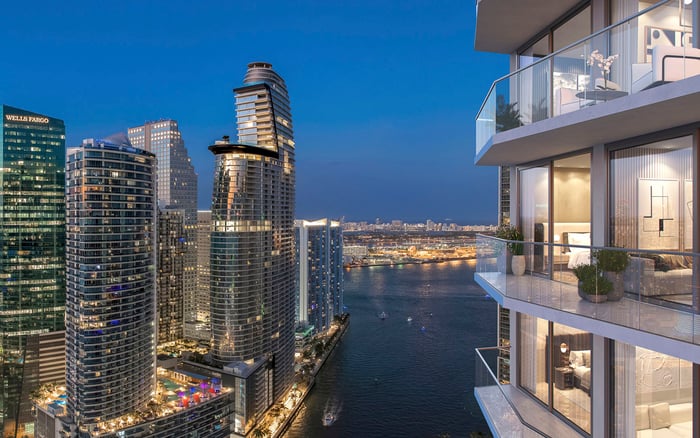
For new-construction buyers, the expectation may be that modern standards and fresh documentation simplify the process. Often, they do. But expectation is not underwriting. Even when evaluating a contemporary project such as 2200 Brickell, the prudent buyer still asks how insurance documentation will be organized, what the association will maintain, and what individual owners may need to provide for their own policies.
The purchase price is only the entry point. The real cost of a residence includes insurance, association dues, reserves, taxes, maintenance, financing, and the opportunity cost of capital. Wind mitigation credits matter because they can affect one of the more unpredictable components in that equation.
A credit does not automatically make one property superior to another. It should be viewed as one line in a broader carrying-cost model. A residence with stronger mitigation documentation may still have higher association dues, a more expensive reserve outlook, or a more complex maintenance profile. Conversely, a property with fewer documented credits may offer architectural rarity, irreplaceable location, or a renovation opportunity that justifies a higher operating cost.
The sophisticated approach is comparative. Buyers should request estimated insurance scenarios early, then test those estimates against the property’s mitigation file. The question is not simply, “What is the premium?” The better question is, “What assumptions are embedded in the premium, and are they supported by documentation?”
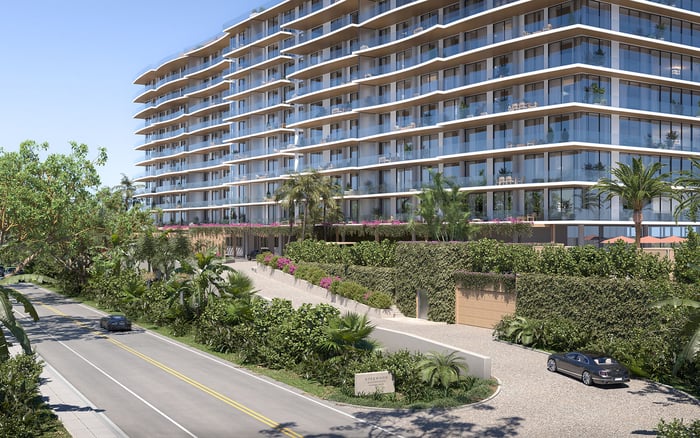
This matters in Miami Beach, where waterfront, ocean-adjacent, and low-density residences often trade on scarcity and design quality. A buyer considering The Perigon Miami Beach may be drawn first to the coastal lifestyle, but the ownership analysis should still include how the building’s protective features and insurance framework are documented.
A discreet but thorough buyer should ask for the wind mitigation report, the master insurance summary, any available building-envelope documentation, and details on impact-rated openings where applicable. For condominium residences, the buyer should also understand the relationship between the association’s master policy and the owner’s separate policy.
The goal is not to slow the transaction. It is to prevent surprises. If a quoted premium assumes a certain type of opening protection, roof condition, or building characteristic, the supporting paperwork should be available before the buyer relies on that number. If documentation is outdated, the buyer can request updated review or adjust the financial model accordingly.
In boutique markets such as Bay Harbor Islands, where buyers often value human scale and waterfront calm, the diligence process can be especially important. A residence at Alana Bay Harbor Islands may be considered for privacy and neighborhood rhythm, while the ownership file should still be reviewed with the same seriousness applied to design and finish selections.
Wind mitigation credits can also influence resale positioning. Future buyers may not assign an identical dollar value to a credit, but they are likely to pay attention to carrying costs, insurance clarity, and the quality of documentation. A seller who can present a clean mitigation file may reduce uncertainty during negotiation.
This is particularly important for boutique residences because buyers often compare across very different formats: a small waterfront building, a branded tower, a townhome, or a single-family-style residence within a condominium framework. The more diverse the comparison set, the more valuable it becomes to normalize the numbers. Insurance assumptions help create that common ground.
In Pompano Beach, for instance, a buyer looking at coastal ownership around Armani Casa Residences Pompano Beach may compare the annual cost profile with properties in Fort Lauderdale, Boca Raton, or Miami Beach. The premium is not merely an annual bill. It is part of how the asset competes.
Wind mitigation credits sit at the intersection of real estate, construction, insurance, and association governance. No single advisor sees the whole picture unless the buyer coordinates the conversation. The real estate advisor should identify the diligence items. The insurance advisor should translate mitigation details into premium implications. The inspector should clarify what is observable and documentable. The attorney should help review condominium and association materials where appropriate.
This is where luxury service becomes practical. The best advisory process does not treat insurance as an afterthought once the contract is signed. It brings the insurance conversation forward, before the buyer has emotionally assigned value to the residence. That discipline can protect leverage, timing, and decision quality.
For buyers considering Coconut Grove, the same logic applies. A wellness-oriented or low-density setting may drive the initial attraction to The Well Coconut Grove, but the final ownership analysis should still integrate insurance assumptions alongside amenities, parking, privacy, and long-term maintenance.
Wind mitigation credits do not replace taste, location, architecture, or view. They refine the economics beneath them. In the ultra-premium market, a residence is rarely purchased on one metric, yet sophisticated buyers understand that small differences in documentation can become meaningful over years of ownership.
The most elegant purchase is not always the one with the lowest premium. It is the one where the buyer understands the premium, the credits, the assumptions, and the future obligations. In South Florida, where design ambition and coastal exposure often coexist, that understanding is part of modern luxury.
What are wind mitigation credits? They are potential insurance premium reductions tied to documented wind-resistant building features.
Do all South Florida residences qualify for credits? No. Qualification depends on the property, documentation, insurer review, and applicable policy terms.
Should a buyer review wind mitigation before contract? Yes. Early review helps clarify insurance assumptions before the buyer relies on carrying-cost estimates.
Are boutique residences more complicated to evaluate? They can be, because documentation may be more individualized than in larger standardized buildings.
Does impact glass automatically create a credit? Not necessarily. The feature generally needs to be documented and accepted within the insurance review.
Can a wind mitigation credit affect resale value? It can support resale confidence by making ownership costs easier for future buyers to understand.
Is new construction always easier for insurance review? It may offer cleaner records, but buyers should still verify the exact documentation available.
How should buyers compare two similar residences? Compare purchase price, insurance assumptions, association costs, reserves, and maintenance together.
Who should review the mitigation file? A qualified insurance advisor, inspector, real estate advisor, and attorney can each play a role.
Is the lowest insurance premium always the best outcome? No. The better outcome is a premium supported by clear facts and aligned with the full ownership plan.
For a confidential assessment and a building-by-building shortlist, connect with MILLION.
If branded residences are on your mind — as a home or as an allocation — we would be glad to share what we are seeing, privately.
Begin a quiet conversation