A buyer-oriented negotiating playbook for securing high-value appliance upgrades in South Florida new construction, with a focus on Aventura and Hallandale contracts, timelines, and design-center leverage.
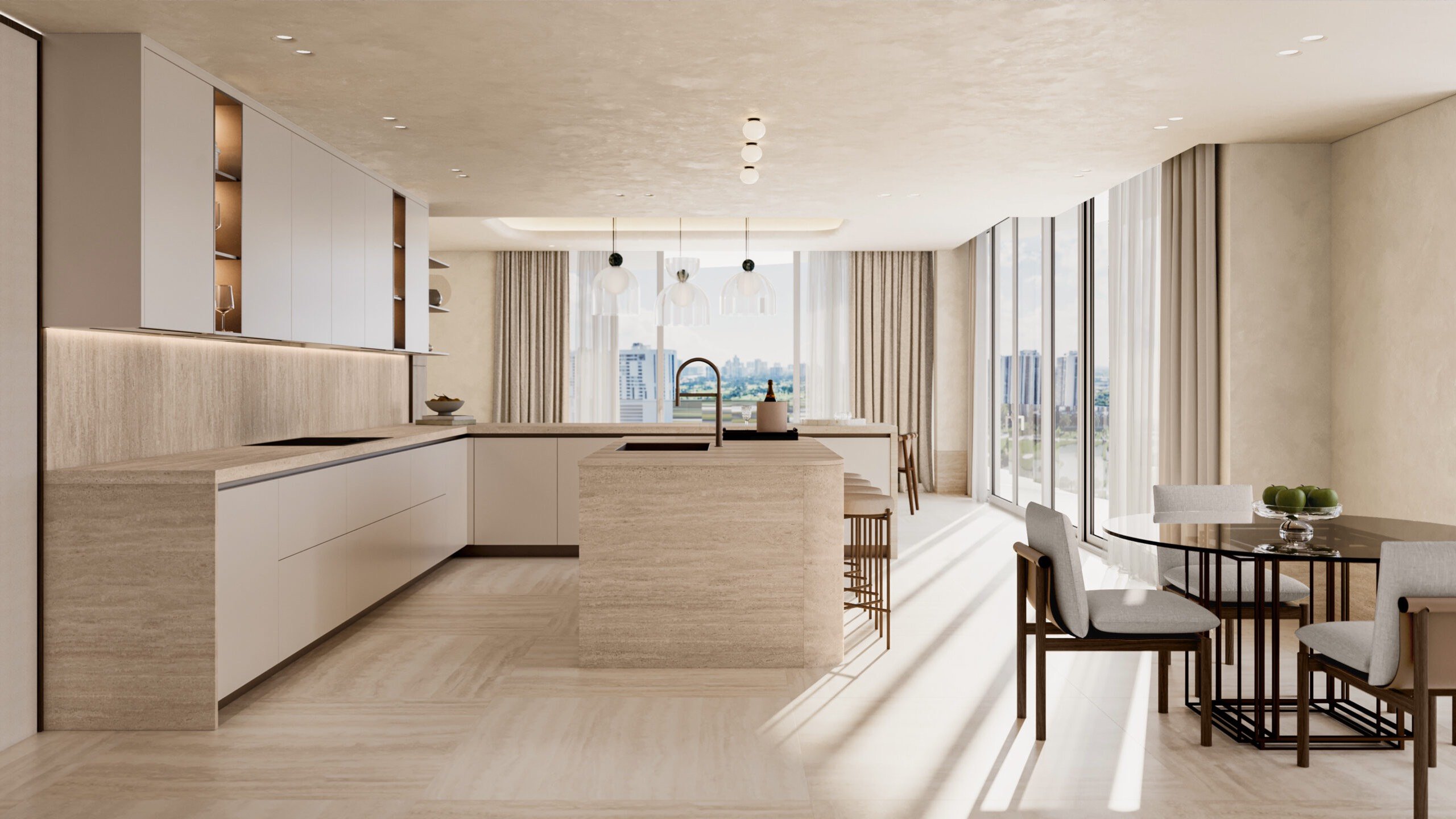
In South Florida’s ultra-premium new construction market, appliance “upgrades” are often framed as a design-center decision. In reality, they’re contract economics. A developer’s appliance program is a procurement pipeline tied to schedules, subcontractors, warranties, and building standards. That makes it negotiable-but only when you treat it as a defined line item with scope, deadlines, and accountability.
For buyers evaluating Avenia Aventura and Shell Bay by Auberge Hallandale, the objective is rarely “the fanciest brand.” It’s securing a suite that delivers on three fronts: (1) daily usability, (2) low-friction service and replacement, and (3) resale credibility within the building’s competitive set.
Because we are not working from a disclosed appliance schedule here, the most defensible approach is to negotiate the process and the deliverables: model-level specificity, installation standards, and a clear plan if supply chains shift. That’s where premium outcomes are won.
Appliance upgrades live at the intersection of cost, schedule, and building uniformity. As a result, some requests are straightforward, while others create ripple effects.
Typically negotiable without disrupting the project
Upgrading within the same manufacturer family (for example, higher trim, better ventilation, quieter dishwasher).
Adding service-oriented scope: extended warranties, first-year maintenance, white-glove commissioning.
Bundling “invisible” performance improvements: upgraded hood CFM within allowed limits, better filtration, or panel-ready integration if the cabinetry program supports it.
Converting an “upgrade” from design-center billing into a contract concession or closing credit, if the developer prefers accounting simplicity.
Typically harder to secure
Changes that affect cabinetry dimensions, electrical load planning, or fire-life-safety constraints.
Late-stage brand changes after procurement lock.
Anything that requires the building to carry two parallel installation standards.
A discreet but effective way to position requests is as risk reduction: fewer punch-list issues, fewer service calls, and stronger resident satisfaction. Developers tend to engage when the ask protects the delivery timeline.
In luxury pre-construction, leverage isn’t a single moment-it’s a sequence.
The most valuable win is contractual permission. Ask for language that confirms:
You will receive an appliance schedule with brand, series, and model numbers.
Substitutions require equal-or-better approval, not “similar” discretion.
Any upgrade pricing is fixed once selected, not subject to later escalation.
If the developer won’t commit to model numbers early, push for a guardrail: a “minimum series” with an explicit upgrade path, plus a written substitution policy.
Design centers are built for throughput. If you reduce complexity, you can often extract meaningful value.
Practical moves:
Bundle upgrades: refrigerator plus ventilation plus dishwasher is easier to approve than a single bespoke request.
Offer standardization: request a higher trim that other buyers are choosing, rather than a one-off.
Ask for execution upgrades: delivery, installation, haul-away, and commissioning are where avoidable frustration tends to hide.
As closing approaches, the developer’s priority is a smooth, on-time finish and a clean close. If you can offer certainty, you can often secure concessions that don’t disrupt construction.
Examples:
Confirming you can close on a target date in exchange for an appliance allowance.
Waiving minor personalization requests if the developer upgrades the package.
Keep the tone professional: you’re not “asking for a deal,” you’re proposing a mutually beneficial adjustment that reduces friction.
Even without project-specific appliance lists, you can negotiate with precision by tightening the deliverables.
Request the appliance package be documented to include:
Brand, series, and model numbers for every appliance.
All trim kits, fillers, and panel hardware (where applicable).
Installation, testing, and commissioning.
Removal of packaging and debris.
Warranty start date clarity (delivery vs. closing).
Responsibility for service calls before and after closing.
This may read like detail. It’s actually leverage. When scope is vague, downgrades become easy.
In day-to-day luxury condo ownership, the most consequential improvements are often:
Ventilation: a well-specified hood and proper make-up air assumptions, within building rules.
Quiet dishwashing: noise is a quality-of-life issue in open kitchens.
Refrigeration reliability: service network and parts availability can matter more than features.
If you want to negotiate assertively without creating tension, anchor on outcomes: quieter operation, cleaner air, fewer service disruptions.
Aventura and Hallandale buyers often share the same expectations, but the buyer profile can differ: some prioritize a primary-residence workflow; others prioritize hospitality-level simplicity. Tailor the appliance ask accordingly.
In Aventura, where day-to-day convenience can drive decision-making, negotiate for frictionless usability and service: clear warranty handoff, reliable delivery, and cabinet-safe integration. In Hallandale, where lifestyle and amenity narrative can be central, negotiate for the “hotel-grade” feel: seamless installation, impeccable alignment, and a package that reads premium at first glance.
Developers rarely respond well to threats. They do respond to clear, well-framed expectations.
A useful approach is to reference “market standard” in a general, non-accusatory way and then specify what you want: integrated refrigeration, a serious ventilation solution, and documented model-level commitments. If your lifestyle includes frequent entertaining, say so. If you travel often, emphasize reliability and service response.
If your search footprint includes other submarkets, keep one or two reference points in mind. In Brickell, for example, branded and design-forward towers such as 2200 Brickell can shape expectations around cohesive kitchen design. The point is not that any one project is “better,” but that sophisticated buyers expect clarity and consistency.
In luxury contracts, the structure of the concession can matter as much as the value.
Developer-installed upgrade
Is often the strongest outcome because it preserves uniform installation standards and reduces post-closing hassle.
Upgrade credit
Can be compelling, but only if you confirm it won’t create gaps in warranty coverage or force owner-managed procurement.
Closing credit
Is clean for the developer, but confirm it won’t leave you with the original appliance package if the credit isn’t truly sufficient to replicate the upgrade through the building’s approved vendors.
If your objective is a premium appliance suite, prioritize developer-installed whenever possible. If your objective is flexibility, a credit can work-provided the constraints are documented: approved installers, delivery windows, elevator reservations, and building rules.
This is not legal advice, but sophisticated buyers consistently benefit from tightening a few core concepts.
Appliance schedule as an exhibit: even if final models are selected later, require a dated exhibit process.
Substitution standard:
“Equal or better” with buyer notice.
Timeline: when selections must be made and what happens if the design center is delayed.
Remedy: if an appliance is not available, is there a cash allowance, an upgrade, or a comparable replacement.
The theme is simple: remove ambiguity. Ambiguity is where quality quietly erodes.
Keep it brief, specific, and oriented around execution.
Confirm enthusiasm for the residence and intent to proceed.
State the outcome: “We want a documented, premium appliance suite with model-level certainty and white-glove commissioning.”
Offer a trade: larger deposit timing certainty, simplified customization scope, or a faster decision window.
Ask for the concession in writing as part of the contract or a signed addendum.
A calm, executive tone signals you’re a serious buyer. Serious buyers tend to get cleaner concessions.
Negotiating only brand names instead of model numbers, installation, and warranty.
Waiting until the design center when contract leverage has already faded.
Assuming panel-ready equals seamless without confirming cabinetry coordination.
Accepting vague substitution language that allows downgrades.
Ignoring building constraints like electrical load, ventilation limits, and delivery logistics.
Luxury is rarely about one headline feature. It’s about the absence of friction.
When should I start negotiating appliance upgrades? Ideally during contract drafting, so upgrades become enforceable terms, not requests.
Is it better to ask for an upgrade credit or developer-installed upgrades? Developer-installed upgrades are usually cleaner for warranty and installation consistency.
What is the single most important detail to document? Brand, series, and model numbers, plus an equal-or-better substitution requirement.
Can I bring my own appliances after closing instead? You can, but confirm building rules, approved installers, and warranty implications first.
How do I avoid surprise costs at the design center? Request a complete written scope that includes trim kits, install, and commissioning.
What upgrades typically improve daily living the most? Ventilation performance and dishwasher quietness are frequent quality-of-life winners.
How do I negotiate without sounding adversarial? Frame requests as delivery and service improvements that reduce post-close issues.
What if the developer says the appliance package is subject to change? Ask for an equal-or-better standard, written notice, and a defined remedy if changed.
Should I use competing projects as leverage? Use them to frame market expectations, not as threats or ultimatums.
Do appliance upgrades help resale value? They can, especially when the suite is cohesive and documented, but usability matters most.
If you'd like a private walkthrough and a curated shortlist, connect with MILLION Luxury.
If branded residences are on your mind — as a home or as an allocation — we would be glad to share what we are seeing, privately.
Begin a quiet conversation