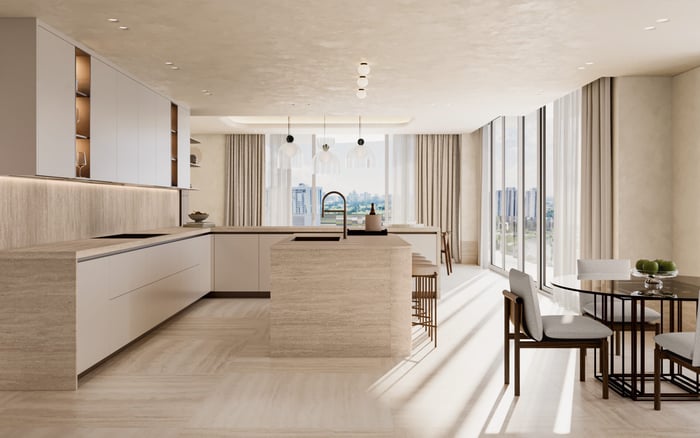
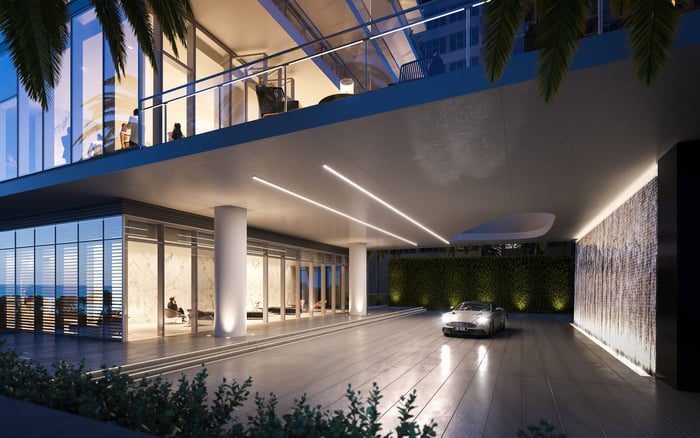
A buyer-oriented comparison of multi-generational living priorities in Aventura versus Hallandale, focusing on how floor plan logic, privacy, and daily operations influence long-term satisfaction in two distinct luxury environments.
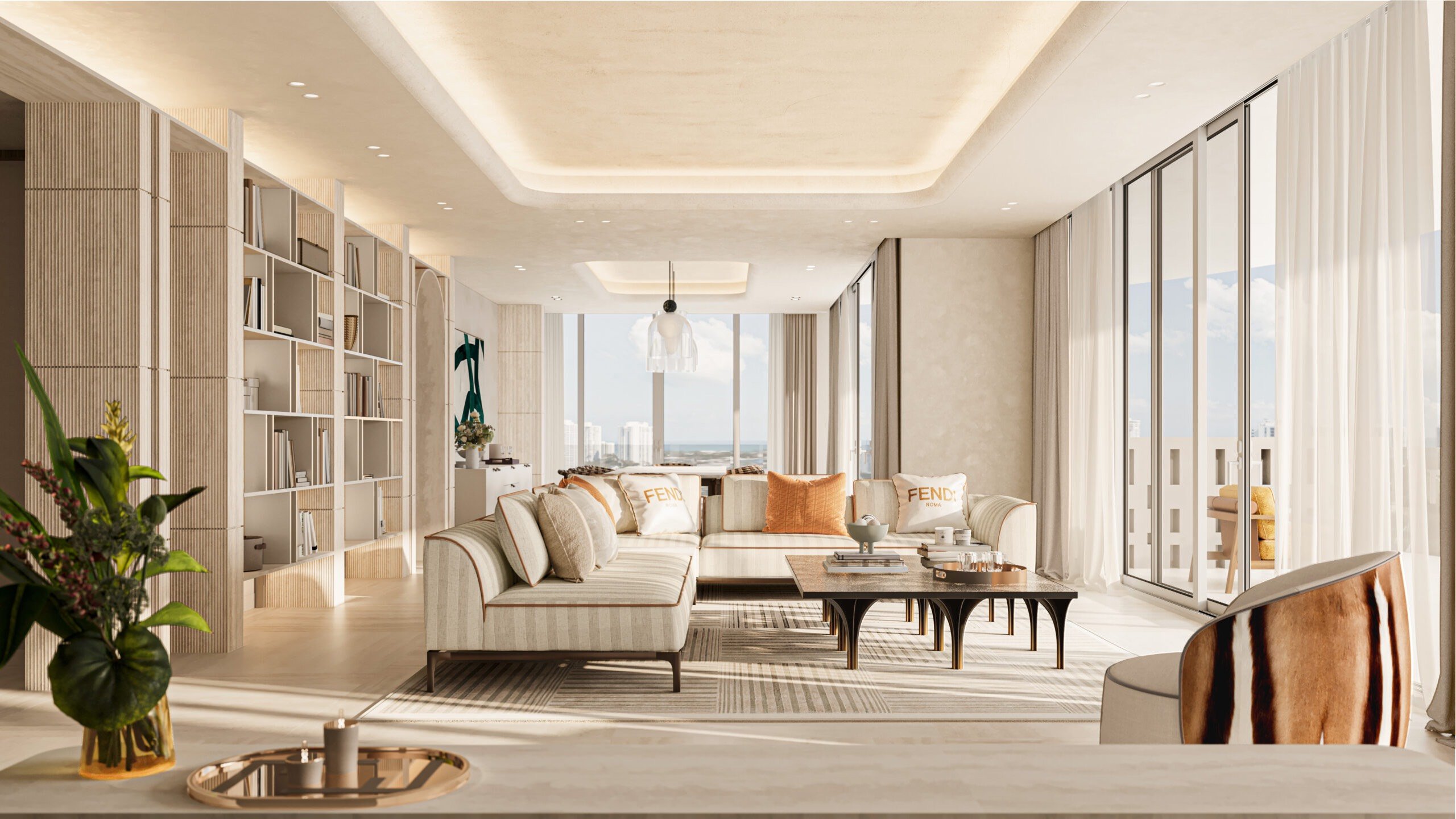
Multi-generational living in South Florida rarely resembles a single, permanent household. More often, it’s a rotating cast: grandparents arriving for season, adult children returning between global postings, a nanny staying during school weeks, or guests who need genuine independence rather than a beautiful sofa bed. In ultra-premium condominiums, the floor plan becomes the governing document for how gracefully everyone coexists.
When evaluating Avenia Aventura against Shell Bay by Auberge Hallandale, the right question is not “Which has more bedrooms?” It’s which plan logic can support multiple rhythms at once-without forcing the primary household to negotiate every meal, nap, Zoom call, and late-night arrival.
The strongest multi-generational layouts reliably deliver five outcomes: true separation between entertaining and sleeping; at least one secondary suite that can function with real autonomy; smart circulation so guests aren’t crossing the kitchen in pajamas; robust storage and utility space; and sound separation that protects the calm luxury is meant to provide.
Aventura buyers often prioritize proximity and ease: medical offices, shopping, dining, and the daily logistics that only grow more important as households broaden across generations. In that context, the most effective multi-generational plans are nimble and “apartment efficient” without ever feeling tight.
In a tower lifestyle, flexibility typically comes from split-bedroom configurations, adaptable dens, and the ability to create a second, quieter zone away from the public-facing living room. For multi-generational living, look for a plan that places a secondary bedroom suite on the opposite side of the residence from the primary suite-ideally with a bathroom that isn’t shared with the main living area. The goal is a guest experience that reads as a private pied-à-terre, not a borrowed room.
Another Aventura-forward advantage is predictable daily flow. If the household includes a caregiver, a college-age child, or a family member keeping different hours, the best plans let them enter, stage essentials, and retreat without cutting through the entertaining core. In practice, that means paying close attention to foyer depth, the directness of the route to secondary suites, and whether the powder room can serve the living area without intruding on bedroom corridors.
While finish levels and amenities matter, the multi-generational advantage in Aventura usually comes down to reprogrammability. A den that serves as a study now, then a nursery, then a quiet guest room isn’t merely a nice-to-have-it’s future-proofing.
Hallandale’s luxury buyer often expects a more resort-inflected daily experience, with heightened sensitivity to arrival sequences, “hotel-grade” privacy, and the ability to host. In that setting, multi-generational plans are judged not only by bedroom count, but by how each suite lives when the residence is fully in use.
At Shell Bay by Auberge Hallandale, the multi-generational ideal is a residence that functions like a small villa in the sky: an entertaining zone that opens with confidence, and bedroom zones that sit back. When several generations share a home, the common failure point is acoustic and visual overlap. A “grand living” room loses value if the corridor to a guest suite runs directly alongside it.
In resort-oriented plans, scrutinize service logic as well. A multi-generational household generates more laundry, more deliveries, and more staging of daily life. Look for utility areas that can absorb that reality and keep the home presentation-ready. Even without assuming any specific configuration, you can still evaluate whether the plan reads with a coherent service side: where packages land, where shoes and sports gear live, and how quickly the space can reset after a weekend of family.
Finally, consider how a secondary suite performs day to day. The best ones feel complete-closet capacity, bathroom privacy, and a level of separation that supports longer stays without friction.
Luxury buyers can be seduced by a gorgeous rendering and a compelling bedroom count. Multi-generational satisfaction is built on details that are less photogenic, yet far more decisive.
First: zoning. You want a “public front, private back” logic, even in a single-level residence. If the primary suite is too exposed to the living room, everyone’s schedule becomes a shared negotiation. Second: doors and corridors. A long, straight hallway can be a gift if it creates distance and quiet; it can also be a flaw if it turns the home into a corridor of pass-throughs. Third: bathrooms. A powder room should serve guests without stealing privacy from a secondary suite. Fourth: storage. If you’re planning for multiple generations, assume multiple wardrobes, medical devices, travel gear, and seasonal rotation.
One practical test: imagine three overlapping moments. A grandparent is resting. A teenager is gaming or studying. You’re hosting friends for cocktails. If you can’t place each activity into a distinct zone without compromise, the plan isn’t truly multi-generational.
The modern multi-generational household wants proximity with boundaries. Those boundaries are created by a suite that can operate semi-independently, with a bathroom that doesn’t become the de facto guest bath for the living area.
In Aventura-style flexibility, this often means a split-bedroom plan plus a den that can act as a buffer. In a more resort-forward Hallandale vision, it can mean a clearer wing concept, where secondary suites feel sufficiently removed for long stays.
In both cases, watch the sightlines. A guest stepping out of their suite shouldn’t immediately face the main living room in full view-and you shouldn’t be looking into their space from the kitchen. These subtle dignities are what make multi-generational living feel elevated rather than improvised.
Multi-generational households amplify the “invisible” aspects of a residence. Sound is the obvious one: televisions, calls, early risers, late sleepers. The plan can help, and so can the separation of wet walls and the placement of closets as acoustic buffers.
Scent and heat management matter, too-especially when multiple generations keep different dietary routines. Open kitchens photograph well, yet a heavily used home benefits from a layout that doesn’t make every cooking moment the center of the household. The best plans preserve an elegant entertaining flow while still allowing the kitchen to function as a real kitchen.
If you’re comparing Aventura and Hallandale options, judge how the plan handles daily realities: where the coffee ritual lives, where groceries land, and whether one part of the household can rest while another part operates.
Multi-generational living is also a location decision. Aventura tends to support a routine-based household: appointments, school runs, shopping, and frequent short outings. That rhythm rewards layouts that are efficient and easy to lock-and-leave-especially when household composition changes over the year.
Hallandale’s resort-adjacent sensibility typically aligns with longer stays and hosting. That calls for a plan that feels generous in the right places: entry experience, entertaining core, and secondary suites that can support extended visits. The residence becomes a destination, not merely a home base.
For families considering multiple South Florida footholds, it can be useful to benchmark expectations against other lifestyle typologies. A waterfront, hotel-branded approach like 2000 Ocean Hallandale Beach can sharpen your sense of what “guest-ready” privacy feels like, while an Aventura-style daily convenience lens can be contrasted with a more neighborhood-anchored option such as Arbor Coconut Grove, where walkability and intimate scale can reshape how often extended family actually uses secondary spaces.
When you tour-or review a plan set-bring a framework that forces clarity.
Identify the “anchor” resident. Is the home designed primarily for the head of household, for entertaining, or as a family hub? The anchor should match your reality.
Choose your second unit within the unit. Decide who needs the most independence: grandparents, an adult child, or long-stay guests. Then identify which suite truly supports them.
Map three paths: entry to kitchen, entry to secondary suite, and kitchen to primary suite. If any of those routes feel awkward or overly public, daily life will feel exposed.
Test for reversibility. A multi-generational plan should survive change: a child moves out, a parent moves in, a caregiver stays seasonally. If a room has only one realistic use, the plan is less resilient.
Within this lens, Avenia Aventura can appeal to buyers who want adaptable, efficient living that remains polished under routine use. Shell Bay by Auberge Hallandale can resonate with buyers who prefer a more destination-like residence, where privacy and hosting feel instinctive rather than managed.
Multi-generational living succeeds when the residence is quiet when it should be, social when it needs to be, and never forces family members to negotiate basic comfort. Evaluate each plan as an operating system: zoning, circulation, suite independence, storage, and the service side of living.
If you can protect the primary suite, give at least one secondary suite true autonomy, and preserve a dignified entertaining flow, you’ll own a home that accommodates family evolution with grace-whether your center of gravity is Aventura or Hallandale.
What makes a floor plan truly multi-generational? Clear separation between sleeping zones and living zones, plus at least one suite with real independence.
Is a split-bedroom layout enough for privacy? Often, yes-if the secondary suite doesn’t rely on a bathroom that also serves the living area.
Should we prioritize a den over an extra bedroom? A well-placed den can be more valuable because it becomes a buffer, office, or flex guest space.
How do we evaluate circulation on a tour? Walk the paths from entry to kitchen and entry to the guest suite, and note any awkward pass-throughs.
What is the biggest mistake families make with multi-gen condos? Choosing for views and finishes first, then discovering the bedroom zones don’t function quietly.
Do we need a separate service area for multi-generational living? Not always, but strong utility and storage planning helps prevent daily clutter from taking over.
How can we reduce noise issues through layout alone? Favor plans where closets and bathrooms sit between bedrooms and active living spaces.
Why does the entry foyer matter so much? It establishes privacy immediately and lets guests arrive without stepping straight into the home’s core.
Is Hallandale better for long-stay guests than Aventura? It depends on lifestyle, but resort-oriented living often heightens expectations for suite privacy.
What should we ask for when reviewing floor plans? Ask how suites relate to the entertaining core, and whether any room can flex over time.
To compare the best-fit options with clarity, connect with MILLION Luxury.
If branded residences are on your mind — as a home or as an allocation — we would be glad to share what we are seeing, privately.
Begin a quiet conversation