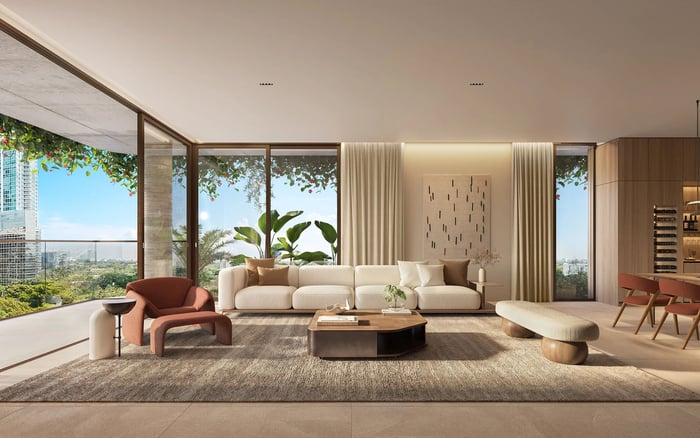
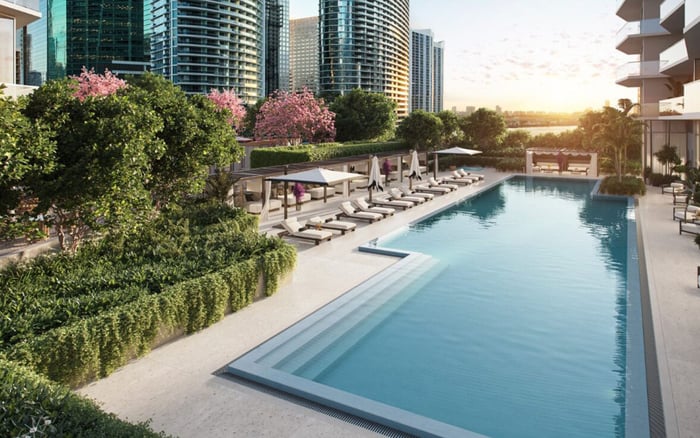
A buyer-focused comparison of 619 Residences by Foster + Partners + Nobu Hospitality and ORA by Casa Tua Brickell for purchasers prioritizing house-like penthouse living, serious kitchens, discreet catering circulation, private dining, terraces, and service-forward entertaining in Brickell.
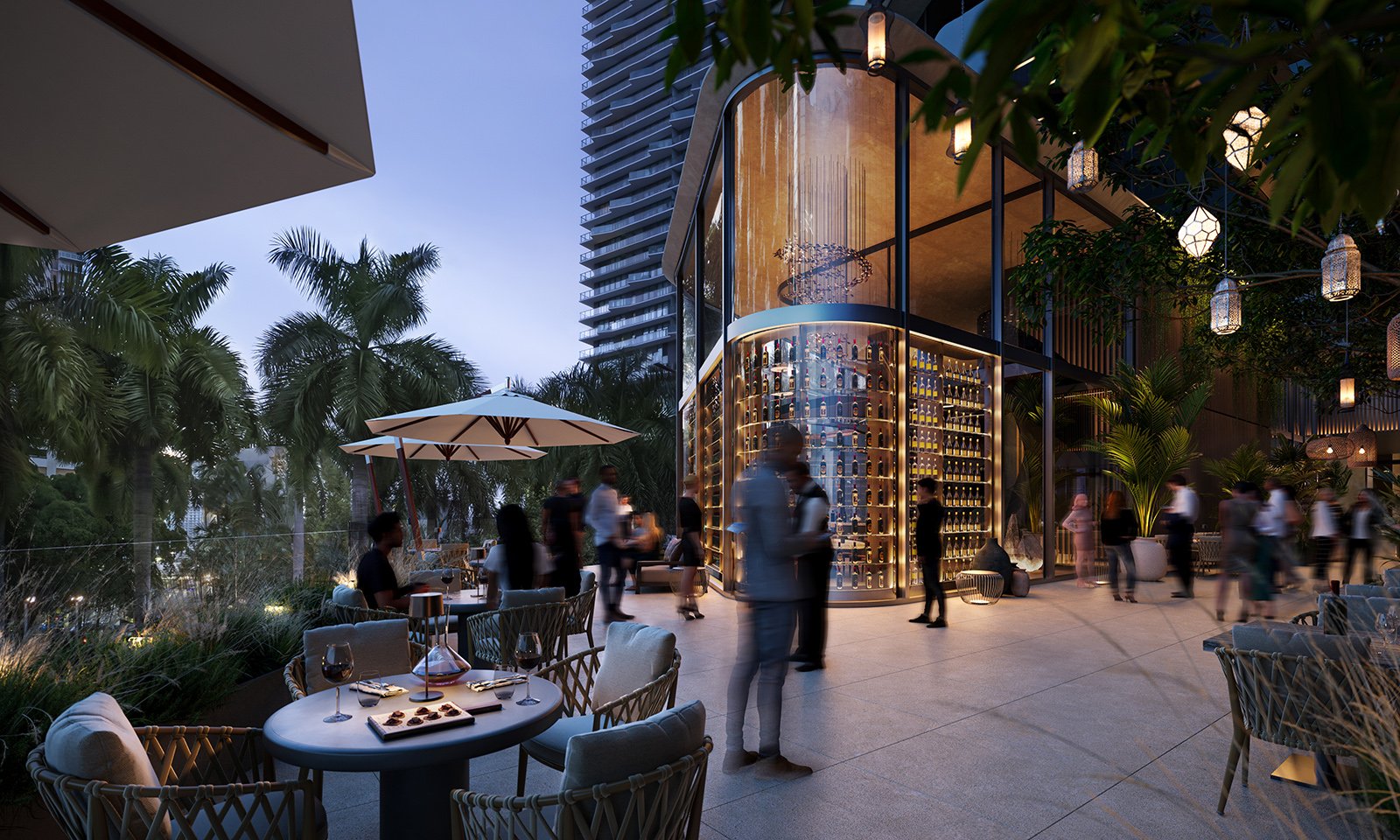
For a certain Brickell buyer, the penthouse is no longer judged solely by ceiling height, skyline position, or a dramatic arrival. The more revealing question is whether it lives like a private house. That means a kitchen capable of serious culinary work, a dining room that can host without strain, and a service route that keeps the evening composed while chefs, florists, servers, and family move through the residence at the same time.
That is the useful lens for comparing 619 Residences by Foster + Partners + Nobu Hospitality with ORA by Casa Tua Brickell. Both names speak to buyers who understand hospitality as a residential language, but the final decision should be made less by brand recognition and more by how the plan performs during dinner for twelve, a holiday weekend, or a quiet weekday breakfast after guests have gone.
In this category, penthouse value is about choreography. A beautiful kitchen that exposes every working detail to the living room may be photogenic, but it can become difficult under pressure. A formal dining room without a nearby staging area may feel ceremonial but not fully usable. A terrace that draws everyone outdoors is powerful only if glassware, food, and staff circulation can follow naturally.
The phrase chef-ready should be tested carefully. For a house-minded buyer, it should mean more than a handsome island and premium finishes. The questions are practical: Can two or three people cook at once? Is there enough concealed storage for serving pieces? Does refrigeration support both daily life and entertaining? Can catering trays be staged without overtaking the family breakfast area?
619 Residences by Foster + Partners + Nobu Hospitality will naturally invite scrutiny around the relationship between architectural restraint and hospitality function. Buyers should look for a kitchen that feels integrated into the architecture rather than treated as a decorative insert. The strongest penthouse kitchen is not necessarily the most visible one. It is the one that can shift from family living to staffed service without making either mode feel compromised.
At ORA by Casa Tua Brickell, the dining and hospitality narrative will be central to many buyers' expectations. That makes the kitchen review even more important. If the residence is being considered as an entertaining platform, the buyer should study whether the main kitchen, secondary prep zones, pantry walls, and dining adjacency work as a system. Brickell buyers often host across several rhythms: intimate dinners, business-adjacent cocktails, family stays, and seasonal gatherings. One kitchen must support all of them.
In a single-family home, service can often disappear through side doors, garages, mudrooms, staff entries, and back-of-house spaces. In a vertical residence, those separations must be created by plan discipline. This is where a penthouse either begins to live like a house or reveals itself as a large apartment with a spectacular view.
A buyer comparing these two options should ask to walk the catering route on paper. Where do deliveries arrive? How does food move from elevator to kitchen? Can staff access prep areas without crossing the principal seating zone? Is there a powder room arrangement that preserves privacy? Where do coats, bags, floral boxes, and serving equipment go before the event begins?
The better plan will make this invisible. Guests should experience arrival, view, art, conversation, and dining. They should not see the logistical machinery behind the evening. For new-construction buyers, these questions should be raised early, because some decisions may be easier to influence before finishes, millwork, and specialty storage are final.
A true private dining room does two things at once. It creates a sense of occasion, and it makes service feel calm. Many luxury residences can place a long table near a view. Fewer can make that table feel like a room, with acoustic comfort, flattering light, logical circulation, and enough separation from the kitchen to preserve ceremony.
For 619 Residences by Foster + Partners + Nobu Hospitality, the comparison should consider how the dining room relates to the broader architectural composition. Does it hold its own as a destination within the residence? Can it support a formal table without interrupting the main living area? If the residence has a spectacular outlook, does the dining room capture it in a way that feels composed rather than exposed?
For ORA by Casa Tua Brickell, buyers should focus on whether the private dining experience feels residential rather than restaurant-like. Casa Tua as an idea carries associations of hospitality, intimacy, and social ease, but the residence still has to function for daily owners. The best dining rooms in this segment can host an elegant dinner on Friday and remain inviting for family lunch on Sunday.
Brickell penthouses often rely on view and outdoor space to deliver the emotional moment. Yet a terrace is only as successful as its connection to the rooms that serve it. If the kitchen is too remote, outdoor dining becomes performative. If the living room is forced to become a corridor, guests feel the strain. If doors and furniture layouts do not support movement, the terrace becomes a photo opportunity rather than a true extension of the house.
The house-minded buyer should study where the first drink is served, where guests naturally gather, and how food moves outside. A water view can set the tone, but circulation determines whether the evening feels effortless. This is especially important in Brickell, where owners may use the residence for both private family stays and polished entertaining tied to business, culture, and travel.
A strong penthouse plan will offer progression: arrival, living, dining, outdoor air, and retreat. It should not ask the owner to choose between spectacle and comfort.
The right choice between 619 Residences by Foster + Partners + Nobu Hospitality and ORA by Casa Tua Brickell depends on which plan better supports the owner's real pattern of living. A buyer who cooks privately several nights a week may prioritize ergonomic kitchen layout and storage. A buyer who entertains with staff may give greater weight to service access, staging zones, and dining room separation. A buyer who wants both should be uncompromising.
Ask for current floor plans, kitchen specifications, appliance schedules, lighting concepts, and any available details on private dining or service circulation. Then test each residence through scenarios: breakfast for four, dinner for ten, cocktails for thirty, a catered holiday, and a quiet morning after overnight guests. The plan that survives those scenarios with the least friction is the one that most closely lives like a house.
What is the main difference a penthouse buyer should evaluate first? Start with how each residence handles cooking, service, dining, and guest movement, not just views or finish palettes.
Why does catering flow matter in a Brickell penthouse? Catering flow protects the guest experience by keeping deliveries, staff movement, staging, and cleanup discreet during entertaining.
Is a chef-ready kitchen always an open show kitchen? Not necessarily. The best chef-ready kitchens often balance beauty with storage, prep space, ventilation, and concealed working zones.
How should buyers judge a private dining room? Look for proportion, lighting, acoustics, service access, and whether the room feels special without becoming impractical.
Does a terrace automatically make a penthouse live like a house? No. Outdoor space only works well when it connects logically to the kitchen, living room, dining area, and service path.
What should buyers ask about ORA by Casa Tua Brickell? Buyers should review how its hospitality-driven identity translates into the actual residence plan, especially kitchen and dining function.
What should buyers ask about 619 Residences by Foster + Partners + Nobu Hospitality? Buyers should study how the architecture, kitchen layout, and hospitality elements work together in daily use and formal hosting.
Are branded residential names enough to make the decision? No. Branding can frame expectations, but the floor plan determines whether the penthouse performs for real life.
Which buyer is best suited to this comparison? This comparison suits a buyer who wants vertical living with the privacy, service logic, and entertaining capacity of a house.
What documents should be reviewed before choosing? Review floor plans, kitchen specifications, appliance schedules, lighting plans, storage options, and any service circulation details.
If you'd like a private walkthrough and a curated shortlist, connect with MILLION.
If branded residences are on your mind — as a home or as an allocation — we would be glad to share what we are seeing, privately.
Begin a quiet conversation