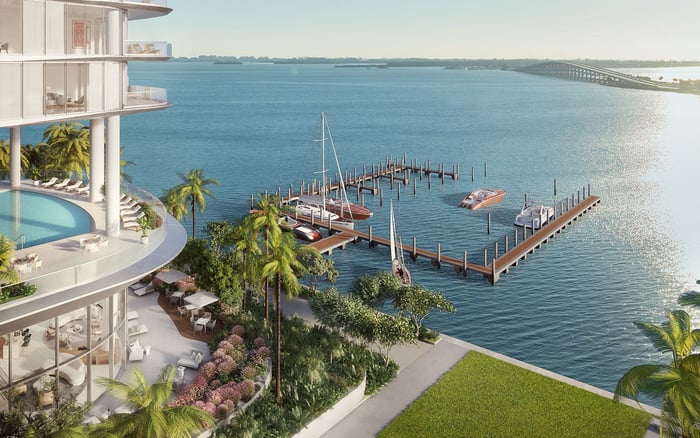
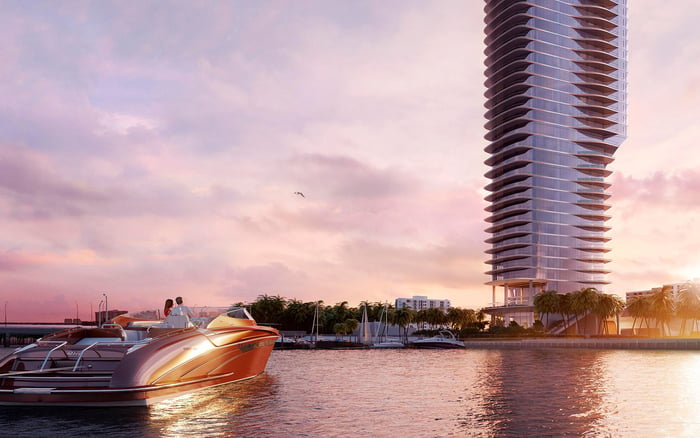
A discreet buyer’s guide to evaluating marina security across South Florida’s oceanfront, bayfront, and urban residential settings before committing to a waterfront lifestyle.
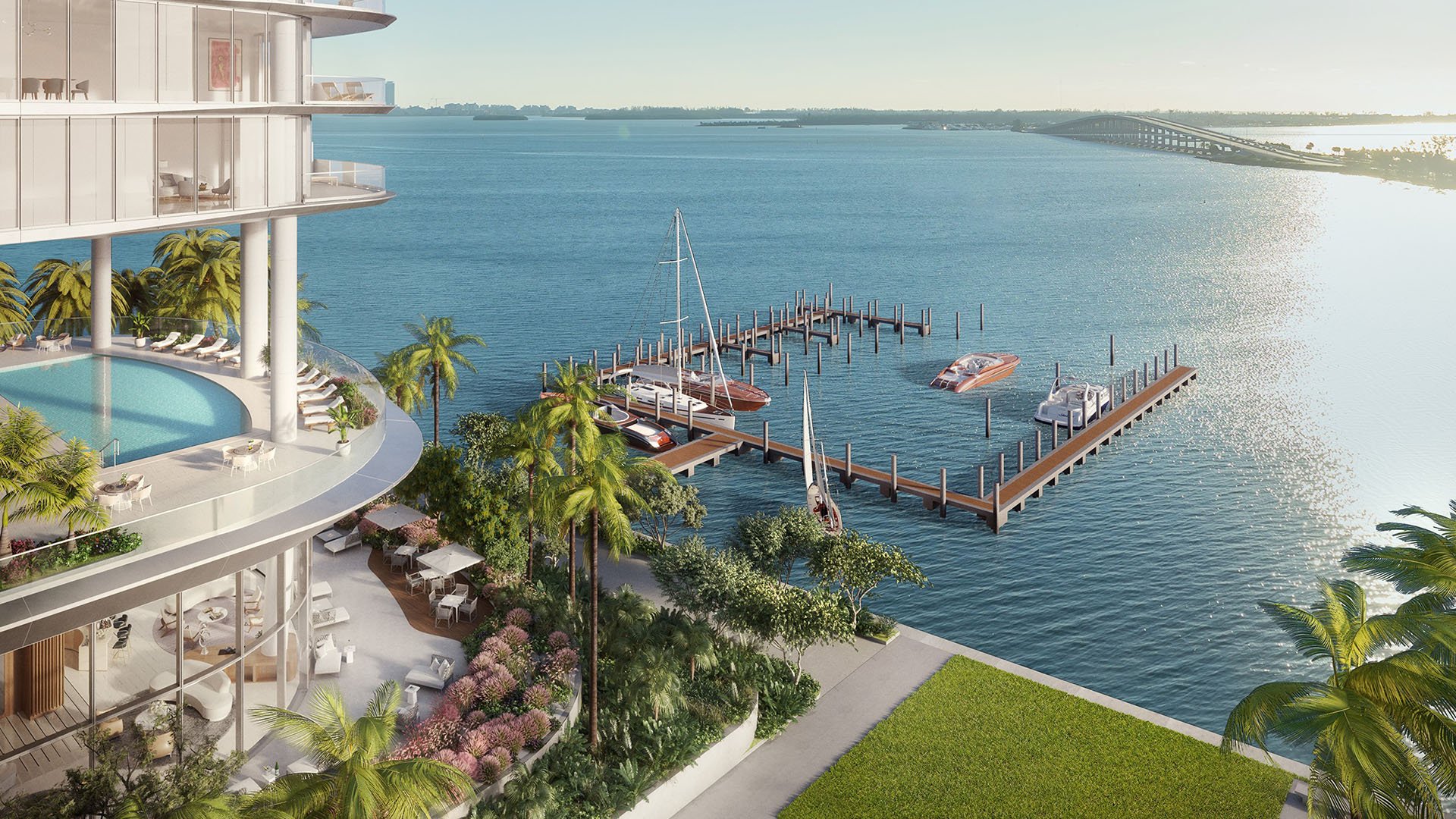
For South Florida buyers, a marina is rarely just an amenity. It is an extension of the residence: a private threshold between the home, the water, the vessel, and the wider city. Even the most compelling waterfront address can lose its composure if the marina environment feels porous, disorganized, or too visible to the wrong kind of foot traffic.
Comparing marina security requires a different lens than evaluating lobbies, elevators, pools, or valet areas. A dock introduces constant movement from captains, crew, guests, contractors, deliveries, maintenance personnel, and neighboring boaters. It also operates outdoors, often across long sightlines, multiple access points, and changing weather conditions. The buyer’s question is not simply whether security exists. The better question is whether the security design feels integrated, discreet, and consistently managed.
A thoughtful review should begin before a showing. Consider how one arrives, where a car is stopped, who verifies access, how the walk to the dock is framed, and whether staff understand the difference between hospitality and control. In ultra-premium real estate, true security rarely announces itself. It is calm, layered, and unambiguous.
Marina expectations shift by geography. A Miami Beach waterfront setting may prioritize privacy, beachfront exposure, and separation between residents and transient visitor flow. A Fort Lauderdale boating address may place greater emphasis on vessel operations, captain access, dockmaster presence, and the choreography of frequent marine activity. Neither model is inherently better. Each requires a security approach matched to the lifestyle it promises.
A strong marina environment begins with defined boundaries. There should be a clear distinction between public frontage, residential common areas, service corridors, marina access, and restricted dock zones. If those lines are vague, the experience can feel casual in ways that undermine privacy. If they are too aggressive, the atmosphere may feel institutional rather than residential.
Buyers should observe whether access is controlled at more than one point. The most polished waterfront communities do not rely on a single gate, camera, or attendant. Instead, they layer design, staffing, credentialing, lighting, and resident protocols so unauthorized movement becomes difficult without making residents feel watched.
Oceanfront residences often trade on serenity, horizon views, and the emotional value of living directly by the Atlantic. Yet the beach itself can create a complex edge condition. Public sand, boardwalk circulation, neighboring hospitality uses, and service access can all influence how secure the marina and waterfront portions of a property feel.
In an oceanfront setting, ask how the property separates beach movement from residential movement. A well-considered plan should make it obvious where residents belong, where guests are received, where staff enter, and where marina access is permitted. The experience should feel intuitive rather than dependent on signs or repeated verbal reminders.
Lighting deserves close attention. Dock areas should be sufficiently illuminated for safety and visibility without feeling harsh or exposed from the residence. The best lighting strategies support surveillance, preserve ambience, and avoid turning the marina into a stage. Buyers should visit, when possible, at different times of day to understand how the mood and visibility change.
Noise is another signal. A secure marina is not necessarily silent, but it should feel orderly. Conversations, equipment movement, and service activity should have a rhythm that suggests supervision. If the dock feels like an unmanaged back-of-house zone, that may reveal more than any brochure could.
Bayfront living often sits between privacy and urban energy. In Brickell, the waterfront experience may be tied to restaurants, offices, hotels, pedestrian routes, valet courts, and dense residential towers. This creates convenience and drama, but it also makes access control more important.
The key question is interface. How does the property manage the transition from city to residence, from residence to marina, and from marina to vessel? In a dense urban context, the strongest buildings make those transitions feel deliberate. There is no confusion about where a visitor waits, where a captain checks in, or how a resident reaches the water without unnecessary exposure.
Buyers considering city-adjacent waterfront living should ask whether marina credentials are separate from building credentials. They should also understand how guests are approved, how vendors are logged, and whether staff can distinguish between routine service and unusual activity. A polished tower may have an excellent lobby experience, but the marina must be evaluated on its own terms.
Privacy is not only about walls. It is also about predictability. When the same protocols are followed each time, residents and crew learn the cadence of the property. That consistency is one of the quiet luxuries of a well-run waterfront address.
A boat-slip attached to, or associated with, a city residence can be exceptionally appealing. It compresses the distance between daily life and open water. Yet convenience can blur boundaries if the property has not clearly defined who may access the dock, under what circumstances, and by which route.
A buyer should distinguish between deeded, assigned, leased, and otherwise arranged dock access, then focus on the security implications of that arrangement. The legal structure matters, but the operational structure matters just as much. Who manages the slip area? Who monitors after-hours access? What happens when a captain, mechanic, provisioner, or guest arrives before the resident?
Consider the path from elevator to dock. Is it direct but controlled, or does it pass through exposed common areas? Does the route feel appropriate for family members, visiting guests, and crew? Are service movements separated from resident leisure spaces? These details shape daily comfort.
The same scrutiny should apply to parking and loading. A secure marina plan can be weakened if vendors can move freely from a loading area to the waterfront without verification. The best properties make necessary access efficient, but never casual.
Before committing to oceanfront, bayfront, or city living, ask precise questions. Who has authority over marina rules? Is there a dockmaster or dedicated marine staff presence? How are temporary guests approved? Are cameras monitored actively, reviewed after an incident, or used primarily as a deterrent? How are keys, fobs, passes, or digital credentials issued and revoked?
Ask about storms, closures, and emergency protocols without turning the conversation into a checklist of fears. South Florida living requires resilience, and marina operations should reflect that. Buyers should understand how residents are notified, how vessels are secured, and how access is handled during unusual conditions.
Insurance, association rules, and vessel size requirements also deserve attention, though those topics should be reviewed with the appropriate professional advisers. From a lifestyle perspective, the real issue is whether the community is disciplined enough to protect both the asset and the atmosphere.
The most revealing security detail is often culture. Watch how staff interact with unknown visitors. Notice whether gates are held open casually. Observe whether crew members appear known by name or treated as anonymous traffic. Look for small signs of care: tidy dock boxes, uncluttered walkways, orderly signage, and staff who are present without hovering.
A luxury marina should never feel like a fortress, but it should never feel improvised. It should allow residents to step from home to water with confidence, knowing that access is controlled, procedures are respected, and the broader environment supports privacy.
For many buyers, the choice between oceanfront, bayfront, and city living begins with views. The wiser comparison continues at the waterline. That is where lifestyle, security, and operational excellence meet.
What is the first marina security feature a buyer should review? Start with access control. Understand who can reach the dock and how that access is verified.
Is a gated marina always more secure? Not necessarily. Gates help, but staffing, monitoring, lighting, and enforcement are equally important.
Should I visit the marina at night before buying? Yes. Evening visits reveal lighting quality, visibility, staffing patterns, and the overall sense of order.
How important is a dockmaster? A visible marine operations contact can be valuable because vessel activity requires specialized oversight.
What should I ask about guest access? Ask how guests are approved, where they enter, and whether their access is limited by time or area.
Do city marinas require different scrutiny? Yes. Urban settings often involve more surrounding traffic, so transitions from public to private space matter.
Can strong security still feel discreet? It should. The best systems are layered and calm, not theatrical or intrusive.
Why does vendor access matter? Vendors often need legitimate entry, but unmanaged service routes can weaken the privacy of the dock.
Should marina rules affect my purchase decision? Yes. Rules shape daily use, guest patterns, vessel access, and the long-term residential atmosphere.
Is marina security part of lifestyle value? Absolutely. A secure, well-managed marina protects both peace of mind and the quality of waterfront living.
To compare the best-fit options with clarity, connect with MILLION.
If branded residences are on your mind — as a home or as an allocation — we would be glad to share what we are seeing, privately.
Begin a quiet conversation