A discreet due-diligence guide for South Beach buyers evaluating The Ritz-Carlton Residences® South Beach through the lens of real-world boating access, bridge clearance, dockage, vessel profile, and long-term lifestyle value.

The Ritz-Carlton Residences® South Beach occupies the kind of Miami Beach setting that invites a particular fantasy: mornings on the sand, evenings in South Beach, and the visual language of yachts, water, and polished resort living. For a luxury buyer, that atmosphere matters. It is part of the emotional pull behind an oceanfront purchase in the heart of South Beach.
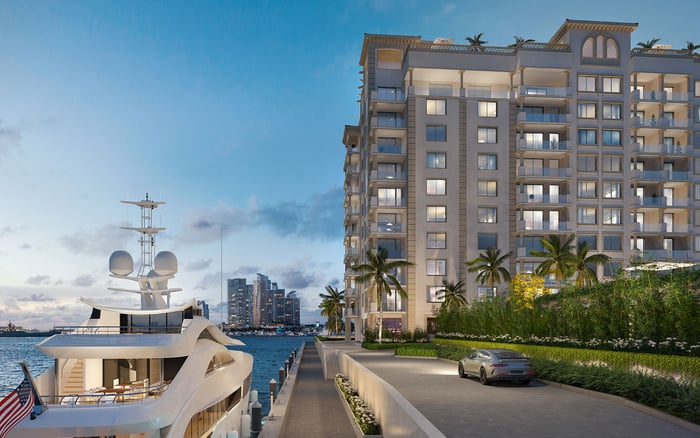
For a buyer whose lifestyle depends on a boat, however, the rendering is not the due-diligence file. Yacht imagery can suggest a waterfront sensibility without proving that a specific vessel can be stored, reached, cleared through bridges, or operated conveniently from a nearby bay-side facility. The central question is not whether the residence feels nautical. It is whether the marine logistics support the owner’s actual use case.
That distinction is especially important in South Beach because the area sits between the Atlantic Ocean and Biscayne Bay. An oceanfront address may deliver beach, hotel-style energy, and architectural prestige, while the boating path may still involve bay-side facilities, fixed or movable bridges, channel considerations, tide windows, and operating rules. A buyer comparing nearby branded options, including The Ritz-Carlton Residences® Miami Beach, should still make the marine plan property-specific.
In South Florida luxury real estate, water has many meanings. Beachfront, bayfront, canal-front, marina-adjacent, and yacht-oriented are not interchangeable terms. For search shorthand, phrases such as Miami Beach, Oceanfront, Marina, Boat-slip, and Beach-access can describe very different privileges, obligations, and constraints.
The sophisticated buyer should begin by separating address value from operating value. Address value is clear: a South Beach residence carries lifestyle gravity, hospitality associations, walkability, dining access, and the cultural texture of Miami Beach. Operating value is more technical. It asks whether usable dockage is on-site, nearby, valet-managed, shared, separately contracted, or entirely off-property.
That distinction changes the conversation with the sales team, advisor, captain, and marine professional. Instead of asking, “Is this a yacht lifestyle building?” the sharper question is, “Where exactly does my vessel live, what route does it take, and what limitations apply every time it moves?”
If the answer depends on a nearby marina or off-site arrangement, the buyer should understand the terms, availability, waitlist risk, vessel-size restrictions, insurance requirements, access hours, tender policies, and the relationship between the residence and the marine facility. A beautiful residence can still be the right purchase, but only if the boating plan is equally real.
Bridge clearance is not a decorative detail. For a South Beach buyer operating a larger boat or yacht from bay-side facilities, it belongs in the same diligence folder as floor-plan analysis, maintenance costs, assessments, insurance, and resale positioning.
The first number is the vessel’s air draft: the height from the waterline to the highest fixed or operational point, including radar, antennas, outriggers, hardtops, mast elements, satellite domes, and any equipment that cannot be practically lowered. Buyers often know length overall and beam, but air draft is the number that determines whether a route is comfortable, conditional, or impractical.
The second step is route mapping. A buyer should verify the vessel’s air draft against every fixed and movable bridge on the intended route, not only the bridge that appears closest on a map. A route can fail at the second or third span. A movable bridge may solve height while introducing timing, opening schedules, traffic delays, restricted openings, or operational uncertainty during peak periods.
The third step is tide analysis. Clearance changes with water level. A vessel that fits at one tide may become marginal at another, and the most elegant ownership experience is not one that depends on constantly negotiating inches. Tide windows also affect draft, channel comfort, and the captain’s willingness to operate at certain times.
The fourth step is channel and speed review. The practical value of a yacht-ready residence depends not only on whether the boat can clear the route, but whether it can do so efficiently and comfortably. Channel depth, no-wake zones, turning room, speed restrictions, bridge-opening delays, and time to open water all determine whether boating feels effortless or ceremonial.
There is no universal answer to whether a South Beach residence works for boating. The correct answer is vessel-specific. A 40-foot center console, a 70-foot sportfisher, and a larger motor yacht may face entirely different planning realities, even when departing from the same general area.
A center console may be concerned with tower height, antennas, fishing equipment, and convenient access to open water. A sportfisher may introduce greater air draft, beam, draft, outriggers, and captain preferences. A larger motor yacht may require more formal dockage, service access, turning room, professional crew logistics, tender storage, and greater sensitivity to bridge schedules or operating restrictions.
The due-diligence profile should include length overall, beam, draft, air draft, stabilizers, tender setup, electronics, hardtop configuration, and the captain’s normal operating pattern. Does the owner run early mornings? Return after dinner? Use the boat weekly, seasonally, or only during peak winter months? Does the captain need reliable access regardless of tide, or can departures be planned around conditions?
These are not minor boating questions. They define whether a luxury residence functions as a true base for a marine lifestyle or simply coexists with one.
A disciplined buyer should ask for technical marine documentation before treating any yacht imagery as evidence of practical access. The request should be calm and specific: identify the dockage arrangement, clarify whether dockage is included or separate, confirm vessel limits, and obtain route information that can be reviewed by the buyer’s captain or marine consultant.
The checklist should include bridge heights, bridge-opening schedules, tide effects, draft limits, channel depth, no-wake zones, speed restrictions, time to open water, fuel access, service logistics, guest pickup options, tender handling, and any rules that affect daily use. If the residence relies on valet-style boating or off-property marine services, the buyer should understand how reservations, staffing, liability, and access are handled.
For many buyers, the most valuable conversation may be between the captain and the marine operator, not between the buyer and the marketing team. The aspirational side of the property should be tested against the practical question: does the infrastructure support the intended use case?
For buyers who do not own boats, bridge-clearance planning may seem niche. For yacht-minded buyers, it can be central to value. A residence that offers a credible, convenient boating plan may command stronger emotional appeal among a narrower but affluent buyer pool. A residence with uncertain or impractical access may still be desirable, but the buyer should not price it as though it solves every marine requirement.
This is where the conversation becomes strategic. The Ritz-Carlton Residences® South Beach may be evaluated for architecture, service, location, brand affiliation, views, privacy, amenities, and beach proximity. For a boater, a parallel evaluation should exist for marine utility. A buyer comparing South Florida branded residences, including The Ritz-Carlton Residences® Pompano Beach, should avoid assuming that one property’s marine realities apply to another.
The most elegant purchase is one where the lifestyle narrative and the operating facts align. If the owner’s vessel clears the route comfortably, if dockage is truly usable, if timing is predictable, and if the captain confirms the plan, the residence can support both pleasure and practicality. If not, the buyer can still proceed with clear eyes, perhaps pairing the residence with a separate marina strategy elsewhere in South Florida.
Luxury due diligence is not about diminishing desire. It is about protecting it. In South Beach, the rendering may begin the dream, but the bridge-clearance file determines how gracefully that dream moves through the water.
Does an oceanfront South Beach residence automatically provide yacht access? No. Oceanfront prestige and practical marine access are separate issues that should be verified independently.
What is the first boating number a buyer should confirm? The vessel’s air draft is essential because it determines whether the boat can clear each bridge along the intended route.
Should buyers check only the closest bridge? No. The full route should be reviewed because a later fixed or movable bridge can create the actual constraint.
Why do tide windows matter for bridge clearance? Water levels can change available clearance, so a route that works at one tide may be less practical at another.
Is a 40-foot center console evaluated the same way as a larger yacht? No. Length, beam, draft, tower height, antennas, and operating style can produce very different access considerations.
What should a buyer ask about dockage? The buyer should confirm whether usable dockage is on-site, nearby, valet-managed, separately contracted, or off-property.
Can marketing imagery be used as proof of boating access? No. Renderings may express lifestyle, but buyers should request technical marine details before relying on them.
Do no-wake zones affect the ownership experience? Yes. Speed zones and operating restrictions can change the real time and convenience of reaching open water.
Can marine access influence resale value? Yes. For buyers whose lifestyle depends on boating, reliable marine utility can affect desirability and long-term value.
Who should review the boating plan before contract? A qualified captain, marine professional, and real estate advisor should review the vessel-specific route and dockage plan.
If you'd like a private walkthrough and a curated shortlist, connect with MILLION.
If branded residences are on your mind — as a home or as an allocation — we would be glad to share what we are seeing, privately.
Begin a quiet conversation