A discreet buyer’s guide to evaluating a seasonal Wynwood pied-à-terre with discipline, focusing on view quality, livability, rental limits, building culture, and resale resilience before emotion takes over.
A seasonal pied-à-terre in Wynwood is often sold first through emotion: the skyline angle, the evening light, the sensation of hovering above a neighborhood defined by cultural energy. That first impression matters, but it should not lead the acquisition. The more disciplined question is not whether the view is beautiful today. It is whether the view will still feel valuable after repeated arrivals, humid afternoons, departing guests, and comparison with quieter, more established alternatives nearby.
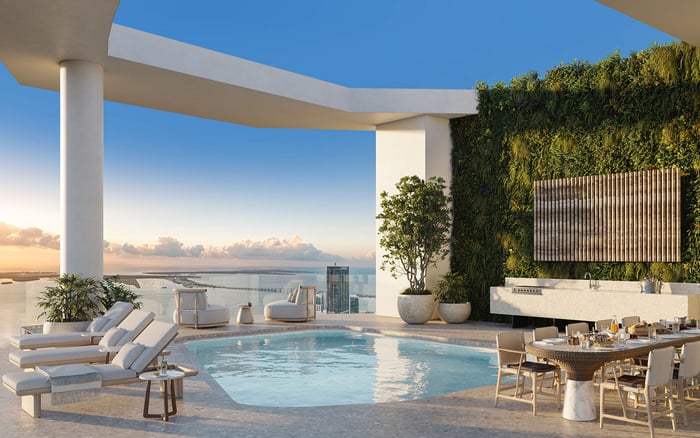
For a Wynwood buyer, a Balcony, a Terrace, a Waterview claim, a New Project label, and an Investment thesis deserve separate scrutiny. A balcony may photograph well yet feel too shallow for a proper breakfast. A terrace may add glamour while demanding more maintenance than a seasonal owner wants. A view may be dramatic at sunset but compromised by glare or privacy exposure at other hours. The wise buyer treats every visual advantage as a working asset, not decorative theater.
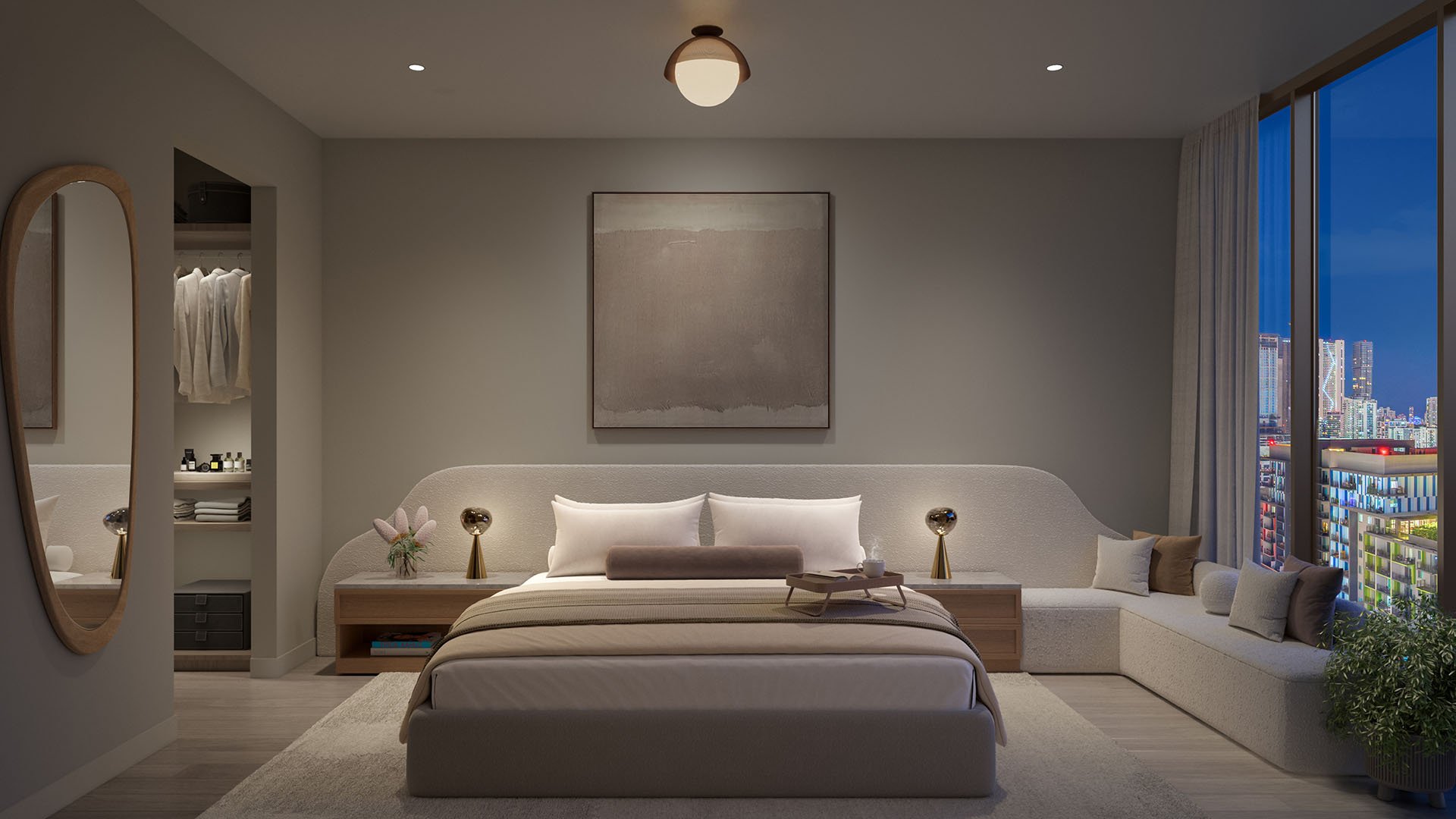
A pied-à-terre does not need to behave like a full-time estate, but it must perform impeccably during compressed periods of use. Arrivals should be easy. Luggage should disappear quickly. The kitchen should support the owner’s actual routine, whether that means quiet mornings, catered evenings, or simple storage for repeated visits. Closets matter more than many buyers expect, because seasonal living works best when it does not require constant packing and unpacking.
Privacy is another seasonal priority. A buyer who uses the residence for long weekends may tolerate a compact plan, but not one that exposes the bedroom, bath, or terrace to every guest. The most elegant pied-à-terre separates public and private moments without wasting square footage. The plan should feel intuitive from the first minute, especially after a late flight or a long dinner.
Wynwood has a specific appeal for buyers who want design, art, dining, and urban texture within a compact seasonal routine. Yet the most sophisticated purchase decision looks beyond the neighborhood line. A buyer considering Frida Kahlo Wynwood Residences should also ask how the residence feels relative to adjacent inventory with different moods, access patterns, and building cultures.
Midtown and the Design District can offer a different cadence, with a more polished retail and gallery rhythm. In that context, Miami Design Residences Midtown Miami may be a useful comparison for buyers who want the same general urban orbit but a slightly different daily path. The point is not to rank neighborhoods abstractly. It is to understand which address best supports the owner’s actual South Florida life.
Before making an offer, a buyer should map three recurring itineraries: airport arrival to front door, home to dinner, and home to beach or marina access if those are part of the seasonal pattern. If any route feels tiresome during the first visit, it will feel more so once ownership begins.
Amenities can seduce quickly, especially in new urban residences. Pools, lounges, wellness areas, and hospitality gestures all contribute to the atmosphere. But a seasonal owner should first examine governance, service tone, elevator experience, guest handling, package management, pet policy, and the rhythm of common spaces.
The best amenity is often not the most photogenic one. It is the front desk that understands seasonal arrivals, the valet sequence that does not fray at peak hours, the management team that communicates clearly, and the common areas that feel calm rather than crowded. A building may be architecturally compelling, but if its operating culture does not suit the owner’s standards, the residence will never feel effortless.
This is where comparison across nearby submarkets becomes valuable. A buyer drawn to the Design District may study Kempinski Residences Miami Design District not only for residence design, but also as a contrast in how a branded or highly serviced environment can shape daily life.
Seasonal buyers often ask whether the residence can be rented when not in use. The answer is never just yes or no. It depends on the condominium documents, minimum lease terms, approval process, local rules, insurance implications, and the building’s tolerance for transient traffic. A residence that appears flexible in conversation may feel restrictive once the documents are reviewed.
The more important question is whether rental activity aligns with the buyer’s ownership intention. If the pied-à-terre is primarily private, occasional rental income should not drive the purchase. If income is central, the buyer should underwrite conservatively and assume that rules, fees, and market conditions may change. Luxury owners who preserve optionality without relying on it usually make cleaner decisions.
Resale perception also matters. Some future buyers prize strict residential privacy, while others value flexibility. A building’s rental culture can influence its long-term identity, so it should be evaluated with the same seriousness as floor height or finishes.
Walk the residence once as a guest and once as an owner. As a guest, notice the arrival sequence, powder room access, entertaining flow, and view reveal. As an owner, notice the laundry location, mechanical noise, storage, bedroom separation, and how easily the residence can be secured before departure.
A seasonal pied-à-terre should feel generous without becoming burdensome. Too much space can create unnecessary carrying costs and upkeep. Too little space can make every stay feel improvised. The ideal plan delivers a sense of occasion upon entry, then quietly supports ordinary rituals: coffee, reading, dressing, working, resting, hosting.
If the view is the main event, the seating arrangement must honor it without forcing every activity toward the glass. Great residences allow the view to accompany the room. Lesser ones make the view do all the work.
Wynwood buyers often benefit from seeing alternatives in Edgewater, Brickell, and the beach before deciding. Edgewater can test the buyer’s appetite for broader water orientation and a more residential waterfront feel. A visit to EDITION Edgewater can sharpen the distinction between an arts-district pied-à-terre and a more bay-facing lifestyle.
Brickell, by contrast, can clarify whether the buyer wants financial-district energy, dining density, and a more vertical urban rhythm. 2200 Brickell is a useful counterpoint for someone unsure whether Wynwood’s creative character or Brickell’s established urban infrastructure better suits repeated seasonal use.
The objective is not to dilute conviction. It is to refine it. If Wynwood still feels right after those comparisons, the buyer can proceed with greater confidence and less romance-driven risk.
Every compelling pied-à-terre has a moment when it performs beautifully: golden light, music in the background, the city below. The more revealing moment is quieter. Does the residence still feel composed on a gray morning? Does the lobby still feel appropriate when you arrive alone? Does the terrace feel usable without guests? Does the neighborhood suit your pace when there is nothing scheduled?
The best seasonal purchase is not the most theatrical one. It is the one that makes returning feel natural. In Wynwood, where visual excitement is part of the appeal, the disciplined buyer lets the view open the conversation, then allows privacy, plan, service, rules, and resale logic to close it.
What should I evaluate first in a Wynwood pied-à-terre? Start with the floor plan and building operations, then return to the view. A beautiful outlook cannot compensate for poor daily function.
Is a higher floor always better for seasonal ownership? Not always. Higher floors may improve perspective, but access, exposure, elevator experience, and terrace usability can matter just as much.
How important is outdoor space? Outdoor space is valuable when it is genuinely usable. Depth, privacy, shade, wind, and furniture layout matter more than square footage alone.
Should rental income drive the decision? It should not dominate unless income is central to the strategy. Rules, approval processes, and building culture can affect rental practicality.
What makes a residence easy to leave between visits? Secure storage, simple systems, reliable management, and low-maintenance finishes make seasonal ownership feel more effortless.
How should I compare Wynwood with Edgewater or Brickell? Compare real routines, not reputations. Test arrival, dining, errands, privacy, and the way each area feels during repeated stays.
Is new construction automatically preferable? No. New construction can be compelling, but governance, delivery quality, service standards, and long-term identity still require review.
What is the biggest mistake buyers make? They overpay for the emotional moment of the view. The smarter approach is to price the entire ownership experience.
How many times should I visit before deciding? Visit at different times of day when possible. Morning, afternoon, and evening can reveal very different qualities.
What should my final question be before making an offer? Ask whether you would still choose the residence if the view were slightly less dramatic. If the answer is yes, the fundamentals may be strong.
For a confidential assessment and a building-by-building shortlist, connect with MILLION.
If branded residences are on your mind — as a home or as an allocation — we would be glad to share what we are seeing, privately.
Begin a quiet conversation