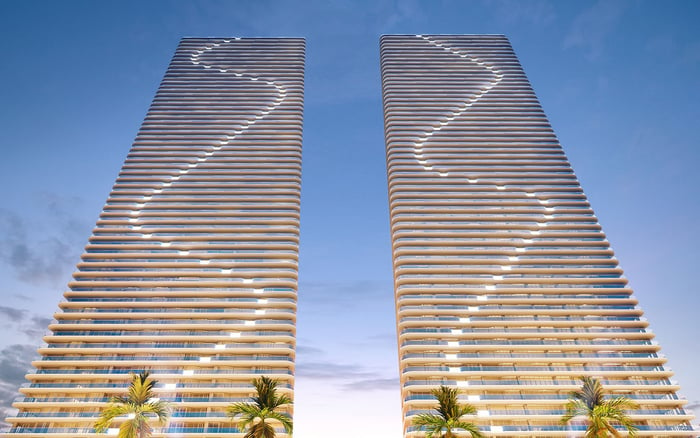
A buyer-focused look at how Aria Reserve Miami and Delano Residences & Hotel Miami represent two different expressions of low-friction luxury in Miami: residential ease and hospitality-shaped convenience.
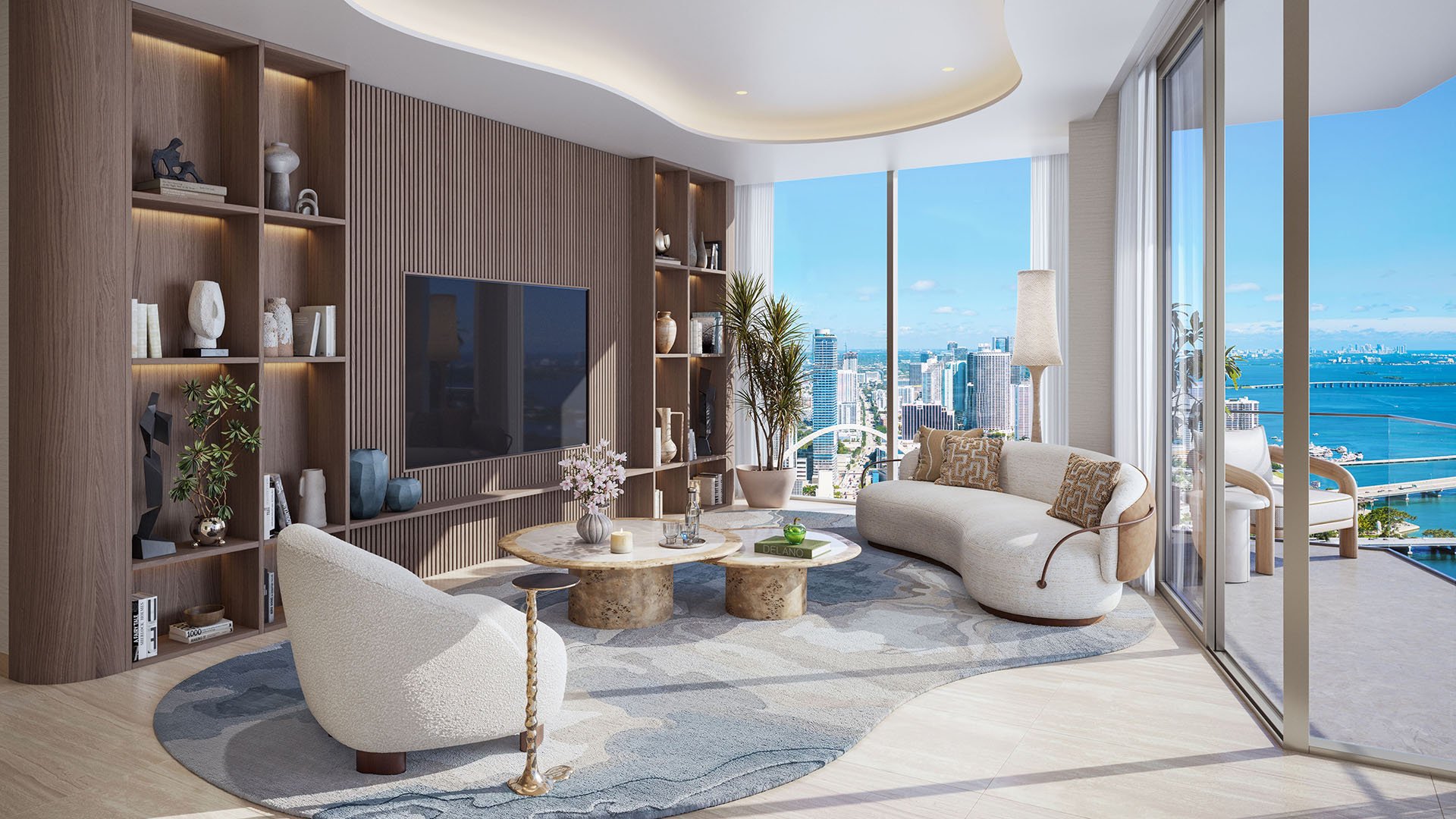
Miami’s highest-end residential market has entered a more sophisticated phase. The conversation is no longer limited to finishes, arrival sequences, skyline views, or the theatrical language of amenity decks. Those still matter, but the sharper buyer question is quieter: how much friction does the residence remove from daily life?
That is the useful lens for understanding Aria Reserve Miami and Delano Residences & Hotel Miami. They sit within the same broader conversation about ease, service, and modern Miami ownership, yet they appeal to different instincts. One is best understood as a residential platform in Edgewater, organized around livability and everyday use. The other, by its residences-and-hotel identity, arrives as a hospitality-facing proposition, where service expectation is part of the first impression.
For buyers, the distinction is not which version is more luxurious. It is which version makes life feel more effortless.
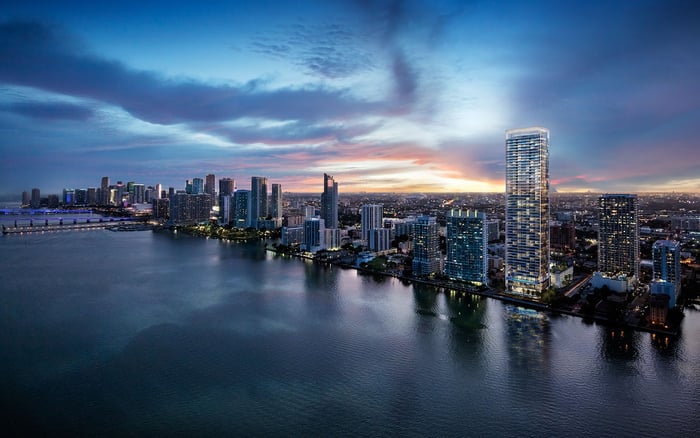
Aria Reserve Miami is best read as a bayfront residential development in Edgewater, not as a hotel-led branded-residence product. That distinction matters because its low-friction promise is expressed less through overt hospitality branding and more through the way a private home supports real routines.
Its relevance comes from a residential-centric idea of ease: spatial generosity, infrastructure, and day-to-day livability. Here, luxury is not merely something seen on arrival. It is felt in the reduced maintenance of ownership, the ability to move between work and leisure without the home feeling improvised, and the confidence that the building is designed for residents who intend to use it.
That is why Aria Reserve Miami resonates with buyers seeking a primary or semi-primary Miami home rather than a purely occasional pied-à-terre. The building is framed for people who want a high-amenity environment while preserving the feel of a private residence. It can feel resort-like without requiring a hotel overlay, an increasingly important distinction for end-users who want convenience without surrendering the residential character of the home.
Delano Residences & Hotel Miami belongs in the same discussion from the opposite direction. Its name alone places hotel and residence in dialogue, naturally setting a different expectation for buyers. The promise is less about the condominium as a purely private residential system and more about the idea that hospitality can shape the ownership experience.
That does not make it better or lesser than Aria Reserve. It simply places it on another side of the low-friction spectrum. Where Aria Reserve emphasizes residential continuity, Delano suggests a buyer who may value a more hospitality-coded rhythm: arrival, service, atmosphere, and the psychological ease associated with a hotel environment.
For some Miami purchasers, especially those dividing time across multiple cities, that framework can be compelling. For others, particularly those building a fuller Miami life, the hotel context may feel less essential than the deeper comforts of a residence designed around permanence. The important point is that both ideas answer the same underlying buyer desire: less effort, more polish, and fewer operational burdens.
The temptation in Miami is to compare buildings by visible abundance. Pools, lounges, wellness spaces, views, and branded experiences are easy to discuss. Low-friction luxury is more subtle. It asks how the residence performs on an ordinary Tuesday, not only during a winter weekend or a hosted evening.
At Aria Reserve, the key buyer consideration is whether the home supports a full domestic pattern: work, family life, leisure, travel, and return. The project’s position in Edgewater also reinforces the waterview appeal of bayfront living while remaining part of a broader urban Miami lifestyle. That creates a very different ownership mood from a residence selected primarily for hotel association or occasional use.
This is also why the comparison extends across Miami’s luxury map. Projects such as EDITION Edgewater, Cipriani Residences Brickell, and Waldorf Astoria Residences Downtown Miami show how buyers are increasingly sorting between residential privacy, branded service, hospitality association, and urban convenience. The decision is less about collecting amenities and more about choosing an operating system for life in Miami.
The low-friction conversation becomes clearer when buyers define how they will actually use the residence. A primary or semi-primary owner usually places more weight on floor plan utility, storage logic, privacy, daily circulation, and the building’s ability to support repeated use without fatigue. That is where Aria Reserve Miami’s residential platform positioning becomes especially relevant.
A second-home buyer may evaluate friction differently. Ease of arrival, lock-and-leave confidence, staff support, and a sense of immediate atmosphere may carry more weight. In that scenario, a hotel-linked format can feel intuitive because the buyer is seeking a polished return experience rather than the full texture of daily residential life.
Neither buyer is wrong. The risk is choosing the wrong luxury language. A family intending to spend long stretches in Miami may find that hospitality theater matters less than livability systems. A frequent traveler using Miami as a periodic base may find that service structure and instant atmosphere are the real luxuries.
Neighborhood context also matters. Edgewater has become one of Miami’s most relevant stages for residential high-rise living, especially for buyers who want bayfront presence without framing the home purely around resort or hotel use. Aria Reserve’s Edgewater identity helps explain why it fits the quieter side of low-friction luxury: it is about making the condominium feel like a true home in the city.
Downtown, by contrast, often carries a more vertical, urban, and internationally legible energy. Brickell adds its own rhythm of finance, dining, and dense urban convenience. For buyers comparing these areas, the key is not only location prestige. It is whether the neighborhood and building concept combine to reduce friction in the way the owner actually lives.
A buyer who wants privacy, views, and a residential cadence may respond differently than one who wants a more service-forward atmosphere close to the city’s most active urban corridors. The best choice is the one that makes the buyer’s Miami life feel least forced.
Low-friction luxury is not minimalism. It is not the absence of service, design, or spectacle. It is the alignment of those elements so the owner does not have to manage the complexity behind them.
Aria Reserve’s role in that conversation is clear: it represents the residential platform side of the movement, a large-scale condominium environment intended to make everyday life easier without becoming a hotel product. Its luxury is tied to livability systems rather than spectacle alone, reflecting Miami’s broader shift from visible opulence to invisible convenience.
Delano Residences & Hotel Miami, meanwhile, gives buyers a different way to think about friction: the appeal of hospitality as a residential companion. The most discerning buyers will not treat these as interchangeable. They will ask whether they want their Miami home to feel principally like a private residence with resort-like ease, or like a residence shaped by the expectations of a hotel environment.
That is where the conversation becomes more valuable than a simple comparison. Aria Reserve and Delano clarify two different answers to the same luxury question. One says ease can be built into the structure of everyday living. The other suggests ease can be intensified through hospitality association. The right answer depends on the buyer’s rhythm, not the market’s noise.
What does low-friction luxury mean in Miami real estate? It means a residence that reduces the effort of ownership and daily living through design, infrastructure, service, and convenience.
Where does Aria Reserve Miami fit in this conversation? Aria Reserve Miami fits as the residential-centric example, emphasizing livability, space, and ease of everyday use.
Is Aria Reserve Miami a hotel-led branded residence? It is positioned as a bayfront residential development in Edgewater rather than a hotel-led branded-residence product.
Who is Aria Reserve Miami best suited for? It is especially relevant for buyers seeking a primary or semi-primary Miami home with high-amenity convenience.
How does Delano Residences & Hotel Miami differ conceptually? Delano enters the discussion as a residences-and-hotel proposition, which naturally places hospitality expectations closer to the center.
Is one model more luxurious than the other? Not necessarily. The better fit depends on whether a buyer values residential continuity or a more hospitality-shaped ownership experience.
Why is Edgewater important to the Aria Reserve story? Edgewater supports a bayfront, urban residential lifestyle that aligns with Aria Reserve’s emphasis on everyday livability.
What should buyers compare besides amenities? Buyers should compare privacy, service rhythm, floor plan utility, return experience, and how the building supports repeated use.
Does low-friction luxury matter for occasional Miami owners? Yes. For occasional owners, ease of arrival, lock-and-leave confidence, and service expectations can become central decision points.
What is the best way to shortlist comparable options for touring? Start with location fit, delivery status, and daily lifestyle priorities, then compare stacks and elevations to validate views and privacy.
For a confidential assessment and a building-by-building shortlist, connect with MILLION.
If branded residences are on your mind — as a home or as an allocation — we would be glad to share what we are seeing, privately.
Begin a quiet conversation