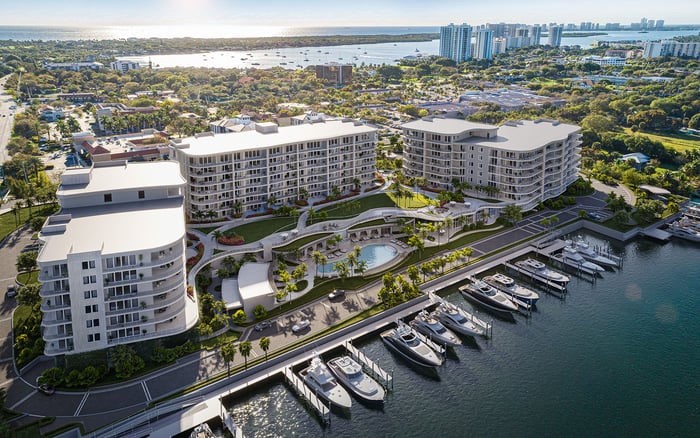
At a branded waterfront condominium, governance determines whether service standards, physical condition, reserves, and assessments remain aligned. Buyers should examine who controls the board, which contracts survive turnover, and whether the budget reflects the full cost of the promised residential experience.

At The Ritz-Carlton Residences® Palm Beach Gardens, ownership extends beyond the private residence. The proposition encompasses privacy, security, amenities, hospitality-style service, and the level of care expected at a high-service waterfront address. Association governance is the framework that sustains that experience.
Three principal parties shape the property: the developer, the condominium association, and the Ritz-Carlton brand or its management or licensing entity. Individual purchasers own their residences, while brand agreements can influence service standards, amenity operations, staffing culture, and property management. These roles overlap, but they are not interchangeable. Buyers should understand who makes decisions, who pays, and who remains accountable when priorities diverge.
Governance deserves the same scrutiny as architecture or views. It is also an investment consideration: the board’s approach to reserves, contracts, maintenance, and standards can affect both ownership costs and asset quality.
Governance generally begins under developer control. Sponsor-appointed directors typically oversee the association board, establish early operating policies, and approve initial budgets. This phase can establish the property’s operational foundation, including arrangements for management, amenities, landscaping, security, and other recurring services.
The second phase begins when control passes to directors elected by unit owners. That board inherits responsibility for association finances, reserves, maintenance, property condition, and enforcement of applicable brand standards. It may also inherit long-term contracts and policies established before owners controlled the board.
The transition is consequential. An owner-elected board may need to review, ratify, renegotiate, or challenge inherited arrangements. The objective is not simply to reduce expenses, but to determine whether each obligation remains commercially sensible while preserving the services and condition that underpin the development’s luxury positioning.
A careful review begins with the declaration and bylaws, then proceeds to the initial budgets, management agreements, brand or licensing agreements, and contracts that may continue after turnover. Each document answers a distinct question. The declaration and bylaws establish authority and procedures. Budgets reveal anticipated operating priorities. Service and brand agreements show how the residential promise translates into day-to-day obligations.
Buyers should examine contract duration, renewal mechanics, termination rights, fee structures, and the allocation of decision-making authority. They should also determine which commitments an owner-controlled board can reconsider and which may remain binding. Professional legal and financial review is appropriate because the controlling language resides in the project’s governing documents and agreements.
This discipline applies across South Florida’s branded-residences market. Purchasers comparing The Ritz-Carlton Residences® West Palm Beach or Mandarin Oriental Residences, West Palm Beach should evaluate each property’s documents independently. A familiar hospitality name does not make governance structures or financial obligations identical.
Hospitality-level staffing, security, amenities, landscaping, and waterfront property upkeep can create substantial recurring costs. A polished initial assessment figure is therefore only a starting point. Buyers should determine whether projected revenue can realistically support the intended operating model and whether reserves reflect the property’s long-term needs.
The most useful budget review separates recurring operations from reserve contributions and one-time costs. Staffing, management, amenity operations, maintenance, insurance-related expenses, landscaping, security, and other material categories should be readily legible. Clarity matters: an understated budget can lead to later assessment increases, while underfunded reserves can heighten exposure to special assessments or deferred work.
The central question is whether the financial plan can sustain the promised lifestyle without compromising the building’s condition. Cost control is prudent, but indiscriminate reductions can erode service and amenity quality. Conversely, premium positioning does not excuse opaque spending. A strong board should demand operational excellence and financial discipline in equal measure.
Turnover should be treated as a structured transfer of institutional knowledge, obligations, records, and responsibility. The owner-controlled board needs a clear view of association finances, reserve planning, property condition, open commitments, and applicable brand standards. It must then distinguish between contracts that serve residents well and arrangements that warrant closer scrutiny.
For buyers, useful questions include whether the association has a coherent reserve strategy, whether major expense categories are clearly explained, and whether decision-makers can identify potential conflicts. Underfunded reserves, opaque budgets, conflicted decisions, and poorly managed turnover can result in service reductions or special assessments.
Regional comparisons can sharpen the inquiry, but they cannot replace project-specific review. A purchaser also considering Glass House Boca Raton may apply the same analytical framework, yet conclusions must derive from that property’s own documents. Even within Palm Beach County, governance, contracts, operating expectations, and amenity obligations can differ materially.
Before committing, request the declaration, bylaws, proposed or current budget, reserve information, management agreement, brand or licensing agreement, and material service contracts. Identify the current control phase and the process governing the eventual transfer to owner-elected directors. Ask which agreements survive turnover and what rights the association retains to review or terminate them.
Then test the budget against the residential promise. Are staffing, security, amenities, landscaping, maintenance, and waterfront care clearly accounted for? Are reserve contributions treated as a genuine obligation rather than a discretionary afterthought? Does the governance structure give the future owner board enough information to make informed decisions?
The goal is not to eliminate every variable. It is to understand where authority resides, how obligations carry through turnover, and whether the financial structure can maintain the property at the standard buyers expect.
Who initially controls the condominium association board? During developer control, sponsor-appointed directors typically oversee the board and establish initial policies and budgets.
What changes after developer turnover? Unit owners elect directors who assume responsibility for finances, reserves, maintenance, property condition, and applicable brand standards.
Does the Ritz-Carlton brand own individual residences? Individual purchasers own their residences, while brand-related agreements can shape services, amenities, staffing culture, and management.
Can contracts continue after turnover? Yes. Management, amenity, landscaping, and other long-term contracts may remain in place after owners gain board control.
Can an owner-elected board reconsider inherited agreements? It may need to review, ratify, renegotiate, or challenge prior contracts and policies, subject to their terms and the governing documents.
Why is budget clarity especially important here? Hospitality-level staffing, security, amenities, landscaping, and waterfront upkeep can create substantial recurring expenses.
What documents should a buyer review? Review the declaration, bylaws, budgets, management agreement, brand or licensing agreement, reserve information, and material contracts.
What are the principal financial warning signs? Underfunded reserves and opaque budgets can increase the risk of reduced services, deferred work, or special assessments.
Should buyers compare assessments across different properties? Comparisons can provide context, but each property’s services, contracts, reserves, and governance obligations require independent review.
What is the board’s central post-turnover challenge? It must control costs while preserving the services, amenities, and physical condition that support the property’s luxury position.
To compare the best-fit options with clarity, connect with MILLION.
If branded residences are on your mind — as a home or as an allocation — we would be glad to share what we are seeing, privately.
Begin a quiet conversation